General U1.13 - Key Features of a Simple Business Plan
Overview
Dotpoint 13: key features of a simple business plan.
A simple business plan gives the owner a clear picture of the business and what it is trying to achieve.
The two key features covered in this dotpoint are:
1. Mission statement
2. Business profile

🎯 Mission statement
A mission statement explains the main purpose of the business. It focuses on why the business exists, what it wants to provide and the values it wants to follow.
What a mission statement should include
- the core purpose of the business
- what the business aims to provide to customers
- important values or standards
- the customer or market the business wants to serve
Why it matters
- keeps the business focused on its current role
- guides everyday decisions and behaviour
- shows customers and staff what the business stands for
- supports consistency in service, culture and priorities
Real-life examples
Patagonia: strongly associated with a mission built around environmental responsibility.
Thankyou: the Australian social enterprise is known for a mission linked to helping end extreme poverty.
Nike: associated with inspiring athletes and encouraging participation in sport.
IKEA: often associated with providing well-designed, functional home products at affordable prices.

Example: a Perth meal-preparation business
A small Perth meal-preparation business might use the mission statement: “To make healthy, affordable lunches easier for busy workers by providing fresh meals that are convenient, reliable and good value.”
This statement identifies the business’s purpose, what it provides, the customers it wants to serve and the values it wants to emphasise.

🏪 Business profile
A business profile is a short overview of the business. It gives the reader the key information needed to understand what the business is, what it does and who it is designed to serve.
What a simple business profile should do
A simple business profile does not need to describe every detail of the business. Its purpose is to provide a clear snapshot so that an owner, lender or other reader can quickly understand the basic business idea.
Business name and type
Identify the business name and the type of business being operated, such as a café, online retailer, tutoring service or mobile service business.
Product or service
Briefly explain what the business sells or provides and the main need it is designed to satisfy.
Target customers
Identify the main people or organisations the business expects to serve.
Location or method of operation
Explain where the business operates or how customers access it, such as a physical location, mobile service or online store.
Example: Fremantle bicycle repair business profile
Business name: Harbour Cycle Works
Business type: small bicycle repair and servicing business
Product or service: bicycle servicing, repairs, tyre replacement and basic maintenance
Target customers: commuters, recreational cyclists and local families
Method of operation: a small Fremantle workshop with bookings made online or in person
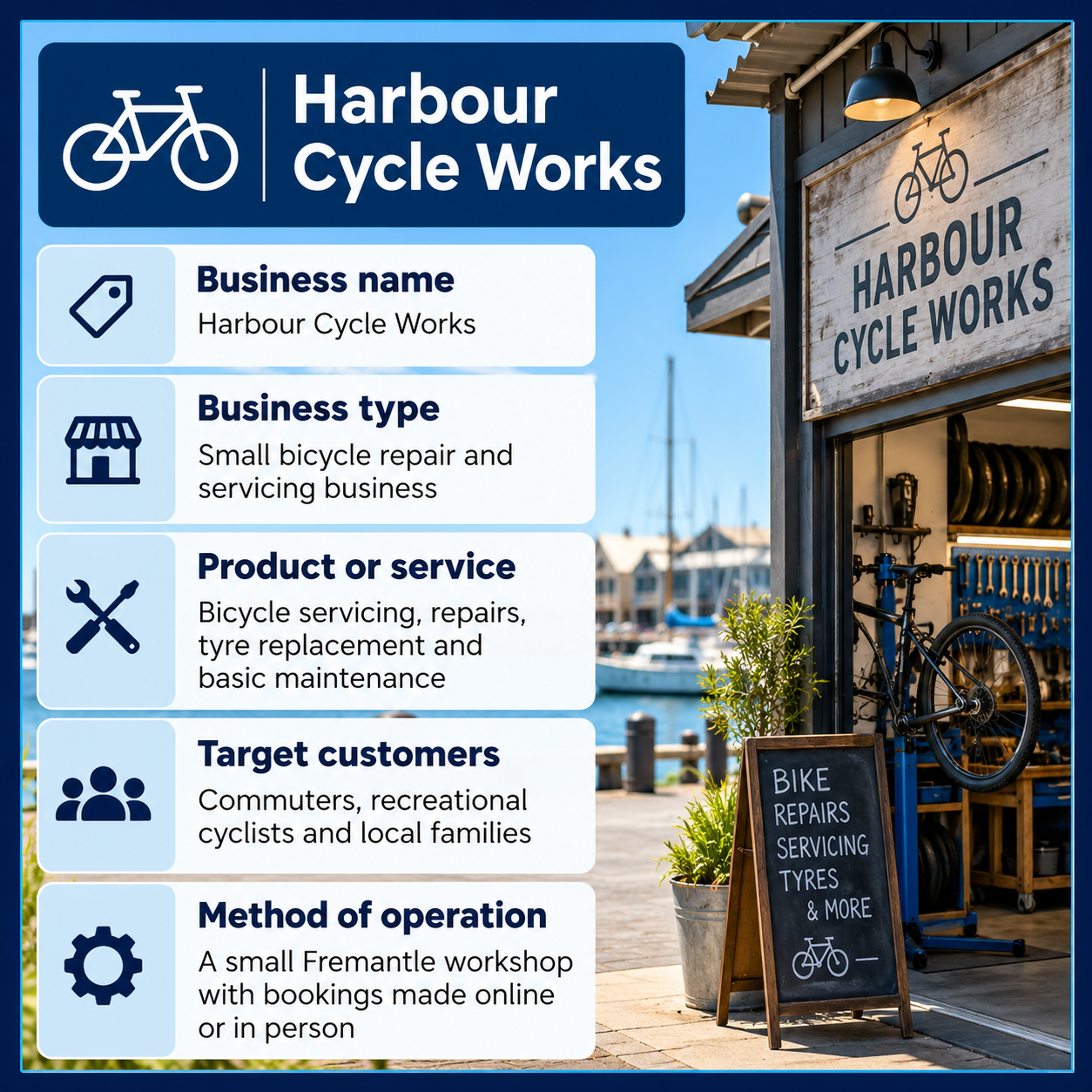
A clear profile makes the business easier to understand because the reader can quickly see what the business is, what it offers, who it serves and how it operates.
🔗 How the two features work together
The mission statement and business profile serve different purposes, but they should support each other.
Mission statement
Explains why the business exists, what it aims to provide and the values that guide it.
Business profile
Explains what the business is, what it sells, who it serves and how it operates.
Example: keeping the plan consistent
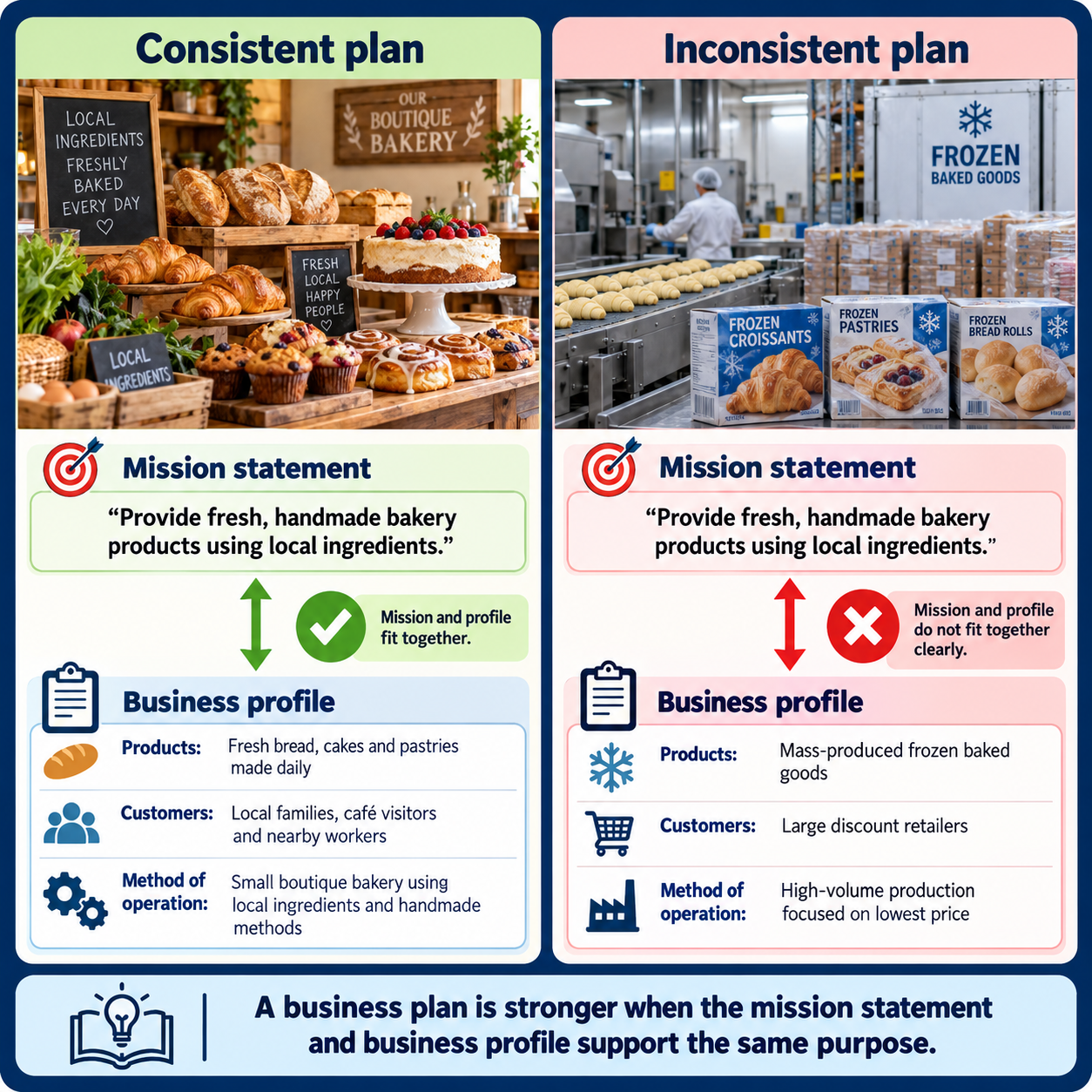
If a boutique bakery has a mission focused on providing fresh, handmade products using local ingredients, its business profile should describe products, customers and operating methods that support that purpose.
If the profile instead described a mass-produced frozen-food business competing mainly on the lowest possible price, the two parts of the plan would not fit together clearly.
🎧 Prefer listening?
If you prefer listening to the content in podcast format:
🎥 Prefer watching?
If you prefer watching the content in video format:
🧑🏫 Class Activities
Hands-on activities
These activities are designed to help you apply the full content to real businesses through research, decision-making and practical classroom tasks.
How this section could be used: teachers could place students into small groups and allocate different activities, ask students to complete one or two activities each week, or use the activities at the end of each syllabus point so groups can take turns completing and presenting one task to the class. Activities can also be used as extension work, revision, or as a starting point for short class discussions.

1. Write the Mission
A new Perth reusable lunch-container business wants to help office workers reduce single-use packaging.
- Identify its likely purpose.
- Identify one value it could emphasise.
- Write a mission statement of no more than 25 words.
Output: create a Mission Statement Card showing Purpose, Customer, Value and Final Mission Statement.
2. Build the Business Profile
Create a profile for a new local business such as a bike-repair shop, mobile car-detailing service, home bakery or handmade jewellery business.
- Give the business a name.
- Describe the product or service.
- Identify the target customers.
- Explain where or how the business operates.
Output: prepare a one-page business profile with the headings Business Name and Type, Product or Service, Target Customers and Location/Operation.
3. Real Business Snapshot
Choose a real small business and investigate what it does and the purpose it appears to serve.
- Summarise its business profile.
- Draft a mission statement based on what the business appears to stand for.
- Explain one reason the two fit together.
Output: prepare a one-slide business-plan snapshot containing the business profile, proposed mission statement and one explanation of alignment.
✍️ Short Answer Questions
Practice questions
Answer each question before opening the sample answer. Use the command term carefully and apply the marketing decision to the context provided.
Show sample answer
A mission statement explains the main purpose of the business, including why it exists, what it aims to provide and the values that guide it.
Show sample answer
A business profile is a short overview that explains what the business is, what it offers, who it serves and how or where it operates.
Show sample answer
One piece of information is the product or service, which explains what the business sells or provides. Another is the target customer, which identifies the main people or organisations the business expects to serve.
Show sample answer
A mission statement gives the business a clear statement of its purpose and values. This means the owner can compare everyday decisions with what the business says it stands for. As a result, decisions about products, service and behaviour are more likely to remain consistent with the business’s core purpose.
Show sample answer
A business profile gives the bank a quick overview of what the business does, who it serves and how it operates. This helps the lender understand the basic business idea before examining more detailed information. As a result, the bank can more easily judge whether the proposed business appears clear and realistic enough to investigate further.
Show sample answer
I recommend including both. The mission statement would explain why the tutoring business exists and the values it wants to follow, while the business profile would explain what tutoring it provides, who the target students are and how the service operates. As a result, the plan gives a clearer picture of both the purpose of the business and the practical business idea.
Show sample answer
One advantage of the mission statement is that it gives the business a clear purpose and helps guide decisions and behaviour. However, the business profile is also important because it explains what the business actually does, who it serves and how it operates, making the business idea easier for owners or lenders to understand. Overall, neither feature is clearly more important. The mission explains why the business exists, while the business profile explains what the business is, so the strongest simple business plan includes both.
🃏 Flashcards
Card 1 of 10
🎮 Revision Game
💰 BME Millionaire
Master mission statements and business profiles and climb the full money ladder.
Biz Fact: Google: Its mission is to organise the world’s information and make it universally accessible and useful.