General U1.16 - Sources of Funding from Financial Institutions
Overview
Dotpoint 16: sources of funding from financial institutions.
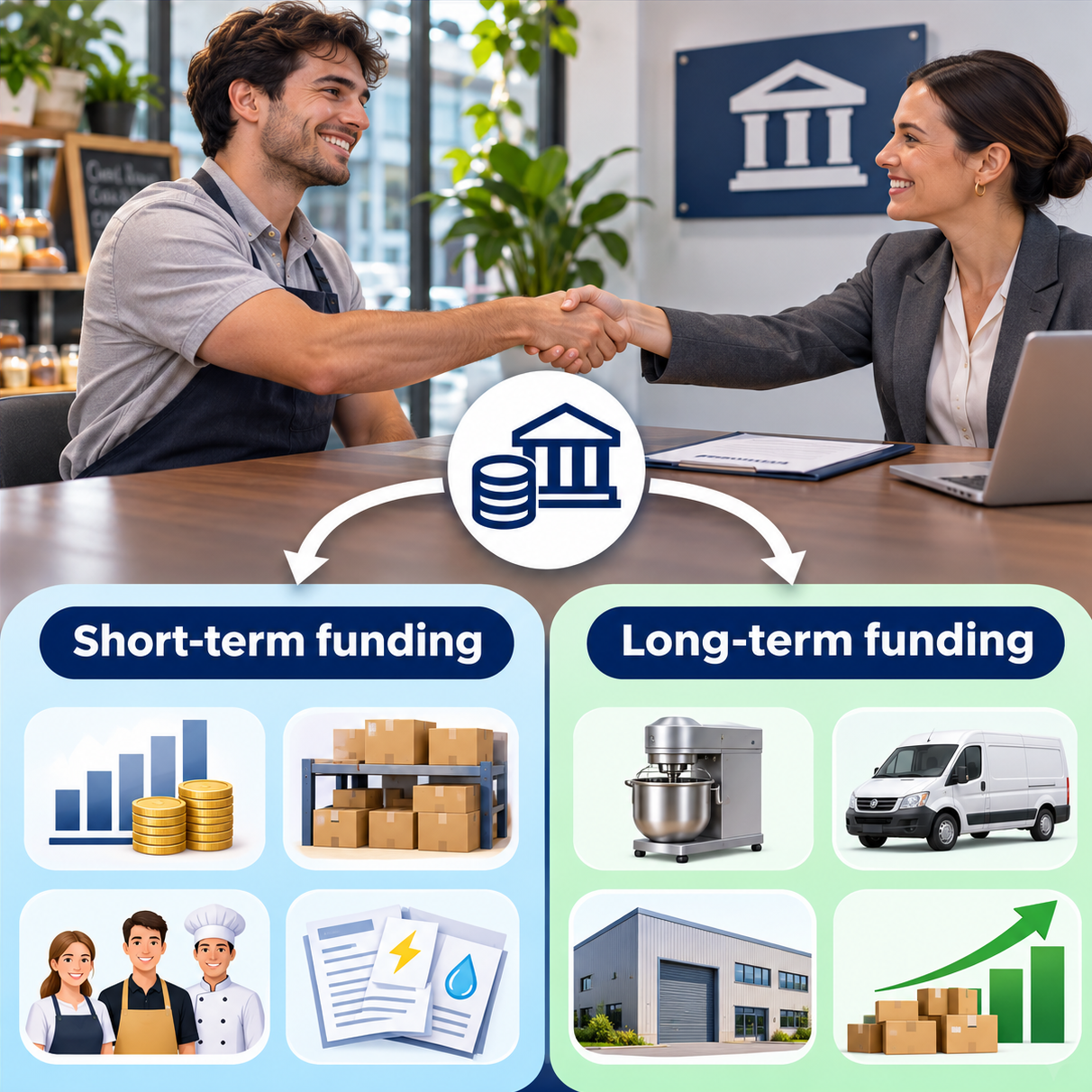
Funding from financial institutions is money a business obtains from organisations such as banks or other lenders to help finance its operations, purchases or growth. The business normally has to repay the money, usually with interest or fees.
One important way to classify business funding is by how long the business expects to use and repay the finance. This dotpoint focuses on:
1. Short-term funding
2. Long-term funding
⏱️ Short-term funding
Short-term funding is finance generally used for temporary or day-to-day business needs and is expected to be repaid over a relatively short period, commonly within about 12 months.
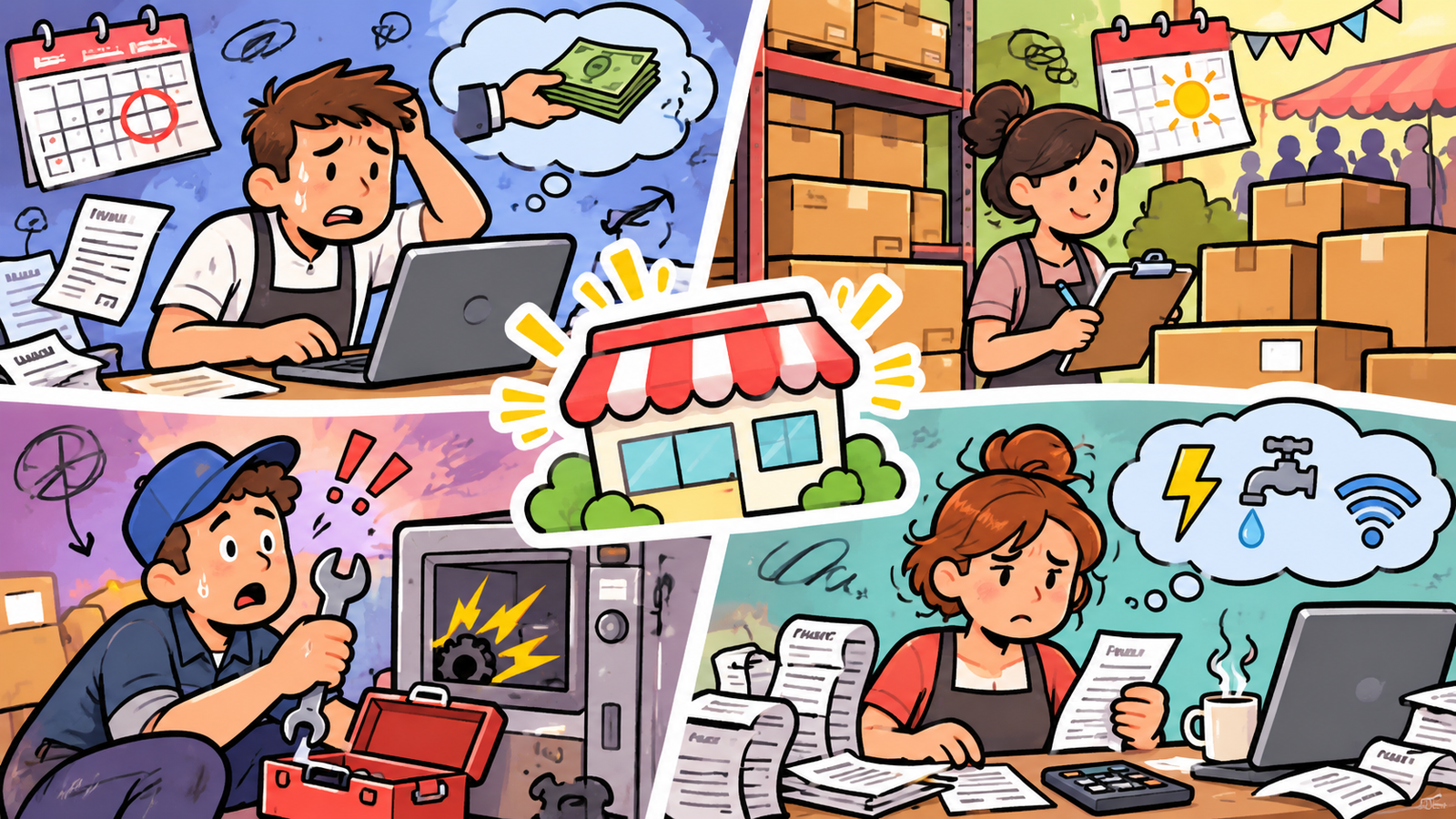
When short-term funding may be useful
- Temporary cash shortages: the business needs cash before customer payments arrive.
- Seasonal stock: extra stock is needed before a busy trading period.
- Unexpected expenses: an urgent repair or short-term bill needs to be paid.
- Working capital: the business needs help covering normal operating costs for a short period.
Common short-term funding sources from financial institutions
Bank overdraft
A bank overdraft allows a business to withdraw more money from its transaction account than it currently has, up to an agreed limit.
It can be useful when cash inflows and outflows do not occur at the same time because the business can use only the amount it needs and repay it as cash comes in.
Short-term business loan
A short-term business loan provides a set amount of money that the business repays over a shorter period.
It may suit a specific temporary need, such as purchasing extra stock before Christmas or paying for an urgent equipment repair.
Risks of short-term finance
- interest and fees increase the total cost of borrowing
- short repayment periods can place pressure on cash flow
- using short-term debt repeatedly for ongoing problems may indicate the business has a deeper financial issue
Example: a surf shop before summer
A Scarborough surf shop expects much stronger sales during summer but needs to purchase extra boards, wetsuits and accessories before the busy season begins.
A short-term loan could provide the cash needed to buy the extra stock. If summer sales occur as expected, the business can use the resulting cash inflows to repay the loan. As a result, the finance matches a temporary funding need rather than creating a long repayment commitment.

🏗️ Long-term funding
Long-term funding is finance used for major purchases, expansion or assets that will benefit the business over several years. Repayment normally occurs over a longer period than short-term finance.
When long-term funding may be useful
- Buying premises: purchasing a shop, office, warehouse or workshop.
- Major equipment: financing machinery, vehicles or expensive technology.
- Expansion: opening another location or significantly increasing capacity.
- Large fit-outs: funding improvements that will be used for several years.

Common long-term funding sources from financial institutions
Long-term business loan
A long-term business loan provides a lump sum that is repaid over several years through regular repayments.
Spreading repayments across a longer period can make a large purchase more manageable because the business can repay the finance while the asset is being used to generate revenue.
Commercial property loan
A commercial property loan can help a business purchase business premises such as a shop, warehouse or office.
Because property is a major long-lasting asset, the finance is normally repaid over a long period rather than being treated as a short-term borrowing need.
Why long-term finance needs careful planning
- the business may be committed to repayments for several years
- interest can make the total cost much higher than the original amount borrowed
- the business needs confidence that future cash flows can support the repayments
Example: a cabinet maker buying machinery
A small cabinet-making business wants to purchase a computer-controlled cutting machine that will be used for many years and allow the workshop to complete more jobs.
A long-term business loan may be more suitable than short-term finance because the cost can be spread across several years while the machine helps the business produce and sell more work. As a result, the repayment period better matches the useful life of the asset.

⚖️ Choosing between short-term and long-term funding
A business should try to match the length of the funding to the length of the business need. A temporary need generally suits short-term finance, while a major asset that will be used for years is more likely to suit long-term finance.
Temporary need
Stock for a seasonal rush, a short cash gap or an urgent repair.
Usually short-term funding
The finance can be repaid after the temporary need has passed or cash inflows improve.
Long-lasting need
Premises, major machinery, a vehicle or a significant expansion.
Usually long-term funding
The repayments are spread while the asset or expansion benefits the business over time.
| Feature | Short-term funding | Long-term funding |
|---|---|---|
| Main purpose | Temporary or day-to-day funding needs | Major assets, expansion or long-lasting investments |
| Repayment period | Relatively short, commonly within about 12 months | Usually spread over several years |
| Examples | Bank overdraft, short-term business loan | Long-term business loan, commercial property loan |
| Main risk | Repayments may place pressure on cash flow quickly | The business takes on a longer financial commitment |
🎧 Prefer listening?
If you prefer listening to the content in podcast format:
🎥 Prefer watching?
If you prefer watching the content in video format:
🧑🏫 Class Activities
Hands-on activities
These activities are designed to help you apply the full content to real businesses through research, decision-making and practical classroom tasks.
How this section could be used: teachers could place students into small groups and allocate different activities, ask students to complete one or two activities each week, or use the activities at the end of each syllabus point so groups can take turns completing and presenting one task to the class. Activities can also be used as extension work, revision, or as a starting point for short class discussions.

1. Short or Long?
Classify each funding need:
- West Coast Surf: needs extra stock for summer.
- Metro Cabinets: wants a new cutting machine expected to last eight years.
- Bloom Florist: needs cash to cover a two-week gap before corporate customers pay invoices.
- Harbour Dental: wants to purchase its business premises.
Output: create a four-row table showing Business Need, Short or Long Term, and Why.
2. Match the Finance
Fresh Box Foods has three needs: a temporary $8,000 cash shortage, $15,000 of extra Christmas stock and a $120,000 refrigerated delivery vehicle.
- Choose the most suitable funding time horizon for each need.
- Suggest a possible financial-institution source.
- Explain why the repayment period suits the purpose.
Output: complete a three-row table with the headings Business Need, Short or Long Term, Possible Source and Why It Fits.
3. Overdraft Decision
Northshore Printing is waiting 30 days for a large customer invoice but needs to pay paper suppliers next week.
- Explain why an overdraft could suit this situation.
- Identify one risk of relying on the overdraft.
- Decide whether it should be used for a new printing machine that will last six years.
Output: write three short paragraphs, one for each question.
4. Finance the Expansion
Little Lane Childcare wants to spend $250,000 converting a neighbouring property into extra childcare rooms that will be used for many years.
- Choose short-term or long-term funding.
- Explain why the time horizon suits the expansion.
- Explain one risk of taking on the long-term finance.
Output: write a short funding recommendation with the headings Choice, Why It Fits and One Risk.
5. Funding Mistake
Peak Bikes uses a short-term loan with rapid repayments to buy expensive workshop machinery expected to last ten years.
- Explain why the funding may be poorly matched to the asset.
- Identify the likely pressure this could place on the business.
- Suggest a more suitable funding approach.
Output: write a Problem → Effect → Better Choice response.
6. Bank Manager Pitch
Coastal Bakehouse needs $12,000 for Easter stock and $180,000 for a new commercial oven and kitchen extension.
Your group acts as the business owners meeting a bank manager.
Output: prepare one slide showing which need should use short-term funding, which should use long-term funding and why. Present your recommendation in about 90 seconds.
✍️ Short Answer Questions
Practice questions
Answer each question before opening the sample answer. Use the command term carefully and apply the marketing decision to the context provided.
Show sample answer
Short-term funding is finance generally used for temporary business needs and expected to be repaid over a relatively short period, commonly within about 12 months.
Show sample answer
Long-term funding is finance used for major purchases, expansion or assets that benefit the business over several years, with repayment spread over a longer period.
Show sample answer
A bank overdraft allows the business to withdraw more money than it currently has in its account, up to an agreed limit. A short-term business loan provides a set amount of money that is repaid over a shorter period for a temporary funding need.
Show sample answer
The extra stock is needed for a temporary seasonal increase in demand rather than a long-lasting asset. Short-term funding can provide cash before summer and then be repaid as the shop sells the additional stock. As a result, the repayment period matches the temporary funding need and the business avoids taking on debt for many years.
Show sample answer
The machinery is a major asset that will benefit the cabinet maker for several years. Long-term funding spreads the repayments while the machine is being used to produce work and generate revenue. As a result, the business avoids having to repay the entire cost quickly, reducing the immediate pressure on cash flow.
Show sample answer
If a temporary need is funded with short-term finance, the business can repay the borrowing once the cash gap or seasonal need has passed. If a long-lasting asset is funded over several years, repayments can occur while the asset is helping the business generate revenue. The implication is that matching the funding period to the business need can reduce unnecessary repayment pressure and make the finance easier for the business to manage.
Show sample answer
I recommend long-term funding because the commercial oven is an expensive asset that will be used for many years. Spreading repayments across a longer period allows the bakery to use revenue generated with the oven to help meet the repayments. As a result, the business is less likely to place severe short-term pressure on its cash flow than if it tried to repay the purchase quickly.
Show sample answer
One advantage of long-term funding is that large purchases can be repaid over several years, reducing the size of the immediate repayment burden. This can suit expensive assets such as premises or machinery. However, long-term funding creates a financial commitment that may continue for years and can involve substantial interest, while short-term funding may be more suitable for temporary needs such as seasonal stock or a brief cash shortage. Overall, long-term funding is not automatically better. The most suitable choice depends on the purpose of the funding, how long the business will benefit from it and whether the business can afford the repayments.
🃏 Flashcards
Card 1 of 11
🎮 Revision Games
💰 Funding Millionaire
Climb the ladder by mastering short-term and long-term funding.
🔀 Short or Long?
Match each business need to the most suitable funding time horizon.
⚡ 60 Second Showdown
Race through funding choices, definitions and business situations.
Biz Fact: Christmas Cash Crunch: Retailers often need short-term finance to purchase Christmas stock months before customers buy it.