
U1.25 — Phases of the Employment Cycle
Overview
Dotpoint 25: Phases of the Employment Cycle.
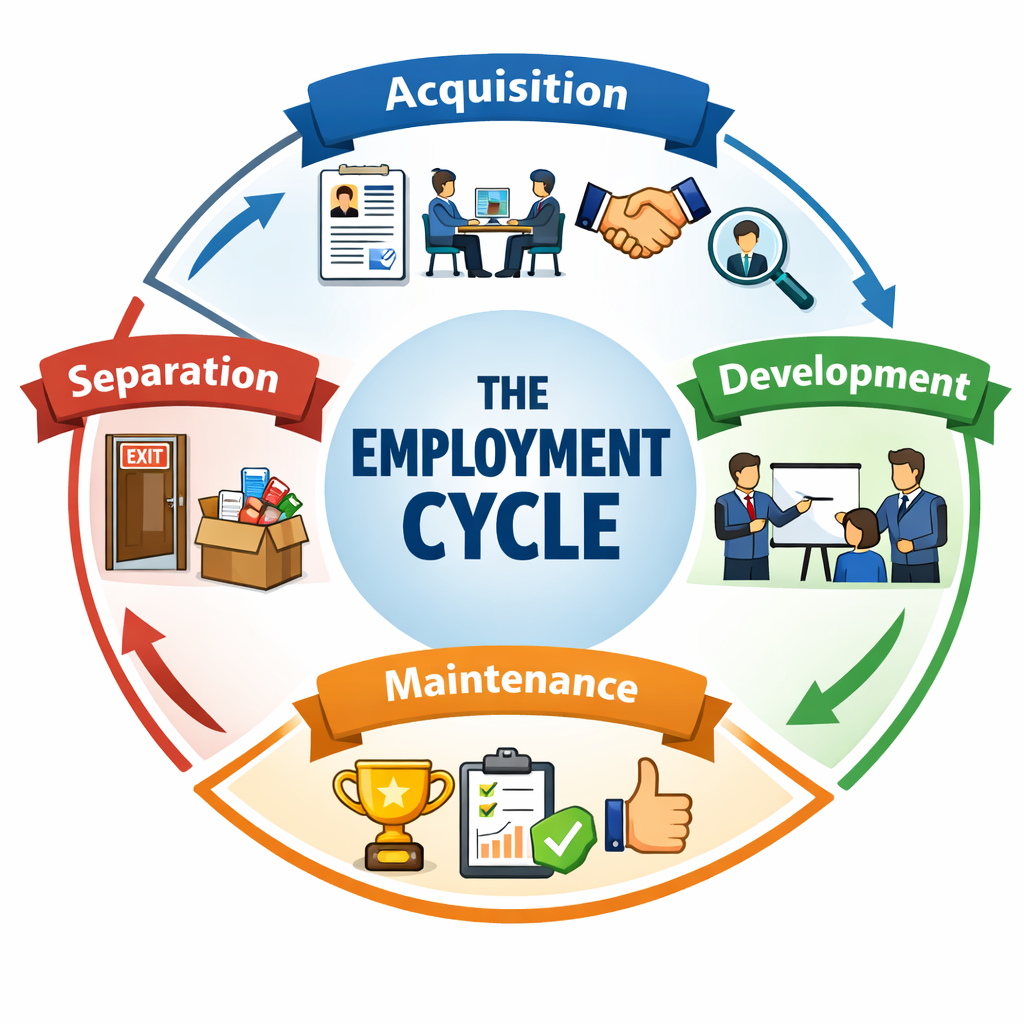
The employment cycle describes the full journey of an employee through a business — from when the business identifies a staffing need, through to when the employee eventually leaves.
The employment cycle consists of four main phases:
- Acquisition
- Development
- Maintenance
- Separation
🔍 Acquisition (Stage 1 of the Employment Cycle) — Acquire them
Acquisition is the first phase of the employment cycle. It is the process of planning for staff, then attracting and selecting the right people to fill roles.
Decisions made at this stage have long-term consequences for productivity, costs, morale and turnover.
Poor acquisition often leads to
- Underperformance
- Increased training costs
- Workplace conflict later in the cycle.
This course divides Acquisition into two parts
1) Staffing needs
Before advertising a position, a business must clearly identify why it is hiring and what problem the new employee is meant to solve.
Effective workforce planning requires businesses to consider:
- what work is not being completed efficiently or to the required standard
- whether the need is short-term or long-term
- if existing staff could be trained instead of hiring
- what employment type best suits the role (full-time, part-time, casual, contract, apprentice)
Short-term workforce planning
- focuses on immediate needs such as busy periods, staff absences, or short projects
- often addressed through casual employees, overtime, labour hire or short-term contracts
Long-term workforce planning
- linked to growth, expansion, retirements, technology change, or new services
- often addressed through permanent recruitment, apprenticeships and training pipelines.
Job analysis, job design and job description
Before recruitment begins, a business must be clear about the role it wants to fill. This usually involves three connected steps: job analysis, job design, and job description.
Job analysis
Job analysis is the process of identifying what a job involves. It looks at the key tasks, duties, responsibilities, skills, qualifications, working conditions, and reporting relationships linked to the role. This helps the business understand exactly what type of employee is needed.
Job design
Job design is the process of organising the tasks and responsibilities within a role. It focuses on how the job is structured to improve efficiency, motivation, job satisfaction, and productivity. For example, a business may decide how much variety, autonomy, teamwork, or responsibility the role should include. Poor job design can lead to boredom, stress, and staff turnover.
Job description
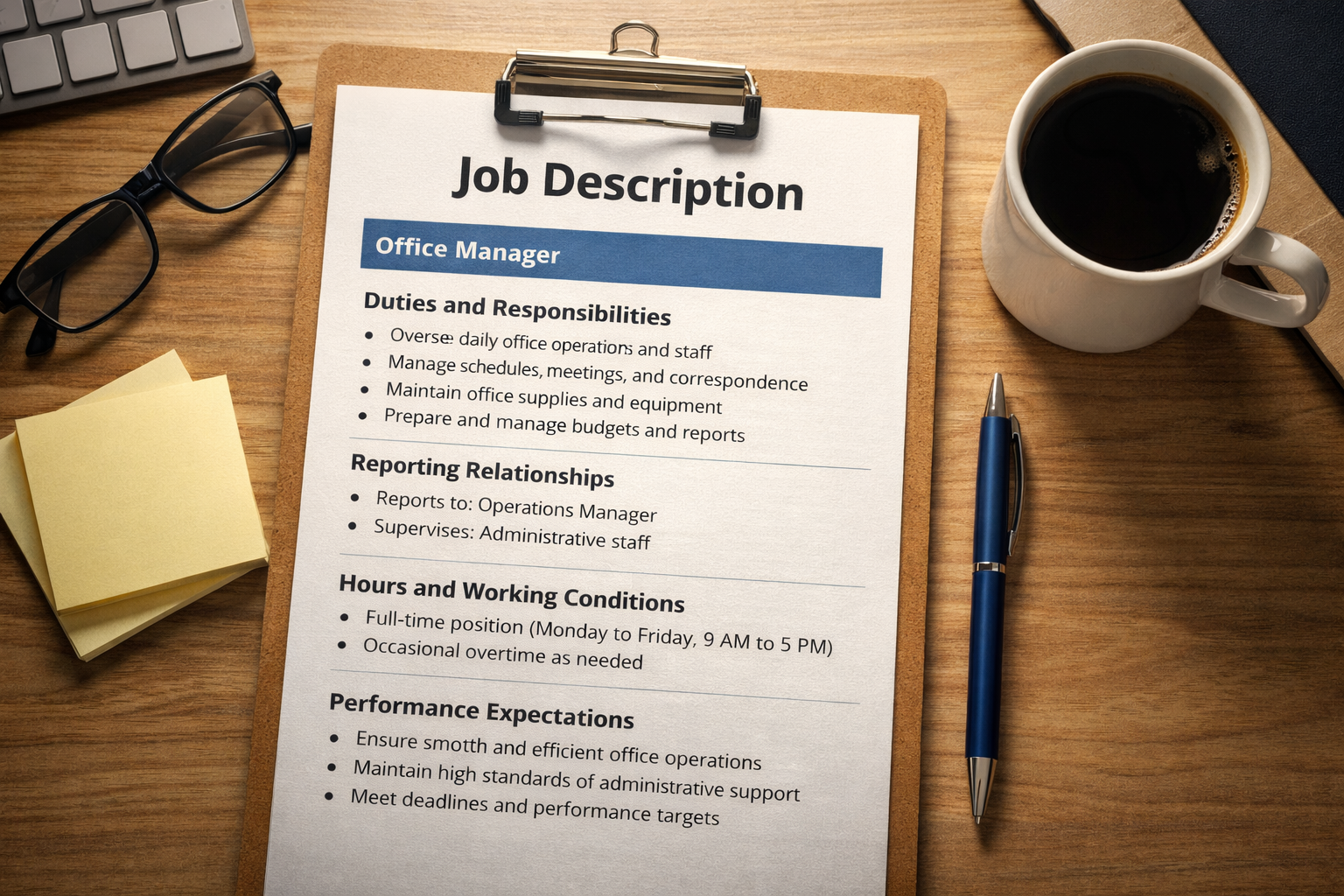
A job description is the written document that outlines the main features of the job. It usually includes duties, responsibilities, reporting lines, hours, working conditions, and performance expectations. It is important because it helps applicants understand the role, allows fair comparison between candidates, reduces misunderstandings, and provides a benchmark for performance management.
Simple difference
- Job analysis = studies the job
- Job design = structures the job
- Job description = writes the job down
2) Recruitment and Selection
Recruitment
Recruitment is the process of attracting a pool of suitable applicants for a vacant position.
Internal recruitment
Internal recruitment involves filling vacancies by promoting or transferring existing employees within the business.
Advantages
- faster and cheaper than external recruitment
- employees already understand the business culture and systems
- improves motivation and employee loyalty
- lower risk due to known performance history
Disadvantages
- limits the pool of candidates
- may create resentment among staff who miss out
- reduces opportunities for new ideas and innovation
- can create skill gaps elsewhere in the organisation
External recruitment
External recruitment involves attracting applicants from outside the business.
Advantages
- larger pool of candidates
- brings new skills, experience and ideas into the business
- useful when specialised skills are required
- can support change and improvement
Disadvantages
- more time-consuming and costly
- higher risk as employee performance is less certain
- longer induction and training period required
- may disrupt existing workplace culture


Common recruitment methods in Perth
- online job platforms (Seek, Indeed, LinkedIn)
- social media and community groups
- TAFE and apprenticeship pathways
- labour hire firms for short-term needs
- employee referrals (common in hospitality and trades)
Selection
Selection is the process of systematically assessing applicants to identify the candidate who best matches the job requirements and the organisation’s needs.
The purpose of selection is to minimise poor hiring decisions and reduce future training, supervision and turnover costs.
Selection process
Application screening
Applications are reviewed against the job description and person specification. Applicants who meet the required skills, experience and qualifications are shortlisted.
Interviews
Interviews assess communication, problem-solving, reliability and teamwork, and cultural fit. Behavioural and scenario-based questions test real workplace behaviour.
Testing (where appropriate)
This may include practical skills tests, role-plays for customer service roles, or safety/compliance checks in high-risk industries.
Reference checks
Referees are contacted to confirm past performance, reliability/attendance, and conduct/teamwork.
Job offer and employment contract
A formal job offer is made and supported by an employment contract outlining pay, hours, responsibilities, reporting lines, probation and notice periods.
Indicators of effective acquisition
Successful acquisition is reflected in:
- lower staff turnover
- fewer performance issues during probation
- faster time to reach expected productivity
- reduced training and supervision costs
- positive feedback from managers, colleagues and customers
📈 Development (Stage 2 of the Employment Cycle) — Build them
Development focuses on building employee skills, knowledge and confidence over time. It includes the induction of new employees into the business and the ongoing training provided as employees develop, take on more responsibility, or adapt to change.
Effective development improves productivity, safety, motivation and retention, while poor development can lead to mistakes, low morale and high staff turnover.
This course divides Development into two parts
1) Induction
Induction is the process of introducing a new employee to the business, their role, and the workplace environment. It usually occurs in the first days or weeks of employment.
The purpose of induction is to help new employees:
- understand how the business operates
- know what is expected of them
- feel safe, supported and confident in their role
A well-run induction reduces early mistakes, stress and employee turnover.

What happens during induction training?
Induction typically includes:
- introduction to workplace policies and procedures
- explanation of job duties and performance expectations
- workplace health and safety training
- introduction to supervisors, team members and reporting lines
- explanation of hours, pay systems and workplace rules
- familiarisation with equipment, systems or software
Example: A new employee at a Perth construction site would complete safety inductions before starting work, while a retail employee in a shopping centre may receive customer service, POS system and store policy training.
2) Training
Training is the process of developing employee skills and knowledge so they can perform their job effectively now and in the future. Unlike induction, training is ongoing and occurs throughout an employee’s time with the business.
Training may be provided:
- when employees start a new role
- when technology or processes change
- when employees are promoted
- to improve performance or safety
Objectives and benefits of training
Objectives
- improve employee performance and productivity
- ensure employees work safely and correctly
- prepare employees for greater responsibility or advancement
Benefits
- higher productivity and efficiency – employees work faster and make fewer mistakes
- improved employee motivation and retention – staff feel valued and supported
- better customer service and business reputation – well-trained staff deliver more consistent service
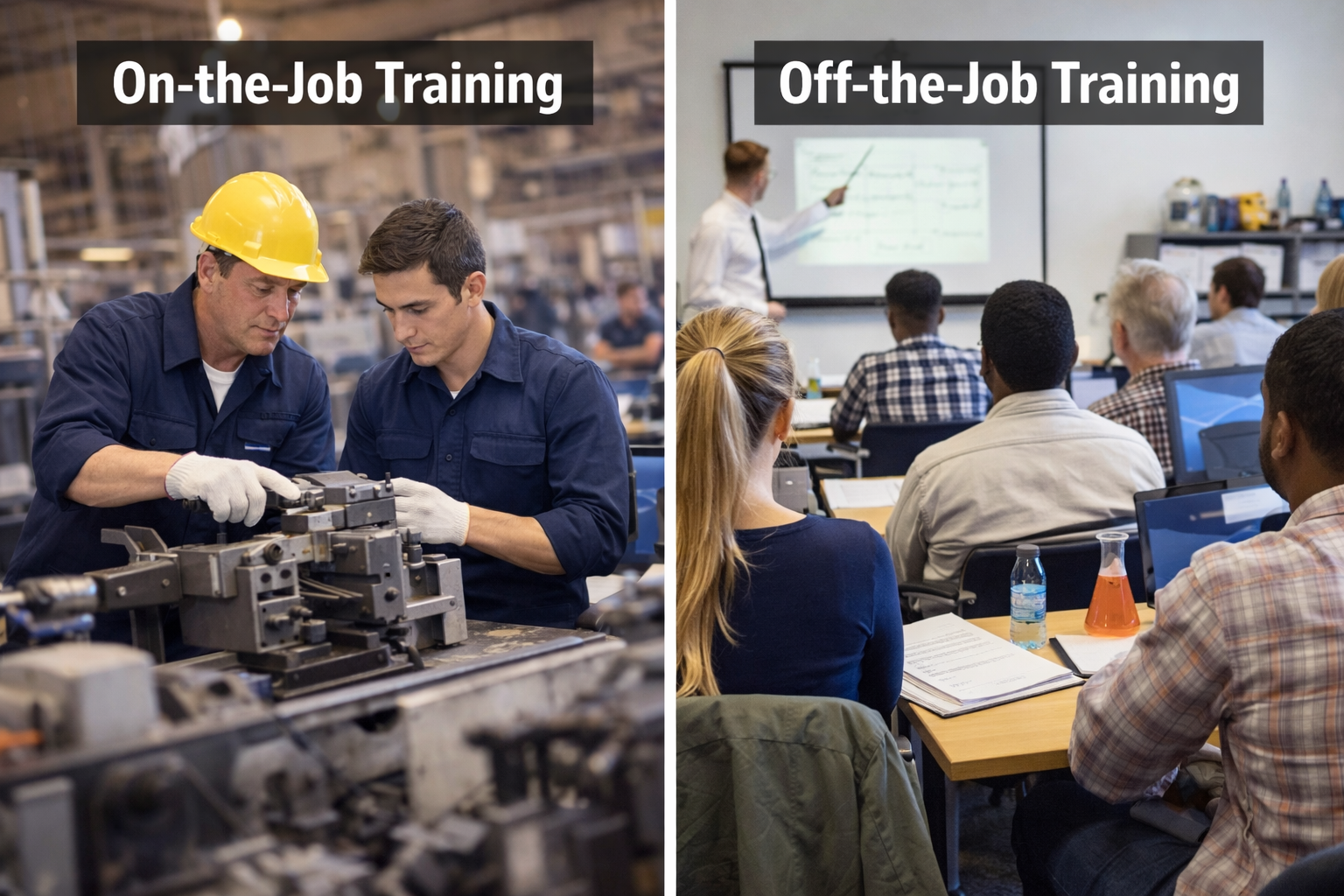
What is on-the-job training?
On-the-job training occurs when employees learn by doing the job itself, usually while being supervised or coached by a manager or experienced colleague.
This type of training takes place in the actual work environment using real equipment and tasks.
Advantages
- training is practical and directly relevant to the job
- employees learn using real equipment and procedures
- lower cost compared to formal external training
Disadvantages
- mistakes can affect customers, safety or productivity
- quality of training depends on the skill of the trainer
- can slow down experienced staff who are supervising
What is off-the-job training?
Off-the-job training occurs away from the normal workplace and focuses on learning rather than performing the job.
Examples include:
- external courses and workshops
- TAFE or university programs
- online training modules
- simulations and role-plays
Advantages
- no risk to customers, safety or production during training
- delivered by specialists or experts
- allows employees to focus fully on learning
Disadvantages
- more expensive than on-the-job training
- skills may not perfectly match the real workplace
- employees are away from productive work time
Why development matters overall
Businesses that invest in effective induction and training are more likely to:
- reduce staff turnover
- improve safety and compliance
- increase productivity and service quality
- develop future leaders internally
In contrast, businesses that neglect development often face higher costs, more errors, and lower employee morale.
🛠️ Maintenance (Stage 3 of the Employment Cycle) — Support them
Maintenance is the stage of the employment cycle where the business works to keep employees in the workplace by providing the conditions, support and systems needed for them to remain employed, motivated and productive.
At the maintenance stage, the business is no longer focused on hiring or training a new employee. Instead, it must make sure employees are supported, rewarded and managed effectively so they want to stay and perform well.
This course divides Maintenance into three parts
1) Agreements
Agreements refer to the broader employment arrangements under which an employee is hired. These may include the employee’s employment package, industry award, enterprise bargaining agreement, or another workplace agreement.
Agreements help set the general conditions of employment and explain what the employee can expect while working for the business.
Agreements may include:
- rate of pay or salary range
- superannuation
- leave entitlements
- workplace benefits
- ICT and mobile phone access
- flexible working arrangements
- childcare support
- fringe benefits such as meals, food and beverage, or entertainment
Why agreements matter in maintenance
Agreements are important because they help retain employees by making conditions clear and competitive. If agreements are fair and attractive, employees are more likely to remain with the business. Poor agreements may lead to dissatisfaction, low morale and staff turnover.
2) Contracts
Contracts are the specific terms of employment that apply to the individual employee.
While agreements set the broader framework, the contract outlines exactly what applies to that worker.
A contract may include
- whether employment is fixed-term or ongoing
- whether the employee is full-time, part-time or casual
- salary or wage details
- hours of work
- specific duties and responsibilities
- leave entitlements
- notice periods
- any additional conditions or benefits
Key point for students
An agreement is the broader employment arrangement, while a contract is the individual employee’s specific terms of employment.
Contracts help maintain employees because they provide certainty and clarity. They can also be reviewed or renegotiated over time if the role changes, the employee is promoted, or the business wants to improve retention.
Examples of employment types in contracts
- full-time – ongoing employment with regular hours and entitlements
- part-time – ongoing employment with fewer hours than a full-time employee
- casual – paid by the hour, usually with no guaranteed hours and fewer entitlements
- fixed-term – employment for a set period of time
3) Performance management
Performance management is the process of monitoring, reviewing and improving employee performance so that employees continue to meet business expectations and contribute to business goals.
Performance management helps the business keep employees productive, supported and motivated while also identifying areas that need improvement.
Appraisals
An appraisal is a formal review of an employee’s work performance.
Appraisals help the business:
- review how well the employee is performing
- identify strengths and weaknesses
- provide feedback
- identify training and development needs
- set goals for improvement
- support decisions about promotion, pay rises or rewards
Why appraisals matter
Appraisals benefit both the business and the employee. The business can identify areas for improvement, while the employee receives feedback, support and recognition. Good appraisals can improve commitment, performance and retention.

Rewards and recognition
An effective performance management system should also include rewards and recognition. These are used to encourage employees, reward strong performance and improve commitment to the business.

Monetary and non-monetary rewards
Monetary rewards
These are financial rewards provided to employees.
- pay rise
- bonus
- commission
- promotion with higher pay
- gifts or cash incentives
- salary-based rewards
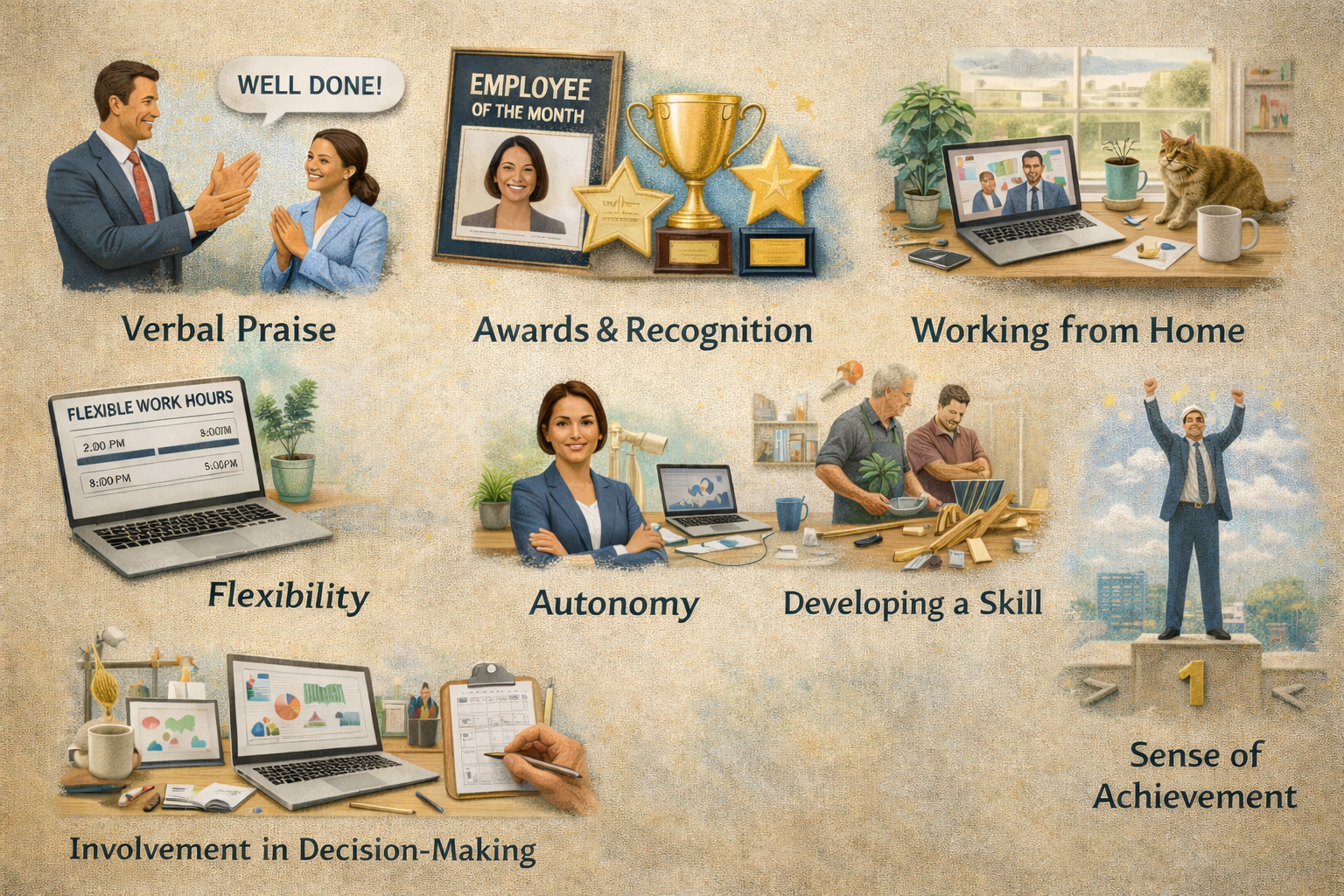
Non-monetary rewards
These are rewards that do not involve direct payment.
- verbal praise
- awards and recognition
- working from home options
- flexibility
- autonomy
- developing a skill
- involvement in decision-making
- sense of achievement
- belonging to a team
Why rewards and recognition matter
A strong reward system helps employees feel valued. This can improve motivation, commitment, job satisfaction and retention. Businesses often use both monetary and non-monetary rewards because money alone does not always create long-term loyalty.
Why maintenance matters overall
Businesses that manage maintenance well are more likely to:
- retain employees
- reduce staff turnover and absenteeism
- improve motivation and job satisfaction
- create clearer expectations
- improve productivity and performance
In contrast, poor maintenance can lead to conflict, low morale, underperformance and costly employee exits.
🚪 Separation (Stage 4 of the Employment Cycle) — Send them off
Separation occurs when the employment relationship between an employee and a business ends. Separation can be voluntary (initiated by the employee) or involuntary (initiated by the employer).
How separation is handled affects staff morale, business reputation, legal risk, and future recruitment.
Poorly managed separation can result in disputes, unfair dismissal claims and damage to the employer’s brand.
This course divides Separation into four parts
1) Retirement (Voluntary)
The employee chooses to leave the workforce, usually after many years of service.
2) Resignation (Voluntary)
The employee chooses to leave their current position.
3) Retrenchment (Involuntary)
The role is no longer needed by the business, not because of the employee’s fault.
4) Dismissal (Involuntary)
The employer ends employment because of misconduct, poor performance or breach of rules.
1) Retirement
Retirement occurs when an employee permanently leaves the workforce, usually due to age or personal choice.
Key features:
- often planned in advance
- allows time for succession planning
- knowledge and responsibilities can be transferred gradually
Example: A senior employee retires after many years of service, with duties gradually handed to a replacement.
2) Resignation
Resignation occurs when an employee voluntarily chooses to leave their position.
Common reasons:
- better job opportunities
- dissatisfaction with pay or conditions
- poor management or workplace culture
- relocation or further study
Employees are usually required to give notice, as stated in their employment contract.
Example: An employee resigns after accepting a higher-paying role closer to home.
3) Retrenchment
Retrenchment, also known as redundancy, occurs when a job role is no longer required by the business — not because of the employee’s performance or behaviour.
Key point for students: ➡️ The role becomes redundant, not the person.
Common causes of retrenchment:
- economic downturn or reduced demand
- restructuring or downsizing
- automation or technology replacing tasks
- business closure or relocation
In genuine redundancy situations, employers may be required to provide:
- redundancy pay
- notice or pay in lieu of notice
- consultation with employees
- assistance with transition where available
Example: A construction company retrenches workers after a major project finishes and no new contracts are secured.
Why this must be handled carefully:
- retrenchment must be genuine and justified
- poor handling can lead to unfair dismissal claims
- morale of remaining employees can be affected
4) Dismissal
Dismissal occurs when an employer terminates an employee’s contract due to misconduct, underperformance or breach of workplace rules.
Key point for students: ➡️ The employee is at fault.
Dismissal can occur in two main ways:
- summary dismissal (immediate termination for serious misconduct)
- dismissal after warnings (for ongoing poor performance or minor misconduct)
Dismissal procedure
Identify the issue
Performance or behaviour concerns are clearly identified and documented.
Communicate expectations
The employee is informed of what standards are required and where they are falling short.
Provide support and time to improve
This may include additional training or a performance improvement plan.
Issue formal warnings
Verbal and written warnings are given if issues continue, outlining consequences.
Allow the employee to respond
The employee is given an opportunity to explain their behaviour or performance.
Make a final decision
If no improvement occurs, dismissal may take place, following contractual notice requirements.
Summary dismissal may bypass some steps if misconduct is severe, such as theft, violence, or serious safety breaches.
Why separation matters overall
Businesses that manage separation well are more likely to:
- reduce legal risk and unfair dismissal claims
- protect the business’s reputation
- maintain trust and morale among remaining employees
- show ethical and professional management
In contrast, poor separation management can lead to disputes, damaged employer brand, lower staff morale and costly legal problems.
🏫 Case Study — A Teacher at Scotch College and the Employment Cycle
Stage 1: Acquisition
Scotch College identifies a need for an additional Business Management & Enterprise teacher due to increased student enrolments and subject demand.
- workforce planning shows the need is long-term, not seasonal
- a job analysis identifies key tasks: teaching ATAR and IB classes, lesson planning, assessment, reporting, pastoral care, and co-curricular involvement
- the role is job designed to include both teaching and co-curricular responsibilities
- a detailed job description is created outlining teaching load, reporting lines, expectations, and professional standards
External recruitment is used (e.g. advertising through Seek). Applicants are shortlisted, interviewed, and required to demonstrate teaching ability and subject knowledge. Referees are checked before an employment contract is offered.
Stage 2: Development
When the new teacher commences, they complete a structured induction, which includes:
- introduction to school policies, procedures and culture
- child safety and mandatory reporting training
- curriculum frameworks and assessment requirements
- introduction to faculty staff, Heads of Department and leadership
Ongoing training and development occurs through professional learning days, moderation, and training in new technologies and teaching strategies.
Stage 3: Maintenance
To retain the teacher and maintain performance, Scotch College focuses on maintenance strategies.
- agreements cover salary, superannuation, leave entitlements and other workplace benefits
- contracts set out the teacher’s role, employment status, hours and responsibilities
- performance management includes appraisals, feedback, rewards and recognition
- non-monetary benefits such as professional development, flexibility and supportive culture help improve retention
Stage 4: Separation
After many years of service, the teacher chooses to leave the profession and retires.
- the separation is planned well in advance
- responsibilities are gradually handed over
- a replacement teacher is recruited to ensure continuity for students
Because separation is managed professionally, the school’s reputation remains strong and staff morale is maintained.
In a different scenario, if enrolments were to fall significantly and subject offerings reduced, a teaching position could become redundant — an example of involuntary separation where the role is no longer required, not due to performance.

🎧 Prefer listening?
If you prefer listening to the content in Podcast format:
🎥 Prefer watching?
If you prefer watching the content in video format:
Biz Fact: Hiring the wrong employee can cost a business 30–50% of that worker’s annual salary in lost productivity, rehiring, and training.