
U2.13 — Applying Marketing Strategies for Each Stage of the Product Lifecycle
Overview
Dotpoint 13: applying marketing strategies for each stage of the product lifecycle.
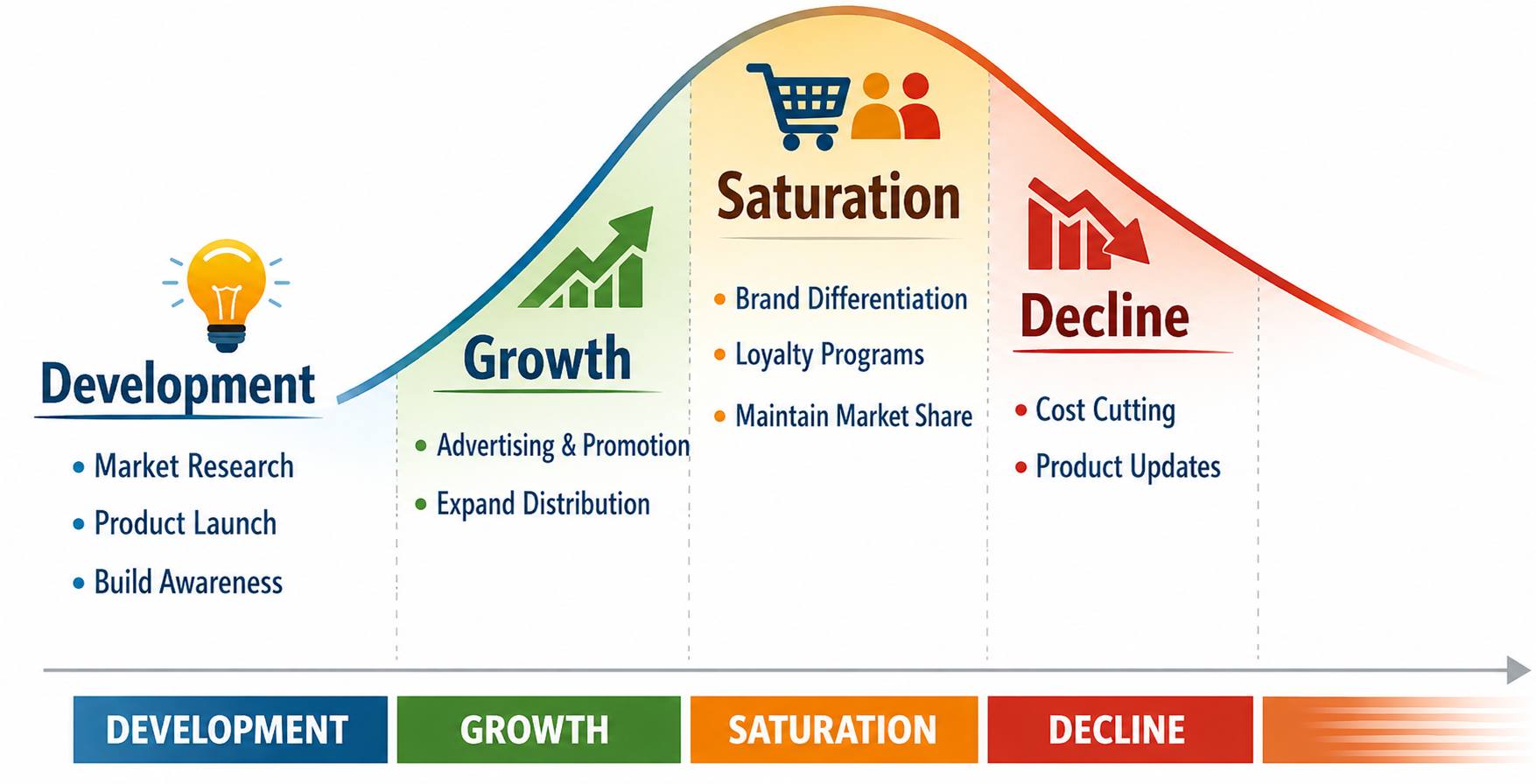
A product does not need the same marketing strategy at every stage of its lifecycle. As a product moves from development to growth, saturation and decline, businesses often change their marketing approach to match customer demand, competition and sales conditions.
In this dotpoint, the focus is on how businesses apply marketing strategies at each stage of the product lifecycle.
🚀 Development stage
At the development stage, the product is still new and not fully established in the market. Customer awareness is low, sales are limited, and the business is often focused on introducing the product successfully.

| P | Strategy at this stage |
|---|---|
| Product | Focus on clear positioning, useful features, distinctive branding and strong packaging. A business may also use differentiation so the product stands out from rivals, such as offering an eco-friendly material or a feature competitors do not have. |
| Price | The business may use skim pricing if the product feels special or innovative, or penetration pricing if the aim is to encourage trial. For example, a launch special such as an introductory lower price for the first month. |
| Place | Distribution may begin through selected locations, direct distribution or a limited rollout. For example, selling first through the company website or only in flagship stores before wider release. |
| Promotion | Use specific advertising and publicity to build awareness, such as Instagram launch posts, short YouTube ads, in-store posters and website banners. Early sales promotion like a free trial or limited-time discount can help create interest. |
| People | Staff need strong training so they can explain the new product and deliver good customer service as part of CRM. For example, employees might be trained to answer common launch questions and recommend the product confidently. |
| Processes | The business should make sure its procedures work smoothly from launch. For example, having a clear ordering, checkout and delivery process so early customers do not have a poor first experience. |
| Physical presence | Signage, the webpage and any staff uniform should help make the launch look professional. For example, new point-of-sale signs, a homepage banner and a visually consistent store display. |
📈 Growth stage
At the growth stage, the product begins to gain stronger sales and wider customer awareness. The business usually focuses on expanding demand, building recognition and increasing market share.

| P | Strategy at this stage |
|---|---|
| Product | Strengthen positioning, refine features and make the branding more recognisable. A business may also increase differentiation by adding upgrades, better quality or new variations that make the product feel better than competing options. |
| Price | The business may keep penetration pricing to win more customers, or slowly adjust price as demand strengthens. For example, moving from a discounted launch price to a standard price once the product has built momentum. |
| Place | Expand distribution into more stores, more channels or stronger locations. For example, moving from online-only sales to shopping centres, department stores or additional franchise outlets. |
| Promotion | Increase advertising and publicity with more specific tactics such as influencer partnerships, social media ads, email marketing and launch events. These help build awareness faster and encourage repeat purchase. |
| People | As customer numbers rise, employees need stronger training and consistent customer service. For example, staff may be trained to upsell accessories, answer common questions and handle larger customer volumes smoothly. |
| Processes | Improve procedures so the business can handle more demand. For example, making checkout faster, improving restocking systems or streamlining delivery to avoid delays as orders increase. |
| Physical presence | The webpage, signage and store presentation should support brand growth. For example, clearer shelf displays, larger menu boards, stronger window signage and a more polished website layout. |
⚖️ Saturation stage
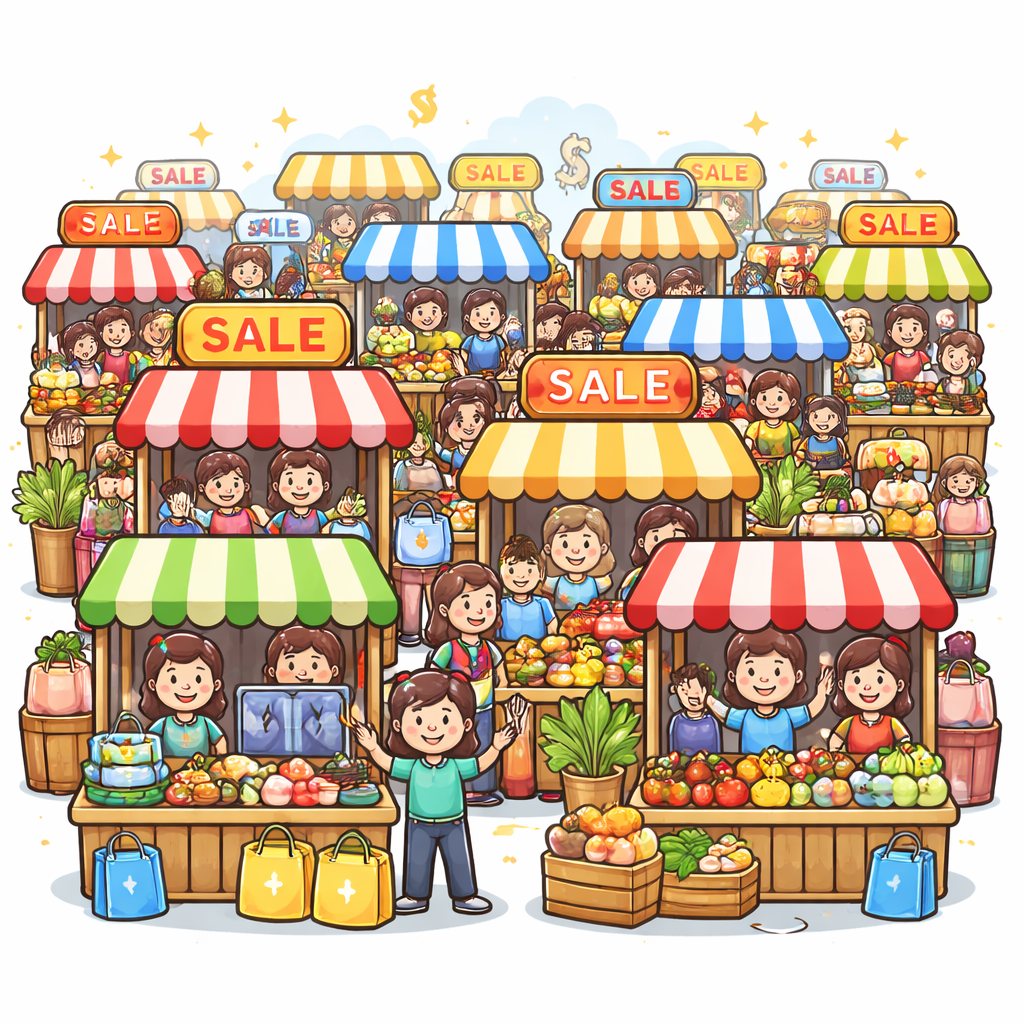
At the saturation stage, sales may level off because the market is crowded and many customers already know the product. The main aim is often to protect market share and stay competitive.
| P | Strategy at this stage |
|---|---|
| Product | Refresh features, update packaging, sharpen positioning and strengthen differentiation. For example, adding a premium version, redesigning the pack or highlighting one feature competitors do not offer. |
| Price | Psychological pricing, bundles or short-term discounts may help defend sales. For example, offering a “2 for $15” deal or setting a price at $9.99 rather than $10.00. |
| Place | Keep the product widely available through strong distribution and good locations. For example, making sure it remains visible both in-store and online so competitors do not take easy sales. |
| Promotion | Use sales promotion, targeted advertising, regular publicity and customer loyalty programs. For example, loyalty points, members-only discounts, app rewards, email offers or repeat-purchase bonuses. |
| People | Employees should deliver strong customer service and good CRM to help maintain loyalty. For example, remembering regular customers, handling complaints well and encouraging return visits. |
| Processes | Efficient procedures matter because the business may need to control costs while keeping quality high. For example, reducing waste, tightening stock control and speeding up service during peak periods. |
| Physical presence | Refreshing signage, updating the webpage and improving store presentation can help the product stay relevant. For example, replacing old visuals with seasonal designs or improving the layout of the online store. |
📉 Decline stage
At the decline stage, sales and demand begin to fall. The business may try to slow the decline, reduce losses, reposition the product or decide whether it should be removed.

| P | Strategy at this stage |
|---|---|
| Product | The business may simplify the range, cut weaker products or reduce unnecessary features. For example, removing unpopular colours, flavours or versions and keeping only the strongest-selling option. |
| Price | Prices may be reduced, or psychological pricing and value deals may be used to encourage remaining demand. For example, discounting the product before it is discontinued. |
| Place | The business may narrow distribution and focus only on stronger locations. For example, removing the product from low-performing stores but keeping it online or in high-traffic outlets. |
| Promotion | Promotion may be reduced to save money, or limited sales promotion may be used to clear stock. For example, a final clearance message on social media, “last chance” signage or a short markdown campaign. |
| People | Employees still need good training and customer service so the business protects its brand reputation. For example, staff should explain replacement products clearly if the old one is being phased out. |
| Processes | The business may streamline procedures to cut costs. For example, reducing stock orders, shortening menu preparation or simplifying delivery for a slow-selling item. |
| Physical presence | The business may reduce emphasis on the product in signage, online menus or displays. For example, moving it off the homepage and giving more shelf or website space to newer products. |
🥤 Boost Juice example
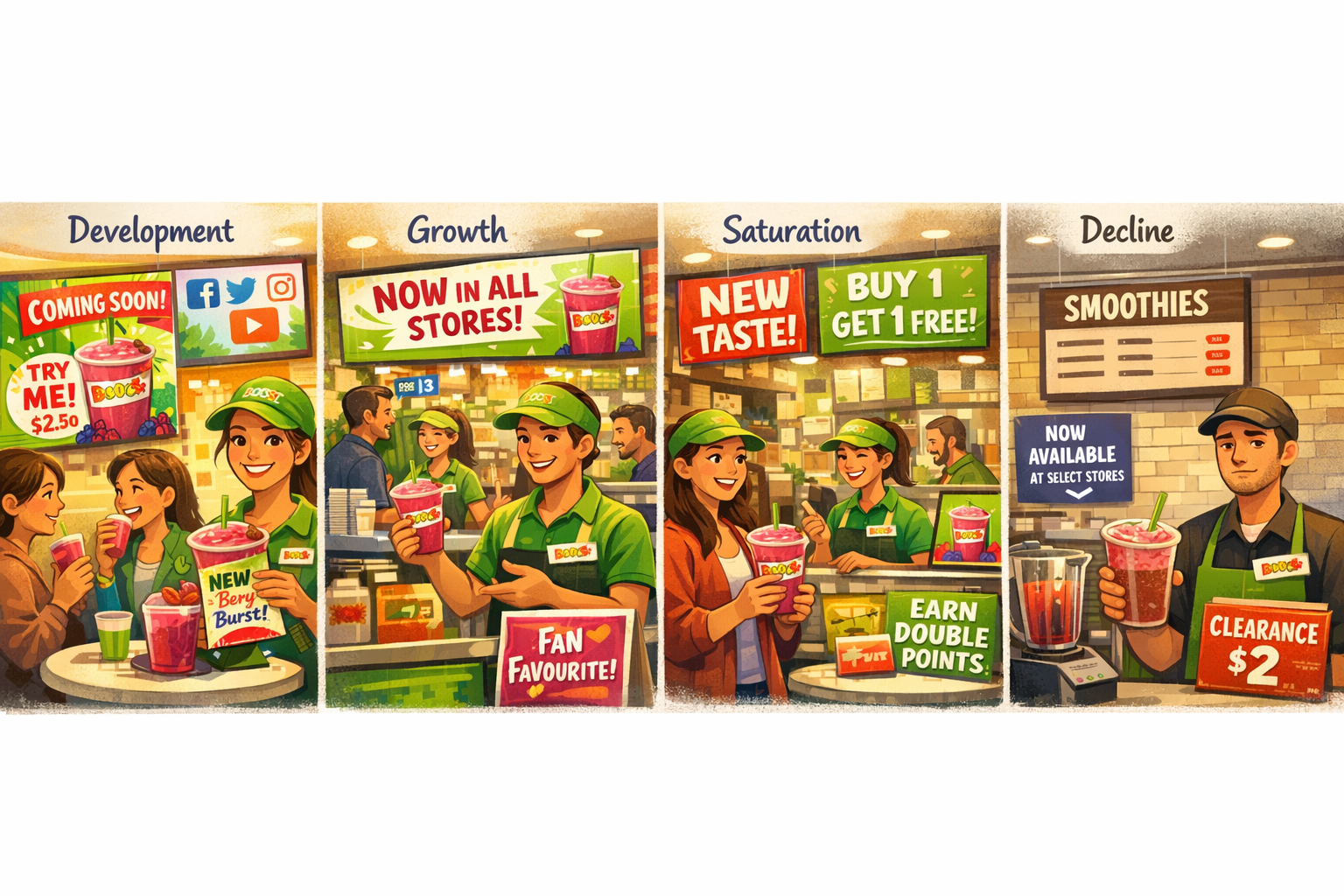
A simple way to apply the product lifecycle is to imagine how Boost Juice might market one drink as it moves through each stage.
Development
Boost Juice may launch a new smoothie with bright branding, a trial price, social media teasers, limited store rollout and trained staff who encourage customers to try it.
Growth
If the drink becomes popular, Boost Juice may expand it to more stores, increase online promotion, keep presentation strong and use staff upselling to build stronger sales.
Saturation
Once sales level off, Boost Juice may refresh the flavour, adjust pricing, run loyalty offers, improve presentation and use promotions to protect customer interest against competitors.
Decline
If demand weakens, Boost Juice may reduce promotion, narrow distribution, simplify the menu and eventually discontinue the item if sales continue to fall.
🎧 Prefer listening?
If you prefer listening to the content in Podcast format:
🎥 Prefer watching?
If you prefer watching the content in video format:
Biz Fact: Kodak is one of the most famous decline-stage stories in business — it helped invent digital camera technology but still filed for bankruptcy in 2012 after failing to adapt quickly enough.