
U3.01 — Factors Driving Global Business Development
Overview
Dotpoint 1: factors driving global business development.
Global business development occurs when a business expands its markets, operations, production, finance or strategic relationships beyond its domestic country in order to grow, reduce risk and improve its competitive position.
In Year 12 BME, global business development is not just about “selling overseas”. It is about understanding why businesses look beyond their domestic market and how global forces influence strategic decision-making.
For a Western Australian business, global development may involve exporting premium food into Asia, selling mining technology to international resource companies, opening offices in Southeast Asia, sourcing cheaper inputs from overseas, or using digital platforms to reach customers in multiple countries.
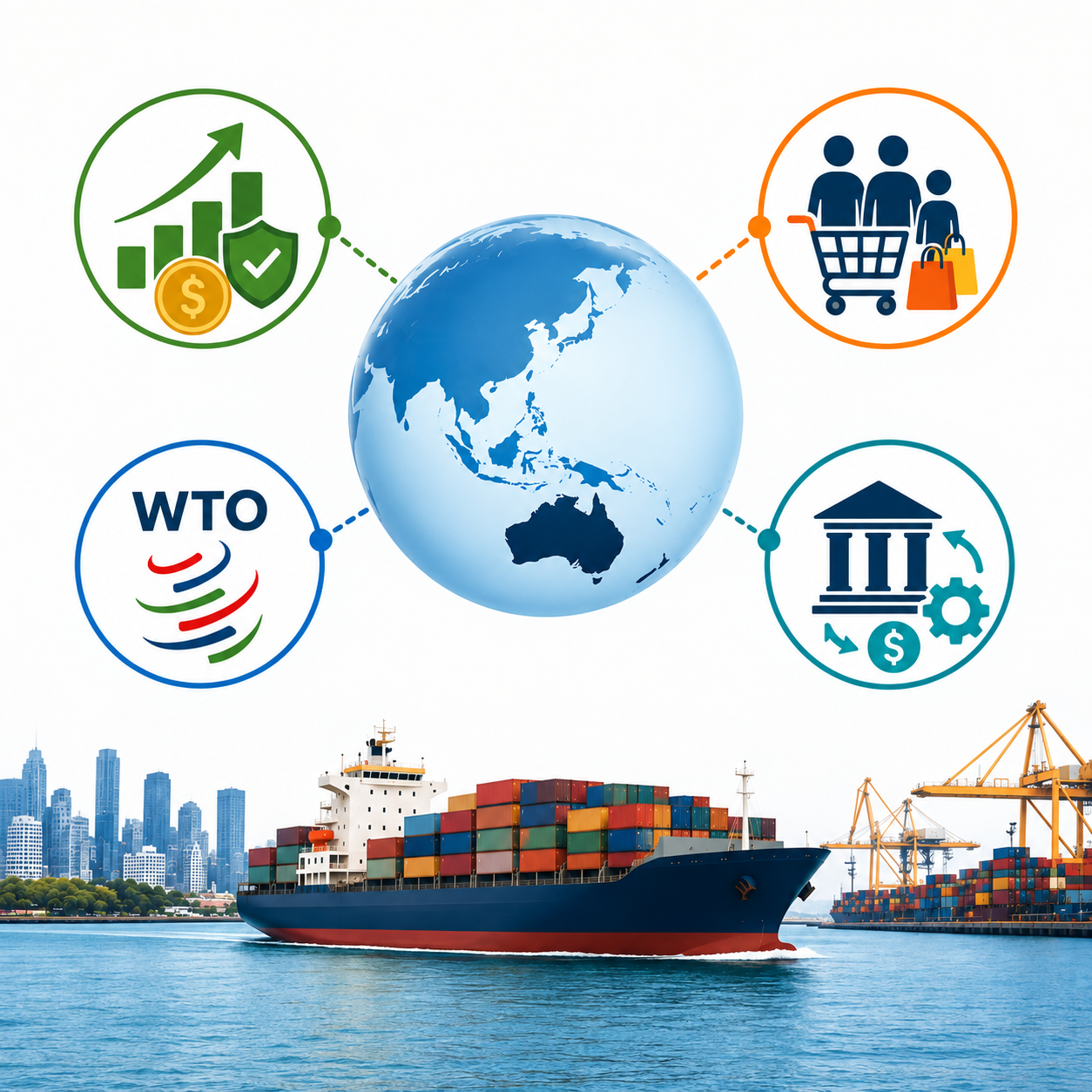
This dotpoint focuses on four key factors that can drive global business development:
- financial growth opportunities and/or loss minimisation
- consumer purchasing and spending patterns
- World Trade Organisation (WTO) regulations and sanctions
- deregulation of the financial market
💰 Financial growth opportunities and/or loss minimisation
Financial growth opportunities and/or loss minimisation is divided into two parts. The first part focuses on how global expansion can help a business grow financially. The second part focuses on how global expansion can help a business reduce risk, avoid losses or protect itself from weaker conditions in one market.
How financial growth opportunities and loss minimisation drive global business development
1. Financial growth opportunities
This refers to the opportunity for a business to increase sales, profit, market share and shareholder value by expanding beyond its domestic market.
Access to larger markets
A business may expand globally because the domestic market is too small, too mature or too competitive. Entering overseas markets gives the business access to more customers, which can increase sales revenue and profits.
Real Australian example: Fortescue is headquartered in Western Australia, but it sells iron ore into major global markets, especially Asia. Expanding beyond Australia allows Fortescue to access a far larger customer base than the domestic market alone could provide, which supports higher export revenue and business growth.
Higher profit potential
Some foreign markets have stronger demand, faster population growth or rising incomes. This can allow a business to sell more products, charge profitable prices and grow faster than it could in Australia alone.
Real Australian example: Cochlear, an Australian hearing implant business, sells products in more than 180 countries. Expanding globally gives Cochlear access to a much larger market for its medical technology than Australia alone could provide.
Economies of scale
As a business sells to a larger international market, it may increase production and reduce the average cost per unit. This can occur through larger production runs, bulk purchasing, specialised machinery or more efficient distribution systems.
Real Australian example: CSL is an Australian biotechnology business that operates globally. Its international scale helps support large investment in research, production and distribution of medical products across many markets.
2. Loss minimisation
This refers to the way global expansion can help a business reduce costs, spread risk, avoid over-reliance on one market and protect itself from weaker domestic conditions.
Spreading risk across markets
A business that relies heavily on one country is vulnerable if demand falls, regulations change or the economy slows. Expanding globally spreads revenue across different markets and can reduce the impact of poor conditions in one region.
Real Australian example: BHP operates across a range of global locations, including Australia, Chile, the United States and Canada. This helps reduce reliance on one country or one resource market and spreads business risk across different regions.
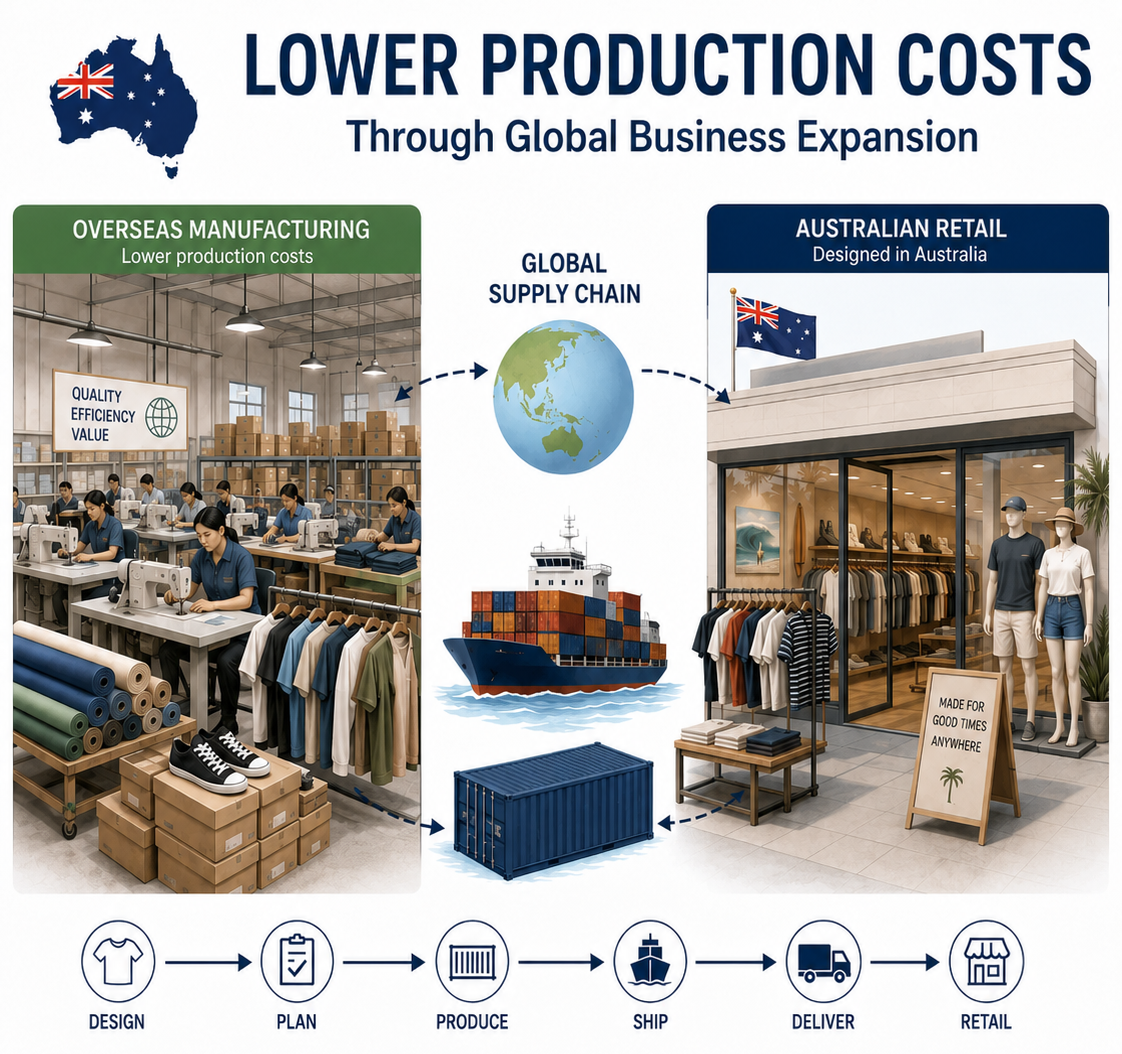
Lower production or operating costs
A business may expand parts of its operations overseas to reduce labour, rent, manufacturing or input costs. Lower costs can improve profit margins and reduce the risk of losses if competition forces prices down.
Real Australian example: Many Australian clothing and footwear retailers, such as Cotton On and Billabong, have used overseas manufacturing and global supply chains to keep production costs lower than if all manufacturing occurred in Australia.
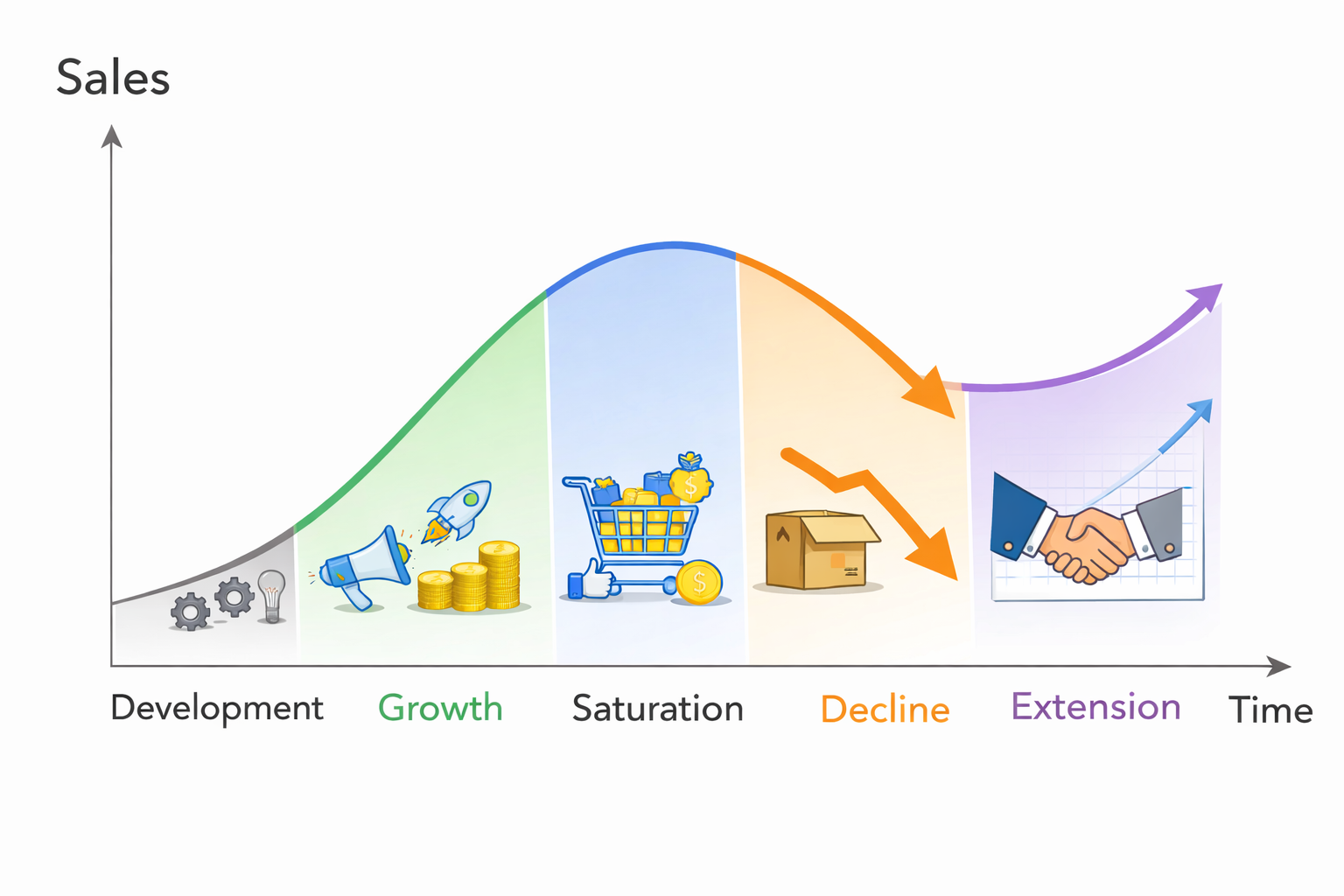
Extending the product life cycle
A product that is mature or declining in Australia may still be in the growth stage overseas. Expanding internationally can extend the product life cycle and reduce losses from falling domestic sales.
Real Australian example: Australian wine producers have often looked to overseas markets when growth in the domestic market is limited. Exporting can help producers find new demand and reduce reliance on Australian consumers alone.
WA example in a global context
Pilbara Minerals is a Western Australian mining company that exports lithium raw materials into global supply chains, particularly for battery and electric vehicle production. Operating in international markets gives Pilbara Minerals access to much larger demand than Australia alone, while also helping the business build long-term relationships with overseas buyers in fast-growing industries linked to clean energy and advanced manufacturing.

Example of how to write this factor in an exam
Financial growth opportunities drive global business development because overseas markets can provide a larger customer base and higher sales potential. This means a business can increase revenue and profit by selling beyond the limited domestic market.
Loss minimisation also drives global business development because operating in several markets reduces dependence on one economy. This will lead to reduced risk if demand falls in the domestic market, as the business can still earn revenue from international customers.
🛒 Consumer purchasing and spending patterns
Consumer purchasing and spending patterns refer to the way consumers choose, buy and pay for goods and services. Changes in income, lifestyle, culture, technology and online shopping behaviour can encourage businesses to expand globally.
How consumer purchasing and spending patterns drive global business development
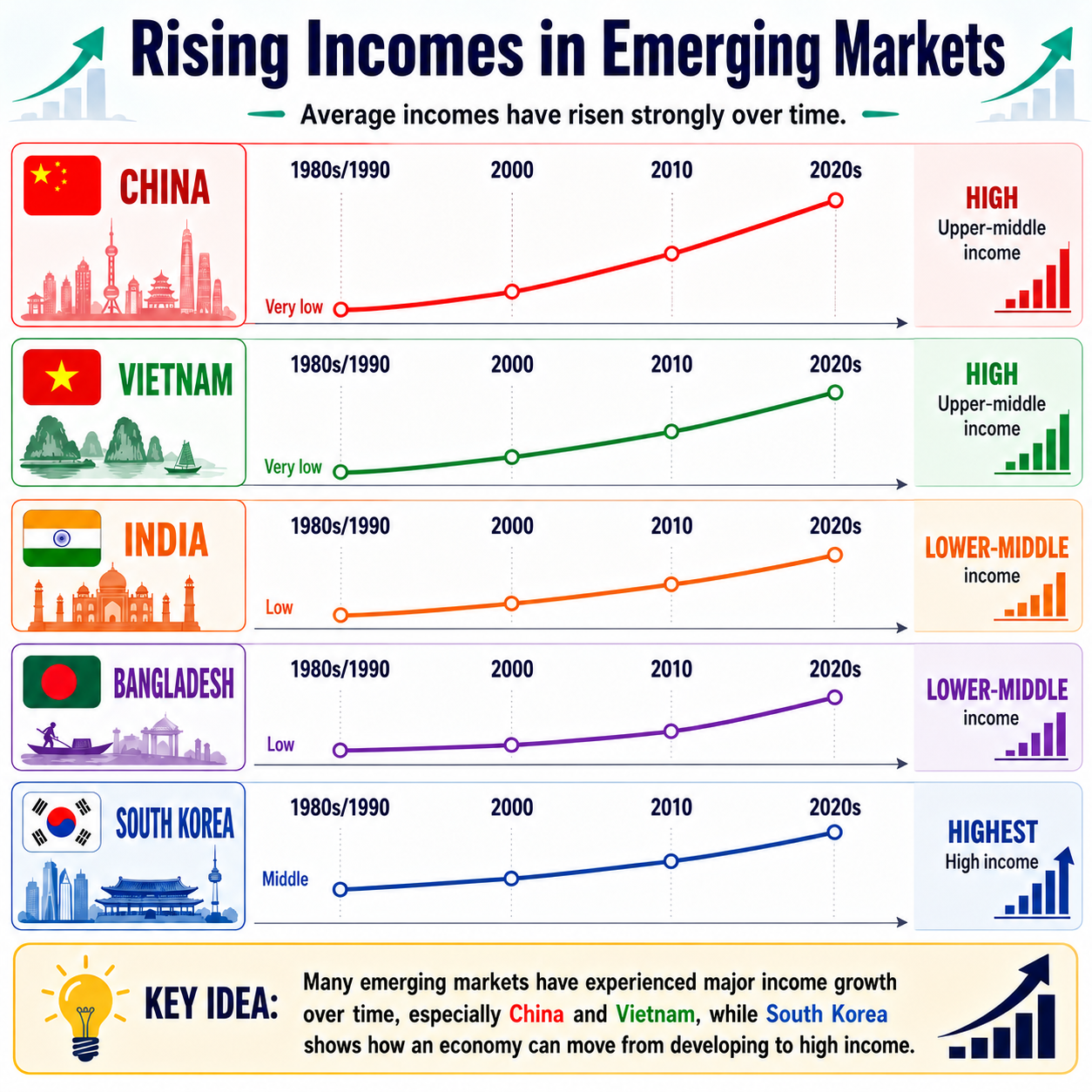
Rising incomes in emerging markets
As incomes rise in countries across Asia, consumers have more disposable income to spend on higher-quality products, services and brands. This drives global business development because Australian businesses may see stronger growth overseas than in the mature Australian market.
Real Australian example: A2 Milk has targeted Asian markets where rising incomes and demand for trusted premium dairy products have created opportunities for Australian and New Zealand branded infant formula and milk products.
Demand for premium and trusted products
Consumers in some international markets are willing to pay more for products that are seen as safe, reliable, ethical or high quality. This is important for Australian food, health, education, tourism, resources and professional services businesses.
Real Australian example: Australian vitamin brand Blackmores became highly successful in China, where rising incomes and health-conscious consumers created strong demand for trusted Australian health supplements.

International shipping and faster transport
International shipping, tracking systems and faster transport have made overseas purchasing more reliable. Consumers are more willing to buy from global businesses when they can track delivery and receive products in a reasonable timeframe.
Real-world example: FedEx, DHL and global air freight networks help businesses deliver products across borders, making it easier for customers to buy from overseas sellers.
More similar global tastes
Global media, travel, migration and social platforms have made consumer preferences more connected across countries. Consumers may want similar fashion, technology, entertainment, food, fitness products or lifestyle experiences.
Real Australian example: Cotton On has expanded internationally by selling casual fashion products that appeal to similar youth and lifestyle trends across different countries.
E-commerce platforms
E-commerce platforms allow consumers to browse, compare and purchase products from overseas businesses without visiting a physical store. This reduces barriers to international selling because a business can reach global customers through a digital shopfront.
Real-world example: Amazon, Alibaba and Shopify show how businesses can sell products internationally through online marketplaces and e-commerce platforms.

Digital purchasing and payment systems
Digital payment systems make global purchasing faster and safer by allowing consumers and businesses to pay across borders. This increases consumer confidence because buyers can use familiar payment platforms and secure payment methods.
Real-world example: PayPal, Google Pay, Apple Pay, Visa and Mastercard help consumers pay for international purchases, while blockchain-based payment systems can support faster cross-border transactions.

WA example in a global context
Little Creatures, which began in Fremantle, developed a strong craft beer brand that later expanded beyond Western Australia and into international markets. Its growth reflects changing consumer spending patterns towards premium, lifestyle-based food and beverage experiences.

Example of how to write this factor in an exam
Consumer purchasing and spending patterns drive global business development because rising incomes, online shopping and changing tastes can create demand for Australian products in foreign markets. If consumers in Asia are spending more on premium food, wine, education, tourism, health supplements and resources-linked technology, an Australian business may expand overseas to meet this demand. This may lead to increased sales revenue, a larger customer base and stronger growth opportunities.
🌐 World Trade Organisation (WTO) regulations and sanctions
The World Trade Organisation (WTO) is an international organisation that deals with the global rules of trade between nations. It was established on 1 January 1995 and now has 166 members, representing most of world trade. Its regulations and sanctions can drive global business development by reducing uncertainty when businesses enter foreign markets.
How the WTO drives global business development
Rules-based trade
WTO regulations create common trade rules between member countries. This reduces uncertainty because businesses have clearer expectations about tariffs, subsidies, trade barriers and fair treatment when they sell overseas.
Real Australian example: Australian grain exporters such as CBH Group rely on predictable international trade rules when selling wheat and barley into overseas markets.
Improved market access
The WTO supports the reduction of trade barriers. Lower tariffs, fewer quotas and clearer market access rules can make it easier and cheaper for businesses to export.
Real Australian example: Australian Agricultural Company (AACo) exports premium beef to overseas markets. When trade barriers are lower and market access rules are clearer, exporters like AACo can sell into global markets more easily.
Dispute settlement
The WTO provides a process for resolving trade disputes between countries. This matters because businesses are more likely to trade globally if they know unfair restrictions can be challenged through a formal system.
Real Australian example: Australian wine and barley exporters have been affected by trade disputes with China, showing why formal trade rules and dispute processes matter for export confidence.
Sanctions and trade consequences
Sanctions are penalties or trade consequences that can apply when countries break international trade rules. This helps create confidence for businesses because countries know there can be consequences if they ignore agreed rules.
Why this matters: If businesses believe countries are more likely to follow trade rules, they may feel safer exporting, investing and building supply chains across borders.
WA example in a global context
CBH Group, based in Western Australia, exports grain to international markets. WTO rules and trade agreements matter because tariffs, quotas, biosecurity requirements and trade disputes can directly affect market access and export revenue for WA grain growers.


Example of how to write this factor in an exam
WTO regulations drive global business development because they create a more predictable rules-based trading environment. This reduces uncertainty for businesses entering overseas markets because trade rules are monitored and disputes can be addressed. As a result, businesses may feel more confident exporting or investing internationally, leading to increased market access and growth.
🏦 Deregulation of the financial market
Deregulation of the financial market refers to the reduction or removal of government controls over financial institutions, interest rates, exchange rates, capital flows and financial services. This can make it easier for businesses to access finance, exchange currencies and complete international transactions.
How deregulation of the financial market drives global business development
Easier access to international finance
Deregulated financial markets can make it easier for businesses to raise money outside their home country. This may include listing on a foreign stock exchange, borrowing from international banks, attracting overseas investors or using global capital markets to fund expansion.
Real Australian example: Atlassian, founded in Australia, listed on the NASDAQ in the United States. This gave the business access to a much larger pool of investors and helped support its growth as a global software company.
More efficient currency exchange
Australia’s move to a floating exchange rate in 1983 meant the Australian dollar could rise and fall based on supply and demand. This made international trade and investment easier because businesses can convert currencies at market rates when buying from overseas, selling overseas or investing internationally.
Real Australian example: Qantas sells tickets in different countries and pays international costs such as fuel, airport charges and overseas wages. Access to foreign exchange services helps Qantas manage these international transactions.
Growth of fintech and digital payments
Financial deregulation and innovation can support fintech services such as online payment platforms, digital wallets, international transfers and buy-now-pay-later systems. This makes it easier for businesses to receive payments from global customers.
Real Australian example: Afterpay, founded in Australia, expanded internationally by allowing consumers and retailers in different markets to use digital payment services.

More competition in banking and finance
Deregulation can increase competition between banks and financial institutions. This may lead to more financial products, trade finance, international payment systems and foreign investment services for businesses.
Real Australian example: Commonwealth Bank, NAB, Westpac and ANZ all offer international trade finance and foreign exchange services that support Australian businesses trading overseas.

WA example in a global context
Northern Star Resources, headquartered in Perth, operates mining assets in Australia and overseas. A deregulated and competitive financial system supports businesses like Northern Star by improving access to finance, currency exchange, international banking and cross-border investment services.

Example of how to write this factor in an exam
Deregulation of the financial market drives global business development because it reduces restrictions on financial transactions, borrowing, investment and currency exchange. This makes it easier for businesses to access overseas finance, pay international suppliers and receive foreign revenue. As a result, businesses face fewer financial barriers when expanding into global markets.
🎧 Prefer listening?
If you prefer listening to the content in podcast format:
🎥 Prefer watching?
If you prefer watching the content in video format:
🃏 Flashcards
Card 1 of 18
🎮 Revision Games
💰 BME Millionaire
Climb the prize ladder. Use your lifelines wisely.
👔 Business Boss
Make 10 expansion decisions. Balance growth, demand, trade access, finance and risk.
⚡ 60 Second Showdown
A varied 60-second challenge covering the four global business development drivers.

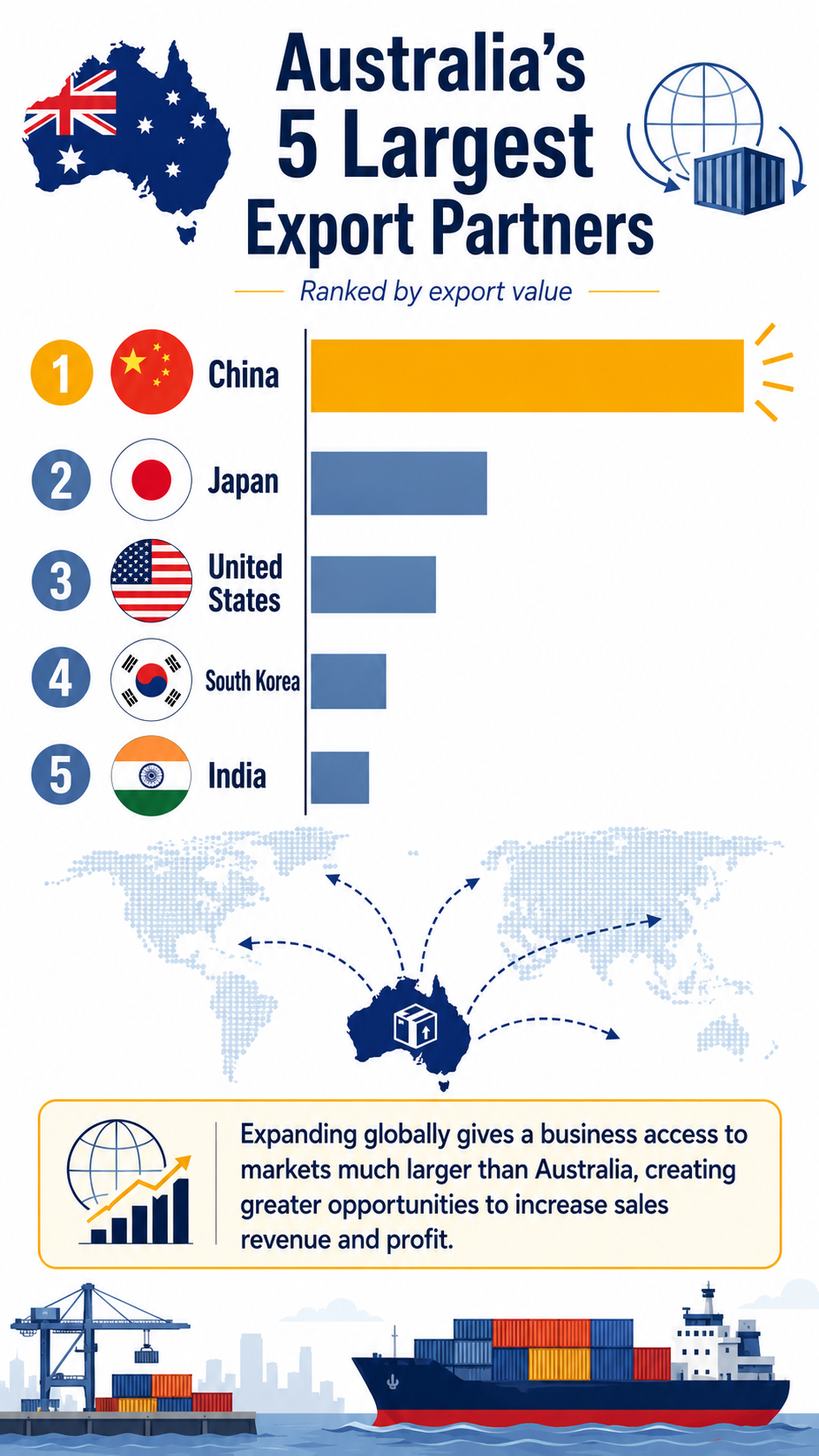
Biz Fact: China is by far Australia’s most important export market, buying almost one-third of Australia’s goods and services exports.
Past Exam Questions
Use these past exam questions to see how this dotpoint has been assessed. Pay close attention to the command term, the number of marks and whether the question is Section 1 or Section 2.
Section 1 Questions
2018 — Section 1 — Question 5(a) — 4 marks
Context
David’s Electric Boards and Blades has gained increased recognition for its newly-designed and produced electric skateboards for the Asian market. Recently, David has decided to relocate his manufacturing plant from Australia to Taiwan to capitalise on opportunities to expand his market share.
5(a): Outline two factors that drive global business development. (4 marks)
One:
Two:
Command term focus: Outline
Outline: state each factor and briefly clarify how it drives global business development.
See the full command term guide here: Command Terms.
5(a) Sample answer
One: Financial growth opportunities and/or loss minimisation can drive global business development because a business may expand overseas to increase sales, access a larger customer base and improve profits. In this case, David’s business may relocate manufacturing to Taiwan to reduce costs and increase market share in Asia.
Two: Consumer purchasing and spending patterns can drive global business development because changes in consumer demand can create opportunities in foreign markets. In this case, growing Asian demand for electric skateboards may encourage David’s business to expand closer to those consumers.
2019 — Section 1 — Question 4(a) — 4 marks
Context
Smart watches are continually improving in terms of style, quality and functionality. Today there are several attractive options available globally from technology companies and fashion brands to suit the various customer tastes and preferences.
4(a): Consider how consumer purchasing and spending patterns drive global business development. (4 marks)
Command term focus: Consider
Consider: explain an advantage and a disadvantage or limitation, then make a judgement.
See the full command term guide here: Command Terms.
4(a) Sample answer
Consumer purchasing and spending patterns can strongly drive global business development because businesses respond to what consumers in different markets are willing to buy. In the smart watch industry, consumers around the world are increasingly spending money on products that combine style, quality, fitness tracking and technology. This creates an opportunity for technology companies and fashion brands to expand globally because similar consumer preferences exist across many countries.
However, consumer tastes are not identical in every market. Some consumers may want premium smart watches with advanced health features, while others may prefer more affordable options or different styles. Therefore, consumer purchasing and spending patterns are an important driver of global business development, but businesses still need to adapt products and marketing to suit different customer segments.
2021 — Section 1 — Question 1(a) — 6 marks
Context
The past decade has seen an expansion of business into the global marketplace.
1(a): Explain how the following factors drive global business development. (6 marks)
- World Trade Organisation (WTO) regulations and sanctions
- Consumer purchasing and spending patterns
Command term focus: Explain
Explain: show cause and effect by explaining why or how each factor drives global business development and the result.
See the full command term guide here: Command Terms.
1(a) Sample answer
WTO regulations and sanctions drive global business development because they create a more predictable rules-based system for international trade. WTO regulations can reduce trade barriers, encourage fair treatment and provide a process for resolving trade disputes between countries. This gives businesses greater confidence to enter foreign markets because there is less risk of sudden or unfair restrictions. This may lead to increased exporting, foreign investment and global market access.
Consumer purchasing and spending patterns also drive global business development because businesses expand into markets where consumers are willing and able to buy their products. If consumers in overseas markets have rising incomes, changing preferences or greater confidence purchasing online, businesses may see opportunities to increase sales internationally. This may lead to a larger customer base, higher revenue and stronger global growth.
2023 — Section 1 — Question 2(b) — 3 marks
2(b): Explain how deregulation of the financial market drives global business development. (3 marks)
Command term focus: Explain
Explain: show cause and effect by explaining how financial deregulation reduces barriers to global expansion and the result.
See the full command term guide here: Command Terms.
2(b) Sample answer
Deregulation of the financial market drives global business development because it reduces restrictions on financial transactions, borrowing, investment and currency exchange. This makes it easier for businesses to access overseas finance, convert currencies and make international payments. As a result, businesses face fewer financial barriers when expanding into foreign markets, which may lead to increased trade, investment and global growth.
2025 — Section 1 — Question 1(a) — 4 marks
Context
Global business development involves expanding a business’ market presence and operations internationally to boost growth and competitive advantage.
1(a): Outline two factors that can drive global business development. (4 marks)
Command term focus: Outline
Outline: state two factors and briefly clarify how each drives global business development.
See the full command term guide here: Command Terms.
1(a) Sample answer
One factor is financial growth opportunities and/or loss minimisation. Businesses may expand globally to access larger markets, increase sales and improve profits. They may also operate in multiple countries to reduce reliance on one domestic market and minimise losses if local demand falls.
A second factor is deregulation of the financial market. Reduced financial restrictions can make it easier for businesses to access finance, exchange currencies and complete international payments. This supports global business development because businesses face fewer barriers when trading, investing or expanding overseas.
Section 2 Questions
2016 — Section 2 — Question 9 — 6 marks
Case study / context
Trepang (also known as sea cucumber) has been fished and traded in northern Australian waters since the 1700s. An Aboriginal and Torres Strait Islander business located in the Northern Territory has demonstrated its sustainability in this market over the past decade. It is now considering business development opportunities in the Asian market due to increased demand for trepang as a gourmet seafood.
In the last few months, the business has improved its understanding of factors affecting business growth and development. The business now needs to conduct a PEST analysis to determine whether to venture into the Asian market. This analysis will address contemporary issues facing a globalised world, including factors driving global business and the resultant impacts.
9: Explain two relevant factors driving global business development. (6 marks)
Command term focus: Explain
Explain: show cause and effect for two relevant factors. Section 2 requires application to the trepang business and Asian market.
See the full command term guide here: Command Terms.
9 Sample answer
One relevant factor driving global business development is consumer purchasing and spending patterns. In this case, Asian consumers have increased demand for trepang as a gourmet seafood. This drives the business to consider global expansion because the Asian market appears to have stronger demand for this product than the domestic market alone. This may lead to increased sales revenue and profit because the business can access a larger group of consumers who are willing to purchase trepang.
A second relevant factor is financial growth opportunities and/or loss minimisation. The Aboriginal and Torres Strait Islander business has already demonstrated sustainability in its existing market, so entering Asia may create an opportunity to grow beyond northern Australia. This is because the Asian market gives the business access to more customers and a potentially higher-value gourmet seafood market. This may lead to business growth while also reducing reliance on one domestic market if local demand weakens.
2024 — Section 2 — Question 7(a) — 4 marks
Case study / context
Jessica and Lexi, who are based in Western Australia, own a start-up technology company called Jesi Technical Solutions (JTS). The business specialises in cloud storage, and the owners are planning to expand overseas. To facilitate this plan, Jessica has analysed consumer spending and tax considerations across many regions. She has selected Southeast Asia as their initial foreign market due to its strong demand for cloud storage, particularly within the rapidly growing online shopping sector. Jessica and Lexi are also aware of the generous home and host government incentives for foreign trade. They have discovered that Vietnam, one of the next-generation Asian high-growth economies, is offering a significant grant of up to USD 700 000 for new technology businesses. Jessica and Lexi are thinking of using this grant to establish their first Southeast Asian branch.
As a start-up, Jessica and Lexi are analysing the impacts of globalisation carefully. By opening offices in emerging markets and hiring local talent, they plan to make a contribution to global prosperity. To ensure a positive global image, the business adheres to the World Trade Organisation’s international trade regulations. Jessica and Lexi encourage both their employees and consumers to share information and work together to spread new technologies around the world. Their commitment to cross-border collaboration enhances technological progress beyond their business mission.
When making global business decisions, Jessica and Lexi place a strong emphasis on ethical considerations. Central to their approach is a commitment to environmental sustainability, driving them to constantly explore and adopt eco-friendly practices within their operations. Moreover, they meticulously assess the ethical implications of outsourcing and employing workers from different countries and strive to uphold fairness and integrity across their entire supply chain. This dedication to ethical conduct not only aligns with their values, but also fosters trust and transparency in their business practices on a global scale.
7(a): Describe two factors driving JTS’s global business development. (4 marks)
Command term focus: Describe
Describe: give the main characteristics or features of two factors and apply them to JTS’s Southeast Asian expansion.
See the full command term guide here: Command Terms.
7(a) Sample answer
One factor driving JTS’s global business development is consumer purchasing and spending patterns. Jessica has analysed consumer spending across different regions and selected Southeast Asia because there is strong demand for cloud storage, especially due to the rapidly growing online shopping sector. This shows that JTS is responding to changing consumer and business demand for digital storage services in a growing foreign market.
A second factor is financial growth opportunities and/or loss minimisation. JTS is considering Vietnam because it is a high-growth economy and is offering a grant of up to USD 700 000 for new technology businesses. This creates a financial opportunity because the grant may reduce the cost and risk of establishing JTS’s first Southeast Asian branch while allowing the business to grow its market presence overseas.