
General U2.01 - The Concept of Business Networks
Overview
Dotpoint 1: the concept of business networks.
A business network is a group of people, businesses or organisations connected through professional relationships and business interaction.
Small businesses do not operate completely on their own. During normal business activity, an owner may develop professional relationships with customers, suppliers, other business owners, advisers and organisations connected to the business community.
Together, these professional connections form the business's business network.
This dotpoint focuses on understanding what a business network is, who may be part of one and the different forms a network can take.

🌐 Understanding business networks
A business network is a group of people, businesses or organisations connected through professional relationships and business interaction.
The basic idea
A business network can be thought of as a web of professional connections surrounding a business.
These connections develop as the business owner and employees communicate and interact with other people and organisations during normal business activity.
A network does not have to be one official group. It may consist of many separate professional relationships that exist around the business.
Business network vs business networking
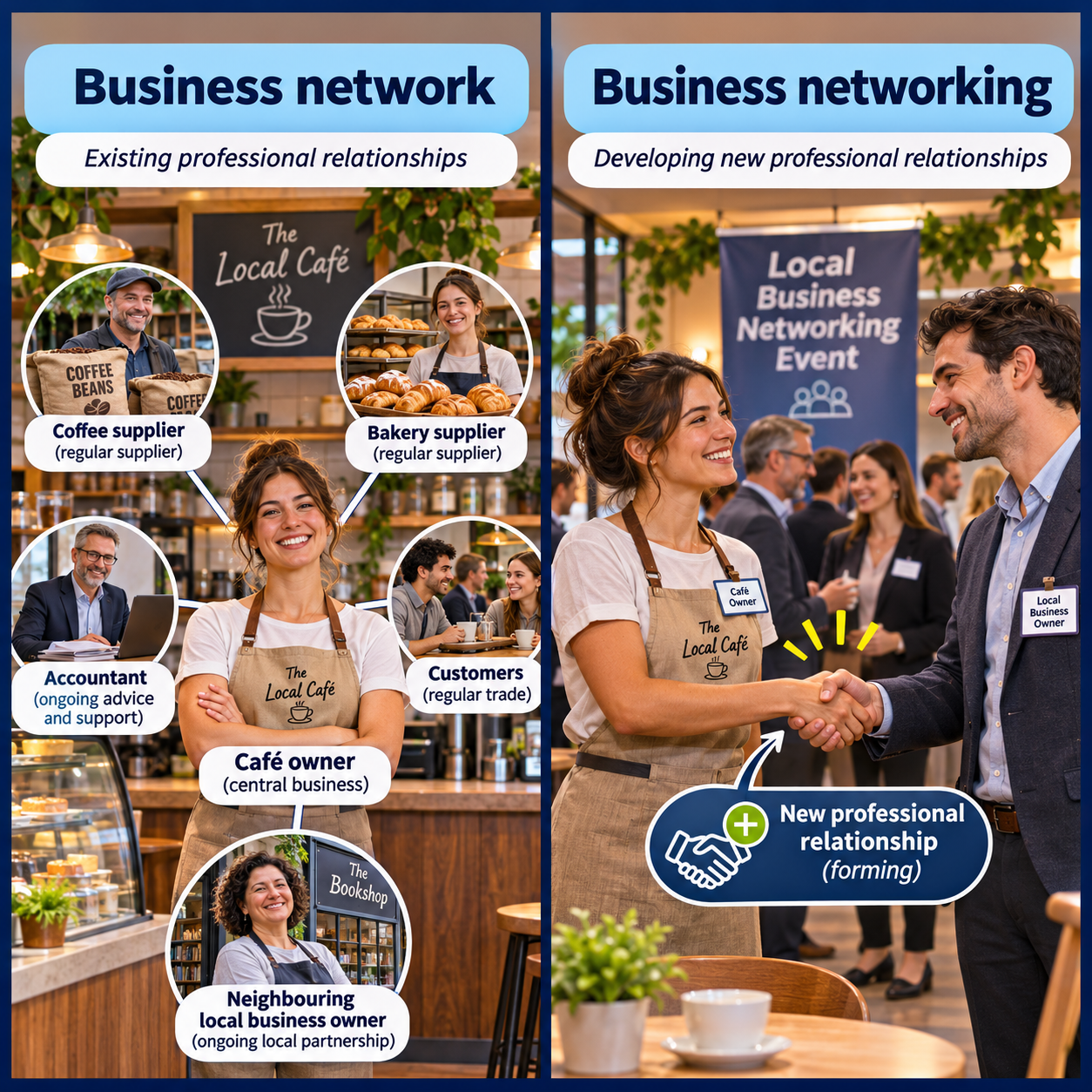
A business network refers to the people, businesses and organisations that are professionally connected to a business.
Business networking is the process of developing and maintaining those professional relationships through activities such as conversations, meetings, events, introductions and ongoing communication.
The distinction is simple: the business network is the collection of professional connections that exists, while business networking is the activity used to create and maintain those connections.
☕ Example: a local café
A small café owner regularly communicates with a coffee supplier, bakery, accountant, customers and neighbouring businesses. These professional relationships collectively form the café owner's business network.
The owner then attends a local business event and meets the owner of a nearby catering company. They exchange contact details and continue communicating after the event.
The act of meeting and developing this new professional relationship is business networking. Once the relationship is established, the catering business becomes another connection within the café owner's business network.
👥 Who can form part of a business network?
Different businesses have different networks
The people and organisations within a business network depend on the type of business and the professional relationships it develops while operating.
A small business may gradually develop many professional connections even if the owner has never formally described them as a network.
Common members of a business network

Five Perth business owners and their possible networks
The exact members of a network change depending on the type of business. The examples below show how different Perth small businesses could be connected to very different people and organisations.
🏄 Scarborough surf-shop owner
- surfboard and wetsuit suppliers
- local surfers and regular customers
- an accountant
- nearby cafés and tourism businesses
- City of Stirling
☕ Fremantle café owner
- coffee roasters and food suppliers
- regular customers and tourists
- an accountant or bookkeeper
- neighbouring hospitality businesses
- City of Fremantle
🪚 Osborne Park cabinet-maker
- timber and hardware suppliers
- builders and interior designers
- homeowners and commercial customers
- an accountant
- equipment and machinery suppliers
💐 Cottesloe florist
- flower wholesalers
- wedding planners
- local function venues
- regular customers
- photographers and event businesses
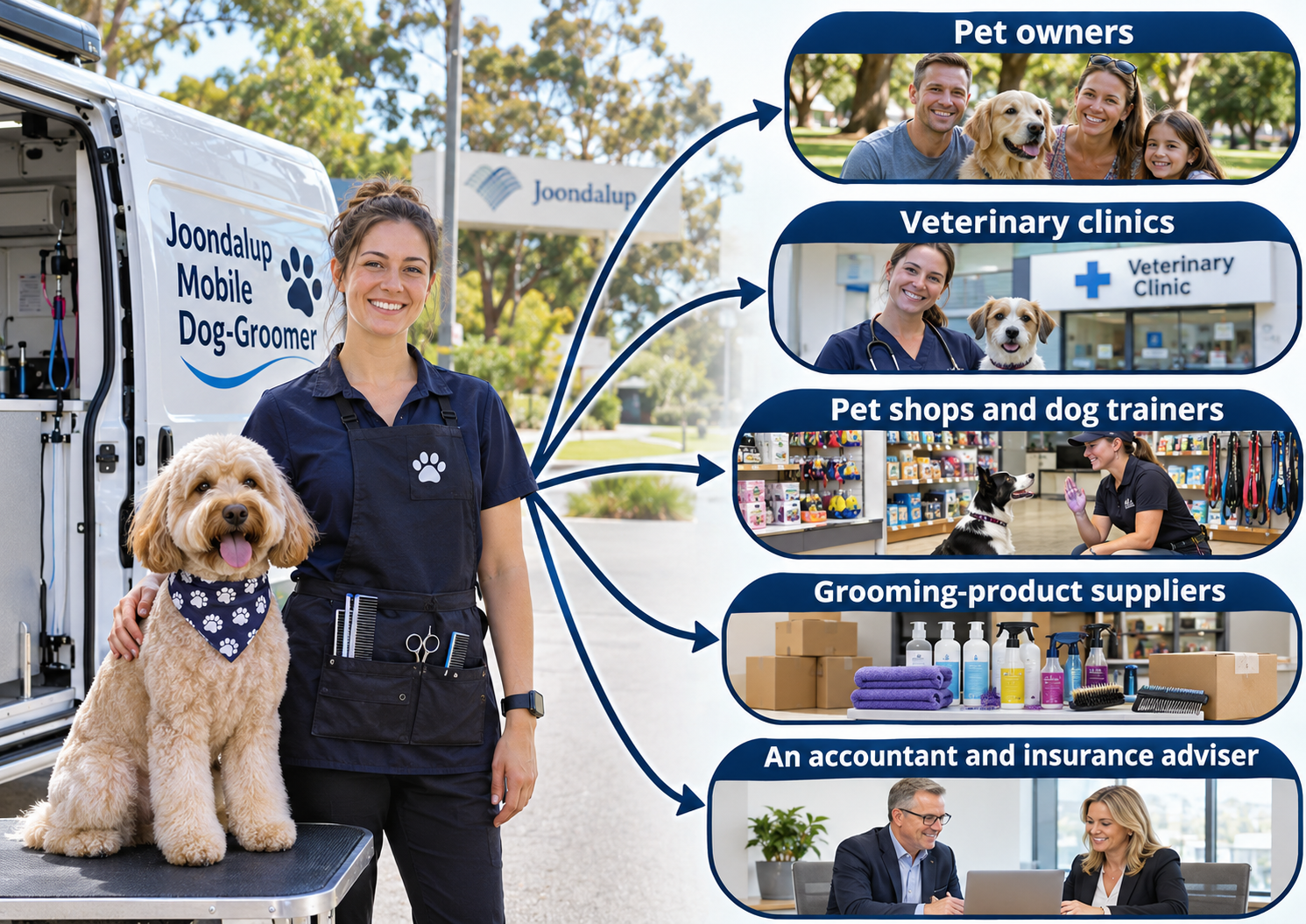
🐕 Joondalup mobile dog-groomer
- pet owners
- veterinary clinics
- pet shops and dog trainers
- grooming-product suppliers
- an accountant and insurance adviser
🤝 Different forms of business networks
Networks can take different forms
Business networks can develop in different ways and do not all look the same.
Some are organised through recognised groups, while others develop naturally through everyday professional relationships. Networks may also exist face-to-face or online.
Common forms of business networks
Formal networks
A formal business network is organised through a recognised group, association or organisation.
Examples include industry associations, chambers of commerce and organised networking groups.
Informal networks
An informal business network develops naturally through everyday professional relationships.
Examples include relationships with suppliers, neighbouring business owners or former colleagues.
Face-to-face networks
Professional relationships may develop through meetings, industry events, local business groups or normal in-person business dealings.
Online networks
Professional relationships may also develop through online industry groups, professional platforms, virtual meetings and other forms of digital communication.

Networks are not limited by location
A small business network can include people located within the local community, elsewhere in Australia or overseas.
For example, a Perth clothing business could be professionally connected to local customers, an accountant in Perth, a packaging supplier in Melbourne and an overseas manufacturer.
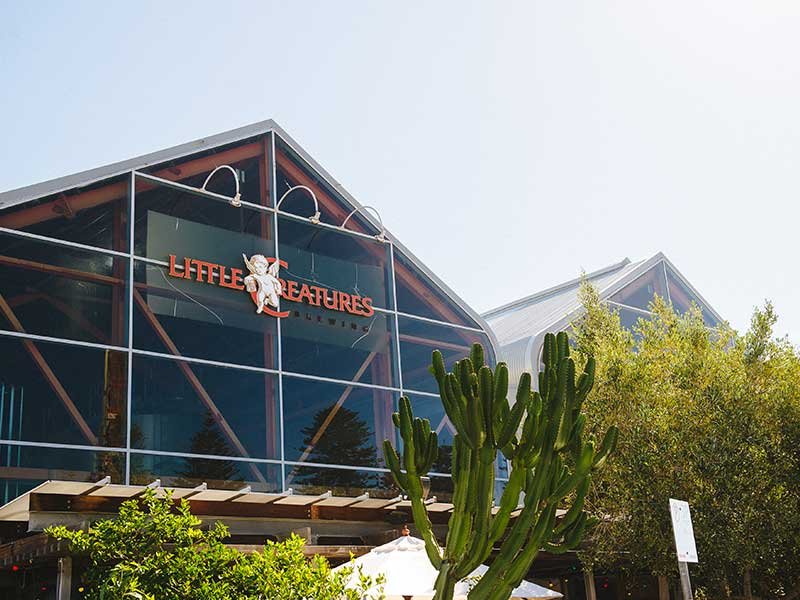
🍺 WA brewery example: Little Creatures Fremantle
Little Creatures Fremantle operates a brewery and hospitality venue at Fremantle Fishing Boat Harbour. Its Fremantle operation includes brewing, food and drink service, functions, brewery tours and a visitor experience.
Because the business operates across brewing, hospitality and tourism, many different professional relationships can exist around the business.
- Customers and visitors: local customers, tourists, tour participants and function guests interact directly with the Fremantle venue.
- Suppliers: the brewery and hospitality venue relies on professional relationships involving food, beverages, equipment and other operating inputs.
- Hospitality and tourism businesses: operating within Fremantle Fishing Boat Harbour places the venue within a wider community of restaurants, tourism operators and local businesses.
- Formal business networks: organisations such as the Fremantle Chamber of Commerce are examples of structured networks available to businesses operating in the Fremantle area.
- Informal connections: everyday professional relationships can develop between managers, staff, suppliers and owners of nearby businesses without belonging to an organised group.
- Government and regulatory organisations: as a hospitality and brewery operation, the business also interacts with government and regulatory organisations connected to licences and business operations.
🎧 Prefer listening?
Listen to the Business Networks podcast for another way to revise this dotpoint.
🎥 Prefer watching?
Watch the Business Networks video to reinforce the key ideas.
🧑🏫 Class Activities
Hands-on activities
These activities are designed to help you apply the full content to real businesses through research, decision-making and practical classroom tasks.
How this section could be used: teachers could place students into small groups and allocate different activities, ask students to complete one or two activities each week, or use the activities at the end of each syllabus point so groups can take turns completing and presenting one task to the class. Activities can also be used as extension work, revision, or as a starting point for short class discussions.

1. Build the Connections
Choose a small business such as a café, hairdresser, landscaping business, tutoring business or bicycle-repair workshop.
- Write the business name in the centre of the page.
- Write eight people, businesses or organisations around it.
- Draw a line from each one back to the business.
- Label what each connection is, such as customer, supplier or adviser.
Output: one page showing the business in the middle with eight labelled connections around it.
2. Real Business Research: Boost Juice
Boost Juice is a real Australian business with stores operating across Australia. Use the official Boost Juice website and other reliable sources to investigate the people and organisations connected to the business.
- Identify at least five different business connections.
- Include examples such as customers, franchisees, suppliers or shopping-centre operators where evidence can be found.
- Identify at least one formal or organised connection.
- Identify whether some connections mainly occur face-to-face or online.
Output: prepare one presentation slide titled Boost Juice Business Network, showing five connections with a short explanation for each.
3. Formal or Informal?
Classify each relationship as mainly formal or informal.
- a business joins a chamber of commerce
- two neighbouring café owners begin speaking regularly
- a builder joins an industry association
- a former colleague remains in professional contact
- a retailer joins an organised networking group
- a supplier and owner develop a regular professional relationship
Output: make a simple two-column table headed Formal and Informal and place each example in the correct column.
4. Five Perth Businesses
Choose one of the Perth businesses from this page: surf shop, café, cabinet-maker, florist or mobile dog-groomer.
- Identify six possible members of its business network.
- State what type of connection each one is.
- Identify one formal connection and one informal connection.
Output: create a six-row table with the headings Connection, Type and Why It Is Connected.
5. Network or Just a Contact?
Decide whether each person should be considered part of the owner's business network.
- a childhood friend who has no involvement with the business
- a friend who owns the printing company used by the business
- an accountant who prepares the business's records
- a person who followed the business once on social media
- a supplier the owner communicates with every month
Output: write Network or Not Network beside each example and give one short reason.
6. Little Creatures Network Snapshot
Use the Little Creatures Fremantle example on this page.
- Identify two face-to-face connections.
- Identify one possible formal network.
- Identify one possible informal connection.
- Identify one government or regulatory connection.
Output: write four short dotpoints, with each dotpoint naming the connection and identifying its type.
✍️ Short Answer Questions
Practice questions
Answer each question before opening the sample answer. Use the command term carefully and apply the business concept to the context provided.
Show sample answer
A business network is a group of people, businesses or organisations connected through professional relationships. These relationships exist through ongoing business activity and professional interaction.
Show sample answer
A business network involves professional relationships between a business and other people or organisations. These relationships can also take different forms, such as formal, informal, face-to-face or online connections.
Show sample answer
A flower wholesaler could form part of the florist's network by regularly supplying flowers and other stock. A wedding planner could also form part of the network through ongoing professional contact when arranging flowers for weddings and functions.
Show sample answer
A social contact can become part of a business network when the relationship begins to involve ongoing professional interaction. For example, a friend may begin supplying printed menus and signs to the café, meaning the two people now communicate about orders, prices and business requirements. As a result, the café gains an ongoing professional connection that forms part of its business network.
Show sample answer
The owner could meet another business owner or supplier through an online industry group and continue communicating with them after the initial contact. Regular business communication would turn the online contact into an ongoing professional relationship. As a result, the clothing business adds another professional connection to its wider business network.
Show sample answer
One advantage of including informal relationships is that many genuine professional connections develop naturally, such as regular contact with suppliers or neighbouring business owners. A second advantage is that it gives a more complete picture of the people and organisations the business actually interacts with.
One disadvantage is that the boundary between a professional connection and a personal friendship can sometimes be unclear. A second disadvantage is that some informal contacts may be occasional or temporary, meaning they may not represent a genuine ongoing business relationship.
Show sample answer
Decision: The café owner should classify the coffee supplier as part of the café's business network.
Reason: The café and supplier have an ongoing professional relationship involving regular orders, communication and supply of coffee beans.
As a result, the café can clearly recognise the supplier as one of the professional connections involved in its normal business operations.
Show sample answer
One advantage of considering the friend part of the network is that the relationship may also involve genuine professional interaction, such as the printing business regularly producing menus, signs or promotional material for the café.
One disadvantage is that a friendship by itself does not create a business connection. If the two people only interact socially, describing the friend as part of the business network would be inaccurate.
Overall, the friend should be considered part of the café owner's business network only if the friendship also includes an ongoing professional or commercial relationship. If there is no business interaction, the relationship should remain classified as social rather than part of the business network.
🃏 Flashcards
Card 1 of 12
🎮 Revision Games
💰 Network Millionaire
Climb the ladder by mastering business-network concepts and examples.
🔎 Connection Detective
Inspect each business situation and identify the correct connection.
⚡ 60 Second Showdown
Make fast business-network decisions before the clock hits zero.
Biz Fact: Coffee can create opportunities: A casual conversation between two business owners can lead to a new supplier, customer or business partnership.