
U1.02 — Australian Consumer Law: Misleading & Deceptive Conduct in Marketing
Overview
Dotpoint 2: Australian consumer law in relation to misleading and deceptive conduct in business marketing activity.
Misleading or deceptive conduct occurs when a business’s marketing creates a false or inaccurate impression that could influence a consumer’s decision.
Misleading and deceptive conduct is regulated under Australian Consumer Law (ACL), which sets the legal rules businesses must follow when marketing and selling goods and services. The ACL applies across Australia and is enforced by the Australian Competition and Consumer Commission (ACCC).
This dotpoint focuses on three common areas where marketing may mislead consumers:
- Bait advertising
- Scientific claims
- Country-of-origin representations

What counts as “misleading” in marketing?
What counts as “misleading” in marketing?
The simplest way to think about misleading marketing is to ask:
What overall impression does the marketing create for an ordinary consumer?
If that impression is false or inaccurate, the marketing may be misleading — even if individual statements are technically true.
Under Australian Consumer Law (ACL), businesses must not engage in conduct that misleads or deceives, or is likely to mislead or deceive. The key issue is the effect the marketing has on consumers, rather than whether the business deliberately intended to deceive them.
Two ways marketing can mislead consumers
- Misleading conduct: the overall advertisement, promotion or behaviour creates a false impression.
- False or misleading claims: a specific statement or representation is false, inaccurate or leaves out important information.
Where can misleading marketing occur?
Misleading conduct can occur across almost any form of business marketing, including:
- online advertising, websites, social media and influencer promotions
- price tags, catalogues, discounts and email marketing
- packaging and product labels
- sales calls and in-store representations
- subscription offers and promotional terms and conditions.

How can businesses avoid misleading consumers?
Businesses should ensure that:
- prices and conditions are clearly communicated
- marketing claims can be supported by evidence
- important qualifications or disclaimers are easy to see
- the overall impression matches the actual product or offer
- consumers have enough accurate information to make an informed decision.
Common warning signs include exaggerated headline claims, hidden conditions, false scarcity such as misleading “limited time” offers, unsupported scientific claims and unclear country-of-origin representations.
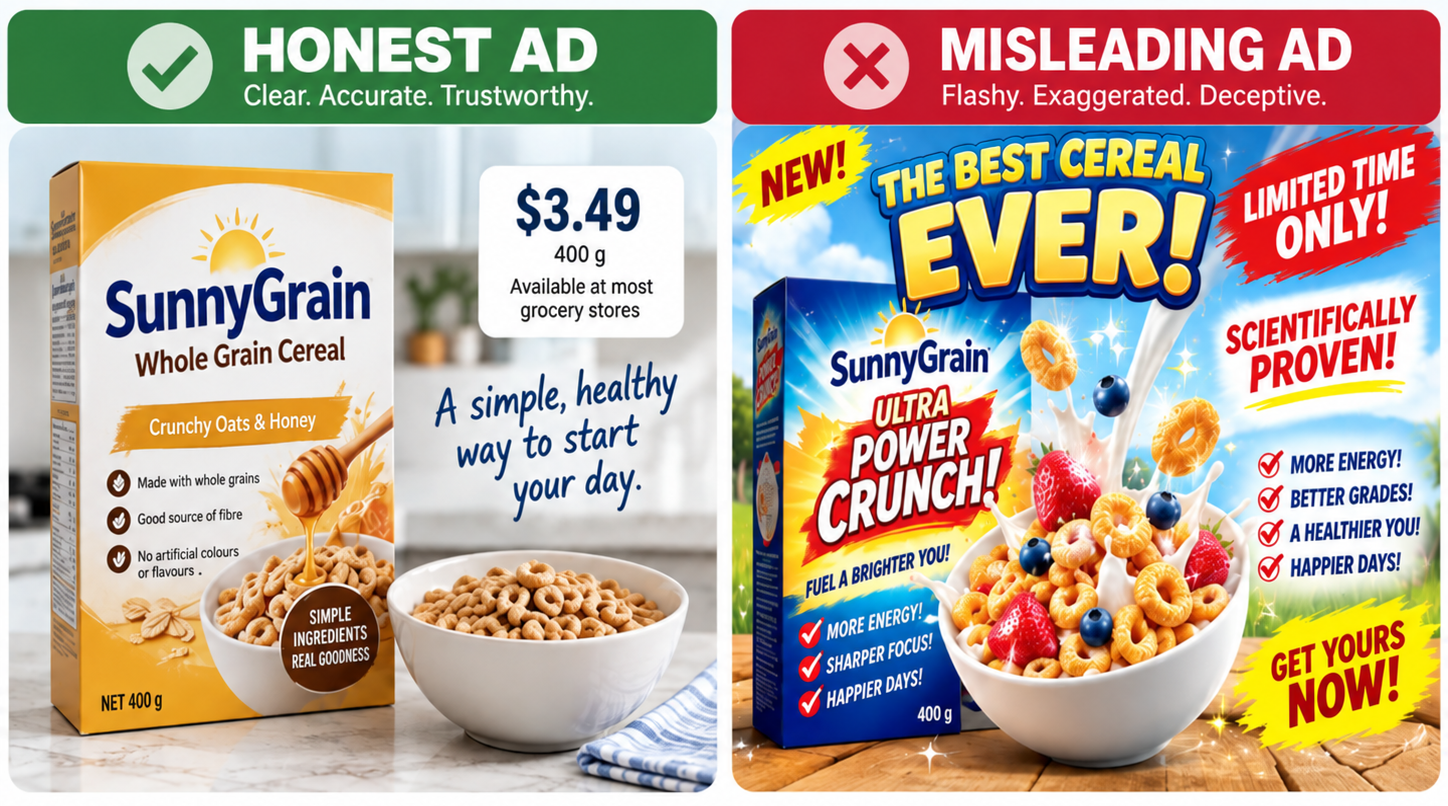
Example of how to write this in an exam
Misleading and deceptive conduct occurs when a business creates an overall impression that is false or likely to mislead consumers. For example, a business may advertise a product using a large headline claim while important conditions are hidden in small print. The effect is that customers may believe the offer is better than it really is and make a purchasing decision they would not otherwise have made. Under Australian Consumer Law, the key issue is the impression created for consumers rather than whether the business intended to deceive them.
Bait advertising
Bait advertising is when a business advertises a product at a very attractive price to bring customers in but does not have a reasonable quantity available, or does not intend to supply the product for a reasonable period at the advertised price.
The purpose of bait advertising is to attract customers using a deal that appears highly appealing. The problem arises when the advertised offer is not genuinely available to consumers in reasonable quantities or for a reasonable time. Customers may travel to a store, visit a website or change their purchasing plans because they believe they have a realistic opportunity to buy the advertised product.
What makes it illegal?
A business may heavily promote a low-price or highly attractive offer. However, it may become illegal if:
- there is no reasonable supply available for the expected level of demand
- the business has no genuine intention or realistic ability to supply the product at the advertised price for a reasonable period
- the overall advertisement creates a false impression that customers can realistically obtain the deal.
Common tactics
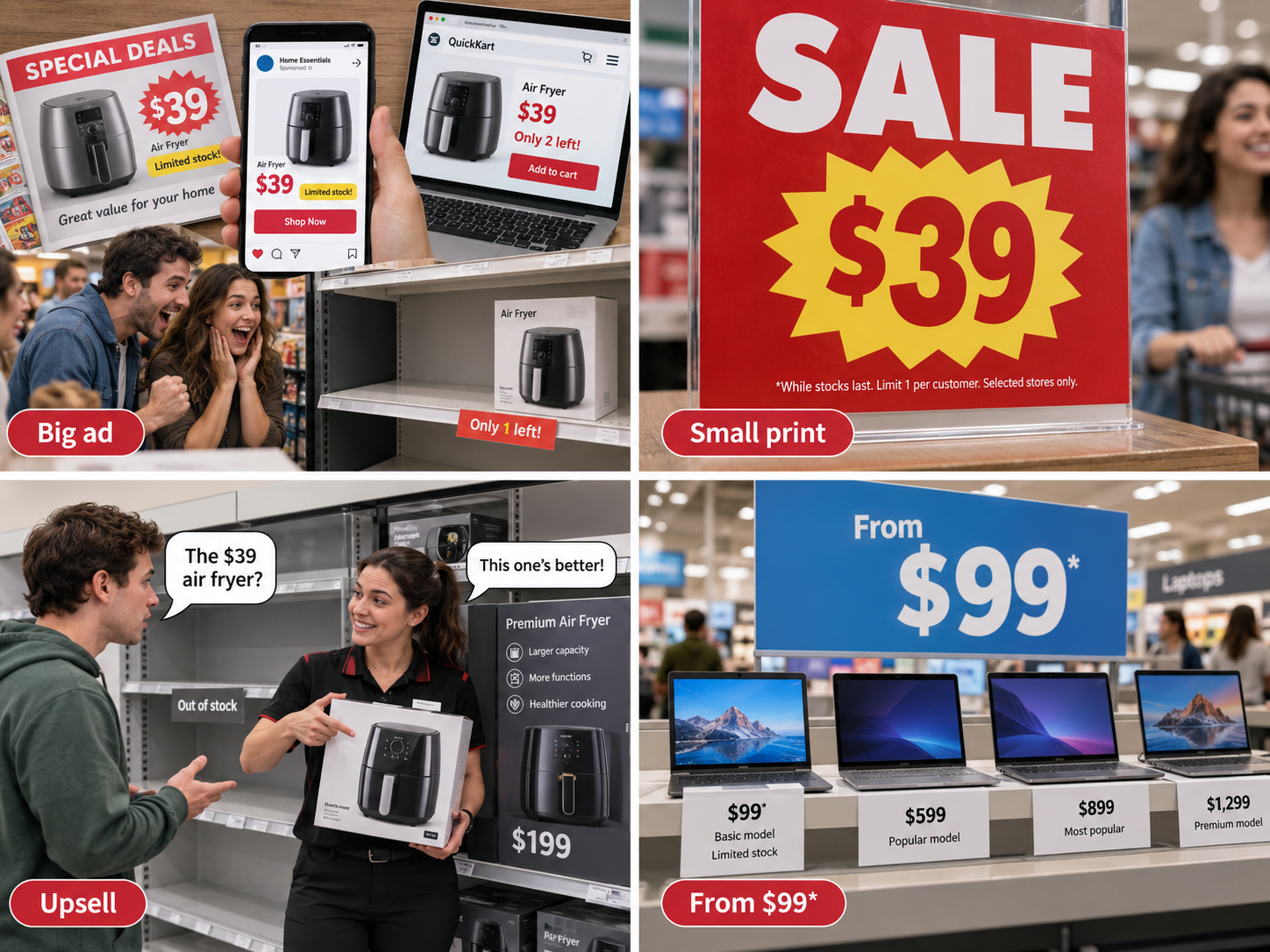
- Advertising very low stock using a large catalogue, social media or online campaign.
- Using “while stocks last” or stock limits in small print while the headline strongly promotes the deal.
- Advertising a low-priced item and then immediately steering customers toward a more expensive substitute.
- Using “from $X” pricing when very few customers can realistically obtain the advertised price.
When it is not illegal
A low-price promotion is not automatically bait advertising. A business can lawfully run a limited offer where the deal is genuine, reasonable stock is available for the expected demand, and any important limits are made clear to consumers upfront. If stock genuinely runs out unexpectedly, offering a raincheck, substitute product or other fair solution may also help demonstrate that the business intended to honour the promotion.
Consequences
Misleading bait advertising can lead to consumer complaints, ACCC or regulator action, changes to advertising, refunds or corrective action, reputational damage and, in serious cases, substantial financial penalties. The business may also lose customer trust if consumers feel they were deliberately drawn in by an offer that was never realistically available.
Example
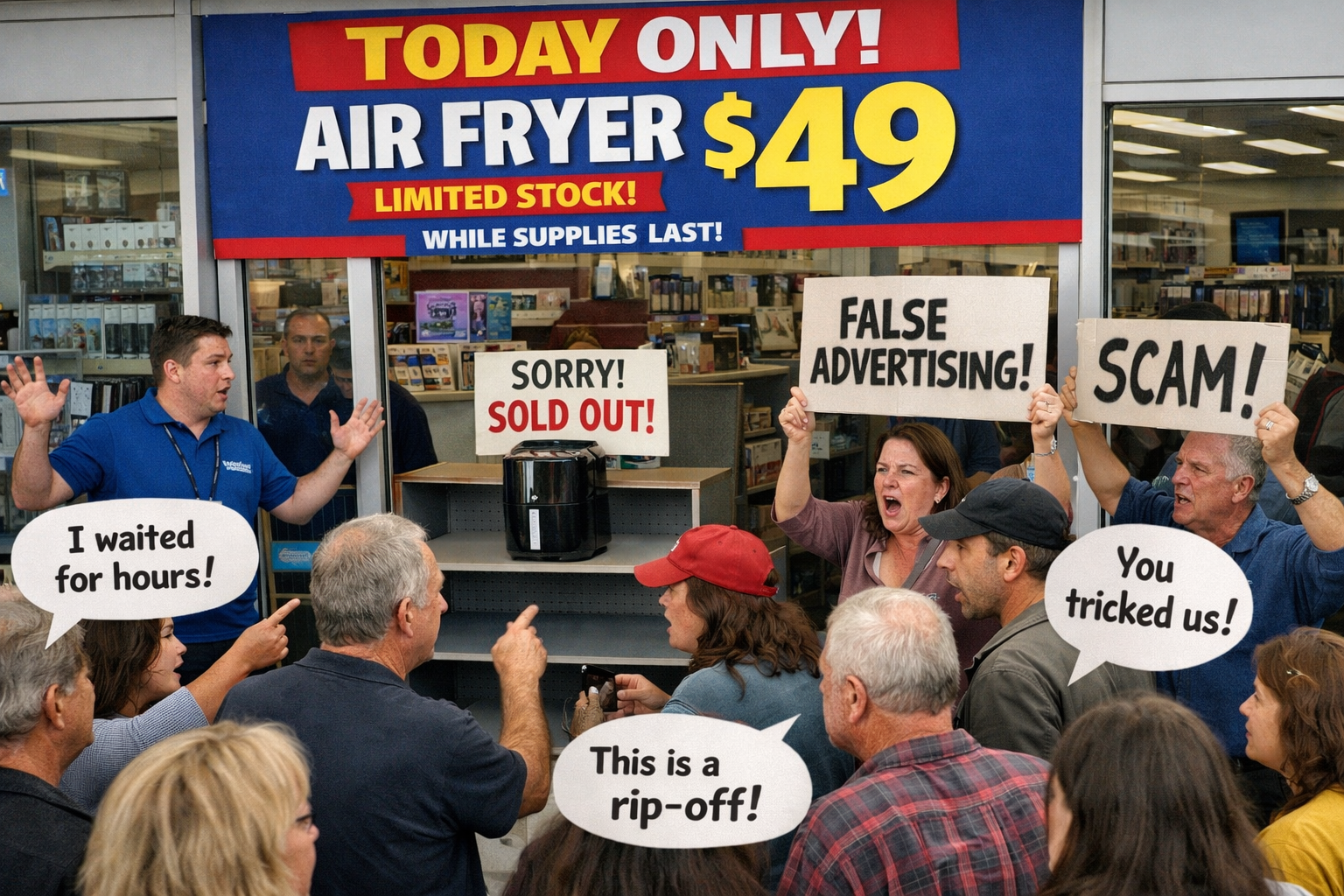
A Perth electronics store advertises “Today only: Air Fryer $49” across social media. The promotion reaches thousands of customers, but the store has only a handful available and knew demand would be far higher. The advertisement may create a false impression of availability because customers reasonably believe they have a genuine opportunity to purchase the air fryer for $49.
Example of how to write this in an exam
Bait advertising occurs when a business promotes a product at a very attractive price to draw customers in but does not have a reasonable quantity available for the expected demand or period of the promotion. For example, if a Perth electronics retailer heavily advertises a $49 air fryer but has only a handful available despite expecting hundreds of customers, the advertisement may create a false impression that consumers have a realistic opportunity to buy the product at that price. This can breach Australian Consumer Law because customers may travel to the store or change their purchasing decision based on an offer that was not genuinely available.
Scientific claims
Scientific claims are marketing statements that use scientific, medical or research-based language to persuade consumers, such as “clinically proven”, “kills 99.9%”, “boosts immunity”, “backed by research” or “reduces stress”.
Scientific language can strongly influence consumers because it makes a product appear tested, credible and effective. Businesses therefore need reliable evidence that supports the claim being made. Even where some research exists, the marketing can still be misleading if the evidence is weak, taken out of context or presented in a way that exaggerates the likely result for consumers.
Where the marketing relates to medicines or other therapeutic goods, the Therapeutic Goods Act may also apply. It sets additional rules for the regulation and advertising of therapeutic goods in Australia, meaning health and medical claims may face extra legal requirements beyond Australian Consumer Law.
What makes it illegal?
- The business cannot substantiate the scientific or medical claim with reliable evidence.
- The marketing exaggerates what the research actually shows.
- The business cherry-picks one result while ignoring the broader body of evidence.
- Statistics or scientific wording are presented in a way that creates a stronger impression than the evidence supports.
Common tactics
- Using phrases such as “scientifically proven” or “clinically tested” without explaining the evidence.
- Using doctors, lab coats, graphs or scientific imagery to imply expert approval.
- Quoting a percentage improvement without explaining the sample size, comparison or limitations.
- Using one favourable study while ignoring other evidence that produces a different result.

When it is not illegal
A scientific claim is not misleading simply because it is persuasive. Businesses can use scientific evidence in marketing where the claim is accurate, supported by reliable and relevant research, and presented clearly without exaggerating the result. Any important limitations or qualifications should be communicated so the overall impression matches what the evidence actually proves.
Consequences
Unsupported scientific claims may need to be removed or corrected and can lead to refunds, corrective advertising, regulator action, reputational damage and financial penalties. Where marketing makes therapeutic or medical claims, additional rules applying to therapeutic goods may also increase the legal consequences for the business.
Example
A Perth supplement brand claims its product “reduces stress by 60%”. If the claim is based on a very small or irrelevant study and the business cannot provide strong supporting evidence, consumers may incorrectly believe the product has a proven medical effect. The scientific claim may therefore create a misleading impression.

Example of how to write this in an exam
A scientific claim may be misleading when a business uses scientific or medical language to make a product appear proven or effective without reliable evidence. For example, a supplement business that claims its product “reduces stress by 60%” must be able to substantiate that claim with strong and relevant evidence. If the claim is exaggerated, based on weak research or presented without important qualifications, consumers may wrongly believe the product will deliver a proven result. This false impression can influence purchasing decisions and therefore breach Australian Consumer Law.
Country-of-origin representations
Country-of-origin representations are claims or marketing impressions about where a product is made, grown, produced or packed.
Country of origin can influence consumer trust, perceptions of quality and willingness to pay. Businesses therefore need to ensure that words, symbols, flags, packaging and branding create an accurate impression of where a product comes from. A claim can be misleading even where a small part of the wording is technically true if the overall presentation suggests a different origin.
What makes it illegal?
- The label or advertisement creates an impression that a product is Australian made when it is not.
- Australian flags, maps, colours or imagery are used in a way that reinforces a false origin impression.
- Wording such as “Australian owned” is presented in a way that makes consumers think the product was manufactured in Australia.
- Important origin information is hidden in fine print or placed where consumers are unlikely to notice it.
Common tactics
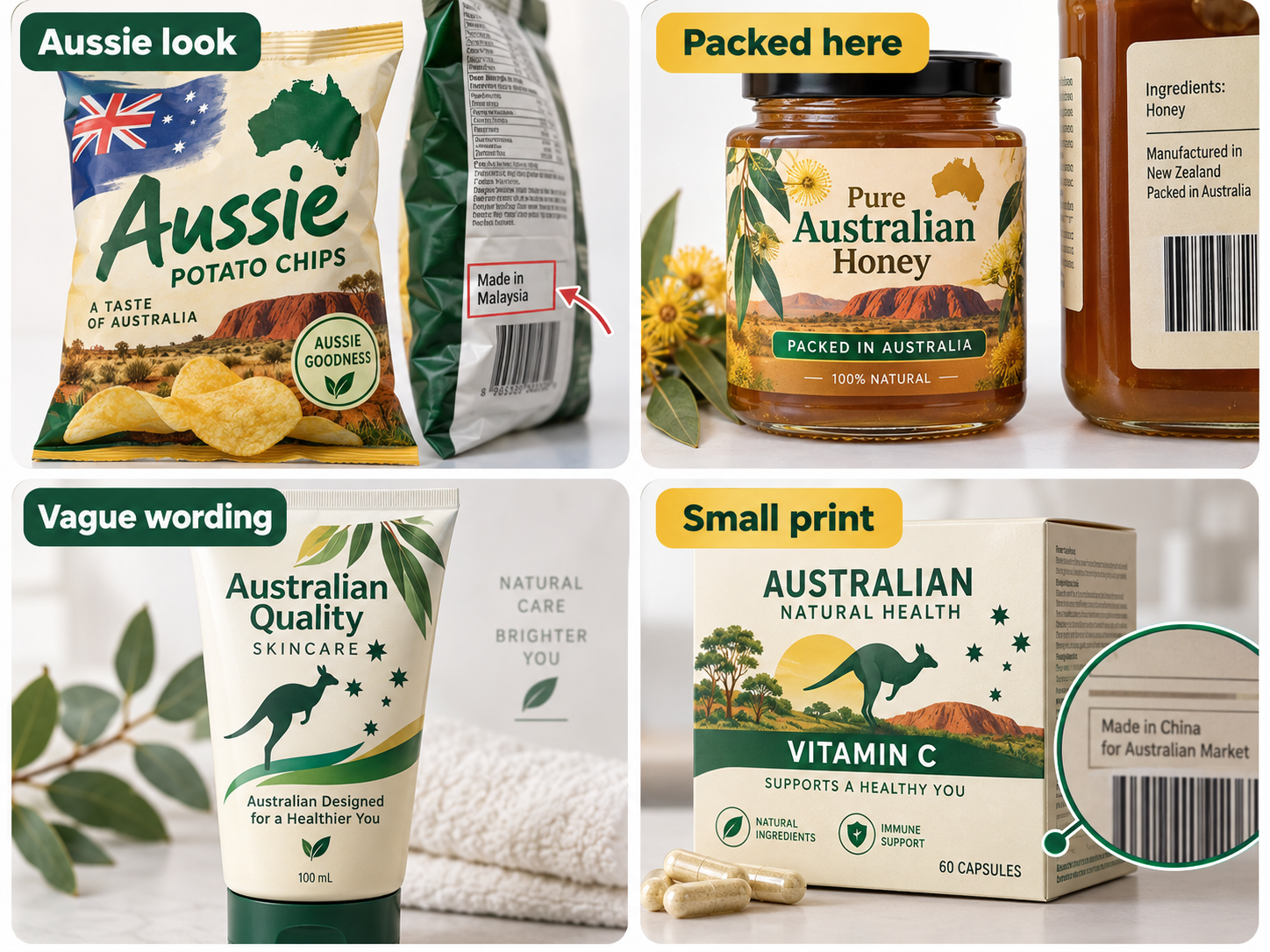
- Using prominent Australian branding on products manufactured overseas.
- Highlighting where a product was packed while making the manufacturing origin unclear.
- Using vague phrases such as “Australian quality” or “Australian designed” alongside Australian symbols.
- Placing the true origin in small print while the front of the package creates a stronger, different impression.
When it is not illegal
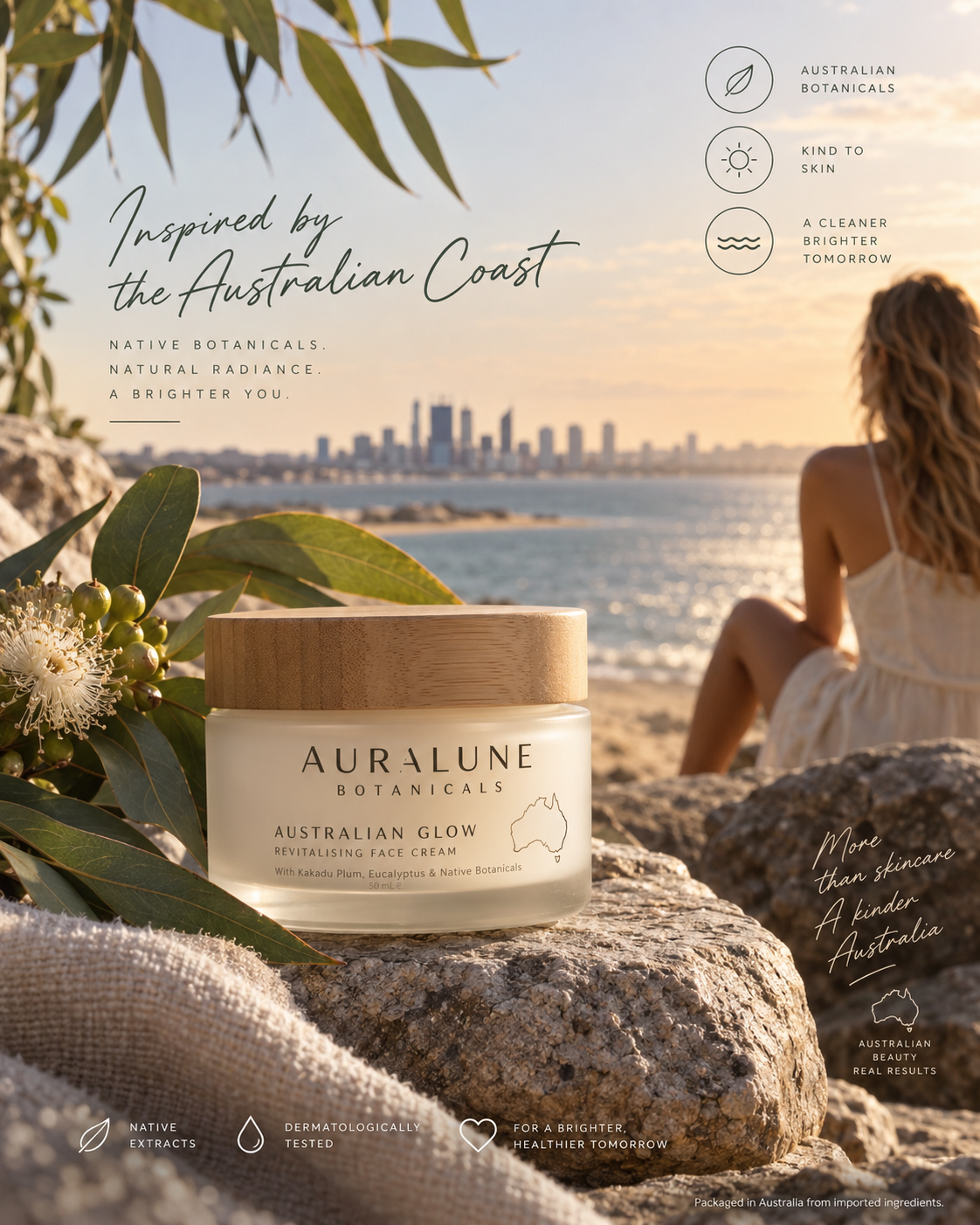
Country-of-origin marketing is lawful where the wording is truthful, precise and consistent with the overall packaging. For example, a product can clearly state that it was “Packed in Australia from imported ingredients” where that accurately describes the product. The key is that the overall impression should not suggest a stronger Australian origin than the facts support.
Consequences
Misleading origin claims can require businesses to change packaging and labels, relabel existing stock, provide refunds or corrective information and respond to regulator action. Businesses may also suffer reputational damage because customers who deliberately choose Australian-made products may feel deceived. Serious breaches can result in substantial financial penalties.
Example
A Perth skincare brand uses large “Australian” branding and Australian imagery on its packaging, but the product is manufactured overseas and only packaged locally. If the overall presentation leads consumers to believe the skincare is made in Australia, the country-of-origin representation may be misleading.
Example of how to write this in an exam
A country-of-origin representation may be misleading when the wording, symbols or packaging create a false impression about where a product was made, grown or produced. For example, a skincare business may use Australian flags and prominent Australian branding even though the product is manufactured overseas and only packaged in Australia. Consumers may be willing to pay more because they believe the product is Australian made. If the overall impression does not match the true origin of the product, the business may breach Australian Consumer Law.
Real Australian case study
Case study: Nurofen
Nurofen promoted different products as being specifically designed for different types of pain, such as back pain, period pain, migraine pain and tension headaches. The packaging and product names created the impression that each product had been specially formulated to target a particular type of pain.
However, the products were essentially the same medicine and contained the same active ingredient in the same dosage. This meant the marketing created the impression that consumers needed a particular Nurofen product for a particular type of pain when there was no meaningful difference in how the products worked.
The conduct was considered misleading because the overall impression suggested a specialised performance difference that could not be justified. Consumers could choose or pay more for one product because they believed it was more suitable for their particular pain.
Following enforcement action, the marketing and packaging had to be changed and the business faced significant penalties and reputational damage. The case demonstrates that under Australian Consumer Law, businesses must be able to support the product differences and benefits implied by their marketing.
Other examples of misleading and deceptive conduct
- Fine print tricks: important conditions are hidden or unclear, such as extra fees, short contract periods or automatic renewal terms.
- Hidden or extra pricing: a low headline price is displayed but unavoidable charges such as booking, delivery or service fees are added later.
- Prizes and gifts not honoured: a promotion advertises a prize or free item that is not genuinely available, or the important conditions are not made clear.
- Puffery: exaggerated promotional claims that are clearly opinion rather than factual promises, such as “the best coffee in the world”. Puffery is generally less likely to be misleading because consumers do not normally treat it as a literal factual claim.
If a statement is likely to influence a customer’s decision and sounds like a real promise rather than obvious hype, the business should be able to prove it.
🎧 Prefer listening?
If you prefer listening to the content in Podcast format:
🎥 Prefer watching?
If you prefer watching the content in video format:
🃏 Flashcards
Card 1 of 11
🎮 Revision Games
💰 BME Millionaire
Climb the prize ladder by mastering Australian Consumer Law and misleading marketing.
🕵️ Ad Detective
Investigate six marketing cases. Identify what is misleading and file the correct ACL verdict.
⚡ 60 Second Showdown
A varied 60-second challenge covering ACL, bait advertising, scientific claims and country-of-origin representations.
Biz Fact: Harvey Norman was penalised $1.25 million by the Federal Court after its promotional catalogue created a misleading impression about the availability and functionality of products like 3D TVs.