
U4.09 — Impact of Technology on Business Operations in Global Markets
Overview
Dotpoint 9: impact of technology on business operation in global markets.
Technology refers to the digital tools, systems, platforms and software that businesses use to communicate, sell, manage operations, protect data and connect with customers across global markets.
Technology matters because it allows businesses to expand beyond their domestic market without needing a large physical presence in every country. It can help businesses reach customers, process online orders, manage inventory, communicate with overseas staff, track shipments and promote products globally.
This dotpoint focuses on two key technology areas that affect business operations in global markets:
- technology that assists business in the expansion into global markets
- e-commerce, security and privacy issues

🌏 Technology assisting expansion into global markets
How does technology assist global expansion?
Technology assists global expansion by helping businesses communicate, sell, manage data, promote products, coordinate staff and deliver goods or services across international markets.
In the past, a business often needed a large physical presence overseas to reach international customers. Technology has reduced this barrier by allowing businesses to operate websites, online stores, cloud systems, digital payment systems, social media campaigns and global communication platforms from almost anywhere.
This can make global expansion faster and less expensive, but it also means businesses must manage new operational risks such as system failures, cyber attacks, privacy breaches, online competition and dependence on digital platforms.
Impact on global business operations
Technology can improve global operations by making it easier for businesses to communicate with overseas customers, suppliers, employees and partners in real time.
It can reduce costs because businesses can use online marketing, video conferencing, cloud systems and e-commerce platforms instead of relying only on physical stores, travel and traditional advertising.
It can also improve speed and accuracy because orders, inventory, payments, customer data and shipments can be managed digitally across different countries.
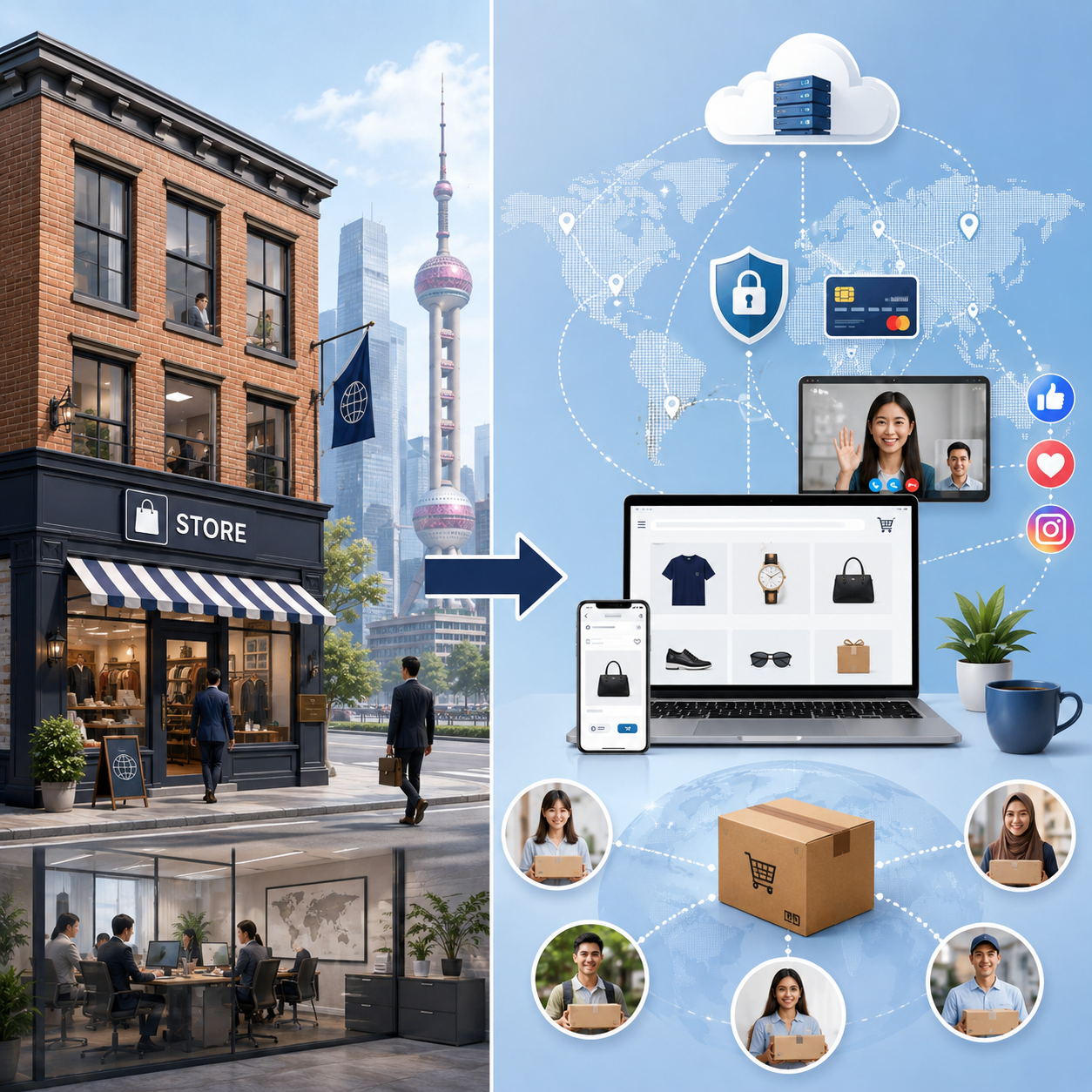
Technology that assists global expansion
| Technology | How it assists expansion | Impact on operations | |
|---|---|---|---|
| 🎥 | Video conferencing | Allows meetings with overseas staff, suppliers, distributors and partners. Zoom is widely used for global meetings and client communication. |
Reduces travel costs, improves communication and supports international management. |
| 🛒 | E-commerce website | Allows customers in other countries to browse, order and pay online. Shopify helps businesses create online stores and accept payments. |
Increases market reach and sales potential, but requires secure payment and fulfilment systems. |
| 📱 | Social media campaigns | Promotes products overseas using visual content, influencers and targeted ads. TikTok helps brands build global awareness through short-form video. |
Builds brand awareness, customer engagement and low-cost international promotion. |
| 📦 | Transport and logistics technology | Uses tracking systems, route optimisation and warehouse software to move goods globally. DHL uses tracking tools to manage international deliveries. |
Improves delivery accuracy, reduces delays and helps customers track international orders. |
| ☁️ | Cloud computing | Allows global access to data, documents, software and business systems. Amazon Web Services provides cloud infrastructure for global businesses. |
Improves collaboration, flexibility and consistency across different locations. |
| 🏷️ | Inventory management software | Tracks stock, orders, warehouses and shipments across countries. Zara uses data systems to respond quickly to global demand. |
Reduces stockouts, improves delivery accuracy and supports smoother global operations. |
| 🤖 | AI chatbots and live chat | Provides customer support across time zones and languages. Sephora has used digital support tools to improve online customer interaction. |
Improves service availability, reduces pressure on staff and supports international customers. |
| 🛋️ | Augmented reality | Allows customers to virtually test or view products before purchase. IKEA has used AR to let customers visualise furniture at home. |
Improves customer confidence and can reduce returns for products such as furniture, glasses and cosmetics. |
Benefits and limitations of technology in global expansion
Benefits to business operations
- Wider reach: the business can access customers in overseas markets through websites, apps and social media.
- Lower costs: online promotion, video meetings and cloud systems may reduce travel, advertising and infrastructure costs.
- Faster communication: managers can contact overseas suppliers, staff and customers quickly.
- Better customer service: chatbots, live chat and order tracking can support customers across time zones.
- Improved decision-making: data analytics can show which products, markets and campaigns are performing well.
Limitations to business operations
- Cyber risk: online systems may be exposed to hacking, malware, scams and data theft.
- Privacy obligations: businesses must protect customer data and comply with privacy laws in different markets.
- Platform dependence: changes to algorithms, fees or rules on platforms such as social media marketplaces can affect sales.
- Technical failures: website outages, payment failures or software problems can stop sales and frustrate customers.
- Digital competition: online markets make it easier for customers to compare prices with global competitors.
Real-life case study
Cotton On and global retail expansion
Cotton On is a strong physical-product example because it sells clothing and lifestyle products across many countries while using technology to support both online and physical retail operations.
Technology can assist Cotton On’s expansion by helping the business manage e-commerce, digital marketing, inventory systems, point-of-sale data and distribution across different countries. This allows the business to promote products globally and respond more quickly to customer demand.
The operational impact is that technology supports stronger global brand awareness, faster stock decisions and better coordination between stores, warehouses and suppliers. However, Cotton On still needs to manage cybersecurity, online customer data, delivery expectations and the reliability of its digital systems across markets.

Example of how to write this in an exam
Technology can impact business operations by helping a physical product business manage global sales more efficiently. For example, LEGO can use e-commerce platforms, digital marketing and inventory systems to sell products to customers in many countries while tracking demand and stock levels. This would improve operational efficiency because LEGO can promote new products globally, process online orders and adjust inventory based on customer demand. As a result, technology can support stronger global sales and smoother international operations.
🛒 E-commerce, security and privacy issues
What is e-commerce?
E-commerce refers to buying and selling goods or services online. This can occur through a business website, online marketplace, mobile app, social media store or digital platform.
For global business, e-commerce can act as a digital shopfront that customers in other countries can access at any time. It can help a business test overseas demand, process online orders, accept digital payments, collect customer data, provide delivery updates and offer online customer support without immediately opening physical stores in every country.
However, e-commerce is not just “putting a website online”. A business must manage currency conversion, shipping costs, returns, delivery times, local consumer law, product descriptions, online reviews, taxes, secure payments and customer expectations in each market.
More detail on the role of e-commerce in global markets is covered in U3.08 — The role of e-commerce in a global environment.
Impact on global business operations
E-commerce can increase sales and global reach because customers can purchase from the business at any time and from almost anywhere.
It can also improve efficiency because ordering, payment, inventory and delivery systems can be connected digitally.
However, businesses must protect online systems and customer information. A cyber attack, privacy breach, fake website, payment fraud or data leak can damage customer trust, interrupt sales and create legal consequences.
Security issues for e-commerce
Common security issues
- Hacking: cybercriminals may access business systems illegally, stealing customer data or disrupting operations.
- Business email compromise: scammers may impersonate suppliers, managers or customers to redirect payments.
- Payment fraud: stolen cards, fake orders or chargeback fraud can create financial losses.
- Malware and ransomware: malicious software can damage files, lock systems or stop the business from operating online.
- Fake websites and phishing: criminals may copy a brand’s website or send fake messages to trick customers.
- Theft of intellectual property: online systems may expose confidential designs, customer lists, product images or business data.

How businesses can reduce security risk
Multi-factor authentication
Adds an extra login step so hackers cannot easily access accounts using only a stolen password.
Encryption and secure payments
Protects customer data and payment information when it is stored or transferred online.
Software updates
Keeping websites, apps and plugins updated reduces weaknesses that hackers may exploit.
Staff training
Employees should be trained to identify phishing emails, fake invoices, weak passwords and suspicious links.
Backups
Regular backups help the business recover if data is lost, corrupted or locked by ransomware.
Cyber incident plan
The business should know who to contact, how to stop damage and how to communicate with customers after a breach.
Privacy issues for e-commerce
Common privacy issues
- Collecting customer data: online stores often collect names, emails, addresses, payment information, order history and preferences.
- Using customer data: businesses must be careful how they use data for marketing, loyalty programs, targeted advertising and analytics.
- Sharing data with third parties: payment providers, delivery companies, email platforms and software providers may handle customer information.
- Cross-border data storage: customer data may be stored on overseas servers, creating extra privacy obligations.
- Data breaches: if personal information is accessed or disclosed without permission, the business may need to notify regulators and affected customers.
- Different privacy laws: Australia has the Privacy Act and Notifiable Data Breaches scheme, while other markets may have their own privacy rules.

How businesses can reduce privacy risk
Clear privacy policy
Explain what data is collected, why it is collected, how it is used, who it is shared with and how customers can seek help.
Data minimisation
Only collect information that the business genuinely needs for orders, delivery, support and legal compliance.
Customer consent
Seek appropriate permission before using personal information for email marketing, loyalty programs or targeted promotions.
Access controls
Limit who can access customer data inside the business and remove access when staff leave.
Breach response process
Have a plan to investigate breaches, reduce harm, notify affected customers and meet legal obligations.
Review third-party platforms
Check that payment, email, delivery and website providers have appropriate security and privacy protections.
Real-life case study
Optus data breach and customer trust
Optus is a useful Australian example for privacy and security issues. A major cyber incident exposed customer information and created serious reputational damage, customer concern, regulatory attention and operational pressure.
This case shows that privacy and security are not just technical issues. They affect customer trust, communication, legal compliance, crisis management, brand reputation and the cost of fixing problems after a breach.
For global businesses using e-commerce, the lesson is clear: collecting customer data creates responsibility. Businesses need secure systems, access controls, staff training, privacy policies and a breach response plan before expanding online into new markets.

Example of how to write this in an exam
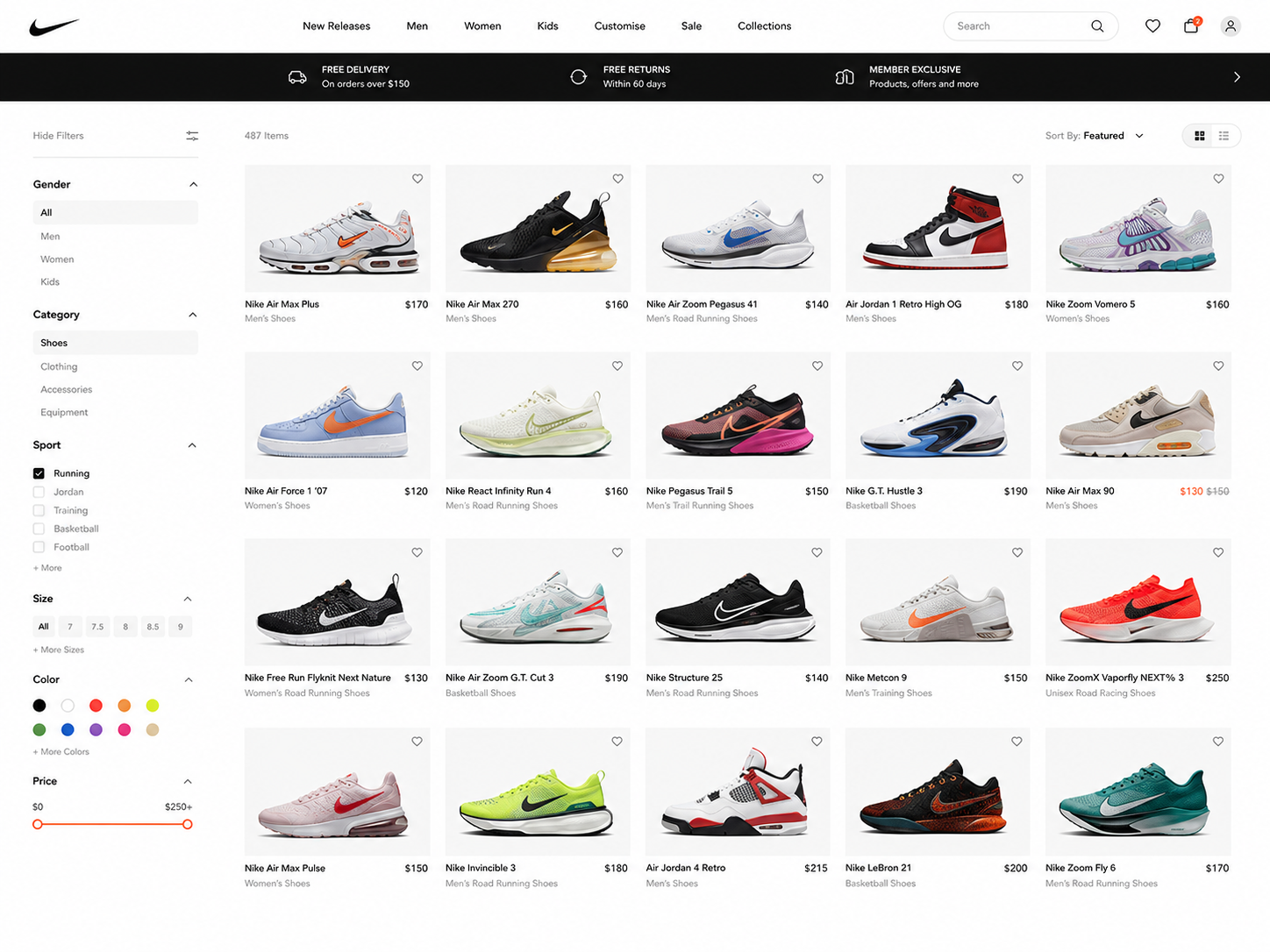
E-commerce can impact business operations by allowing a business to sell to customers in overseas markets through an online platform. For example, Nike can use its online store and mobile app to sell shoes and clothing directly to customers in different countries, process payments and collect customer data. This can increase sales and improve customer convenience. However, Nike must also protect customer information, secure online payments and manage privacy requirements across different markets. As a result, e-commerce can support global growth but also increases the need for cyber security and data protection.
🎧 Prefer listening?
If you prefer listening to the content in podcast format:
🎥 Prefer watching?
If you prefer watching the content in video format:
🃏 Flashcards
Card 1 of 9
🎮 Revision Games
💰 BME Millionaire
Climb the prize ladder. Use your lifelines wisely.
👔 Business Boss
Make 10 global technology decisions. Balance growth, security and customer trust.
⚡ 60 Second Showdown
A varied 60-second challenge covering technology, e-commerce, security and privacy.

Biz Fact: Zoom exploded during COVID and became a core tool for businesses managing staff, clients and suppliers across countries without travelling.
Past Exam Questions
Use these past exam questions to see how this dotpoint has been assessed. Pay close attention to the command term, the number of marks and whether the question is Section 1 or Section 2.
Section 1 Questions
2016 — Section 1 — Question 5(b) — 2 marks
Context
Question 5 focuses on e-commerce, technology, financial risk and resistance to change in an increasingly globalised world.
5(b): Describe one impact of technology on business operations in global markets. (2 marks)
Command term focus: Describe
Describe: give the main characteristics or features with enough detail to show what it is like.
See the full command term guide here: Command Terms.
5(b) Sample answer
One impact of technology is that it can improve communication in global markets. Businesses can use video conferencing, messaging platforms and cloud systems to communicate with overseas staff, suppliers and customers. This can reduce travel costs and make international operations easier to coordinate.
2017 — Section 1 — Question 2(c) — 4 marks
Context
Foxtrot Transportable Housing is expanding into Asia and considering how its marketing mix may need to change for international markets.
2(c): Describe two ways in which Foxtrot Transportable Housing could use technology in global markets. (4 marks)
One:
Two:
Command term focus: Describe
Describe: give the main characteristics or features and apply each use of technology to the business.
See the full command term guide here: Command Terms.
2(c) Sample answer
One: Foxtrot Transportable Housing could use digital marketing to promote its homes to customers in Asian markets. This may include targeted social media advertising, online videos and translated website content to build brand awareness with overseas customers.
Two: Foxtrot could use video conferencing and cloud-based project management to communicate with overseas suppliers, builders or distributors. This would help the business coordinate orders, designs and delivery schedules without needing constant international travel.
2018 — Section 1 — Question 2(b) — 4 marks
Context
Uber has collaborated strategically with many international businesses in countries such as Russia, Australia and the United States. Volvo, a Swedish vehicle manufacturer, and Uber recently announced a $300 million joint venture to develop self-driving cars.
2(b): Describe two ways in which a joint venture might use technology to enhance its success in a global market. (4 marks)
One:
Two:
Command term focus: Describe
Describe: give the main characteristics or features and show how each technology use could support global success.
See the full command term guide here: Command Terms.
2(b) Sample answer
One: The joint venture could use video conferencing so Uber and Volvo managers, engineers and designers in different countries can communicate quickly without constant international travel. This would improve coordination and help the joint venture make faster decisions during the development of self-driving cars.
Two: The joint venture could use cloud computing so employees in different global locations can access shared documents, design updates, project information and testing data. This would improve collaboration and support more efficient international product development.
2019 — Section 1 — Question 2(b) — 3 marks
Context
When planning international expansion, businesses must research a variety of complex factors that may affect their success.
2(b): Explain the impact that technology, specifically e-commerce, has on a business operating in a global environment. (3 marks)
Command term focus: Explain
Explain: show cause and effect by explaining why or how something happens and the result.
See the full command term guide here: Command Terms.
2(b) Sample answer
E-commerce can impact business operations by allowing a business to sell products to international customers through an online platform. This means the business may reach a larger global market without immediately opening physical stores overseas. As a result, e-commerce can increase sales opportunities and reduce expansion costs, although the business must manage online payments, delivery, returns and customer service across different countries.
2023 — Section 1 — Question 4(c) — 3 marks
Context
Strategic management is a key element to consider when operating in global markets.
4(c): Explain the impact security and privacy issues have on business operations in global markets. (3 marks)
Command term focus: Explain
Explain: show cause and effect by explaining how security and privacy issues affect costs, trust, compliance or operations.
See the full command term guide here: Command Terms.
4(c) Sample answer
Security and privacy issues can impact business operations because global businesses often collect customer data through websites, apps and online payment systems. If this information is hacked, stolen or misused, the business may face website disruption, legal costs, compensation claims and loss of customer trust. As a result, businesses operating globally need secure systems, privacy policies, staff training and breach response plans to protect customer data and maintain their reputation.
Section 2 Questions
2025 — Section 2 — Question 8(d) — 6 marks
Case study / context
Aura and Ash founded their online greeting card business, AuraAsh Designs in Perth in 2022, offering both custom-made and general greeting cards for all occasions. The business quickly gained popularity due to its unique designs and personalised options, attracting a loyal customer base. With the success of their online platform, Aura and Ash are now looking to expand their operations into the New Zealand market. They are aware of the benefits provided by Australia’s free trade agreement with New Zealand, which could facilitate smoother entry into the New Zealand market through reduced trade barriers.
Aura and Ash are planning to open a physical branch in New Zealand after recognising the potential for the business’ future growth. This branch will act as a local base for production and distribution in New Zealand. This will ensure faster delivery times for their New Zealand customers. Aura and Ash intend to hire a small team of local employees, who understand the market dynamics and customer preferences, to manage operations at the New Zealand branch. This team will handle everything from production to customer support and help establish a strong presence for AuraAsh Designs.
Technology will play an important role in AuraAsh Designs’ expansion into New Zealand. Aura and Ash are aiming to use their existing online platform to reach a wider audience and simplify operations. Aura and Ash plan to use innovative e-commerce software to manage inventory, process orders and track shipments efficiently. Additionally, the business will use social media and digital marketing strategies to promote their brand and engage with customers in New Zealand to build a strong online community. However, Aura and Ash are aware that they will need to address security and privacy issues to protect customer data and ensure compliance with local regulations. They aim to implement strong cybersecurity measures and comprehensive privacy policies.
By combining the benefits of the free trade agreement, a local physical presence and advanced technology, Aura and Ash are well positioned to successfully expand their greeting card business into the New Zealand market. They hope their strategic approach will not only enhance the business’ operational efficiency, but also provide a personalised and smooth experience for their new customers.
8(d): Explain two impacts of technology on AuraAsh Designs’ business operations in New Zealand. (6 marks)
Command term focus: Explain
Explain: show cause and effect by explaining why or how something happens and the result. Section 2 requires application.
See the full command term guide here: Command Terms.
8(d) Sample answer
One impact of technology is that e-commerce software could improve AuraAsh Designs’ operational efficiency in New Zealand. The business could use its online platform to process New Zealand orders, manage inventory and track shipments between its Perth operations and New Zealand branch. This would reduce order errors, improve stock control and help customers receive faster delivery updates, leading to a smoother customer experience.
A second impact is that social media and digital marketing could help AuraAsh Designs build brand awareness in the New Zealand market. The business could promote its personalised greeting cards through targeted ads, visual content and customer engagement on platforms such as Instagram or TikTok. This would help AuraAsh Designs attract New Zealand customers and build an online community, increasing the likelihood of stronger sales in its new market.