
U1.06 — Legal Requirements of Contracts
Overview
Dotpoint 6: Legal requirements of contracts, including:
A contract can have the three key elements (intention, agreement, consideration) but still be unenforceable if it fails basic legal requirements.
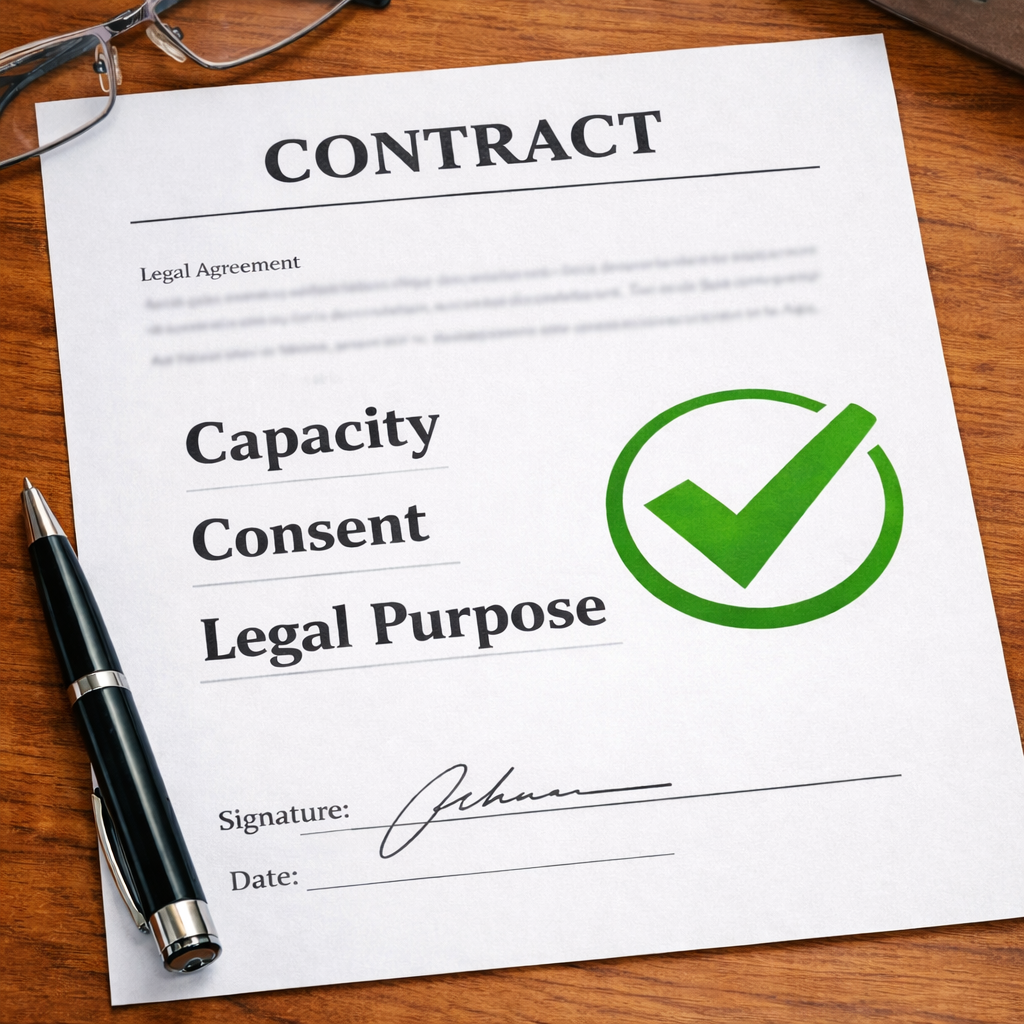
This dotpoint focuses on three legal requirements that must exist for a contract to be enforceable:
- Capacity
- Consent
- Legal purpose
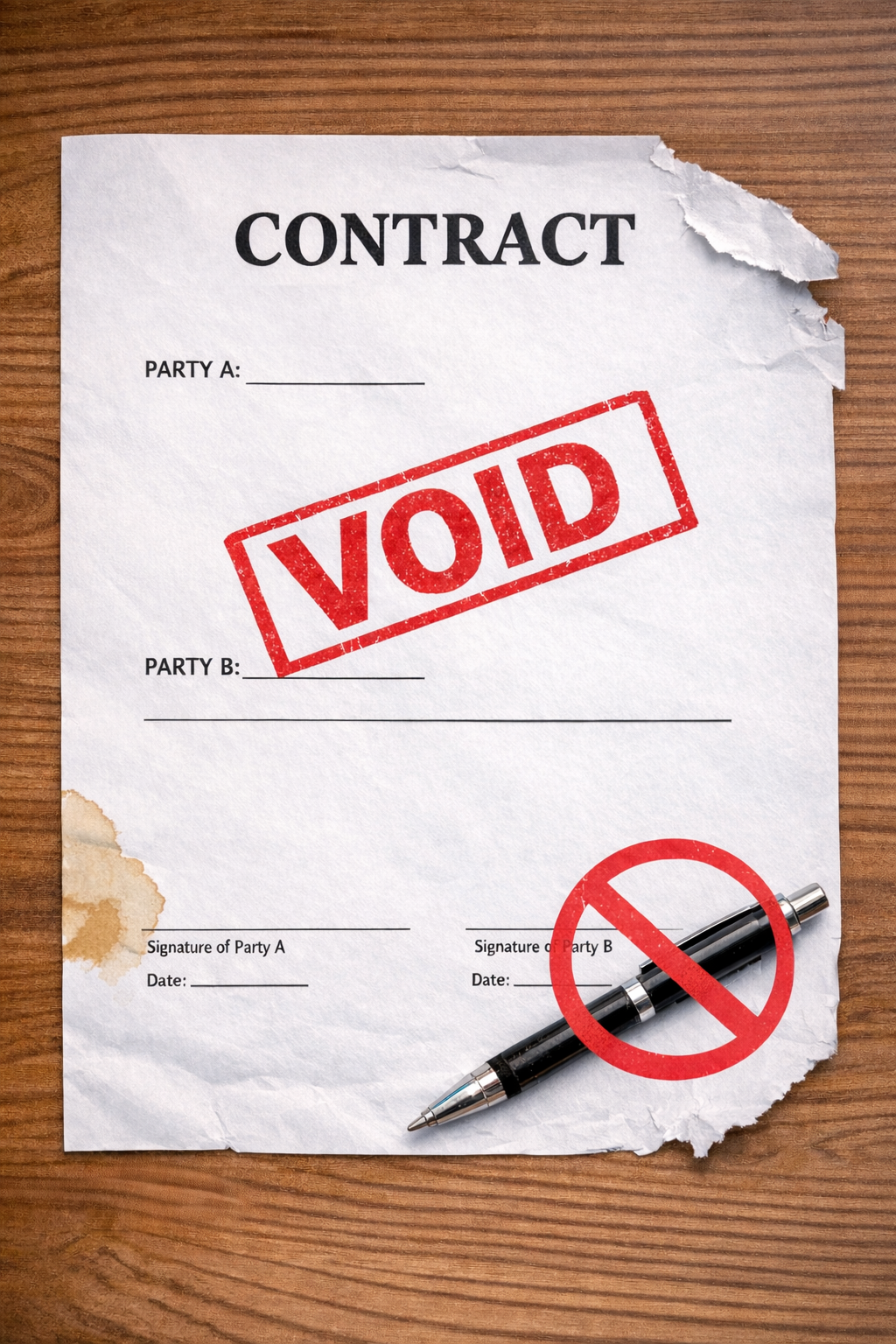
If any one of these is missing, the contract may be void (has no legal effect) or voidable (can be cancelled by the affected party).
Capacity
What it means
Capacity means a person (or business) has the legal ability to enter a contract.
Most adults have capacity, but there are common limits in real business situations:
- Minors (under 18) — contracts may not be fully enforceable unless they are for necessities or clearly beneficial.
- Mental impairment / incapacity — if a person cannot understand what they are agreeing to (e.g., severe dementia, serious intellectual disability, extreme intoxication).
- Authority in a business — the person signing must have the power to bind the organisation (e.g., manager vs casual employee).

WA examples
✔ A 17-year-old signs up for a basic phone plan needed for school and work. This may be seen as a necessity, so it is more likely to be enforceable.
✘ A Year 11 student signs a 24-month gym contract with high fees and penalties. If it is not clearly beneficial, the gym may struggle to enforce it if the minor cancels.
✘ A casual staff member at a Carousel Shopping Centre store signs a supplier order “on behalf of the business” without permission. The supplier may find the contract is not binding because the staff member had no authority.
✘ A customer in Morley is asked to sign a finance-style agreement while clearly not understanding the terms (confused and unable to explain what they’re agreeing to). The business risks a capacity dispute later.
✔ A registered WA builder signs a building contract through a company director. The director has authority, so the contract is enforceable against the company.
Why this matters in business
- Businesses need to know the person signing has capacity and authority.
- If capacity is missing, the business can lose time, money and the ability to enforce payment.
- Good practice: verify age/ID when needed and ensure the signer is an authorised representative.
Consent
What it means
Consent means each party agrees freely and with a clear understanding of what they are signing.
Consent may not be genuine if there is:
- Misrepresentation — false statements that induce someone to sign.
- Undue influence — unfair pressure from someone in a position of power or trust.
- Duress — threats or coercion (e.g., “sign or you’ll be fired”).
- Mistake — both parties are not actually agreeing to the same thing.
WA examples
✘ A Perth car dealer tells a buyer the vehicle has “never been in an accident” when it has been repaired after a crash. The buyer’s consent may not be genuine due to misrepresentation.
✘ A small business supplier pressures a new café owner in Mount Lawley to sign immediately by threatening to cancel all deliveries. That can be duress.
✘ A franchise sales rep uses confusing language and hides key fees in fine print, causing the buyer to misunderstand the costs. The buyer may argue there was no informed consent.
✔ A homeowner in Hillarys receives a clear written quote, has time to read it, asks questions, then signs. Consent is likely genuine because the decision is informed and voluntary.

How businesses stay safe
- Use clear language, not tricks or hidden fees.
- Give customers time to read and ask questions.
- Put key terms in writing: price, scope, timeframes, cancellation, fees.
- Avoid pressure tactics that could later be argued as undue influence or duress.
Legal purpose
What it means
A contract must be for a lawful purpose.
If the agreement involves illegal activity or illegal terms, it may be void and cannot be enforced.
Legal purpose also links to business compliance — contracts cannot override laws like:
- Australian Consumer Law (misleading conduct, consumer guarantees)
- Employment law (awards, NES, unfair dismissal protections)
- Licensing and safety rules (e.g., building regulations, alcohol laws)
WA examples
✘ A Perth employer writes a “contract” saying staff will be paid below the award and get no breaks. Even if the worker signs, the purpose/terms breach employment law and cannot be enforced.
✘ A home renovation agreement in WA involves an unlicensed person doing work that legally requires a registered builder. The arrangement can become legally risky and may be unenforceable.
✘ A contract to sell fake branded shoes at a weekend market in Fremantle is illegal and cannot be enforced in court.
✔ A legitimate Perth supplier agreement for monthly deliveries with clear pricing and lawful goods has a legal purpose and is enforceable.

Why this matters in business
- Illegal contracts can lead to losses because payment cannot be enforced.
- Businesses can face penalties and reputational damage for illegal terms.
- Good practice: check compliance with consumer, workplace, and licensing laws before signing.
Real WA Business Scenarios
Employment contract
A café in Applecross hires a 17-year-old for weekend shifts.
Capacity → minor can work, but the contract must be fair and appropriate (hours, pay, conditions).
Consent → the offer, pay rate, and shifts are clearly explained before signing.
Legal purpose → the contract follows the relevant award and workplace laws.
Supplier contract
A Mandurah café signs a 12-month agreement with a Perth coffee supplier.
Capacity → the person signing is the owner or authorised manager.
Consent → no hidden fees; cancellation and delivery terms are clear.
Legal purpose → lawful goods and fair trading practices.
Construction example
A homeowner in Baldivis signs with a registered WA builder and gets a subcontractor quote.
Capacity → builder has authority and required licence.
Consent → homeowner understands scope, progress payments, and timeframes.
Legal purpose → building work is lawful and meets WA regulations.
Contract Validity
Valid
Valid – A real contract the courts will enforce.
Examples:
- A business signs a 12-month lease for a shop in a shopping centre.
- A café agrees in writing to buy weekly coffee beans from a supplier at a set price.
Voidable
Voidable – A contract exists, but one party can cancel it because it was not made fairly (e.g. pressure or misleading claims).
Examples:
- A customer signs a deal after being told a key false claim (e.g. “no exit fees” when there are).
- An employee signs a contract after being threatened (“sign now or we’ll report you / fire you immediately”) → may be voidable due to duress.
Void
Void – Not a contract at all (no legal effect), so it can’t be enforced.
Examples:
- An agreement to do something illegal (e.g. pay cash “off the books” to avoid tax).
- A contract for illegal goods or services → the courts won’t enforce it.
Unenforceable
Unenforceable – An agreement may exist, but the court won’t enforce it because a legal requirement wasn’t met (often formality).
Examples:
- A person agrees verbally to be a guarantor for someone else’s loan, but the law often requires the guarantee to be in writing and properly explained.
- A customer and business agree to a long-term payment plan, but the key terms (total cost, fees, repayment schedule) are not provided clearly in writing — making it much harder to enforce if there’s a dispute.
🎧 Prefer listening?
If you prefer listening to the content in Podcast format:
🎥 Prefer watching?
If you prefer watching the content in video format:

Biz Fact: Anytime Fitness clubs require under-18s to have a parent/guardian sign (or restrict contract length), because capacity is a common issue with minors.