
U1.18 - Customer Profiling to Determine Customer Needs and Expectations
Overview
Dotpoint 18: The use of customer profiling to determine customer needs and expectations
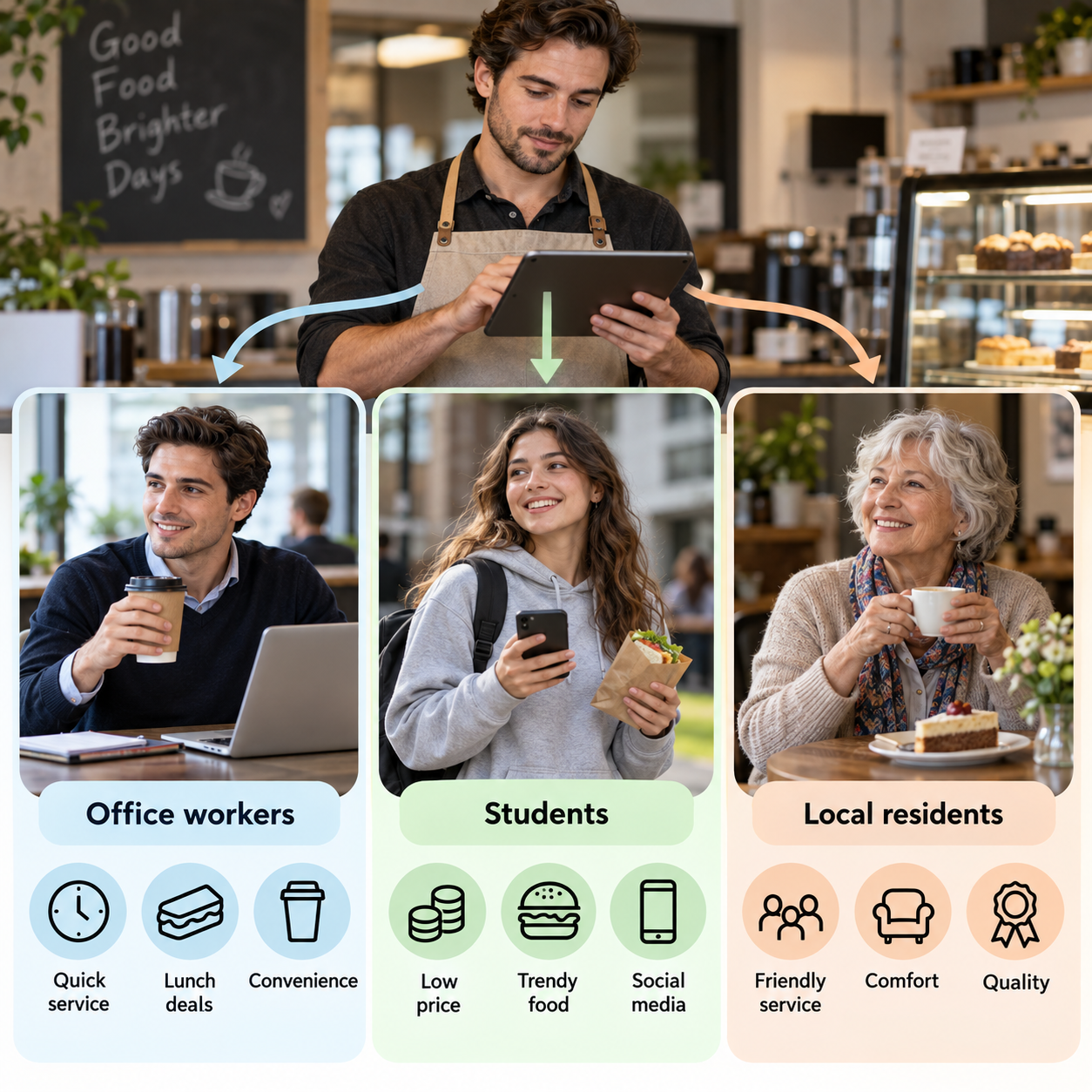
Customer profiling is the process of collecting and analysing information about customers to understand their characteristics, needs and expectations.
Businesses use this information to develop a customer profile representing a typical customer or customer group. This helps them make more informed decisions about their products, prices, marketing and customer service rather than relying on guesswork.
What is Customer Profiling?
Customer profiling is the process of collecting and analysing information about customers to understand their characteristics, needs and expectations.
Businesses use this information to build a customer profile, which describes a typical customer or customer group. This helps the business make decisions about its products, prices, marketing and customer service.
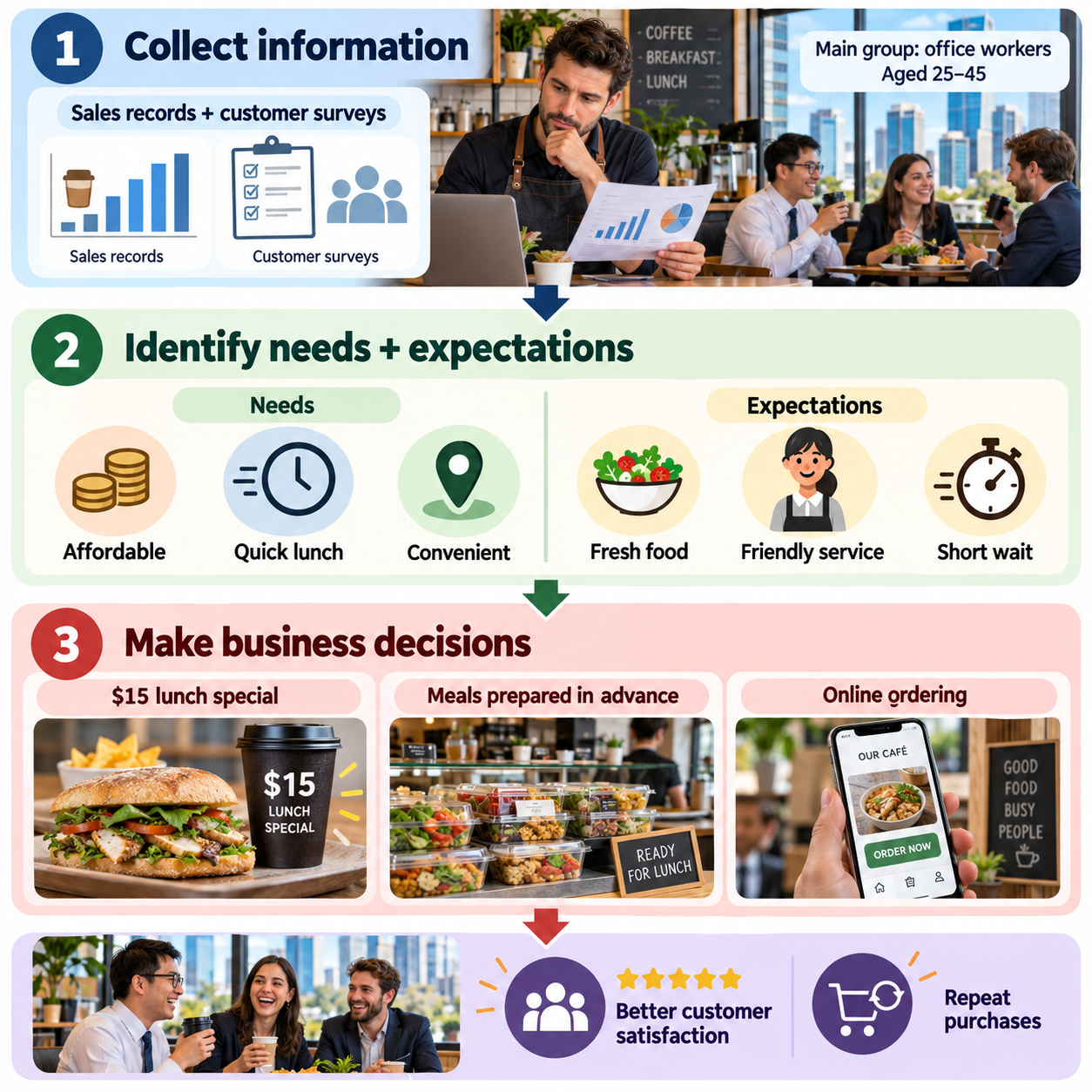
Customer profiling follows three connected steps: collect customer information, identify customer needs and expectations, and use the profile to make business decisions. The sections below show how each step works.
1. Collecting Customer Information
Businesses collect two types of information:
- Quantitative data: Numerical information, such as customer age, income, spending and frequency of purchases.
- Qualitative data: Non-numerical information, such as customer opinions, preferences, attitudes and feedback.
This information is used to identify four main customer characteristics:
2. Identifying Customer Needs and Expectations
Once the information has been collected, the business analyses it to identify:
Customer needs
What customers require from a product or service to solve a problem or satisfy a particular requirement.
Customer expectations
The standard of quality, service and overall experience customers believe they should receive.
Example: A busy office worker buying lunch may need an affordable meal but expect friendly service and to receive their food within five minutes.
3. Using Customer Profiles to Make Business Decisions
Businesses use customer profiles to make better decisions about their products, marketing and customer service. This can help a business:
- Improve its products and services to better meet customer needs.
- Develop more effective marketing that appeals to particular customer groups.
- Increase customer satisfaction and loyalty by consistently meeting customer expectations.
Perth Example – A Café in the CBD
A Perth café wants to attract more weekday customers and collects information through sales records and customer surveys.
Step 1 – Collect information
The café discovers that many customers are office workers aged 25–45 who regularly purchase lunch during their working day.
Step 2 – Identify needs and expectations
- Needs: Affordable meals that are convenient to purchase during a short lunch break.
- Expectations: Fresh food, friendly service and minimal waiting times.
Step 3 – Make business decisions
The café introduces a $15 lunch special, prepares popular meals in advance and offers online ordering to reduce waiting times.
By using its customer profile, the café can better meet customer needs and expectations, potentially increasing customer satisfaction and encouraging repeat purchases.
Example of how to write this in an exam
Customer profiling involves collecting and analysing information about customer characteristics, needs and expectations. For example, a Perth café may use sales records and customer surveys to identify a customer group consisting of busy office workers who need affordable lunches and expect fast service. The café can use this information to introduce a $15 lunch special and online ordering. By meeting the needs and expectations of this customer group, the café may improve customer satisfaction and encourage repeat business.
Market Segmentation vs Target Market vs Customer Profiling
The three ideas work together in a simple sequence: divide the market into groups, choose which group to target, then learn more about that chosen group. For example, a gym may identify several customer groups before deciding which one it wants to attract.
1. Market segmentation — sort customers
What happens: The business divides the overall market into groups with similar characteristics.
Gym example: It identifies students, FIFO workers, parents and retirees as different customer segments. It has not yet decided which to target.
2. Target market — choose who to focus on
What happens: The business selects one or more of those segments to focus its products and marketing on.
Gym example: It chooses FIFO workers because it believes it can meet their requirements well. A business can choose more than one target segment.
3. Customer profiling — describe the chosen customers
What happens: The business collects more detailed information about the chosen group to understand their needs, expectations and buying behaviour.
Gym example: Its typical FIFO customer works away regularly, needs flexible memberships and expects an easy app-based sign-up and membership pause.
Example of how to write this in an exam
Market segmentation involves dividing the overall market into groups of customers with similar characteristics, whereas a target market is the group or groups a business chooses to focus on. Customer profiling then creates a more detailed picture of the chosen customers, including their needs, expectations and buying habits. For example, a gym may identify students, FIFO workers and parents through segmentation, select FIFO workers as a target market and develop a profile showing that they need flexible memberships and expect easy online account management. This allows the gym to design a relevant membership and promotion rather than offering every customer the same service.
WA Case Study — A Perth Ice Bath / Recovery Studio
A Perth recovery studio collects information from its customers, including their reasons for visiting, booking habits, preferences and feedback. After analysing the information, it identifies three distinct types of customers: performance-focused customers, wellbeing-focused customers and time-poor professionals.
Each group has different needs and expectations. Rather than offering everyone the same message, package and service, the studio uses these three profiles to adapt its sessions, pricing, promotion and customer experience for the groups it decides to target.
Profile 1 — Performance-focused
Who: athletes, gym-goers and people training for sport.
Motivation: recovery results such as less soreness and a faster return to training.
Behaviour: books regularly, tracks routines and wants clear structure.
Needs and expectations: consistent temperature, a clean setup and sessions that run on time.

Business response
Service: structured performance sessions.
Process: consistent timing and clear instructions.
Promotion: sport-focused messaging and relevant testimonials.
Price: packs or memberships for frequent users.
Profile 2 — Wellbeing-focused
Who: customers interested in stress relief and relaxation.
Motivation: feeling calmer and improving wellbeing.
Behaviour: may be nervous at first and want reassurance.
Needs and expectations: supportive staff, guidance and a calm environment.

Business response
Service: beginner-friendly sessions and optional coaching.
Environment: calmer time slots and a comfortable setup.
Promotion: relaxation and wellbeing messaging.
Process: easy FAQs and clear first-visit instructions.
Profile 3 — Time-poor professionals
Who: busy workers and parents with limited time.
Motivation: quick recovery and convenience.
Behaviour: books at short notice and prefers online booking.
Needs and expectations: fast booking, predictable times and no delays.

Business response
Place / process: online booking, reminders and quick check-in.
Service: express sessions with set time blocks.
Promotion: convenience-focused messaging.
Price: simple casual and package pricing.
🎧 Prefer listening?
If you prefer listening to the content in podcast format:
🎥 Prefer watching?
If you prefer watching the content in video format:
🃏 Flashcards
Card 1 of 9
🎮 Revision Games
💰 BME Millionaire
Climb the ladder by mastering customer profiling.
🕵️ Profile Detective
Classify needs, expectations, profile details and business responses.
⚡ 60 Second Showdown
Rapid-fire questions on profiles, needs and expectations.

Biz Fact: Netflix groups viewers into over 2,000 taste profiles — so it knows what you’ll binge next.