
U1.23 — Types of Organisational Structures
Overview
Dotpoint 23: types of organisational structures, including: functional, product, divisional, team
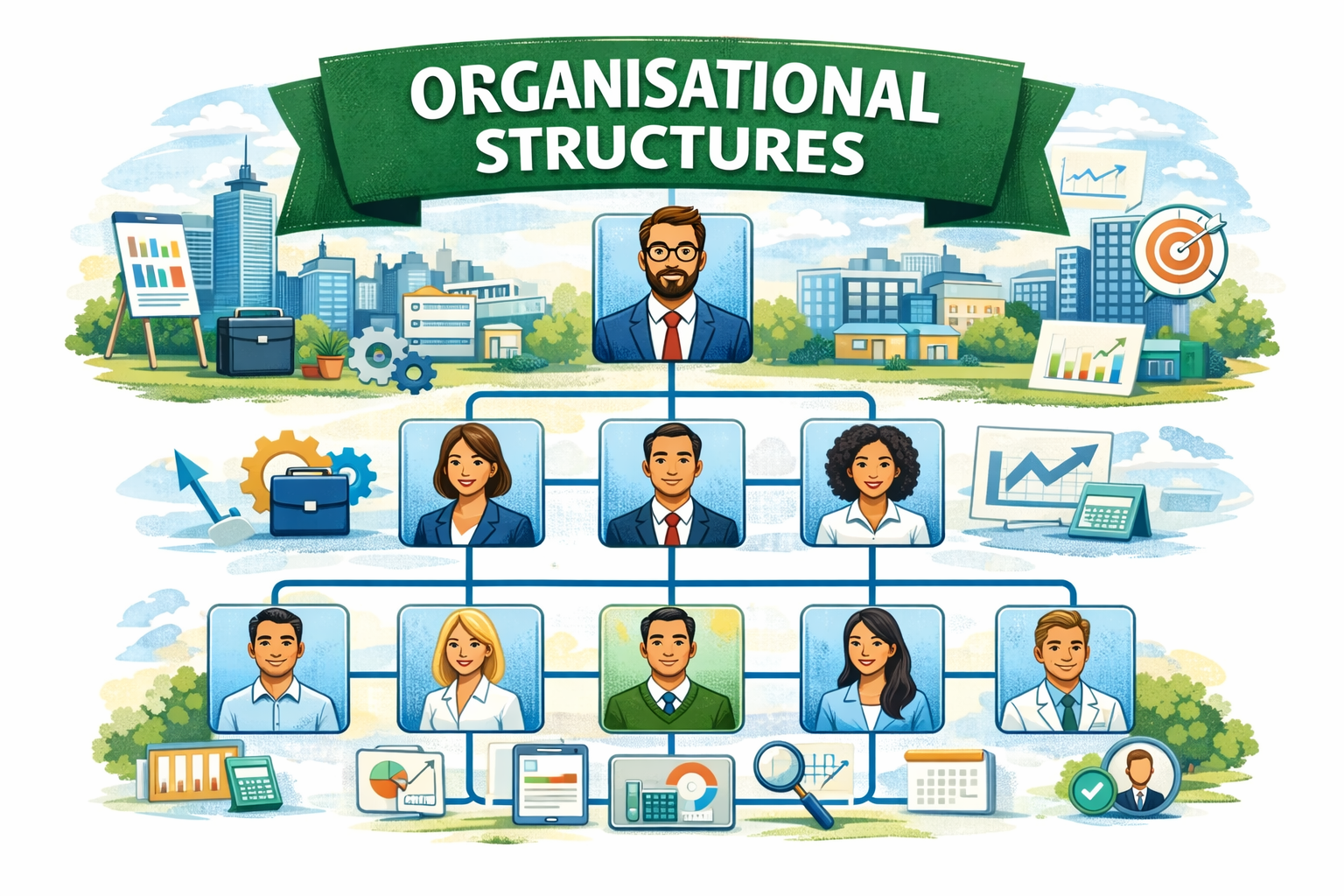
An organisational structure refers to the formal system that outlines how tasks, responsibilities, authority and communication flow within a business. It determines how employees are grouped and how decisions are made.
There is no single “best” structure. The most effective structure depends on factors such as:
- business size
- number of products or services
- geographic spread
- need for flexibility or control
The four common organisational structures studied at ATAR level are:
- functional
- product
- divisional
- team
Quick Visual
Functional = grouped by departments
Product = grouped by product lines
Divisional = grouped by region/market
Team = grouped by flexible teams
🏛️ Functional Structure
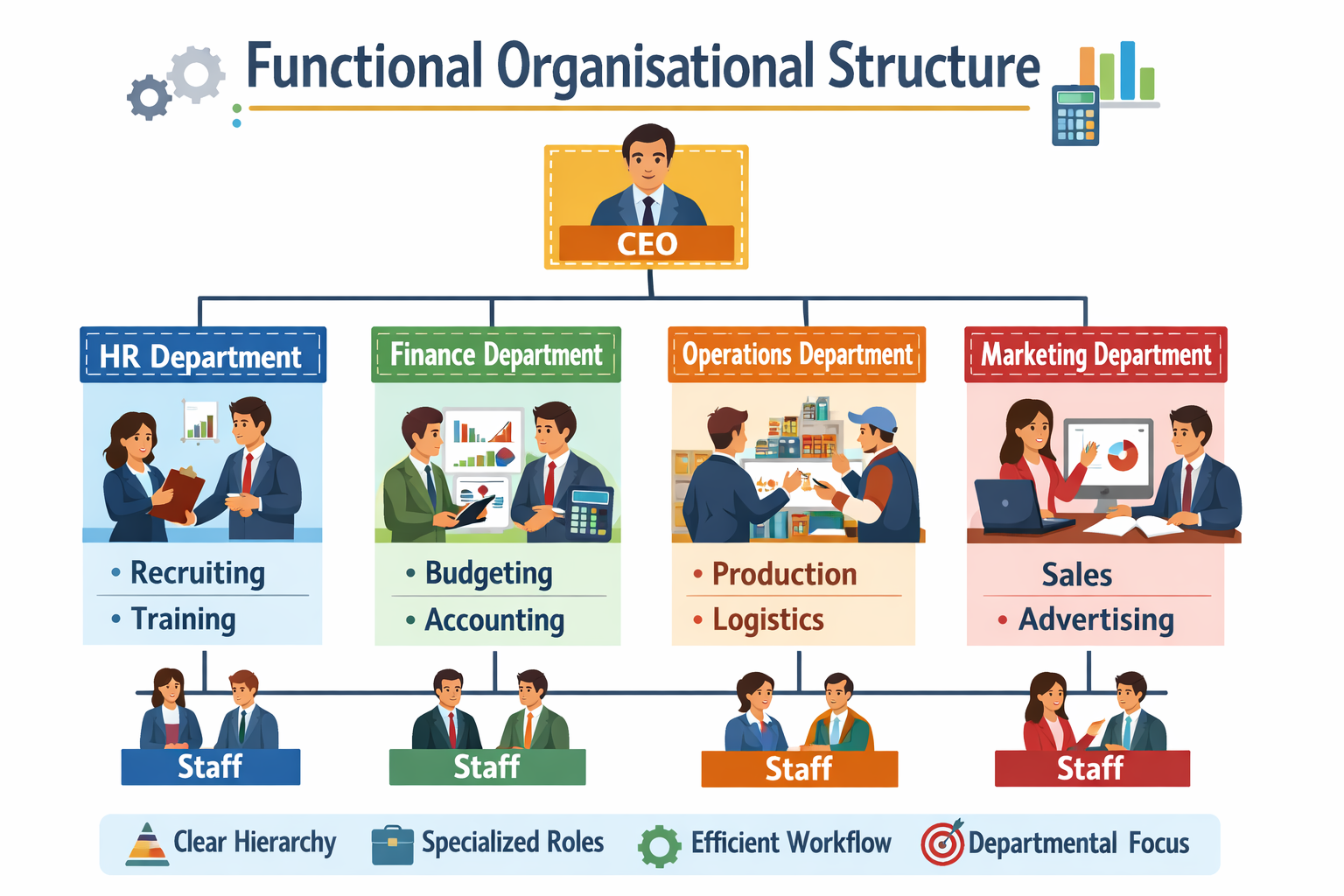
Functional structure groups employees according to their specialised business functions, with each function responsible for a specific area of the organisation.
Common functions include
- Marketing (promotion, advertising, branding)
- Finance (budgets, payroll, accounts)
- Human Resources (HR) (recruitment, training, performance management)
- Operations (production or service delivery)
- Sales / Customer Service
- IT / Systems
Advantages
- High levels of specialisation, leading to efficiency and expertise
- Clear roles, responsibilities and reporting lines
- Easier training and performance management
- Lower costs due to limited duplication of roles
️ Limitations
- Departments can become siloed, reducing cooperation
- Communication between functions can be slow
- Decision-making may be delayed if multiple functions are involved
- Less flexible when responding to rapid change
Best suited for
- Small to medium-sized organisations
- Businesses offering one main product or service
- Stable environments where tasks are predictable
Example
Schools clearly operate using a functional structure:
- Marketing: promoting enrolments through open days and community events
- Finance: managing budgets, payroll and resource allocation
- HR: recruiting staff, professional development, performance management
- Operations: teaching and learning, timetabling, daily school operations
- IT / Systems: networks, devices, learning platforms
📦 Product Structure
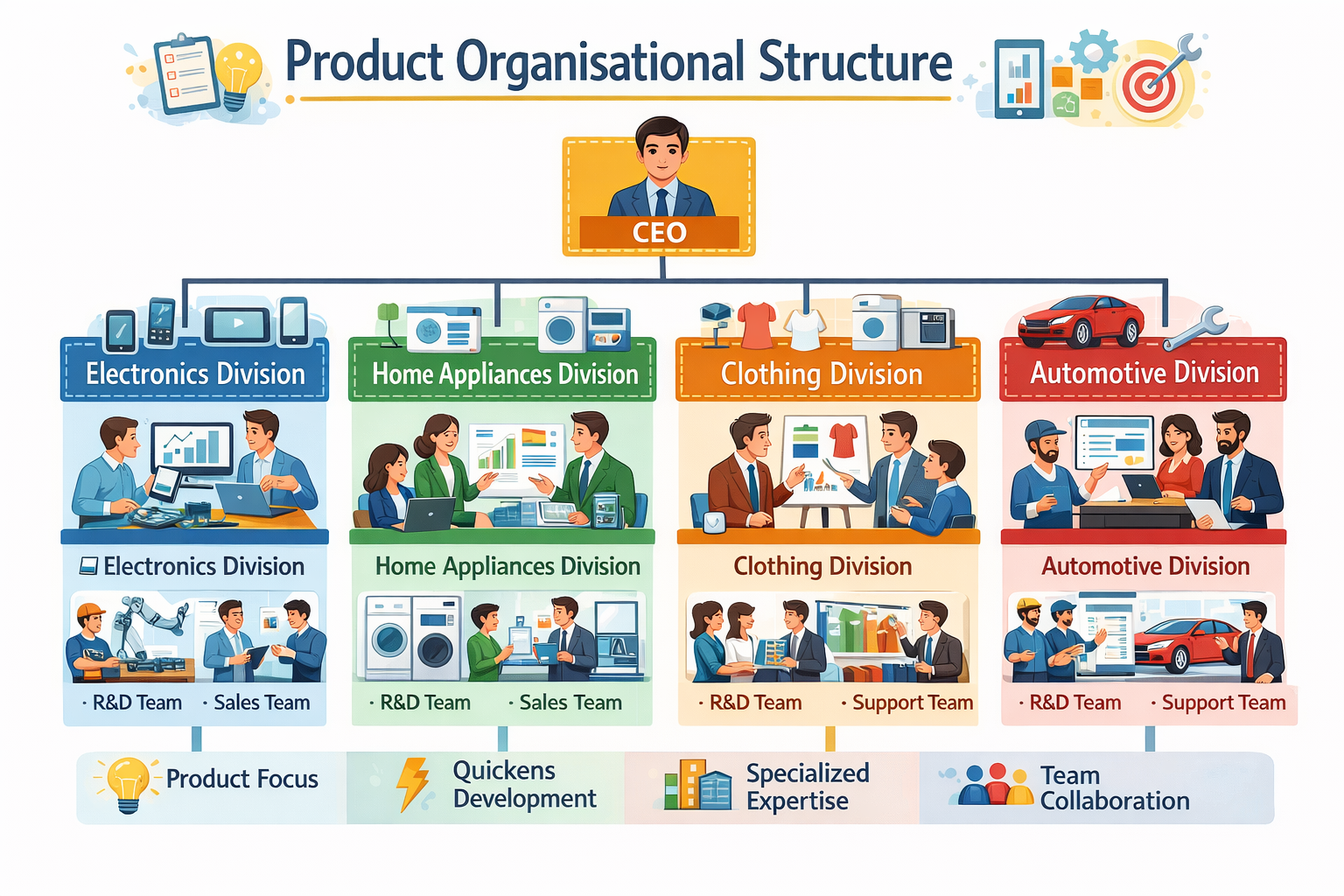
Product structure groups employees around distinct product or service lines, with each product treated as a separate unit within the business.
Advantages
- Clear accountability for each product’s performance
- Faster decision-making at product level
- Encourages innovation and product improvement
- Easier to measure profitability by product
Limitations
- Duplication of resources across product lines
- Higher operating costs
- Risk of internal competition for funding and staff
- Inconsistent branding if not well coordinated
Best suited for
- Large businesses with multiple, clearly differentiated products
- Businesses where each product targets a different customer segment
Real-life examples
- Apple: separate product lines such as iPhone, iPad, Mac, Apple Watch and Services.
- BHP: product lines such as iron ore, copper and coal operate differently due to different markets, costs and risks.
- Coca-Cola (Australia): different beverage categories (soft drinks, energy drinks, water) require different marketing and distribution approaches.
🧭 Divisional Structure
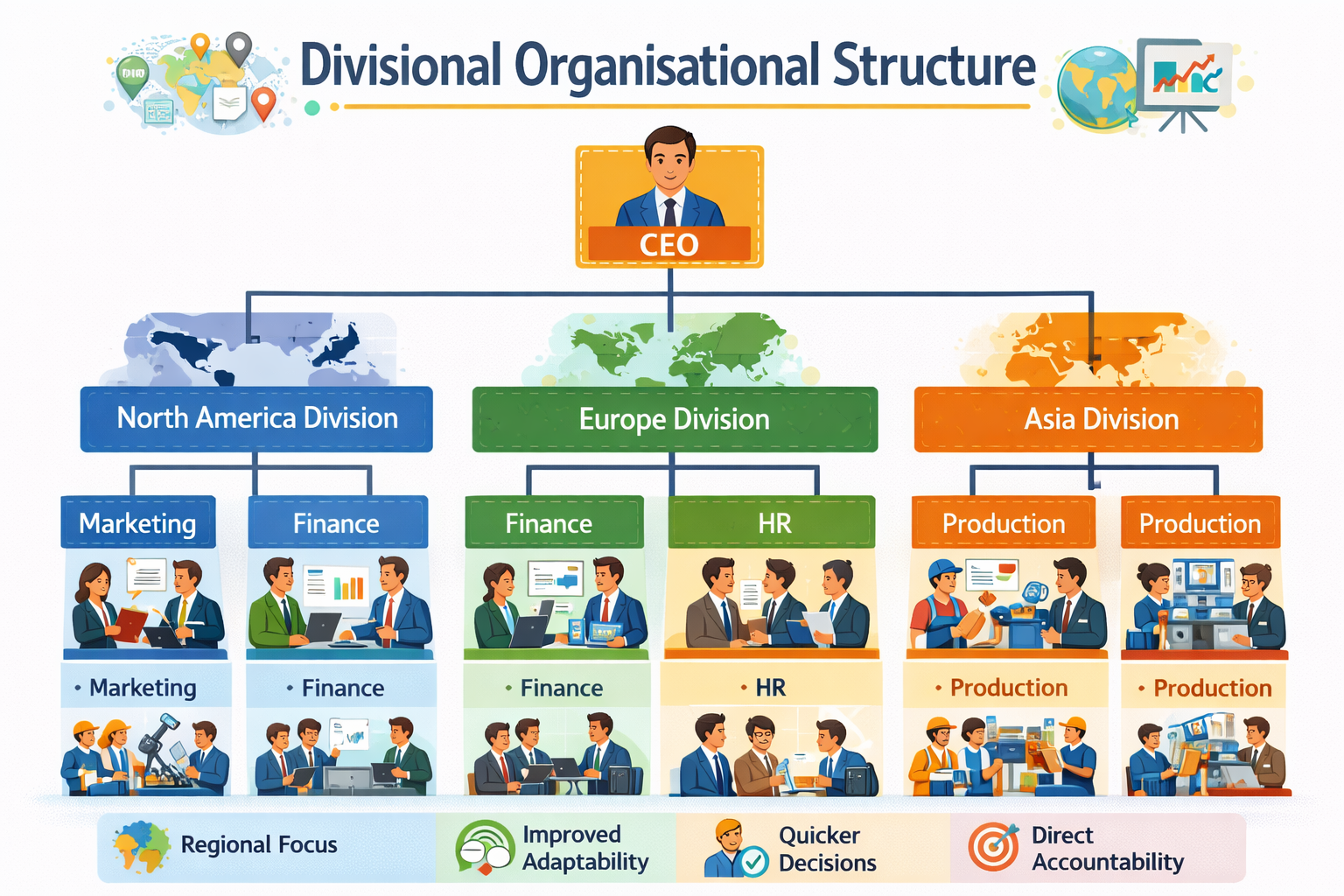
Divisional structure groups employees based on location, market, or customer group, with each division operating semi-independently and responsible for its own performance.
Advantages
- Decisions are made closer to customers and local markets
- Faster response to regional or market-specific needs
- Clear performance measurement by division
- Improves customer focus and accountability
Limitations
- Duplication of functional roles across divisions
- Higher administrative and staffing costs
- Possible inconsistency in service quality between divisions
- Requires strong head office control to maintain alignment
Best suited for
- Large organisations operating across multiple regions or markets
- Businesses needing local decision-making
Examples
- National retailers with a WA division managing local staffing, store operations and regional promotions.
- Logistics businesses operating separately in metro Perth and regional WA.
🤝 Team Structure
Team structure is a less hierarchical structure in which employees are grouped into teams with complementary skills, working toward a common goal.
Types of teams
- Cross-functional teams: include employees from different functions working toward one objective.
- Project teams: temporary teams created to complete a specific task or project, then disbanded once objectives are met.
- Ongoing teams: permanent teams responsible for continuous operations or service delivery.
Advantages
- Faster communication and decision-making
- Greater flexibility and adaptability
- Encourages collaboration and innovation
- Can improve motivation and productivity
Limitations
- Role ambiguity if leadership is unclear
- Difficult to manage consistently across teams
- Performance can vary between teams
- Not suitable for routine or highly standardised work
Best suited for
- Start-ups
- Creative and digital industries
- Project-based organisations
- Fast-changing environments
Examples
- Perth digital agencies using project teams (ads specialist + designer + copywriter + account manager) for each client campaign.
- Event businesses forming temporary teams for festivals and major event delivery.
- Construction businesses assembling project teams for individual builds.

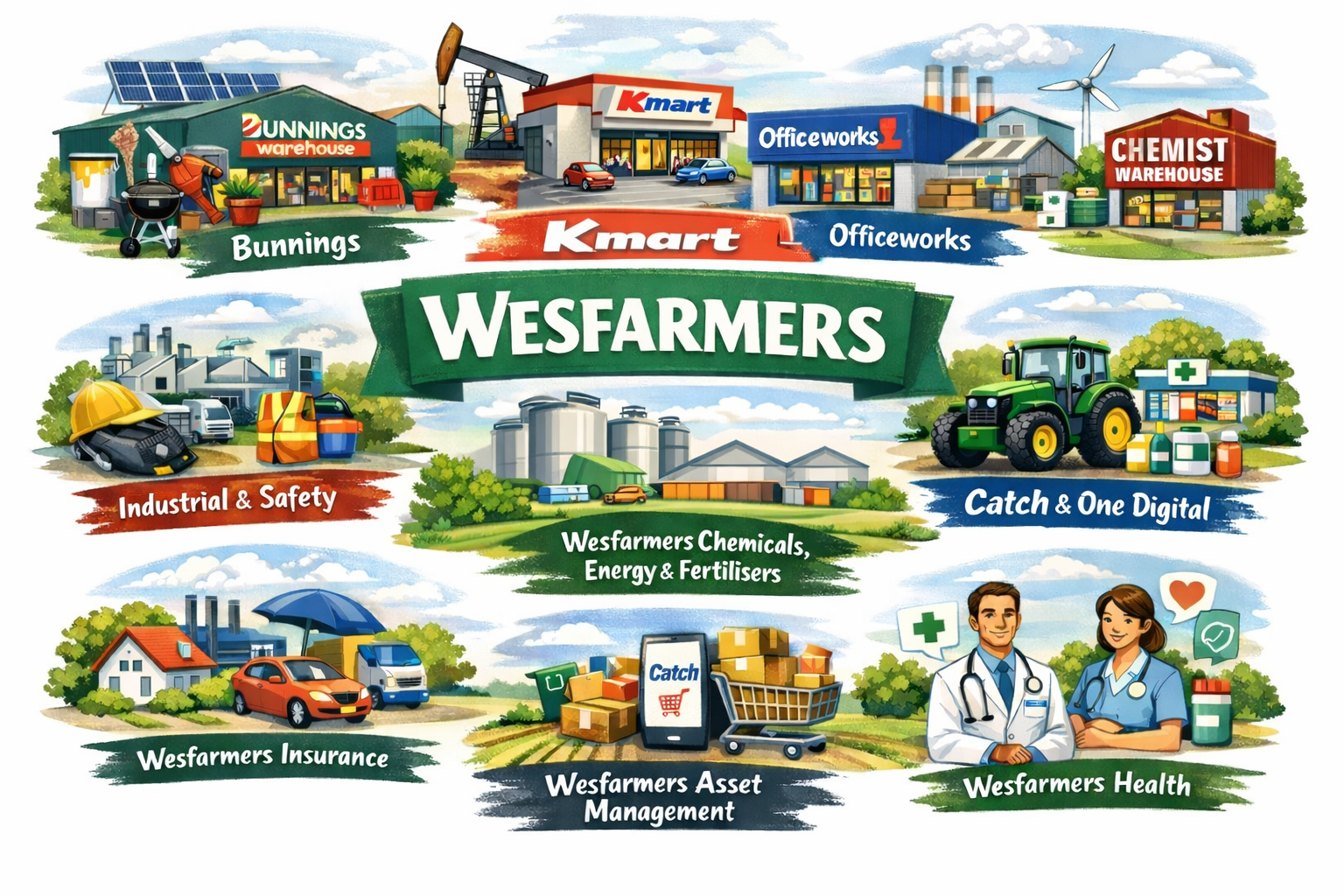
📍 Case Study: Wesfarmers (Divisional Structure)
Wesfarmers operates using a divisional organisational structure because it owns and manages multiple businesses in different retail and industrial markets.
What Wesfarmers owns (major divisions)
- Bunnings (hardware and home improvement)
- Kmart (discount department stores)
- Target (department stores)
- Officeworks (office supplies and services)
- Priceline Pharmacy (health and beauty retail)
- Catch (online retail marketplace)
- WesCEF (chemicals, energy and fertilisers)
How the divisional structure works
- Each division operates as its own business unit with its own management team.
- Each division can make decisions suited to its market (pricing, staffing, operations, promotion).
- Head office focuses on overall strategy, governance and allocating resources across divisions.
Evaluation
A divisional structure suits Wesfarmers because the divisions operate in very different markets. While this structure can increase costs due to duplication, it improves accountability and makes it easier to manage a large and complex group of businesses.
🎧 Prefer listening?
If you prefer listening to the content in Podcast format:
🎥 Prefer watching?
If you prefer watching the content in video format:

Biz Fact: Google uses team-based structures so engineers, designers and marketers work together on one product at a time.