
U2.15 — Key Elements and Structure of a Business Plan
Overview
Dotpoint 15: key elements and structure of a business plan.
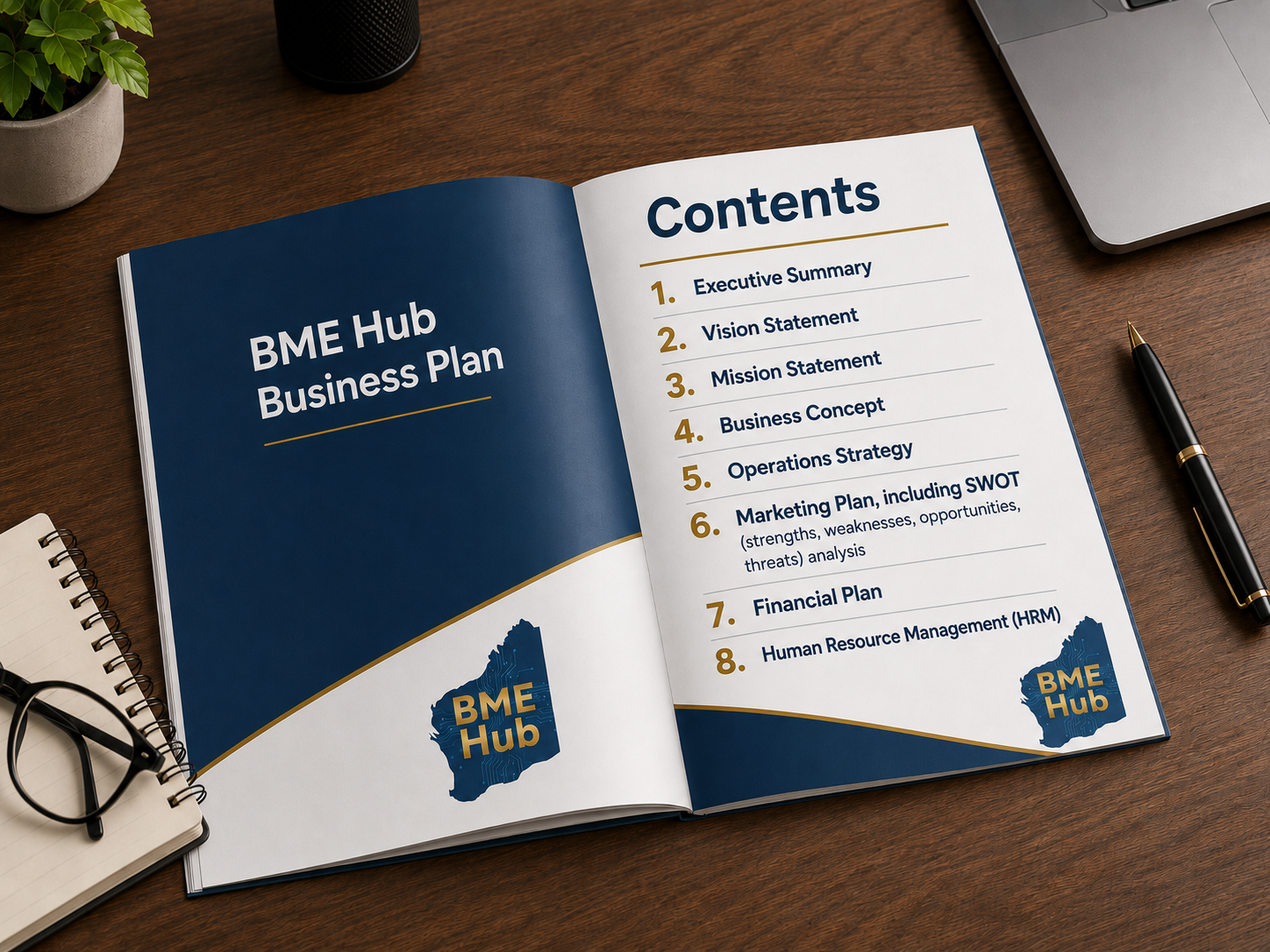
A business plan is made up of several key sections. Each section focuses on a different part of the business so that the overall plan is clear, organised and useful.
The key elements are:
- executive summary
- vision statement
- mission statement
- business concept
- operations strategy
- marketing plan, including SWOT analysis
- financial plan
- human resource management (HRM)
📄 Executive summary
The executive summary is a short summary of the whole business plan. It appears near the front and gives the reader a quick overview of the business idea, goals and main points.
What it should include
- the business name and what the business does
- a short description of the product or service
- the main target market
- the key business goals
- a short summary of the business concept
- important points from the operations, marketing and finance sections
- the main funding need, if finance is being requested
- the key reason the business looks likely to succeed
Purpose of the element
- gives the reader a quick snapshot of the whole plan
- helps banks, investors or owners quickly understand the idea
- brings together the most important points from the entire document
- encourages the reader to keep reading the rest of the business plan
Real-life examples
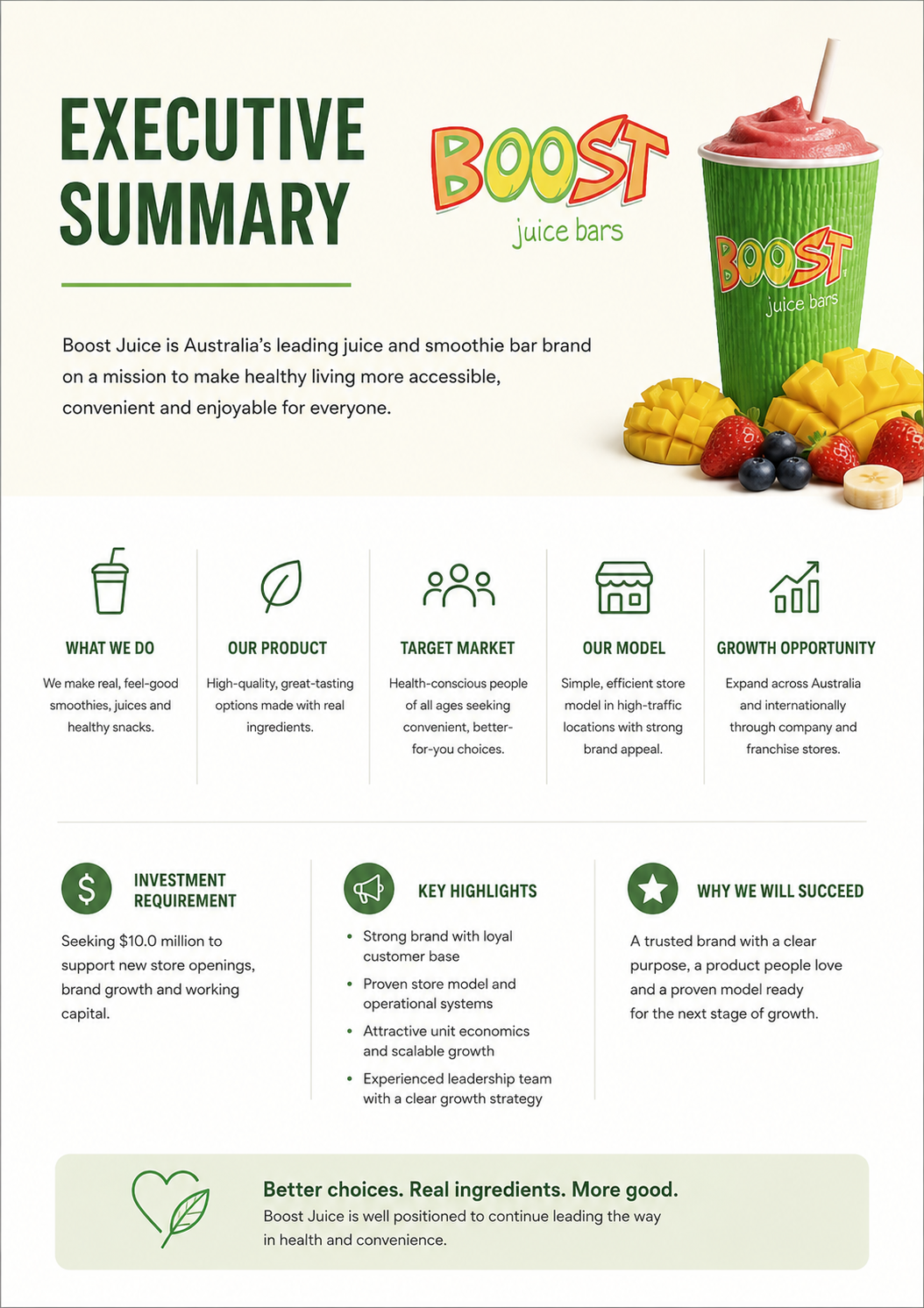
Boost Juice could use its executive summary to briefly outline its healthy drink concept, busy retail-store model, target customer and expansion opportunity.
Canva could summarise its design platform, target users, growth goals, competitive advantage and funding need in a front-page overview.
Bunnings could summarise its warehouse retail model, home-improvement focus and value-based positioning in one short section.
🌟 Vision statement
The vision statement explains what the business wants to become in the future. It gives the business a long-term direction and shows the bigger picture it is working towards.
What it should include
- a clear long-term direction
- what the business hopes to achieve or be known for
- future ambitions such as growth, leadership, innovation or reputation
- a broad future focus rather than day-to-day details
Purpose of the element
- gives the business a strong future focus
- helps guide long-term decision-making
- shows staff and owners the bigger goal they are working towards
- supports consistency in strategy over time
Real-life examples
Tesla: widely associated with a vision centred on accelerating the world’s transition to sustainable energy.
Google: often linked with a vision of making information more accessible and useful.
Amazon: strongly associated with a long-term vision of being highly customer-focused and dominant in many markets.
Qantas: linked to a vision of remaining a leading airline connecting Australia with the world.
Canva: associated with a big-picture vision of empowering the world to design.
Apple: often tied to a future-focused vision around innovation and simple technology experiences.
🎯 Mission statement
The mission statement explains the main purpose of the business. It focuses on why the business exists, what it wants to provide and the values it wants to follow.
What it should include
- the core purpose of the business
- what the business is trying to provide to customers
- important values or standards
- the customer or market the business wants to serve
Purpose of the element
- keeps the business focused on its current role
- helps guide everyday decisions and behaviour
- shows customers and staff what the business stands for
- supports consistency in service, culture and business priorities
Real-life examples
Patagonia: strongly associated with a mission built around environmental responsibility.
Thankyou: the Australian social enterprise is known for a mission linked to helping end extreme poverty.
Woolworths: often frames its mission around helping customers with food, convenience and daily needs.
McDonald’s: widely linked to delivering consistent food and customer experience across many markets.
Nike: associated with inspiring athletes and encouraging participation in sport.
IKEA: often associated with providing well-designed, functional home products at affordable prices.
💡 Business concept
The business concept explains the actual business idea. It outlines what the business will sell, who it is for and what makes it attractive to customers.
What it should include
- the main product or service
- the target market
- the USP or point of difference
- how the business will meet customer needs
- the type of business model, such as retail, online, service or franchise
- the main reason customers would choose it over competitors
Purpose of the element
- explains the core idea behind the business
- helps the reader quickly understand what the business actually offers
- shows how the business fits into the market
- clarifies the business’s competitive edge
Real-life examples
Boost Juice: fast, fresh smoothies and juices aimed at health-conscious customers in busy retail locations.
Bunnings: a warehouse-style home-improvement retailer with wide range, value pricing and convenient one-stop shopping.
Uber: a platform-based transport service connecting riders and drivers through an app.
Airbnb: a business concept built around matching travellers with short-term accommodation offered by hosts.
MECCA: beauty retail with strong brand curation, customer experience and premium positioning.
⚙️ Operations strategy
The operations strategy explains how the business will run on a day-to-day basis. It focuses on how the product or service will actually be produced or delivered.
What it should include
- suppliers and where inputs will come from
- equipment, machinery or technology needed
- location and facilities
- production or service processes
- distribution or delivery methods
- inventory or stock handling
- opening hours or service times
- initial capital investment needed to get started
Purpose of the element
- shows the business can operate in a practical way
- connects the idea to the real systems needed to make it work
- helps the owner plan cost, efficiency and quality control
- reduces the risk of the business being unrealistic or badly organised
Real-life examples
Coles would need detailed supplier and logistics systems to keep shelves stocked across many stores.
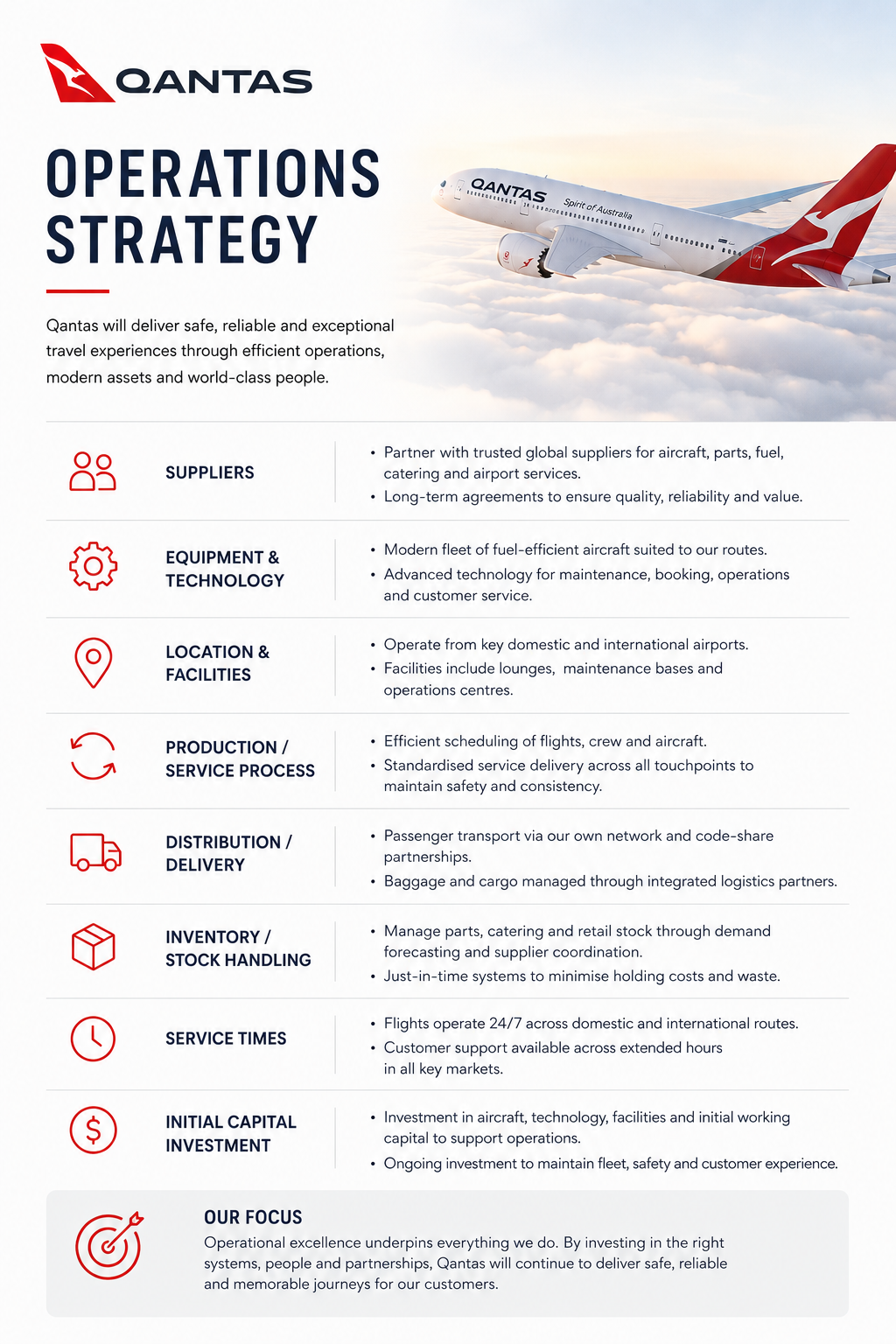
Qantas would need operations planning around aircraft, maintenance, routes, schedules and staffing.
Domino’s would need store layout, ovens, delivery systems, stock control and staffing processes.
Australia Post would rely on distribution systems, transport networks and parcel-handling processes.
📣 Marketing plan, including SWOT analysis
Marketing plan
The marketing plan explains how the business will attract customers and compete in the market. It outlines the current market situation, who the customers are, what the goals are and how the business will market itself.
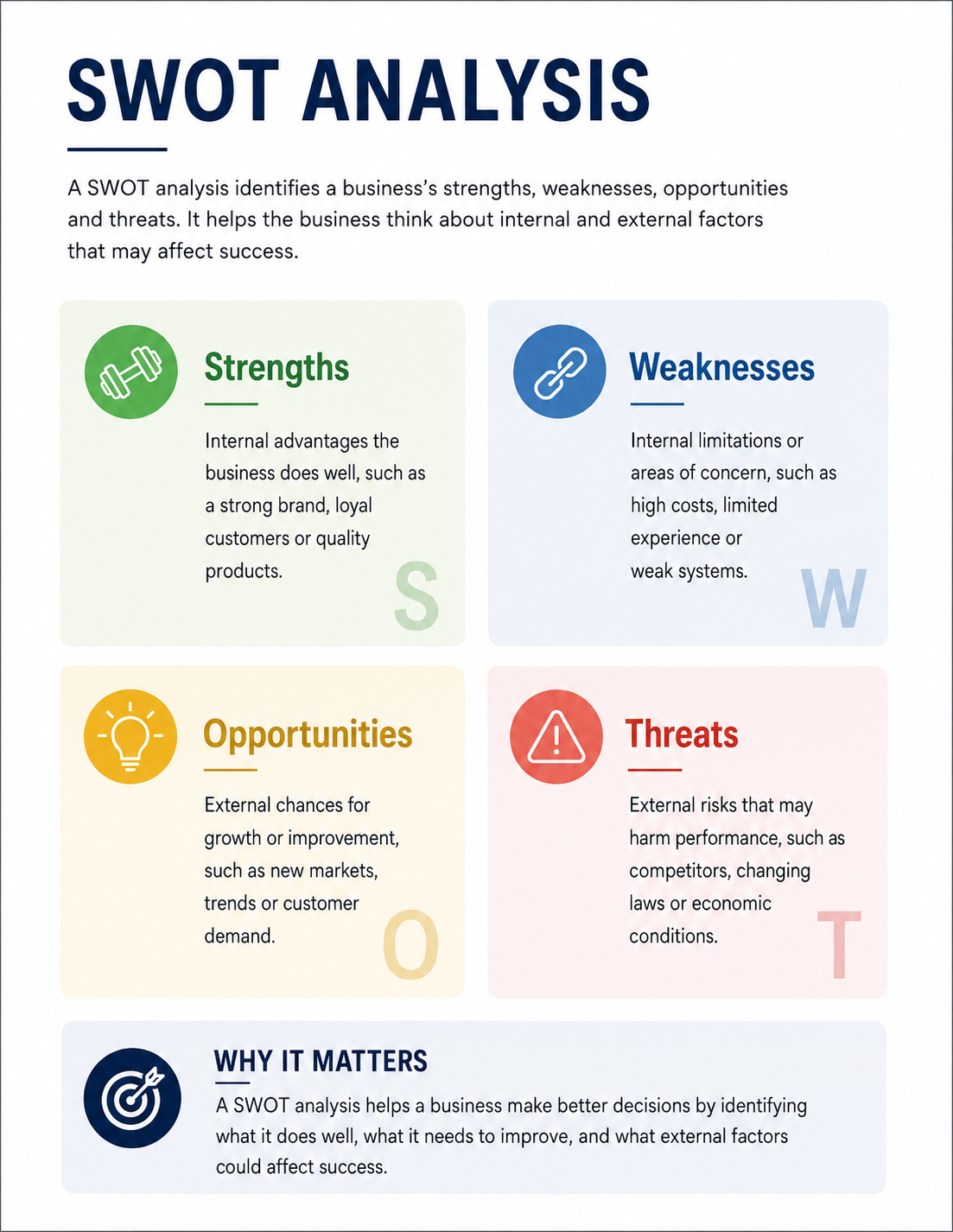
SWOT analysis
A SWOT analysis identifies the business’s strengths, weaknesses, opportunities and threats. It helps the business think about internal and external factors that may affect success.
What it should include
- market position — the business’s current reputation, experience, customer base and positioning
- competitor analysis — who the competitors are and how they compare on price, quality, service, location and promotion
- target market analysis — demographics, location, lifestyle and buying behaviour
- marketing goals — clear and measurable goals such as increasing sales, customer numbers or brand awareness
- marketing strategy — the overall approach used to reach the target market and achieve the goals
- marketing mix — the 7Ps: product, price, place, promotion, people, process and physical evidence
- SWOT analysis — strengths, weaknesses, opportunities and threats linked to the business
Purpose of the element
- shows how the business plans to win and keep customers
- helps the business understand its current market position
- connects the target market with marketing goals and strategies
- uses SWOT to identify advantages and possible risks before resources are committed
Real-life examples
Boost Juice could target teenagers, students and shopping-centre customers, while comparing itself with cafés and other drink brands.
Nike may set goals around brand awareness and product launches, supported by premium positioning and strong promotion.
MECCA could include target customers, premium positioning, store experience, digital marketing and competitor analysis against Sephora and department stores.
A Perth pilates studio may compare pricing, timetable, location, instructors and reviews against rival studios.
💵 Financial plan
The financial plan explains the money side of the business. It outlines how much funding is needed, where the money will come from and how the business expects to perform financially.
What it should include
- start-up costs such as fit-out, equipment and setup
- capital investment needed before the business begins operating
- working capital needed for day-to-day operations
- sources of finance such as savings, loans or investors
- expected sales revenue
- forecast expenses
- cash flow needs and key financial risks
Purpose of the element
- shows whether the business idea is financially realistic
- helps the owner estimate how much money is actually needed
- supports applications for loans or outside finance
- reduces the risk of underestimating day-to-day financial needs
Real-life examples
Domino’s franchise planning would include store fit-out, ovens, delivery equipment, wages, rent and stock costs.
Qantas financial planning would involve major aircraft, labour and fuel costs.
A local café might include espresso machines, furniture, rent, stock purchases, wages and enough working capital to survive the early months.
Canva would focus heavily on software development costs, staffing, marketing spend and growth funding.
👥 Human resource management (HRM)
The HRM section explains the staffing side of the business. It outlines what employees are needed, what skills they need and how they will be managed.
What it should include
- how many staff are needed
- the main roles and responsibilities
- the skills or experience required
- wages and staffing costs
- training needs
- recruitment plans
- whether outside experts such as accountants, designers or IT support are needed
Purpose of the element
- helps the business plan who will do the work
- shows whether the owner can manage everything alone or needs support
- helps estimate staffing costs and management needs
- supports smoother business setup and clearer staff expectations
Real-life examples
Woolworths would need detailed staffing plans across checkout, stocking, management and logistics roles.
Flight Centre would need trained travel consultants and support staff with strong customer-service and systems skills.
A hair salon may need senior stylists, junior staff, reception support and regular training in customer service and product knowledge.
Apple retail stores rely heavily on staff training so employees can provide consistent service and product advice.
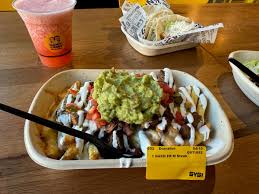
🇦🇺 Real-life example — Guzman y Gomez
Executive summary
A GYG business plan for a new restaurant could briefly outline the site location, target customer, restaurant format, fresh fast-food concept, funding required and the reason the site looks attractive.
Vision statement
Its vision-style focus would be on long-term growth and being a major fast-food brand that changes the way people think about fast food.
Mission statement
Its mission-style focus would centre on fresh food, a strong guest experience and doing fast food in a different way to more traditional rivals.
Business concept
The business concept would include Mexican-inspired fast food, restaurant and drive-thru formats, digital ordering, fresh ingredients and a clear alternative to traditional burger-based fast-food chains.
Operations strategy
This could include kitchen setup, ingredient supply, restaurant layout, ordering systems, drive-thru procedures, opening hours, delivery partnerships and store-level service standards.
Marketing plan, including SWOT
The marketing plan could include local customer groups, nearby competitors, app and loyalty tools, digital promotion, store visibility and 7P decisions. SWOT points may include strengths such as strong brand momentum and threats such as intense competition or rising costs.
Financial plan
The financial plan could include restaurant fit-out, kitchen equipment, stock, rent, wages, marketing costs, technology systems and enough working capital to support the store through its early months.
HRM
The HRM section could include restaurant managers, shift leaders, front counter staff, kitchen staff, wage costs, recruitment needs and training that supports food quality, speed and customer experience.
🎧 Prefer listening?
If you prefer listening to the content in podcast format:
🎥 Prefer watching?
If you prefer watching the content in video format:
Biz Fact: Some investors spend less than 10 minutes reading a business plan, which is why a clear structure and strong executive summary can make or break a business idea.