
U2.24 — Non-Financial Incentives for Employees
Overview
Dotpoint 24: non-financial incentives for employees, including skill improvement training and recognition and reward.
Non-financial incentives are motivation strategies that encourage employees without directly giving them extra money.
Non-financial incentives can be powerful because employees are not only motivated by pay. Many employees also want to feel skilled, trusted, respected, recognised and able to grow in their role.
This dotpoint focuses on two specific non-financial incentives businesses can use to motivate employees:
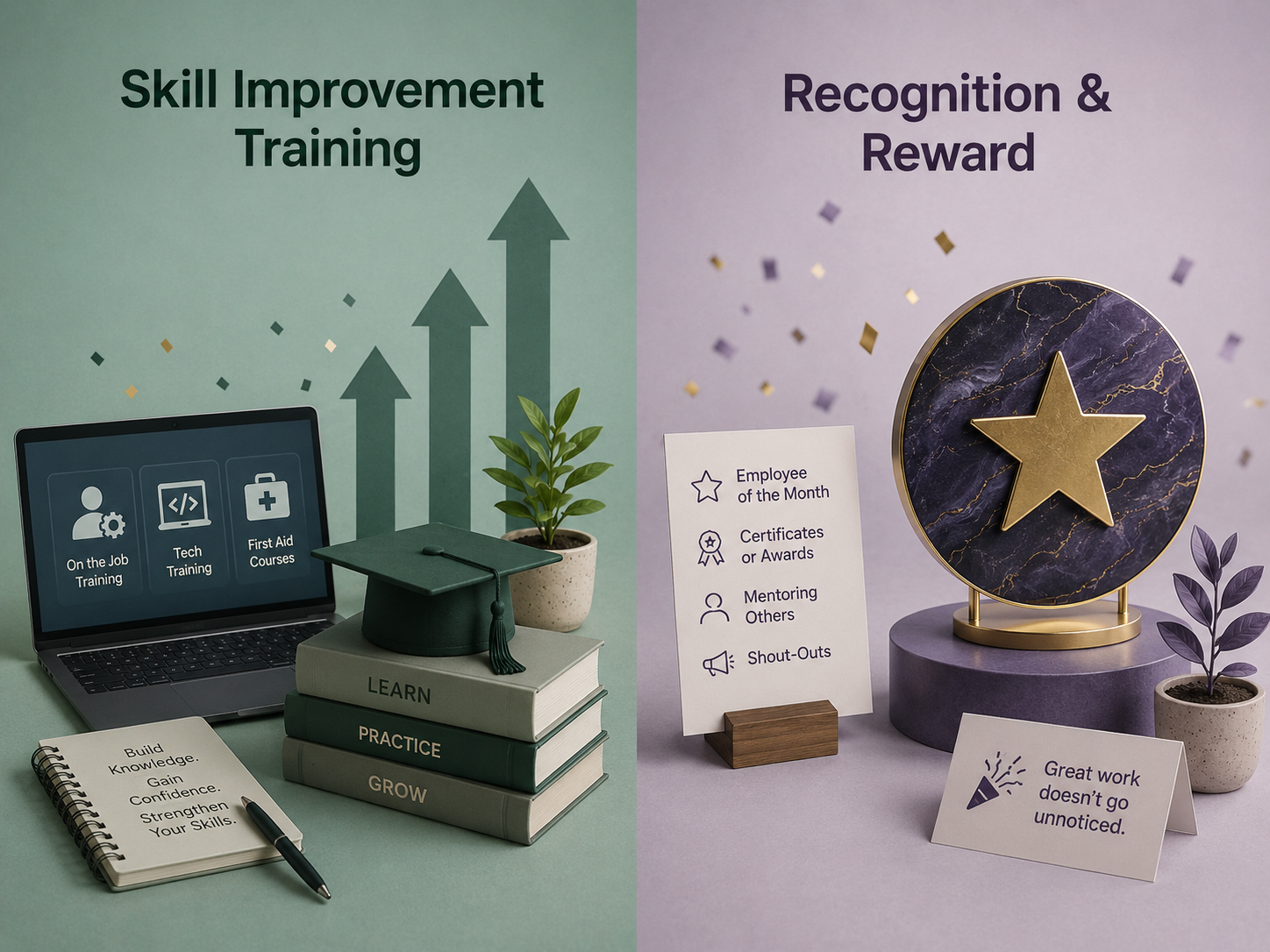
Skill improvement training — training that helps employees build knowledge, confidence and ability in their job.
Recognition and reward — non-money-based ways of acknowledging strong effort, achievement or positive workplace behaviour.
🎓 Skill improvement training
Skill improvement training is training provided by a business to help employees improve their knowledge, skills, confidence and ability to perform their job.
Summary
Skill improvement training is used to help employees become better at their work. It may involve learning new technology, improving customer service, developing leadership skills, understanding safety procedures or gaining a formal qualification.
This type of training can motivate employees because it helps them feel more capable and confident. When employees believe they are improving, they may feel more valued by the business and more willing to stay.
Training can also support business performance. Better-trained employees may make fewer mistakes, serve customers more effectively, work more safely and adapt more easily to change.
Skill improvement training links closely to Maslow’s higher-level needs because it can support growth and self-development. It also links to Herzberg’s motivators because development, achievement and responsibility can improve job satisfaction.

| Type of training | How it works | Simple example |
|---|---|---|
| On-the-job training | Employees learn while doing the job, usually with guidance from a manager or experienced worker. | A new café worker learns how to use the coffee machine during shifts. |
| Off-the-job training | Employees learn away from their normal work area, such as in a classroom, workshop, online course or external training session. | A retail employee attends a first aid course or customer service workshop outside normal duties. |
| Formal training | Employees complete structured training, such as courses, certificates or workshops. | A retail employee completes a customer service certificate. |
| Leadership training | Employees learn how to manage teams, communicate clearly and make decisions. | A team member is trained to become a shift supervisor. |
| Technology training | Employees learn how to use new systems, software or digital tools. | A business trains staff to use AI tools, booking software or point-of-sale systems. |
Pros of skill improvement training
- It can improve employee confidence because workers feel more capable in their role.
- It can increase motivation because employees see a pathway for growth.
- It can improve productivity because employees develop stronger skills.
- It can reduce errors, waste and safety risks.
- It can improve staff retention because employees feel the business is investing in them.
Limitations of skill improvement training
- Training can be expensive and time-consuming for the business.
- Employees may leave after receiving valuable training.
- Training may not motivate employees if it feels irrelevant or boring.
- Training may reduce short-term productivity while employees are away from normal work.
- Not all employees want extra responsibility or career development.
Australian examples
- McDonald’s Australia offers training and development programs, including nationally recognised qualifications in retail and food service.
- Coles may train supermarket staff in customer service, food safety, online ordering systems and store operations.
- Qantas may train cabin crew and airport staff in safety procedures, customer service and emergency response.
- Crown Perth may train hospitality staff in customer service, food handling, responsible service and workplace procedures.
World examples
- Amazon uses Career Choice to support employees with prepaid education and skills training for future career opportunities.
- Marriott and other global hotel groups may use hospitality, leadership and service training to improve guest experience.
- Nike stores may train retail employees in product knowledge, customer service and brand standards so staff can better help customers.
👏 Recognition and reward
Recognition and reward refers to non-financial ways a business acknowledges employees for strong effort, achievement, reliability or positive workplace behaviour.
Summary
Recognition and reward can motivate employees by making them feel noticed, respected and appreciated. This may include praise, certificates, awards, public acknowledgement, extra responsibility, leadership opportunities or being trusted with important tasks.
Unlike financial rewards, recognition and reward does not have to involve extra money. The focus is on status, confidence, pride and belonging. Employees may work harder when they feel their effort matters and is seen by others.
This incentive can be especially useful when employees value respect, achievement and personal growth. It can also support a positive workplace culture because people are encouraged to repeat helpful and high-quality behaviour.
Recognition and reward links closely to Maslow’s esteem needs because employees may want respect and appreciation. It also links to Herzberg’s motivators because recognition, achievement and responsibility can improve job satisfaction.
| Type of recognition | How it works | Simple example |
|---|---|---|
| Public praise | The employee is recognised in front of others. | A manager thanks an employee at a team meeting for excellent customer service. |
| Employee of the month | The employee is formally recognised for strong performance, effort or attitude. | A crew member is named employee of the month for reliable work and strong customer service. |
| Certificates or awards | The employee receives a non-money award for effort, achievement or positive behaviour. | A staff member receives a teamwork award, safety award or customer service certificate. |
| Extra responsibility | The employee is trusted with more important tasks. | A reliable worker is asked to train new staff. |
| Leadership opportunities | The employee is given a chance to lead others or contribute to decisions. | A strong team member becomes a shift leader or project leader. |
| Preferred shifts or tasks | The employee is rewarded with more choice over shifts, duties or tasks. | A consistent employee gets first choice of weekend shifts or preferred work tasks. |
| More autonomy | The employee is trusted to make more decisions about how their work is completed. | A manager allows an experienced employee to organise their own work and solve customer issues independently. |
| Mentoring others | The employee is recognised as skilled enough to guide or train other workers. | An experienced employee is asked to coach new staff members. |
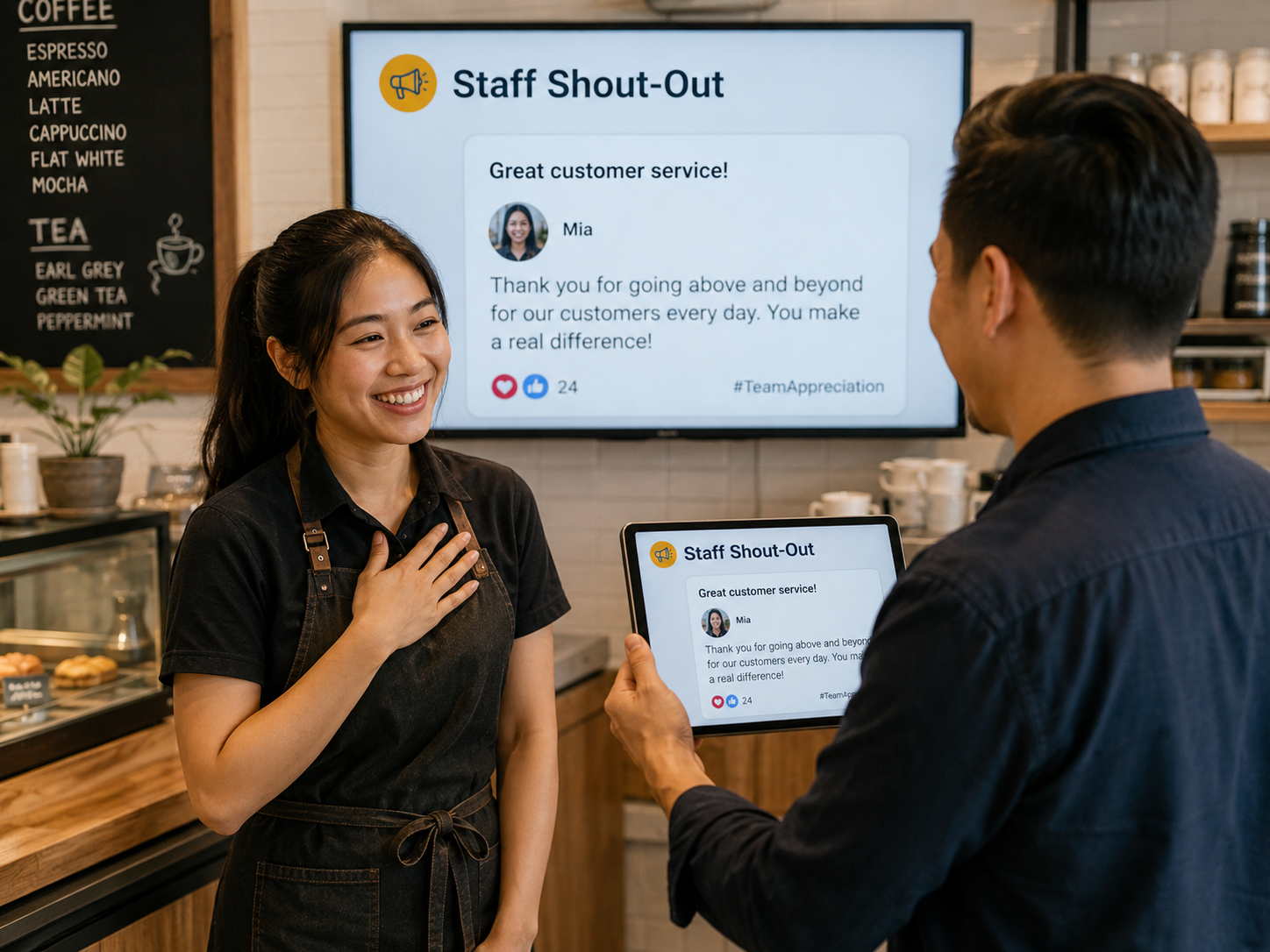
| Social media or workplace shout-out | The business publicly recognises the employee online or through an internal platform. | A café posts a staff shout-out for an employee who delivered excellent customer service. |
| Special events or celebration days | Employees are recognised through invitations to events or team celebrations. | A business invites high-performing staff to a celebration lunch or awards evening. |
Pros of recognition and reward
- It can make employees feel valued without large financial costs.
- It can improve confidence because employees know their work is appreciated.
- It can encourage positive behaviour, such as teamwork, reliability and customer service.
- It can strengthen workplace culture because people feel noticed and respected.
- It may motivate employees who are driven more by respect, status or growth than money.
Limitations of recognition and reward
- Recognition can feel fake if it is not genuine or specific.
- Employees may become demotivated if the same people are always recognised.
- Recognition may not be enough if employees are poorly paid or treated unfairly.
- Some employees may prefer private praise rather than public attention.
- It may create jealousy if employees believe recognition is based on favouritism.
Australian examples
- Kmart Australia may recognise team members through internal shout-outs, extra responsibility and leadership opportunities.
- Nando’s Australia may recognise strong team members through praise, crew trainer roles and shift leadership opportunities.
- Hoyts may recognise cinema staff through public praise, preferred roles and chances to train newer workers.
- Perth Wildcats and other sporting organisations may use awards, leadership roles and public recognition to reward positive team behaviour.
World examples
- Disney is known for recognising cast members who provide strong guest service and help protect the customer experience.
- Ritz-Carlton and other luxury hotel businesses often recognise employees who deliver excellent customer service.
- Hilton may use employee recognition programs to celebrate strong service, teamwork and hospitality standards.
🎧 Prefer listening?
If you prefer listening to the content in podcast format:
🎥 Prefer watching?
If you prefer watching the content in video format:

Biz Fact: Starbucks offers eligible staff tuition support for an online degree, showing how training benefits can motivate employees to stay and grow.