
General U2.04 - Business Protocols
Overview
Dotpoint 4: business protocols, including the use of appropriate language and business etiquette.
Business protocols are the accepted rules, expectations and professional behaviours used when people communicate and interact in a business environment.
Business interactions can occur with customers, employees, suppliers, managers and other organisations. The way people communicate and behave during these interactions can influence how professional and reliable the business appears.
Business protocols provide guidance about how people are expected to communicate and behave in different business situations.
This dotpoint focuses on two important areas of business protocols:
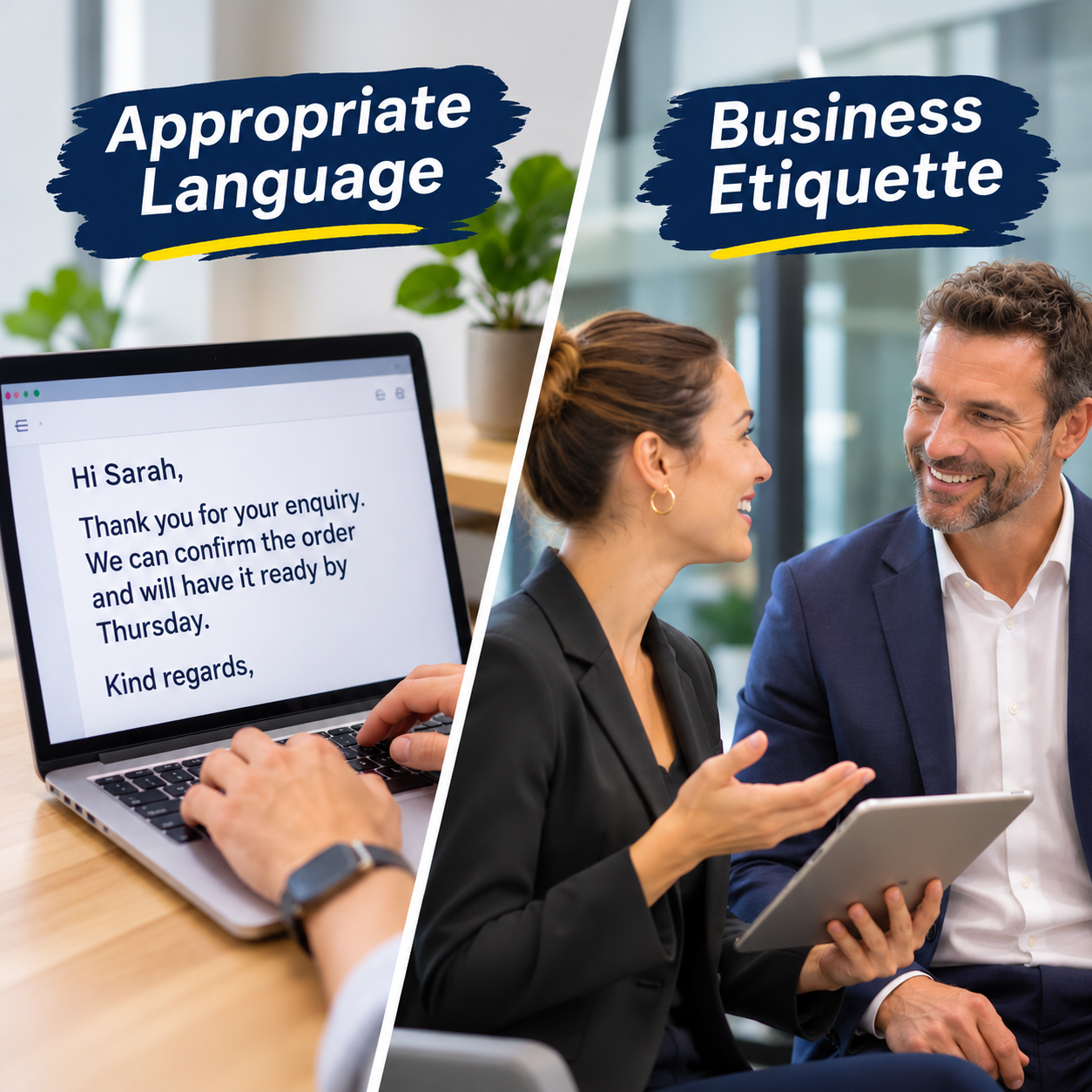
1. The use of appropriate language
2. Business etiquette
📋 Understanding business protocols
What are business protocols?
Business protocols are the accepted rules, expectations and professional behaviours used when people communicate and interact in a business environment.
They help people understand how they are expected to act in common business situations, including:
- speaking with a customer
- writing an email
- attending a meeting
- answering a telephone call
- meeting a supplier

Protocols and ethics are different
In U2.03, ethical business practice focused on whether behaviour is considered right, fair and responsible.
Business protocols focus on the accepted professional way of communicating and behaving.
For example, arriving late to a meeting without warning may break normal business etiquette even though it is not necessarily an ethical issue.
Business protocols may be formal or informal
📄 Formal protocols
Formal protocols are clearly established by the business and may appear in policies, procedures, induction materials or employee guidelines.
For example, a business may have a formal procedure explaining how employees should answer customer telephone calls or respond to complaints.
🤝 Informal protocols
Informal protocols are professional expectations that may not be written down but are commonly understood within a workplace or industry.
For example, employees may be expected to arrive several minutes before a client meeting even if this expectation is not written in a policy.
🔧 Example: an automotive repair workshop
A small automotive repair workshop may expect employees to greet customers professionally, clearly explain repair work, answer telephone calls using the business name and keep customers informed if a vehicle will not be ready at the agreed time.
Some of these expectations may appear in written customer-service procedures, while others may simply form part of the normal professional standards expected within the workshop.
Together, these expectations form part of the workshop's business protocols.

💬 The use of appropriate language
Language should suit the business situation
Appropriate business language means communicating in a way that suits the audience, situation and purpose of the interaction.
The exact language used may differ between workplaces, but professional communication should generally be clear, respectful and suitable for the person receiving the message.
Important features of appropriate business language
🗣️ Professional tone
Language should sound respectful and appropriate rather than rude, aggressive or overly casual.
🎯 Clear meaning
Messages should explain the important information clearly so the receiver understands what is required.
👥 Suitable for the audience
Language should be adjusted depending on whether the person is a customer, employee, manager, supplier or other business contact.
🚫 Avoid unnecessary slang or jargon
Slang, abbreviations or technical language should be avoided when they may confuse the person receiving the message.
The same message can sound very different
❌ Too casual
✅ Appropriate business language
Appropriate does not always mean extremely formal
The appropriate level of formality can be different from one business to another. A business should use language that suits its customers, industry and situation while still remaining clear, respectful and professional.
🏄 Surf shop
A surf shop employee helping a regular customer may use a relaxed and friendly tone when discussing boards or wetsuits. The language can be informal while still remaining clear, respectful and helpful.

🧸 Childcare centre
A childcare employee speaking with a parent may use warm and reassuring language while clearly explaining how the child has been feeling, what activities they completed and whether there are any concerns the parent should know about.

⚖️ Law firm
A lawyer communicating with a new business client may use a more formal tone, carefully explain important information and avoid casual language that could make the communication appear unclear or unprofessional.

🤝 Business etiquette
Professional behaviour matters
Business etiquette refers to the accepted standards of polite and professional behaviour when interacting with people in a business environment.
Good business etiquette can help an employee or business create a professional impression and make interactions with customers, colleagues and other businesses run more smoothly.
Common examples of business etiquette
Punctuality
Arriving on time for meetings, appointments and work commitments shows respect for other people's time.
Greetings and introductions
People should be acknowledged politely and introduced appropriately when meeting customers or business contacts.
Professional presentation
Clothing and personal presentation should suit the workplace, role and type of business interaction.
Phone and device etiquette
Employees should avoid unnecessary phone use during meetings and communicate professionally when answering business calls.
Meeting etiquette
Participants should arrive prepared, listen when others are speaking and avoid repeatedly interrupting.
Cultural awareness
Businesses should recognise that professional expectations may differ across cultures and avoid assuming that one style of interaction is appropriate everywhere.
💻 Online business etiquette
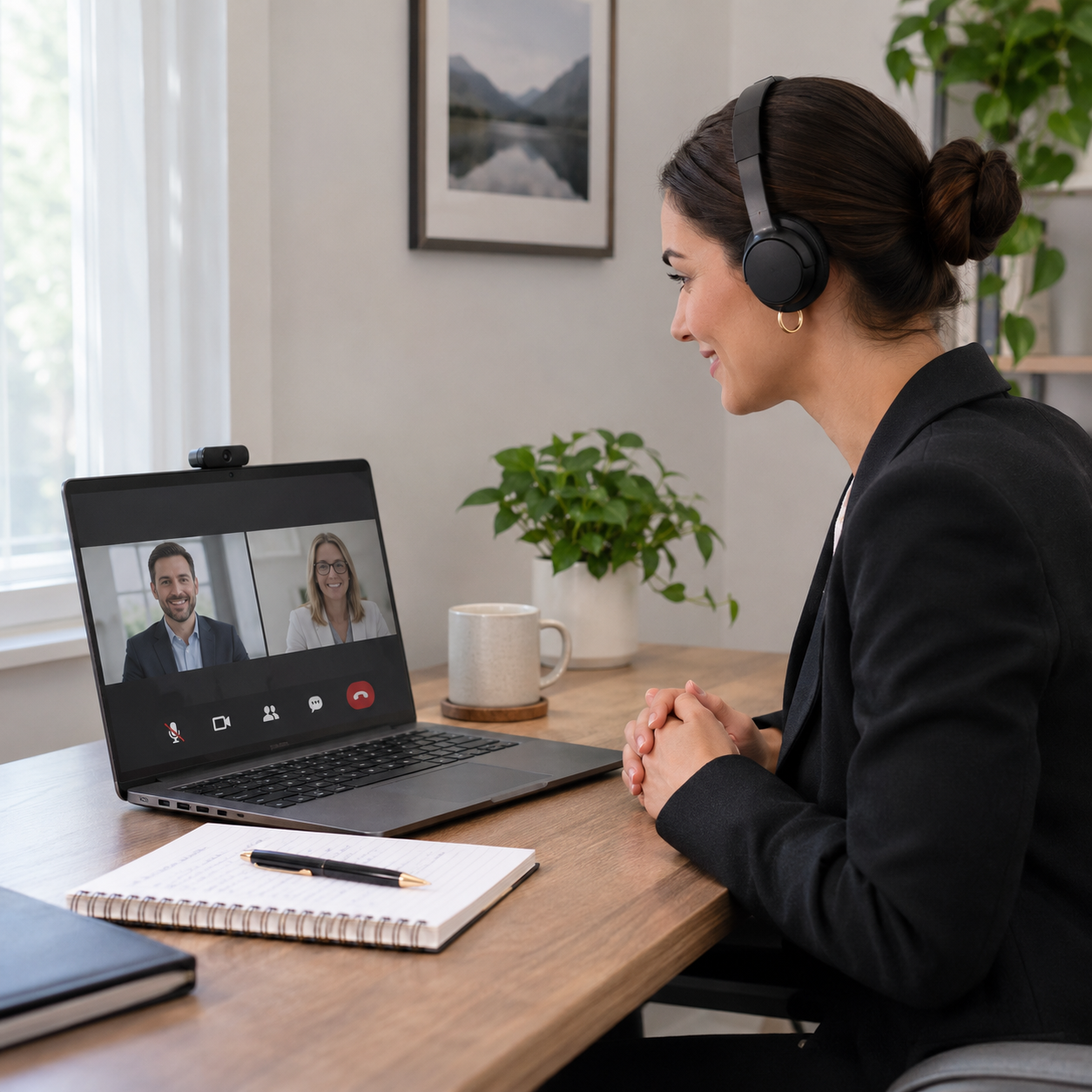
Business etiquette also applies to digital interactions such as video meetings.
An employee attending an online client meeting should join on time, use an appropriate display name, reduce background distractions, mute their microphone when necessary and avoid completing unrelated tasks while another person is speaking.
The technology may be different, but the expectation of professional behaviour remains.
Protocols can change with the situation
Business etiquette is not identical in every business, country or industry.
A small creative agency may operate with relatively informal workplace protocols, while a law firm may use more formal language, dress and meeting procedures.
Employees therefore need to understand the expectations of their own workplace and adjust their behaviour to suit the business situation.
Business etiquette in different face-to-face situations
🩺 Physiotherapy clinic
A receptionist greets a client when they arrive, makes eye contact, confirms their appointment details and listens without interrupting when the client explains a booking problem.

🏨 Hotel reception
A hotel employee welcomes a guest, speaks politely, gives clear directions to their room and remains calm while answering questions about the booking or hotel facilities.

📦 Supplier meeting
A retail business owner arrives prepared for a meeting with a new supplier, introduces the people attending, allows the supplier to finish speaking and confirms any agreed next steps before the meeting ends.

🎧 Prefer listening?
Listen to the Business Protocols podcast for another way to revise this dotpoint.
🎥 Prefer watching?
Watch the Business Protocols video to reinforce appropriate language and business etiquette.
🧑🏫 Class Activities
Hands-on activities
These activities are designed to help you apply the full content to real businesses through research, decision-making and practical classroom tasks.
How this section could be used: teachers could place students into small groups and allocate different activities, ask students to complete one or two activities each week, or use the activities at the end of each syllabus point so groups can take turns completing and presenting one task to the class. Activities can also be used as extension work, revision, or as a starting point for short class discussions.

1. Real Business Research: Woodside Energy
Research Woodside Energy's expectations for professional conduct and respectful workplace behaviour.
- Identify four expectations connected to professional behaviour.
- Identify one expectation relevant to a meeting, event or business interaction.
- Explain why a large business needs consistent protocols.
Output: prepare a one-slide class presentation titled Professional Behaviour at Woodside.
2. Rewrite the Customer Message
A Perth plumbing business needs to tell a customer that today's appointment has been delayed.
The employee sends: “hey mate running late dunno when we will get there probs this arvo.”
- Identify three problems with the message.
- Rewrite it using appropriate business language.
- Give the customer a clear next step.
Output: produce the original message beside your improved version and identify the three improvements.
3. One Message, Three Businesses
A customer or client needs an update from a business.
- Write a response for a surf shop customer asking when a new board has arrived.
- Write a response for a parent asking a childcare centre about their child's day.
- Write a response for a business client waiting for information from a law firm.
Output: create a three-column comparison showing how the language changes while each message remains clear, respectful and appropriate.
4. Business Etiquette Slideshow
A new employee at a West Perth accounting firm is preparing for their first meeting with an important client.
- Identify appropriate behaviour before the meeting.
- Identify appropriate behaviour during the meeting.
- Identify three behaviours that should be avoided.
Output: prepare a three-slide presentation titled Before, During and Avoid.
5. Protocol Detective
A Fremantle marketing agency meets a new client. One employee arrives late, another checks their phone repeatedly, while a third uses unexplained technical jargon.
- Identify each protocol problem.
- State the appropriate behaviour that should replace it.
- Explain whether each issue relates mainly to language or etiquette.
Output: complete a table headed Problem, Correct Protocol and Language or Etiquette.
6. International Business Etiquette Research
Business etiquette can vary between countries. In small groups, research professional etiquette in three of the following countries:
- Japan
- India
- Germany
- United Arab Emirates
- Singapore
For each country, investigate:
- how people commonly greet each other in a business setting
- expectations around punctuality
- how formal business communication tends to be
- business card or introduction practices
- one behaviour an Australian businessperson should be aware of before attending a meeting
Output: create a three-country comparison table or a three-slide presentation titled Business Etiquette Around the World.
✍️ Short Answer Questions
Practice questions
Answer each question before opening the sample answer. Marks are based on the command term and the number of separate points requested.
Show sample answer
Business protocols are the accepted rules, expectations and professional behaviours used when people communicate and interact in a business environment. They provide guidance about how people are expected to behave in common business situations.
Show sample answer
Business etiquette refers to the accepted standards of polite and professional behaviour in a business environment. It can include punctuality, appropriate greetings, professional presentation and respectful meeting behaviour.
Show sample answer
Appropriate business language should be clear so the receiver understands the message. It should also use a respectful and professional tone suited to the audience.
Show sample answer
The employee should join the online meeting on time so the client is not left waiting. The employee should also avoid unrelated phone use and background distractions while the client is speaking.
Show sample answer
A childcare employee could use warm but clear language when explaining how the child has been feeling and whether there are any concerns. This can help the parent understand the information while making the communication feel reassuring and professional. As a result, the parent may have greater confidence in the childcare centre.
Show sample answer
The retail owner could arrive prepared for the supplier meeting, introduce the people attending and listen while the supplier explains their offer. This demonstrates professionalism and respect during the interaction. As a result, the supplier may develop greater confidence in the business as a potential customer.
Show sample answer
One advantage is that formal protocols can give employees clear guidance about how to communicate with customers and other business contacts. A second advantage is that consistent communication may help the business create a more professional image.
One disadvantage is that developing and explaining detailed protocols can take time for a small-business owner. A second disadvantage is that overly strict protocols may make communication sound unnatural in businesses where customers expect a more relaxed style.
Show sample answer
Decision: The receptionist should greet the guest calmly, check the booking details and clearly explain the available options.
Reason: Polite and professional language is more appropriate than blaming the guest or another employee.
As a result, the hotel is more likely to maintain a professional relationship with the guest while resolving the problem.
Show sample answer
One advantage of highly formal language is that communication may appear professional and respectful, particularly when dealing with new customers or complaints.
One disadvantage is that highly formal language may sound unnatural in a surf shop where customers may expect a friendly and relaxed style.
Overall, the surf shop should use professional language without making every interaction highly formal. A relaxed tone is appropriate provided the communication remains clear and respectful.
🃏 Flashcards
Card 1 of 8
🎮 Revision Games
💰 Protocol Millionaire
Climb the ladder by mastering business protocols, appropriate language and etiquette.
🔎 Protocol Detective
Inspect realistic workplace situations and identify the protocol involved.
⚡ 60 Second Showdown
Race through mixed questions about communication, etiquette and workplace protocols.
Biz Fact: Bunnings includes customer greeters among its store roles, demonstrating how welcoming customers can be part of business etiquette.