
U1.13 - Key Elements of a Marketing Plan
Overview
Dotpoint 13: Key Elements of a Marketing Plan
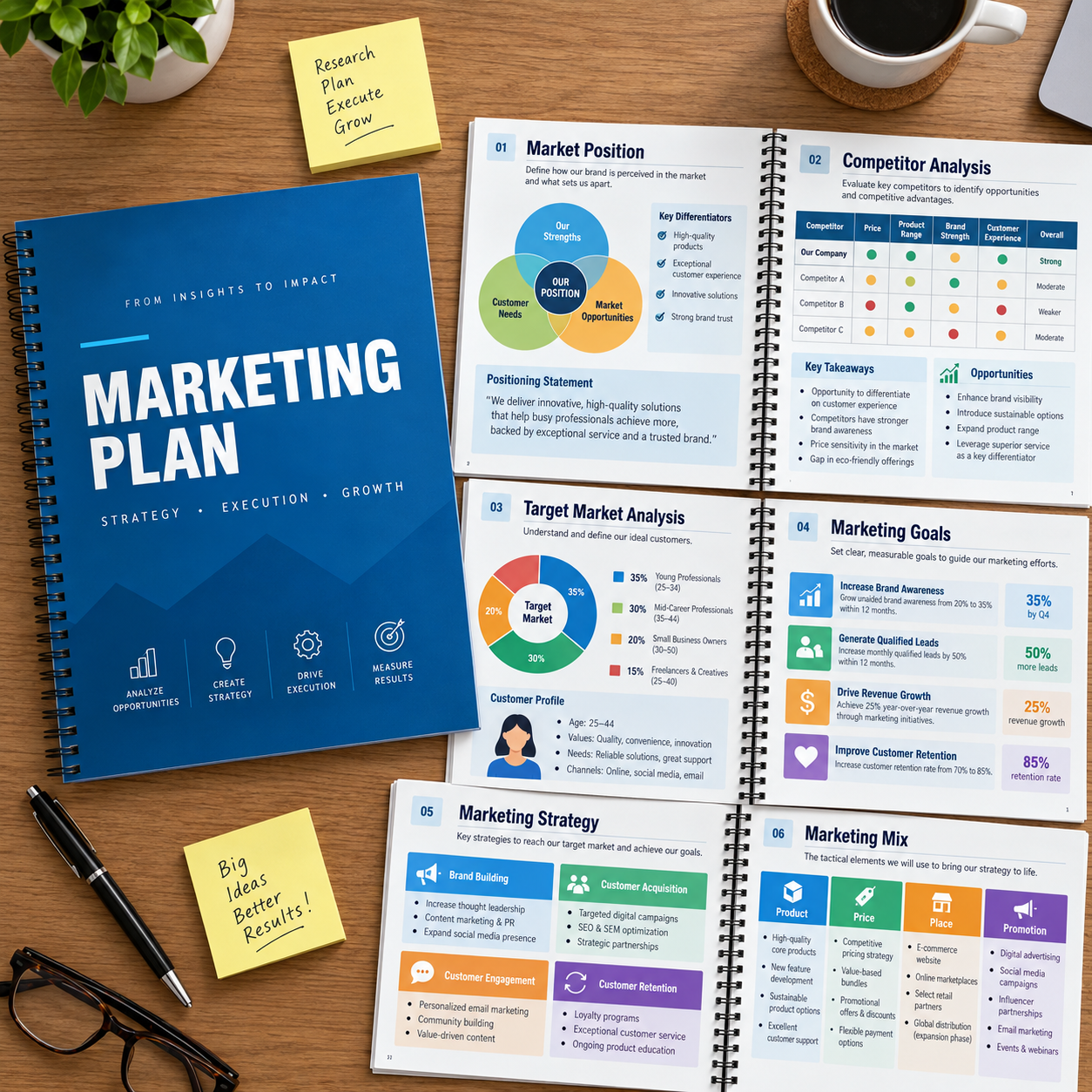
A marketing plan is a document outlining a firm's marketing objectives and marketing strategies to be used to achieve these objectives.
This dotpoint focuses on the following key elements of a marketing plan:
- Market position
- Competitor analysis
- Target market analysis
- Marketing goals
- Marketing strategy
- Marketing mix
What is a Marketing Plan?
A marketing plan is a document outlining a firm's marketing objectives and the marketing strategies that will be used to achieve those objectives.
When is it used?
A marketing plan is commonly prepared when a business is launching a new product, entering a new market, trying to increase sales or responding to stronger competition.
What does it include?
A marketing plan usually considers:
- the business's current market position
- its competitors
- its target market
- its marketing objectives
- its marketing strategy
- its marketing mix.
WA Case Study - Alfred's Kitchen (Guildford)
Alfred's Kitchen is a well-known roadside burger business in Guildford, Western Australia. It was founded by Alfred Cook in 1946, originally operating from a small roadside caravan. It describes itself as Perth's longest-running roadside burger kitchen and has built a strong reputation over decades for its burgers, late-night trading and distinctive outdoor dining experience.
Despite being an established business, Alfred's Kitchen could still use a marketing plan when making an important marketing decision.
For example, it may develop a marketing plan if it wanted to:
- attract more younger customers
- increase sales during quieter trading periods
- promote a new menu item
- respond to increasing competition from other burger restaurants
- expand its online and social media marketing
- strengthen its position as a well-known Guildford destination.
The marketing plan would help Alfred's identify what it wants to achieve, who it wants to target and which marketing strategies should be used to achieve those objectives.

Key Elements of a Marketing Plan
Each element answers a different question about the business's marketing direction.
1) Market position
Market position is a summary of the existing situation the business finds itself in. It shows what the business already has and the starting point it is working from.
- Length of operation
- Customer base
- Experience of owners/managers
- Reputation or brand image
- Positioning - budget, mid-range or premium
Example: A new tutoring business has a different market position from an established tutoring centre with strong results and repeat customers.
2) Competitor analysis
Competitor analysis identifies competitors and compares key factors such as price, quality, location, service and promotion.
- Who are the main competitors?
- What do they do well?
- Where are they weak?
- What could the business do differently?
Example: A Perth pilates studio might compare itself with other studios on pricing, timetable, location, instructors and reviews.
3) Target market analysis
Target market analysis identifies the specific customers the business wants to reach.
- Demographics: age, income and family situation
- Location: where customers live or travel from
- Lifestyle: students, FIFO workers, tourists and families
- Buying behaviour: online vs in-store, convenience vs experience
Example: A business near a WA university may target students using student deals and strong social media promotion.
4) Marketing goals
Marketing goals are what the business wants to achieve. Strong goals are clear and measurable.
- Increase sales revenue
- Increase customer numbers
- Improve brand awareness
- Increase market share
Example: "Increase bookings by 15% this term" is clearer than "get more customers".
5) Marketing strategy
Marketing strategy is the overall approach used to reach the target market and achieve the goals.
- Compete mainly on price
- Compete mainly on quality or experience
- Differentiate with something unique
- Focus on a niche group of customers
Example: A WA barber might compete by offering a premium experience rather than trying to be the cheapest.
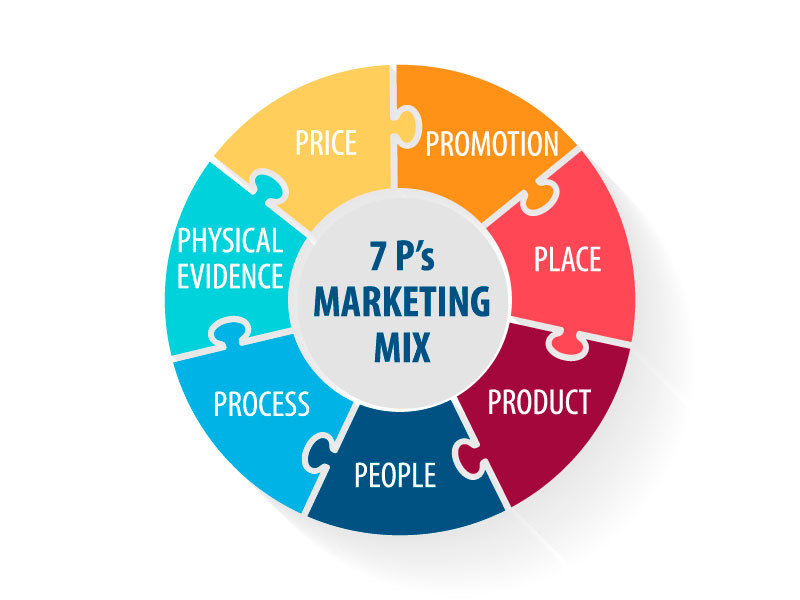
6) Marketing mix - Extended Marketing Mix (7Ps)
Marketing mix is an extension of the marketing strategy. The marketing strategy sets the overall approach, while the marketing mix contains the specific strategies and decisions used to put that approach into action.
These decisions are organised around the 7Ps:
The individual marketing-mix strategies are explored in more detail in U1.16 and U1.17.
Example of how to write this in an exam
Competitor analysis
Competitor analysis involves identifying rival businesses and comparing factors such as their price, quality, location, service and promotion. For example, a Perth pilates studio could compare its membership prices, timetable, instructor experience and customer reviews with competing studios. This helps the business identify competitor strengths and weaknesses and determine how it could differentiate itself.
Target market analysis
Target market analysis identifies the specific customers a business wants to reach by examining factors such as age, income, location, lifestyle and buying behaviour. For example, a business located near a WA university may identify students as its target market and use student discounts and social media promotion to appeal to them.
Purpose of Marketing Plans
A marketing plan gives a business a structured approach to its marketing rather than relying on isolated ideas or one-off promotions. It connects the business's current position, target customers, goals and strategies into one coordinated plan.
Direction
A marketing plan gives the business a clear direction by identifying what it wants to achieve, who it wants to reach and the strategies it will use. This helps managers and employees work towards the same marketing objectives.
Better decision-making
Research into competitors, customers and the business's current market position allows marketing decisions to be based on evidence rather than guesswork.
Better use of resources
Planning helps a business decide where to spend its marketing budget, time and staff effort. This can reduce wasted spending on promotions or strategies that do not support the business's objectives.
Measuring performance
Clear marketing goals allow the business to compare actual results with what it planned to achieve. If results are below expectations, the business can adjust its strategies.
Responding to change
A marketing plan can also help a business respond to changing customer preferences, new competitors, declining sales or new opportunities. Because the plan identifies goals and strategies, managers can review and adjust the plan when market conditions change.
Example Marketing Plan Layout (WA)
Example business: Swan River Kayak Tours - a WA-based tour operator that has been operating for two years.
The business performs strongly on weekends but has lower weekday bookings. Most customers are tourists and Perth locals looking for outdoor activities, and the owners want to attract more tourists, couples and local families during quieter periods.
Before the upcoming spring and summer season, Swan River Kayak Tours is preparing a new marketing plan focused on increasing weekday bookings, strengthening its online presence and positioning its tours as a safe, scenic and beginner-friendly Perth experience.

Market position
The business has been operating for two years and already has strong weekend demand and positive customer reviews. Most existing customers are tourists and Perth locals looking for weekend activities.
Its main weakness is low weekday demand, so the marketing plan needs to build on its existing reputation while encouraging customers to book outside peak periods.
Competitor analysis
The business would compare itself with other Perth tourism and recreation businesses, including boat cruises, bike tours and adventure-tour operators.
Competitors may have stronger online advertising and package deals, so Swan River Kayak Tours could differentiate through local guides, safety, scenery and a beginner-friendly experience.
Target market analysis
The main target groups could include tourists visiting Perth, local couples and families looking for outdoor activities, and customers searching for school-holiday experiences.
The business could focus particularly on customers who value accessible outdoor experiences, convenient online booking and memorable local activities.
Marketing goals
The business could set a goal to increase weekday bookings by 20% over the next three months.
A second goal could be to increase brand awareness by generating more website visits, enquiries and social-media engagement before the summer tourism period.
Marketing strategy
The overall strategy could be to position Swan River Kayak Tours as a safe, scenic and beginner-friendly WA experience.
The business could also build partnerships with hotels and tourism pages, while using weekday specials to shift some customer demand away from weekends.
Marketing mix (7Ps)
- Product: beginner tours and sunset tours
- Price: weekday discounts and family bundles
- Place: online booking and tourism partnerships
- Promotion: Instagram reels, Google ads and TripAdvisor
- People: trained guides and strong customer service
- Process: simple booking and a clear safety briefing
- Physical evidence: branded gear, quality photos and a professional website
🎧 Prefer listening?
If you prefer listening to the content in podcast format:
🎥 Prefer watching?
If you prefer watching the content in video format:
🃏 Flashcards
Card 1 of 10
🎮 Revision Games
💰 BME Millionaire
Climb the ladder by mastering marketing plans and their key elements.
🧩 Marketing Plan Builder
Match each business decision to the correct marketing-plan element.
⚡ 60 Second Showdown
Rapid-fire questions on the plan, elements and 7Ps.

Biz Fact: Apple's marketing plans are product-launch driven, not calendar driven. Campaign timing is aligned to innovation cycles, not financial years.