
U1.14 - Characteristics of Market Segmentation
Overview
Dotpoint 14: Characteristics of Market Segmentation
Market segmentation is the process of dividing a large market into smaller groups of customers with similar characteristics, so marketing can be more targeted.
This dotpoint focuses on three major characteristics used to segment a market:
- Demographic
- Geographic
- Psychographic - lifestyle and behaviour
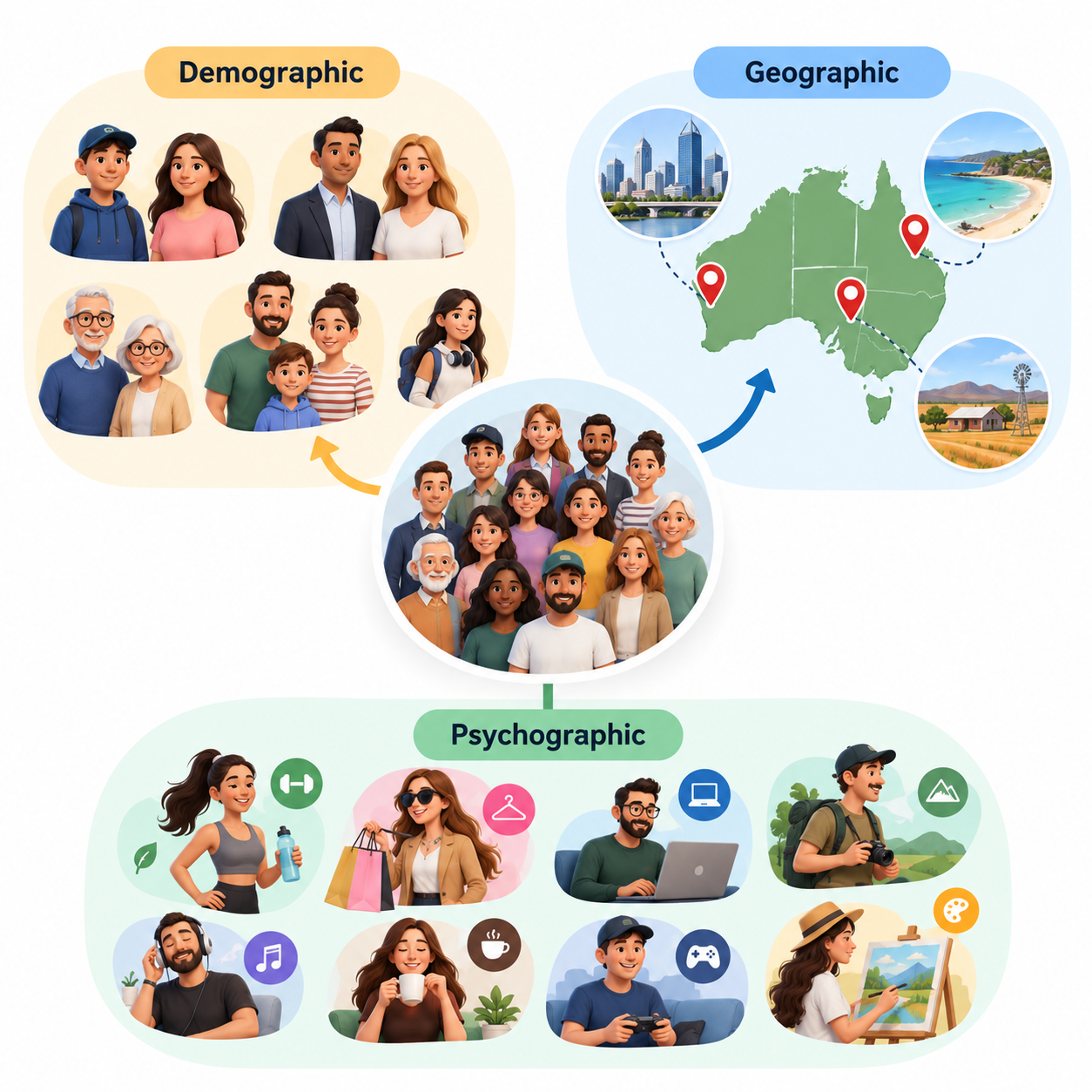
What is Market Segmentation?
Market segmentation is the process of dividing a large market into smaller groups of customers with similar characteristics, so marketing can be more targeted.
Businesses rarely try to market exactly the same product or message to every possible customer. Instead, they divide the broader market into smaller groups whose needs, characteristics or buying behaviour are similar.
This allows a business to adapt its products, advertising messages, media channels, prices or offers to better suit different groups of customers.
Why businesses segment a market
Different groups of customers may want different products, value different benefits or respond to different types of advertising. Segmentation helps the business make its marketing more relevant.
- More effective marketing: advertising can be designed for a particular customer group rather than being too general.
- Better product decisions: products and services can be adapted to suit the needs of different groups.
- Smarter pricing: different segments may have different incomes and willingness to pay.
- Better place decisions: stores, delivery areas or promotion can be focused where particular groups are located.
- Less wasted spending: marketing can be directed towards customers who are more likely to buy.
Segmentation is not the same as a target market
Market segmentation is the process of sorting the broader market into different groups. A target market is the segment or segments the business then chooses to focus its marketing on.
Example: A gym may segment its market into students, FIFO workers, parents and retirees. It might then choose FIFO workers and students as two target markets.
The business could then market differently to each group:
- FIFO workers: promote flexible memberships that can be paused while customers are away.
- Students: promote cheaper memberships through social media and student discounts.
The same principle applies to larger businesses. For example, Nike could advertise to teenagers through social media and influencers, use performance-focused advertising for serious runners, and use comfort and health-focused messaging for older customers. The business is still selling its products, but it adapts its marketing to suit the needs and characteristics of different segments.
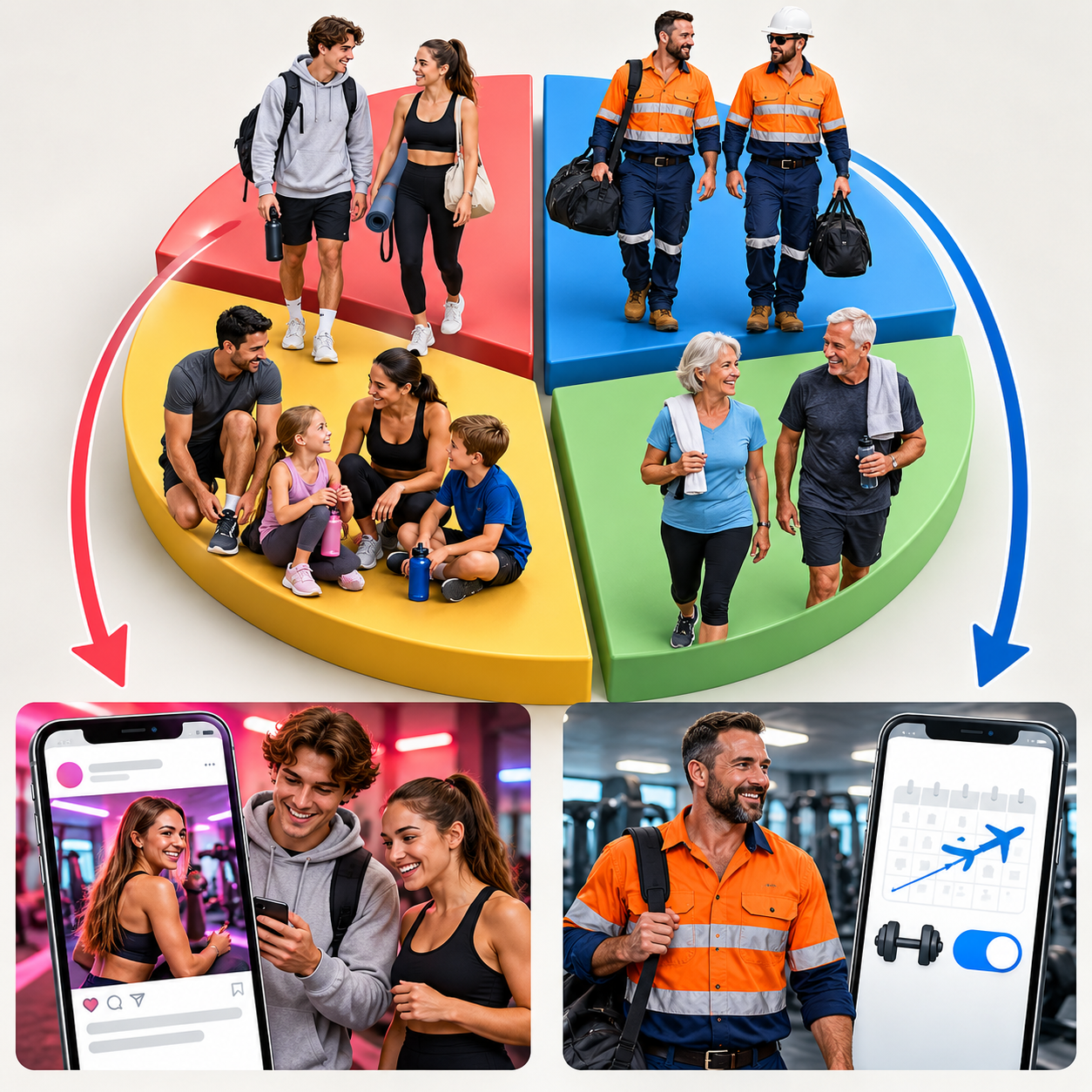
Three ways to segment a market
This dotpoint focuses on three major characteristics businesses can use to divide a market:
- Demographic - who the customer is
- Geographic - where the customer is located
- Psychographic - how the customer lives and behaves
Example of how to write this in an exam
Market segmentation is the process of dividing a broad market into smaller groups of customers with similar characteristics. For example, a gym may identify students, FIFO workers, parents and retirees as separate segments. The business may then choose more than one segment to target and use different prices, promotions or messages for each group.
Demographic Segmentation
Demographic segmentation is based on who the customer is. It divides customers according to measurable personal or social characteristics such as age, income, occupation or life stage.
These characteristics can help a business understand differences in customer needs, spending power and preferences, allowing it to adjust products, prices and promotion for different demographic groups.
Common demographic characteristics
- Age: teens, young adults, middle-aged customers or retirees
- Gender: products or promotions may be designed for different customer groups
- Income: budget buyers compared with premium buyers
- Education: school, TAFE or university students
- Occupation: FIFO workers, office workers or tradespeople
- Life stage: single customers, couples or families with children
- Family size: larger families may value bundle deals or family-sized products

Examples
- A tutoring business targets Year 11-12 students and their parents with senior-school exam preparation.
- A dentist promotes Invisalign to working adults with higher disposable income.
- A gym targets FIFO workers with flexible membership pauses.
- A café runs a kids eat free offer to attract families during early dinner times.
These Nike ads show how a business can alter its advertising to appeal to different demographic customer groups.
Example of how to write this in an exam
Demographic segmentation divides customers according to characteristics such as age, income, occupation or life stage. For example, a gym may target FIFO workers with flexible membership pauses because their occupation involves periods away from home. This allows the business to adapt its service and promotion to the needs of that demographic group.
Geographic Segmentation
Geographic segmentation is based on where the customer lives, works or travels from. A business can divide customers by suburb, region, country or type of location.
Customer needs can differ between locations because of climate, population, tourism, local competition and access to the business. This means the business may change its product range, promotion or distribution for different geographic groups.
Common geographic characteristics
- Suburb or local area: Customers in Scarborough or Trigg may have different lifestyles and spending patterns from customers in Midland or Joondalup.
- International markets: Customers in New Zealand, South-East Asia, Europe or the UK may differ in culture, language, income and buying preferences.
- Urban vs regional: Perth metropolitan customers may have greater access to stores and services, while customers in Bunbury, Kalgoorlie or Albany may have different needs because of distance and availability.
- Tourist locations: Customers in Rottnest Island, Fremantle or Elizabeth Quay may include more visitors, so businesses may focus on convenience, experiences and tourist spending.
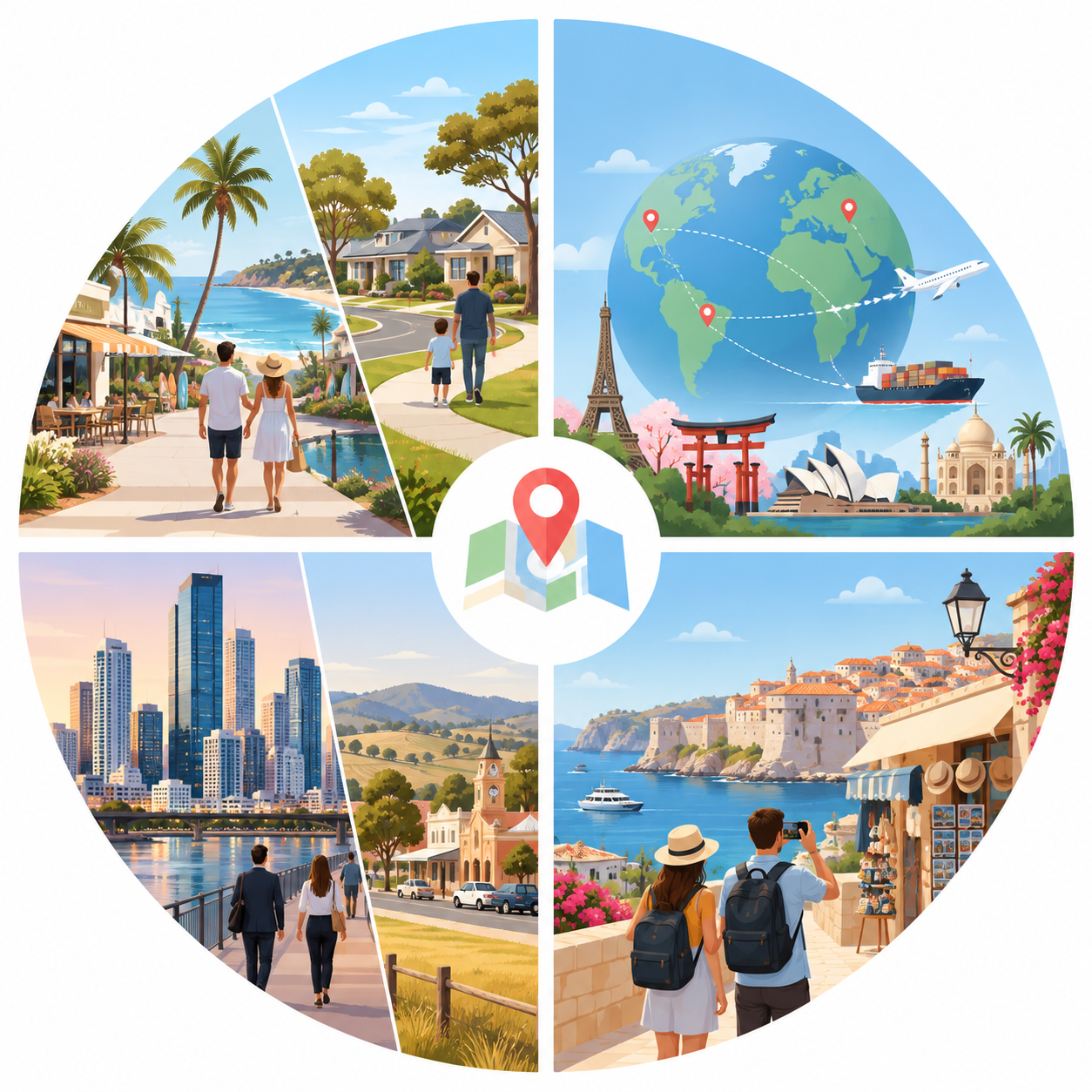
Examples
- A café near Scarborough Beach may target beachgoers and tourists with quick meals, cold drinks and summer promotions suited to a coastal location.
- A takeaway business in Joondalup may focus on nearby students and office workers by offering fast weekday lunch options and convenient takeaway service.
- A mechanic in Bunbury may focus on regional residents and commuters, where customers may rely more heavily on cars and have fewer nearby service alternatives than in metropolitan Perth.
- A souvenir store at Elizabeth Quay may target domestic and international tourists with Perth-themed products, gift items and convenient purchases near major visitor attractions.
Example of how to write this in an exam
Geographic segmentation divides customers according to where they live, work or travel from. For example, a café near Scarborough Beach may target beachgoers and tourists with quick meals, cold drinks and summer promotions because customers in a coastal tourist location may have different needs from customers in another suburb. This allows the café to tailor its products and promotion to the characteristics of that geographic segment.
Psychographic Segmentation
Psychographic segmentation is based on how customers live and behave. It considers lifestyle, values, interests and buying behaviour.
Psychographic characteristics often help explain why customers buy. Two people of the same age and income may still want very different products because they have different lifestyles, interests or values.
Common psychographic characteristics
- Lifestyle: sporty, outdoors, luxury, health-focused or busy schedules
- Values: convenience, sustainability, status or quality
- Interests: fitness, gaming, fashion, cars or travel
- Behaviour: loyal vs first-time customers, frequent vs occasional buyers, or price-sensitive vs less price-sensitive customers
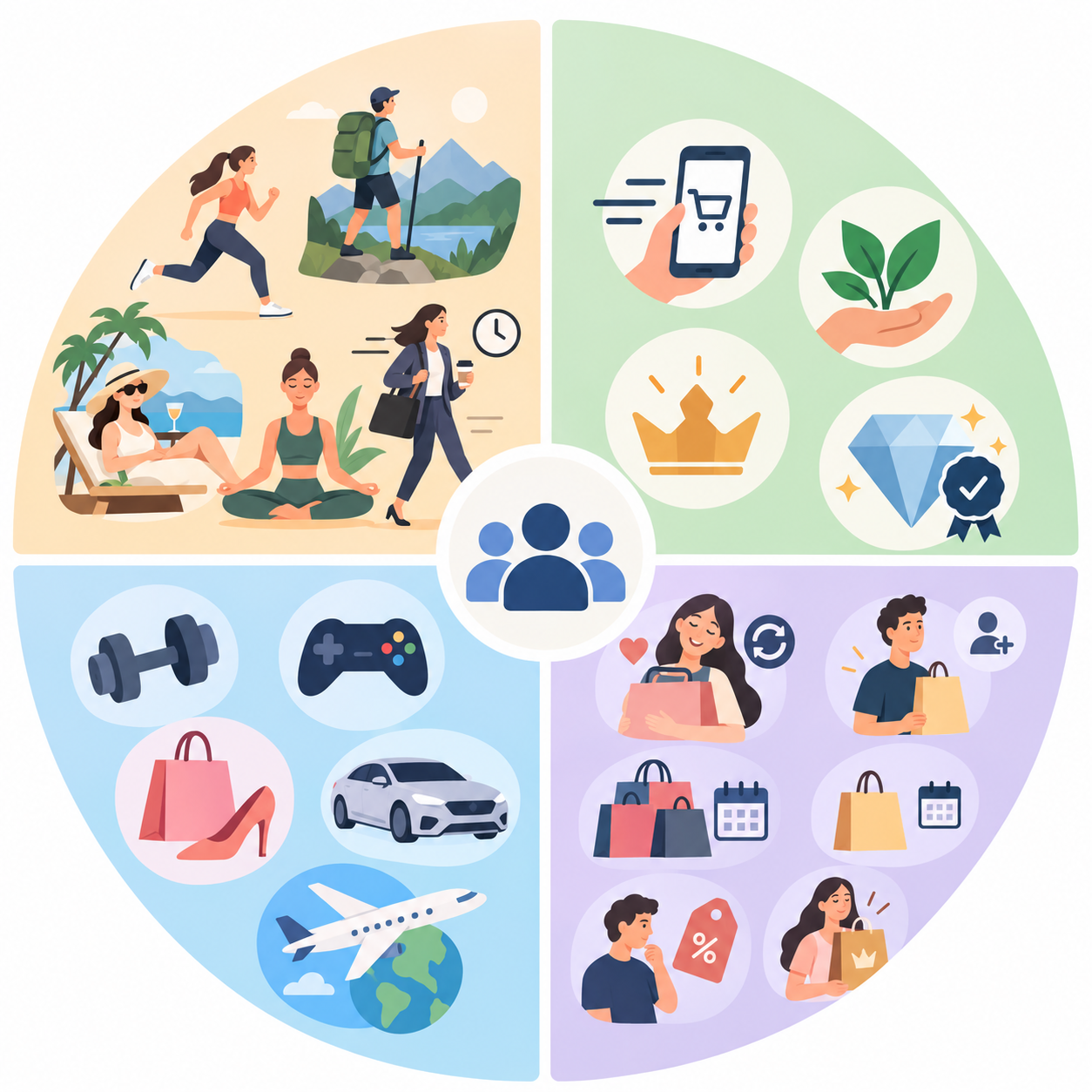
Examples
- An ice-bath studio targets customers interested in recovery and performance who book regular sessions.
- A premium barber targets customers who value appearance and experience and return for repeat appointments.
- A fast-food business targets convenience seekers who want quick meals or late-night food.
- A sustainable clothing brand targets customers who value eco-friendly choices and adjusts its branding and promotion around sustainability.
Example of how to write this in an exam
Psychographic segmentation divides customers according to lifestyle, values, interests and behaviour. For example, a sustainable clothing business may target customers who value environmentally friendly products. This allows the business to design its products and promotion around the values and lifestyle of that psychographic segment.
WA Case Study Example
WA Example - Rottnest Island Day Tours
A Rottnest Island tour business could first segment the wider tourism market into different customer groups. It may then choose several of those segments to target and use different marketing strategies for each one.
For example, the business could identify:
- Demographic segments: families with children during school holidays and young adults travelling with friends.
- Geographic segments: Perth locals, interstate visitors and international tourists.
- Psychographic segments: adventure-focused customers interested in cycling and snorkelling, compared with relaxed customers interested in beaches, food and sightseeing.
Different strategies for different target segments
The business does not need to market to every segment in exactly the same way. Once it decides which segments it wants to target, it can change its marketing to better suit each group.
- Families: promote family day bundles, child-friendly activities and school-holiday pricing through family-focused advertising.
- Young adults and adventure customers: promote bike-and-snorkel packages using Instagram reels and energetic visual content.
- Interstate and international tourists: use tourism websites, hotels and travel partnerships, with clear ferry and booking information.
- Relaxed sightseeing customers: promote beach, food and scenic packages rather than adventure activities.
The key idea is that segmentation identifies the different customer groups, while the marketing strategy can then be adapted to the particular segments the business chooses to target.
🎧 Prefer listening?
If you prefer listening to the content in podcast format:
🎥 Prefer watching?
If you prefer watching the content in video format:
🃏 Flashcards
Card 1 of 7
🎮 Revision Games
💰 BME Millionaire
Climb the ladder by mastering market segmentation.
🎯 Segment Sorter
Classify each customer characteristic as demographic, geographic or psychographic.
⚡ 60 Second Showdown
Rapid-fire questions on segmentation and target markets.

Biz Fact: McDonald's changes its menu by country for different geographic segments - for example, in Japan it sells the Ebi Filet-O shrimp burger.