
U3.04 — Role of Ethics in Global Business Decisions
Overview
Dotpoint 4: role of ethics in global business decisions.
Ethics are the moral principles that guide business decision-making. In global business, ethics help businesses decide what is right, fair and responsible when operating across countries with different laws, wages, working conditions, cultures and environmental standards.
This dotpoint focuses on the role of ethics in global business decisions, including:
- environmental responsibility
- outsourcing
- the use of offshore labour

⚖️ What role do ethics play in global business decisions?
Ethics play a role in global business decisions because businesses often face choices where the cheapest or easiest option may not be the most responsible option. This is especially important when businesses operate in countries with lower wages, weaker labour protections or lower environmental standards.
Why ethics matter in global business
Protecting reputation and brand trust
Consumers may avoid businesses that are linked to pollution, unsafe workplaces, child labour, forced labour or unfair wages. Ethical decisions can protect brand image and build trust.
Business result: stronger reputation can increase customer loyalty and reduce the risk of boycotts or negative media attention.
Reducing legal and compliance risk
Global businesses may need to comply with labour laws, environmental regulations, modern slavery reporting rules, supplier standards and industry codes of conduct.
Business result: ethical decision-making can reduce the chance of fines, investigations, legal action and supply chain disruption.
Supporting long-term business sustainability
Ethical decisions can increase costs in the short term, but they can protect the business from long-term damage. A business that ignores ethics may save money now but face reputation damage, worker disputes, supplier failures or regulatory action later.
Business result: ethics can support long-term management success and help the business operate responsibly in global markets.

🌱 Environmental responsibility
Environmental responsibility means making business decisions that reduce harm to the natural environment. In global business, this can include reducing emissions, waste, water use, packaging, pollution and environmental damage across international supply chains.
Ethical environmental decisions
Reducing emissions and energy use
A global business may choose renewable energy, more efficient machinery, cleaner transport, lower-emission production methods or carbon reduction targets.
Ethical role: ethics encourages the business to reduce environmental harm even if cleaner energy or equipment costs more.
Australian example: Atlassian has promoted climate action and emissions reduction as part of its global sustainability strategy, showing how an Australian-developed global technology business can consider environmental responsibility in its operations and supply chain.
Reducing waste and packaging
A business can reduce single-use plastics, improve recycling, use recyclable packaging or redesign products so less material is wasted.
Ethical role: ethics encourages the business to consider the environmental impact of its products after they are sold, not just the profit made from selling them.
Australian example: Woolworths has taken steps to reduce plastic bag use and improve packaging sustainability, showing how a large Australian business can make environmental decisions that affect millions of customers.
Responsible sourcing
A business may choose suppliers that follow environmental rules and avoid pollution, deforestation, unsafe chemicals or excessive water use.
Ethical role: ethics means the business should not ignore environmental damage simply because it occurs overseas or through a supplier.
Australian example: Kmart Group has made sustainability commitments around responsible sourcing, packaging and emissions, showing how large retailers can place pressure on overseas suppliers to meet stronger environmental expectations.

Greenwashing risk
Greenwashing occurs when a business exaggerates or misleads customers about its environmental responsibility. This is unethical because consumers may believe they are supporting a more sustainable business than they actually are.
Business risk: greenwashing can damage trust, attract regulator attention and weaken the credibility of genuine sustainability actions.
Global example: In 2015, Volkswagen was exposed for marketing some diesel cars as environmentally friendly while secretly using software to cheat emissions tests. The scandal caused major reputation damage and led Volkswagen to pay US$4.3 billion in criminal and civil penalties in the United States, alongside billions more in recalls and compensation.

Example of how to write this in an exam
Ethics can influence a global business to improve environmental responsibility by reducing waste and emissions in its overseas operations. This occurs because the business considers the environmental impact of its decisions, not only cost and profit. This may lead to higher short-term costs, but it can protect the business’s reputation and reduce the risk of criticism from consumers and regulators.
📦 Outsourcing
Outsourcing occurs when a business contracts another business or third party to complete work. The work may be done in Australia or overseas. In global business, outsourcing often raises ethical issues because the business may not directly control the workers, factory or supplier doing the work.
Ethical issues in outsourcing
Fair wages and working conditions
A business may outsource production to a cheaper supplier, but ethics requires the business to consider whether workers are paid fairly and work in safe conditions.
Ethical role: the business should not choose a supplier only because it is cheap if low costs come from worker exploitation.
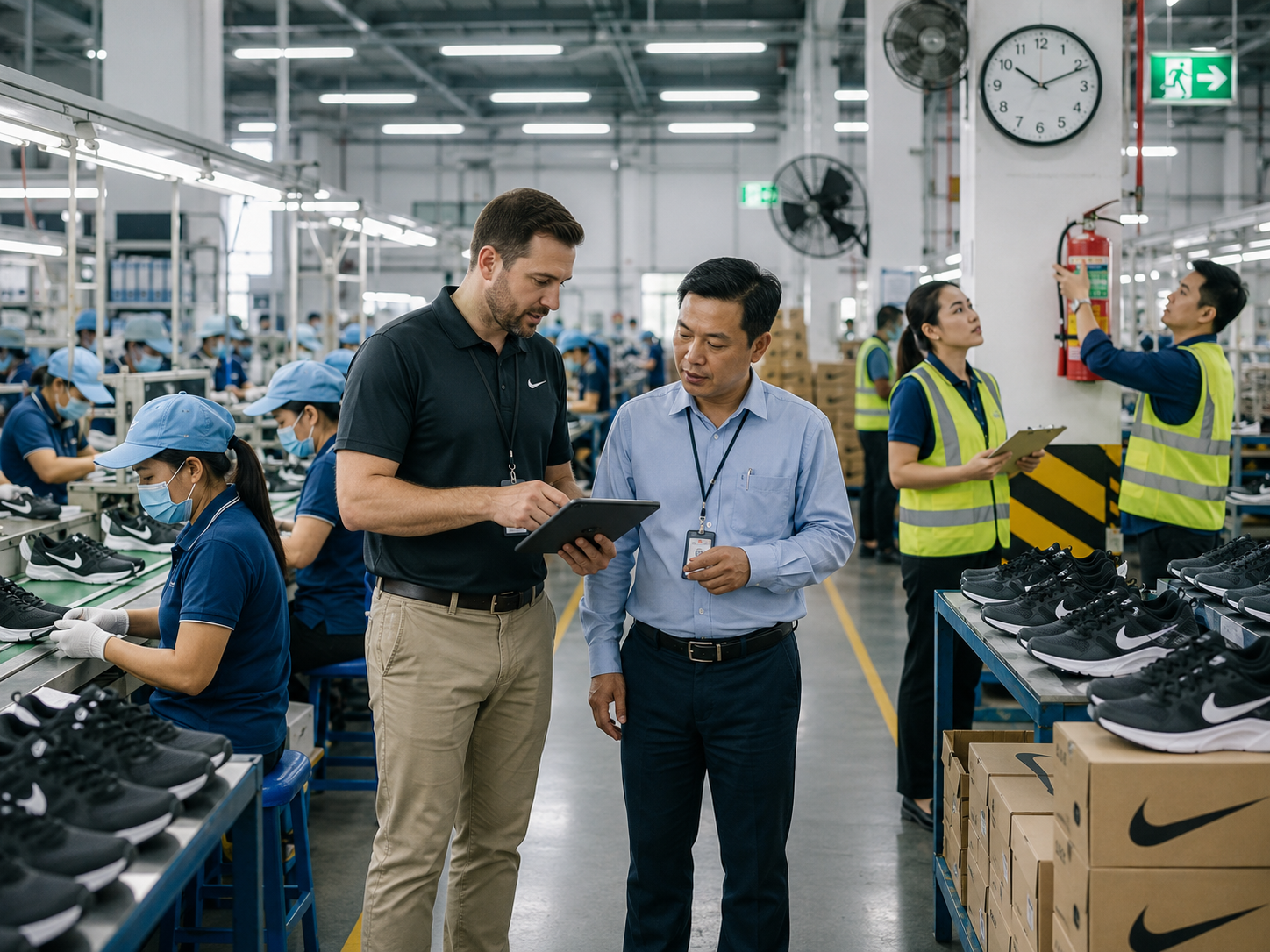
Real-world example: Nike contracts independent factories in countries such as Vietnam and Indonesia to manufacture products. This creates an ethical need for Nike to monitor supplier wages, working hours and factory safety, because another company is doing the production work.
Child labour, forced labour and modern slavery
Some global supply chains carry risks of child labour, forced labour, debt bondage, human trafficking or other forms of modern slavery. Ethics requires businesses to investigate and manage these risks, rather than claiming they are only the supplier’s problem.
Australian context: Australia’s Modern Slavery Act 2018 requires large businesses operating in Australia, with annual consolidated revenue of at least $100 million, to prepare a modern slavery statement. These statements explain the risks of modern slavery in the business’s operations and supply chains, and the actions taken to assess and address those risks.
Supply chain transparency
Outsourcing can make it harder to see exactly who is making the product and under what conditions. A business may use multiple suppliers, subcontractors and factories across several countries.
Ethical role: ethics encourages the business to be transparent about suppliers and take responsibility for the conditions in its supply chain.
Australian example: Cotton On Group says its factory audits are benchmarked against international standards and cover areas such as fire and safety, workers’ rights, management practices, factory conditions, waste and the environment.
Job displacement in the home country
Outsourcing can lead to job losses if work previously done in Australia is moved to an outside supplier overseas. This creates an ethical issue because the business must balance lower costs with the impact on local workers and communities.
Real-world example: When Australian companies move call-centre or back-office work to overseas service providers, they may reduce costs, but this can also reduce employment opportunities for local Australian workers.
Example of how to write this in an exam
Ethics plays a role in outsourcing because a business should consider whether its external supplier treats workers fairly. For example, if an Australian clothing business outsources production overseas, it should check wages, hours and factory safety. This may increase monitoring costs, but it reduces the risk of exploitation and protects the business’s reputation.
🌏 The use of offshore labour
Offshore labour refers to using workers in another country. This may occur when a business sets up its own overseas branch, factory or service centre, or when it uses an overseas supplier. Ethics influences offshore labour decisions because businesses must decide whether they will follow only the minimum local laws or apply higher standards of fairness and responsibility.
Outsourcing vs offshore labour
Outsourcing and offshore labour often overlap, but they are not exactly the same.
Outsourcing occurs when a business contracts another company to perform work, while offshore labour refers to workers being located in another country.
Therefore, when an Australian business contracts an overseas supplier, it is using both outsourcing and offshore labour. However, a business may also use offshore labour through its own overseas factory or subsidiary, meaning no outsourcing has occurred.
Outsourcing is usually cheaper because the business avoids the cost of establishing and operating its own overseas facilities. Using workers through a business-owned overseas factory or subsidiary is generally more expensive, but it gives the business greater control over wages, working conditions, quality and production.
Example: an Australian clothing company outsourcing production to a factory in Bangladesh is using outsourcing because another company makes the clothes, and offshore labour because the workers are located overseas. However, if the Australian business owned and operated its own factory in Bangladesh, it would be using offshore labour, but it would not be outsourcing.
Ethical issues when using offshore labour
Fair pay and worker welfare
Businesses may use offshore labour because wages are lower overseas. This can be legal, but ethics requires the business to consider whether workers are being paid fairly for their country and industry.
Ethical role: the business should avoid exploiting weaker labour protections or desperate economic conditions.
Real-world example: Nike’s overseas production model creates an ethical responsibility to check that workers in supplier factories receive fair treatment, safe conditions and reasonable working hours.
Safe working conditions
Offshore labour may be located in countries where workplace safety laws are weaker or less strictly enforced. Ethics requires the business to protect workers from unsafe buildings, equipment, chemicals, harassment or excessive hours.
Ethical role: a business should not accept unsafe conditions overseas that it would not accept in Australia.
Real-world example: Global hotel chains such as Marriott and Hilton use workers across many countries, so ethical decision-making requires safe working conditions, fair treatment and training across different legal systems.
Training and skill development
Using offshore labour can be ethical if the business provides real employment, training, career pathways and skills development for workers in the host country.
Ethical role: the business can contribute positively to the host country rather than only using workers as a source of cheap labour.
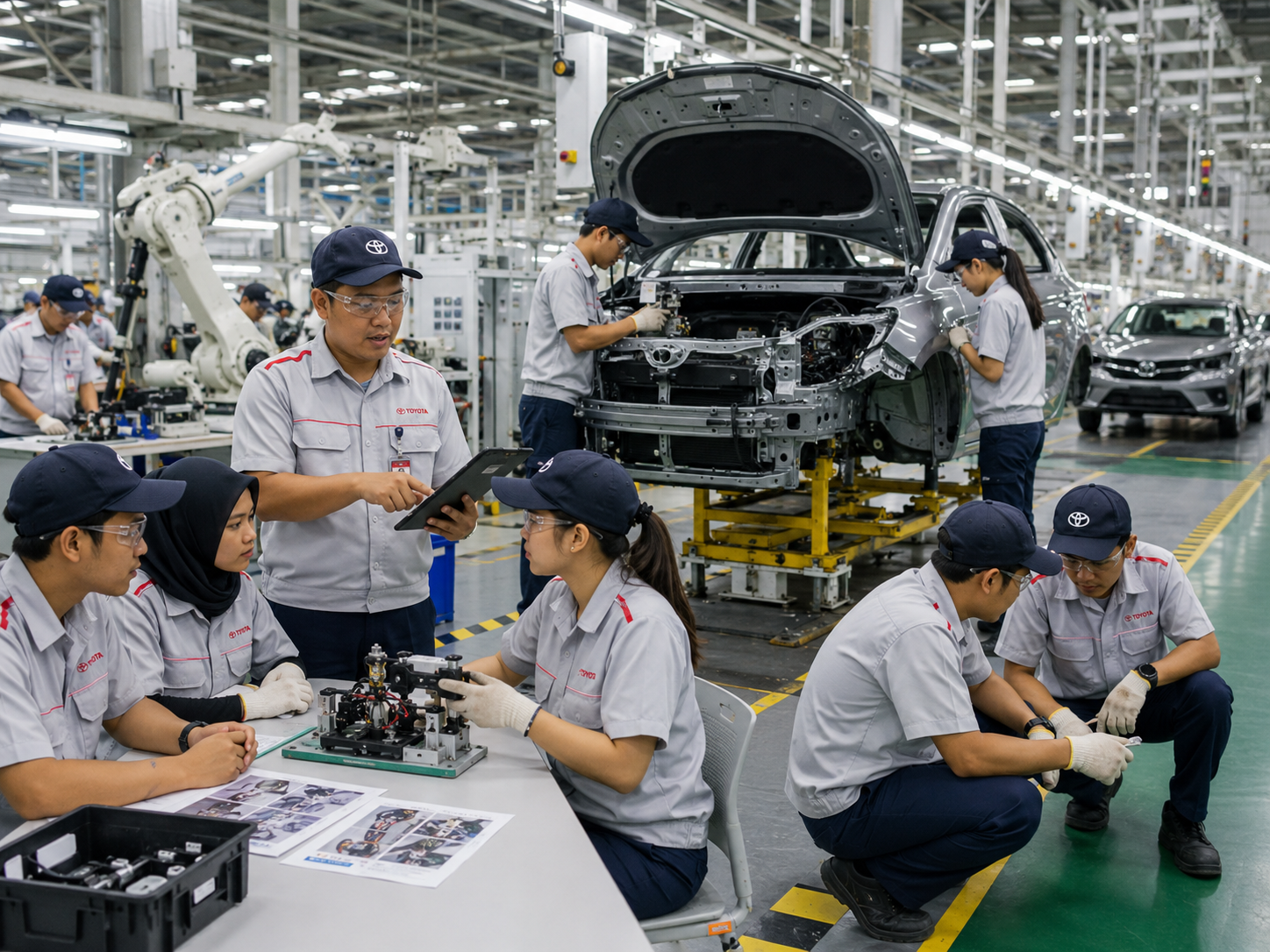
Real-world example: Toyota’s overseas manufacturing plants can provide local employment and training in production systems, quality control, safety and technical skills.
Risk of exploitation
Offshore labour becomes unethical when a business uses workers in another country mainly because they can be paid very low wages, denied rights or exposed to poor conditions.
Business risk: if exploitation is revealed, the business may face public criticism, boycotts, legal scrutiny and damage to its global image.
Example of how to write this in an exam
Ethics influences global business decisions concerning offshore labour because businesses must consider whether overseas workers are treated fairly. A business may use offshore labour to reduce costs, but it should still ensure fair wages, safe conditions and reasonable working hours. This may increase costs, but it protects workers and reduces reputational risk for the business.
🎧 Prefer listening?
If you prefer listening to the content in podcast format:
🎥 Prefer watching?
If you prefer watching the content in video format:
🃏 Flashcards
Card 1 of 10
🎮 Revision Games
💰 BME Millionaire
Climb the prize ladder. Use your lifelines wisely.
👔 Business Boss
Make 10 ethical decisions. Balance worker welfare, environment, reputation, control and cost.
⚡ 60 Second Showdown
A varied 60-second challenge covering environmental responsibility, outsourcing and offshore labour.

Biz Fact: Cotton On audits many overseas factories to help improve worker safety and labour conditions.
Past Exam Questions
Use these past exam questions to see how this dotpoint has been assessed. Pay close attention to the command term, the number of marks and whether the question is Section 1 or Section 2.
Section 1 Questions
2016 — Section 1 — Question 3(a) — 4 marks
Context
After a sustained period of strategic global business growth, an international hotel chain reviews its ethical decisions and business practices.
3(a): Describe an ethical business decision that the chain could take and give an example of a related ethical business practice. (4 marks)
Command term focus: Describe
Describe: give the main characteristics of one ethical decision and a related ethical business practice.
See the full command term guide here: Command Terms.
3(a) Sample answer
An ethical business decision the hotel chain could take is to improve its environmental responsibility across its international hotels. A related ethical business practice would be installing energy-efficient lighting, reducing single-use plastics and using water-saving systems in hotel rooms. This shows the hotel chain is considering its environmental impact, not just profit.
2018 — Section 1 — Question 1(c) — 4 marks
Context
Great leaders have vision and integrity and can be described as being outstanding strategic planners. However, these leadership qualities are sometimes not enough for successful business decision-making in a global environment. It is equally important for leaders to be ethical to ensure long-term management success in their businesses.
1(c): Leaders in business are expected to act ethically. Describe two different ways in which a leader might demonstrate ethical global business decisions. (4 marks)
Command term focus: Describe
Describe: give the main characteristics of two ways a leader could demonstrate ethical global business decisions.
See the full command term guide here: Command Terms.
1(c) Sample answer
One way — environmental responsibility: a leader could demonstrate ethical global business decision-making by reducing the environmental impact of global operations. For example, the leader could choose suppliers that reduce emissions, waste and water use. This shows the business is considering environmental responsibility when making global decisions, rather than only focusing on cost.
A second way — outsourcing and offshore labour: a leader could choose overseas suppliers that pay fair wages and provide safe working conditions. This is linked to outsourcing because the business is contracting another company to complete work, and it may also involve offshore labour if the workers are located overseas. This shows the leader is not only choosing the cheapest supplier, but also considering worker welfare.
2021 — Section 1 — Question 1(c) — 4 marks
Context
The past decade has seen an expansion of business into the global marketplace.
1(c): Ethics plays a role when making global business decisions. Describe two ethical actions a business could decide to take to improve its environmental responsibility. (4 marks)
One:
Two:
Command term focus: Describe
Describe: give the main characteristics of two ethical actions that improve environmental responsibility.
See the full command term guide here: Command Terms.
1(c) Sample answer
One: A business could reduce packaging waste by using recyclable or reusable packaging across its global operations. This improves environmental responsibility by reducing landfill and pollution.
Two: A business could choose suppliers that use renewable energy or lower-emission production methods. This improves environmental responsibility by reducing the environmental impact of the business’s supply chain.
2023 — Section 1 — Question 2(a) — 2 marks
2(a): Describe the role of ethics in global business decisions when businesses choose to use offshore labour. (2 marks)
Command term focus: Describe
Describe: give the main characteristics of the role ethics plays when a business uses offshore labour.
See the full command term guide here: Command Terms.
2(a) Sample answer
Ethics influences offshore labour decisions by requiring businesses to consider whether overseas workers are treated fairly. This means the business should consider wages, working conditions, safety and worker rights rather than only choosing offshore labour because it is cheaper.
2025 — Section 1 — Question 2(b) — 3 marks
Context
Australian businesses that focus on developing home grown products, ethical practices and government grants for international expansion can unlock significant opportunities.
2(b): Explain how the role of ethics influences global business decisions concerning the use of offshore labour. (3 marks)
Command term focus: Explain
Explain: show cause and effect by explaining how ethics changes offshore labour decisions and the result.
See the full command term guide here: Command Terms.
2(b) Sample answer
Offshore labour refers to using workers in another country. Ethics influences offshore labour decisions because a business must consider whether overseas workers are being treated fairly, not just whether labour is cheaper. This means the business should check wages, safety, hours and working conditions before using offshore labour. This will lead to a lower risk of worker exploitation and can protect the business’s reputation, although it may increase labour or monitoring costs.
Section 2 Questions
2019 — Section 2 — Question 8 — 6 marks
Case study / context
Utterly Uggalicious is an Australian business that sells sheepskin boots. Currently the wool for the boots is sourced from Australia and New Zealand to ensure the highest-quality materials are used. The boots are manufactured in Australia and sold locally.
Utterly Uggalicious has been operating for five years and has experienced a huge increase in the demand for its products. It believes this is due to their high quality and ethical production policies.
As the business has become more and more popular, Utterly Uggalicious has had to significantly increase production, employ more staff and look for a bigger manufacturing location. While the business is keen to continue to use Australian and New Zealand materials, it is considering the advantages of moving its production offshore. Hence, the business has started to research the benefits of moving its wool processing and manufacturing to Asia.
In making this strategic decision, the business must also consider the negative human and environmental factors that may impact Utterly Uggalicious. Currently, the business has a corporate social responsibility strategy in place; however, a move to Asia could hinder the business’ ability to follow this strategy.
8: Advise Utterly Uggalicious on the role of ethics in global business decision-making in relation to the outsourcing of labour versus offshore labour. (6 marks)
Command term focus: Advise
Advise: recommend a suitable approach, explain why it suits the situation and identify the likely effect. Section 2 requires application to Utterly Uggalicious.
See the full command term guide here: Command Terms.
8 Sample answer
Utterly Uggalicious should consider ethics carefully before moving wool processing and manufacturing to Asia because its current success is linked to high quality and ethical production policies. If the business chooses outsourcing, it would contract another business to complete production. This may reduce costs and help meet demand, but it creates ethical risk because Utterly Uggalicious may have less control over wages, working conditions, safety and environmental standards in the supplier’s factory.
If the business chooses offshore labour through its own overseas operations, it may have more direct control over worker training, safety, quality and ethical standards. However, this may be more expensive and complex to manage. The ethical issue is that the business must not use overseas workers only because they are cheaper, especially if that would conflict with its CSR strategy.
Overall, Utterly Uggalicious should only move production to Asia if it can maintain ethical labour standards, safe working conditions and environmental responsibility. This may reduce some of the cost savings from moving offshore, but it protects the brand’s ethical reputation and reduces the risk of customer backlash.
2024 — Section 2 — Question 7(d) — 9 marks
Case study / context
Jessica and Lexi, who are based in Western Australia, own a start-up technology company called Jesi Technical Solutions (JTS). The business specialises in cloud storage, and the owners are planning to expand overseas. To facilitate this plan, Jessica has analysed consumer spending and tax considerations across many regions. She has selected Southeast Asia as their initial foreign market due to its strong demand for cloud storage, particularly within the rapidly growing online shopping sector. Jessica and Lexi are also aware of the generous home and host government incentives for foreign trade. They have discovered that Vietnam, one of the next-generation Asian high-growth economies, is offering a significant grant of up to USD 700 000 for new technology businesses. Jessica and Lexi are thinking of using this grant to establish their first Southeast Asian branch.
As a start-up, Jessica and Lexi are analysing the impacts of globalisation carefully. By opening offices in emerging markets and hiring local talent, they plan to make a contribution to global prosperity. To ensure a positive global image, the business adheres to the World Trade Organisation’s international trade regulations. Jessica and Lexi encourage both their employees and consumers to share information and work together to spread new technologies around the world. Their commitment to cross-border collaboration enhances technological progress beyond their business mission.
When making global business decisions, Jessica and Lexi place a strong emphasis on ethical considerations. Central to their approach is a commitment to environmental sustainability, driving them to constantly explore and adopt eco-friendly practices within their operations. Moreover, they meticulously assess the ethical implications of outsourcing and employing workers from different countries and strive to uphold fairness and integrity across their entire supply chain. This dedication to ethical conduct not only aligns with their values, but also fosters trust and transparency in their business practices on a global scale.
7(d): Comment on three aspects of the role of ethics JTS should consider when making global business decisions. (9 marks)
Command term focus: Comment
Comment: make a clear statement about each aspect and support it with relevant explanation and application to JTS.
See the full command term guide here: Command Terms.
7(d) Sample answer
One aspect JTS should consider is environmental responsibility. As a cloud storage business, JTS may use energy-intensive digital infrastructure, servers and data systems. Ethics should influence JTS to use energy-efficient technology or renewable energy where possible. This may increase costs, but it supports JTS’s commitment to environmental sustainability and protects its positive global image.
A second aspect is outsourcing. If JTS outsources parts of its cloud storage, IT support or customer service when expanding into Southeast Asia, it should assess whether suppliers act ethically. This means checking data security, worker conditions, environmental practices and transparency. This is important because unethical suppliers could damage JTS’s reputation even if JTS is not directly employing those workers.
A third aspect is offshore labour. JTS plans to open offices in emerging markets and hire local talent, so ethics should influence how these workers are treated. JTS should provide fair wages, safe working conditions, training and career opportunities. This may increase labour costs, but it supports fairness and integrity, helping JTS build trust as it expands globally.