
U4.03 — Economic Factors Which Impact on Business Operations in the Global Market
Overview
Dotpoint 3: economic factors which impact on business operations in the global market.
Economic factors are part of the external macro-environment that businesses must analyse before entering or operating in global markets.
Economic factors are external conditions in the economy that can influence business operations. These factors are outside the direct control of the business, but they can significantly affect revenue, costs, demand, expansion, finance and risk.
A useful acronym for remembering the four economic factors is DICE:
- D — discretionary spending
- I — interest rates
- C — currency fluctuations
- E — economic activity

📊 Introduction to economic factors
Economic factors are conditions in the economy that can influence how easily a business can sell products, finance expansion, manage costs and compete in global markets.
In global business, economic factors are important because a business may operate across several economies at the same time. For example, an Australian business may raise finance in Australia, import materials from China, sell products in New Zealand and receive payments in a foreign currency.
As a result, changes in economic conditions in one country can affect a business’s costs, sales, profitability and international operations in another country.
DICE — the four economic factors in this dotpoint
Exam reminder
When writing about economic factors, avoid simply defining the term. Link the factor to a specific business operation such as sales, pricing, costs, imports, exports, borrowing, investment, production, staffing or expansion.
📈 Economic activity
Economic activity refers to the level of production, income, employment, spending and growth in an economy.
When economic activity is strong, businesses usually experience higher demand, stronger employment, better consumer confidence and more opportunities for expansion. When economic activity is weak, consumers and businesses may reduce spending, which can lower sales and increase risk.
Impact on global business practice
Economic activity can affect global business operations because it influences whether customers in the target market have jobs, income and confidence to buy goods and services.
Strong economic activity can make a market more attractive for expansion because businesses may expect higher sales and stronger demand. Weak economic activity can make expansion riskier because customers may delay purchases, reduce spending or choose cheaper alternatives.
This matters in global markets because a business may need to compare economic growth, GDP, unemployment, inflation and consumer confidence across countries before deciding where to invest.

Key economic lingo
Economic growth
An increase in the production of goods and services in an economy over time. Strong economic growth can increase confidence and demand in a target market.
GDP
Gross Domestic Product — the total value of goods and services produced in an economy. Rising GDP usually suggests stronger economic activity.
Unemployment
The percentage of people who are able and willing to work but cannot find a job. Lower unemployment usually means more people are earning income.
Inflation
A rise in the general price level over time. Inflation can reduce purchasing power if prices rise faster than incomes.
Consumer confidence
How optimistic consumers feel about their income, job security and future economic conditions. Higher confidence can support spending.
Business confidence
How willing businesses are to invest, hire, increase production or expand. Strong confidence can support global growth decisions.
What does a strong or weak economy look like?
Stronger economic activity
- higher consumer confidence
- stronger sales and demand
- higher economic growth and stronger GDP
- lower unemployment, so more people are earning income
- businesses are more willing to hire, invest and expand
- consumers are more likely to spend on discretionary items
Weaker economic activity
- lower consumer confidence
- weaker sales and demand
- slower economic growth or falling GDP
- higher unemployment, meaning fewer people have income to spend
- businesses often delay expansion, hiring and investment
- consumers are more likely to focus on essentials and cut back on non-essential spending
The business cycle
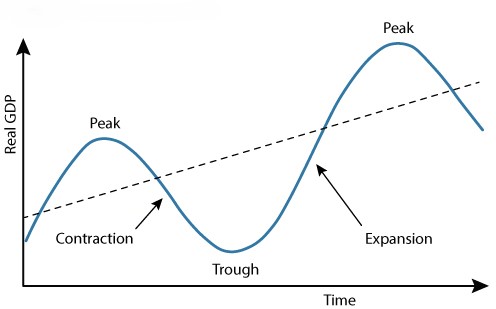
A good way to visualise economic activity is through the business cycle. The business cycle shows how the level of economic activity rises and falls over time, moving through periods of stronger growth and weaker conditions.
Boom / peak: demand is strong, employment is usually high, businesses are more confident and consumers are more likely to spend on non-essential items.
Contraction: economic activity starts to slow, confidence falls and businesses may delay investment or reduce costs.
Trough / recession: spending is low, unemployment may rise and many businesses focus on survival rather than growth.
Expansion: demand begins to recover, confidence improves and businesses may begin hiring, restocking and investing again.
How economic activity affects operations
Sales and demand
Higher economic growth, stronger GDP and lower unemployment can increase demand for products, especially non-essential or premium products.
Expansion decisions
A business may choose to enter a market in the expansion or boom stage of the business cycle and delay entry into a market experiencing recession or weak confidence.
Production and staffing
Strong activity may require more stock, workers and production capacity, while weak activity may lead to lower output, reduced hiring or delayed investment.
Common exam links
| Economic activity situation | Likely business impact | Global business example |
|---|---|---|
| Strong growth | Customers have more income and confidence, increasing demand. | An Australian skincare or fashion business may open stores in Asia if economic growth increases middle-income consumers. |
| Weak growth | Consumers may delay purchases or choose cheaper alternatives. | A premium food business may struggle if households in the target market reduce spending on luxury items. |
| Lower unemployment | More consumers earn wages, increasing potential spending. | A cosmetics or apparel business may experience higher demand if more workers earn income and have confidence to spend. |
| High inflation | Purchasing power can fall if prices rise faster than wages. | A business selling non-essential products may need smaller sizes, cheaper options or more value-focused promotions. |
Example of how to write this in an exam
Economic activity can impact global business operations because it affects GDP growth, employment, consumer confidence and demand in the target market. For example, if an Australian activewear brand such as Lorna Jane entered a country experiencing strong economic growth and lower unemployment, more consumers may have income and confidence to spend on non-essential fitness clothing. This could encourage the business to increase stock, hire local employees and invest in marketing. As a result, strong economic activity can make overseas expansion more attractive and support higher sales in the global market.
🛍️ Discretionary spending
Discretionary spending refers to the money consumers have available to spend after paying for essential items such as housing, food, transport, utilities and healthcare.
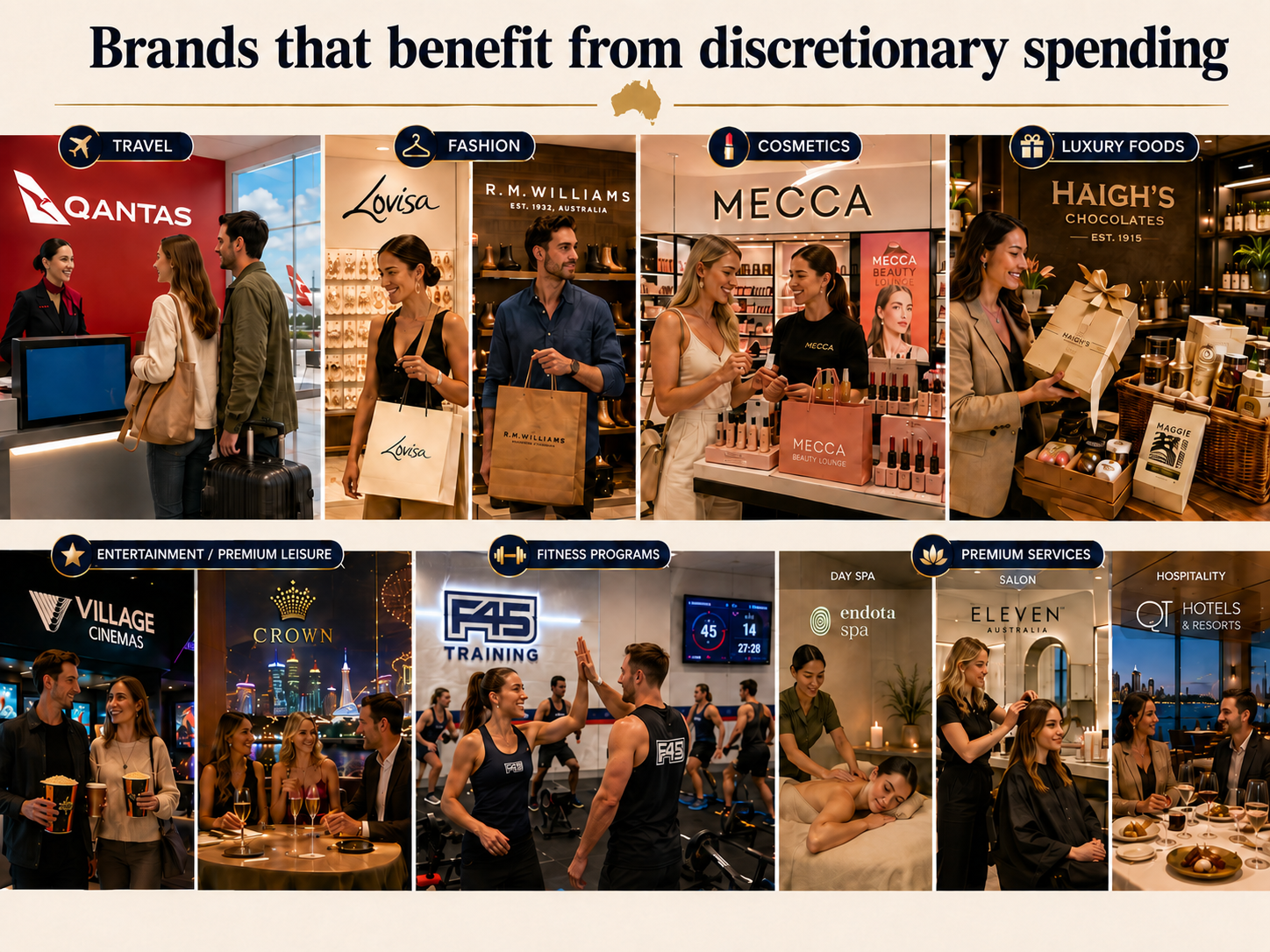
It is especially important for businesses selling non-essential products or experiences, such as travel, fashion, cosmetics, luxury foods, entertainment, fitness programs and premium services.
Impact on global business practice
Discretionary spending can affect global business operations because it influences whether customers can afford to buy non-essential goods and services.
When discretionary spending is high, customers may be more willing to buy premium or luxury products. When discretionary spending is low, customers may reduce non-essential purchases, choose cheaper alternatives or delay spending.
A business entering a global market must consider whether its target customers have enough income after essentials to support demand for its product.
How discretionary spending affects operations
Demand for non-essentials
Luxury foods, cosmetics, tourism and fashion may sell better when consumers have more income left over after essentials.
Pricing strategy
If discretionary spending is low, the business may need cheaper product options, discounts or smaller package sizes.
Product positioning
High discretionary spending may support premium positioning, while low spending may require value-based marketing.
Products most affected by discretionary spending
High impact products
Travel, tourism, cosmetics, fashion, gym memberships, luxury foods, entertainment, premium furniture and lifestyle products are often highly affected by discretionary spending.

Lower impact products
Essential groceries, basic healthcare, utilities and low-cost household necessities are usually less affected, because consumers still need them even when budgets are tight.

Example of how to write this in an exam
Discretionary spending can impact global business operations because it affects whether consumers can afford non-essential products after paying for basic needs. For example, if Australian households have higher discretionary income, businesses such as Qantas may experience stronger demand for international leisure travel because holidays are not essential purchases. This could influence the number of flights offered, promotional campaigns and pricing for overseas routes. As a result, higher discretionary spending can improve sales potential and make global travel expansion more attractive.
🏦 Interest rates
Interest rates are the cost of borrowing money and the return received on savings. They affect business loans, consumer loans, mortgage repayments, investment decisions and spending behaviour.
For global businesses, interest rates matter because expansion often requires finance for warehouses, stores, machinery, technology, marketing, staff and inventory.
Impact on global business practice
Interest rates can impact global business operations because they affect how expensive it is for a business to borrow money to fund overseas expansion.
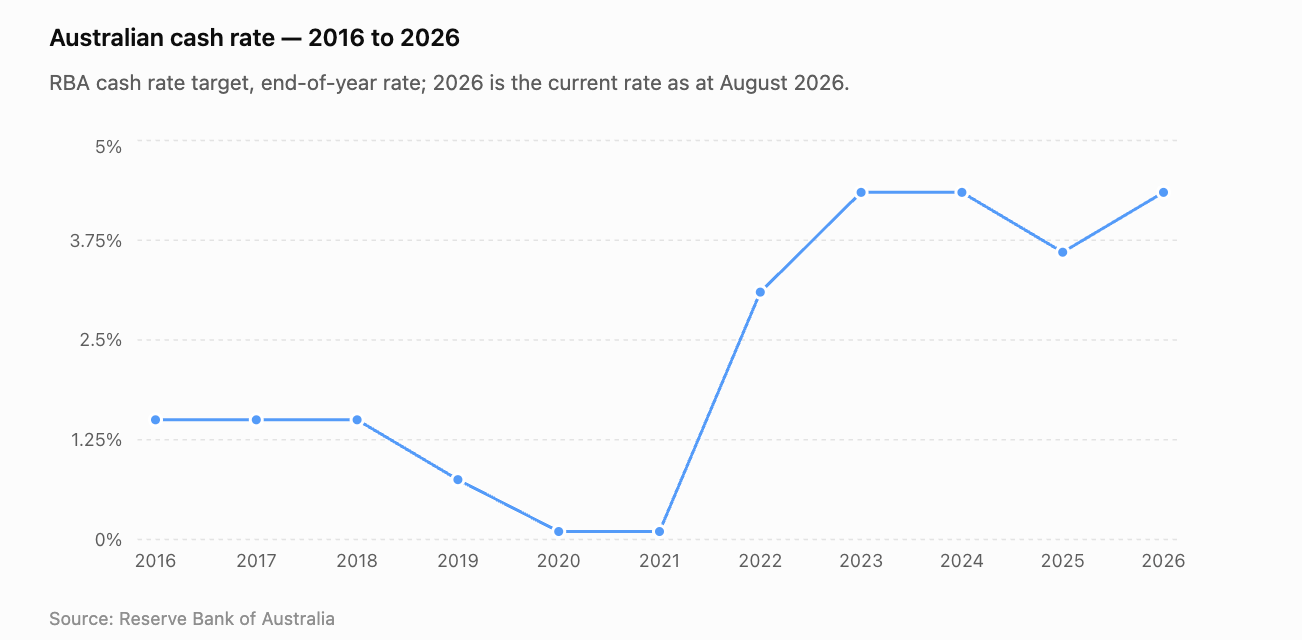
Low interest rates can make expansion more attractive because loan repayments are lower. High interest rates can make expansion more expensive, reduce profit margins and discourage investment.
Interest rates can also affect customers. Higher interest rates can reduce discretionary spending because consumers may have higher mortgage and loan repayments, leaving less money for non-essential purchases.
How interest rates affect operations
Borrowing and expansion
Higher interest rates increase the cost of loans used to fund overseas stores, warehouses, machinery or production facilities.
Cash flow and profit
Higher loan repayments can reduce cash flow and lower profitability, especially during the early stages of global expansion.
Consumer spending
Higher rates can reduce discretionary spending because households may spend more on mortgage or loan repayments.
Example of how to write this in an exam
Interest rates can impact global business operations because they affect the cost of borrowing money for expansion. For example, if an Australian business such as Qantas wanted to purchase more aircraft or expand international routes, higher interest rates could make it more expensive to borrow funds. This could reduce cash flow because the business may need to make higher loan repayments while also paying for fuel, staff, airport fees and maintenance. As a result, rising interest rates may slow overseas expansion or reduce profitability in global markets.
💱 Currency fluctuations
Currency fluctuations are changes in the value of one currency compared with another currency. For Australian businesses, this often means changes in the value of the Australian dollar against currencies such as the US dollar, Japanese yen, New Zealand dollar, Indonesian rupiah or Chinese yuan.
Currency fluctuations affect global business operations because businesses may import materials, export goods, pay overseas suppliers, receive foreign revenue or sell travel experiences linked to exchange rates.
Impact on global business practice
Currency fluctuations can impact global business operations by changing costs, prices, profit margins and customer demand.
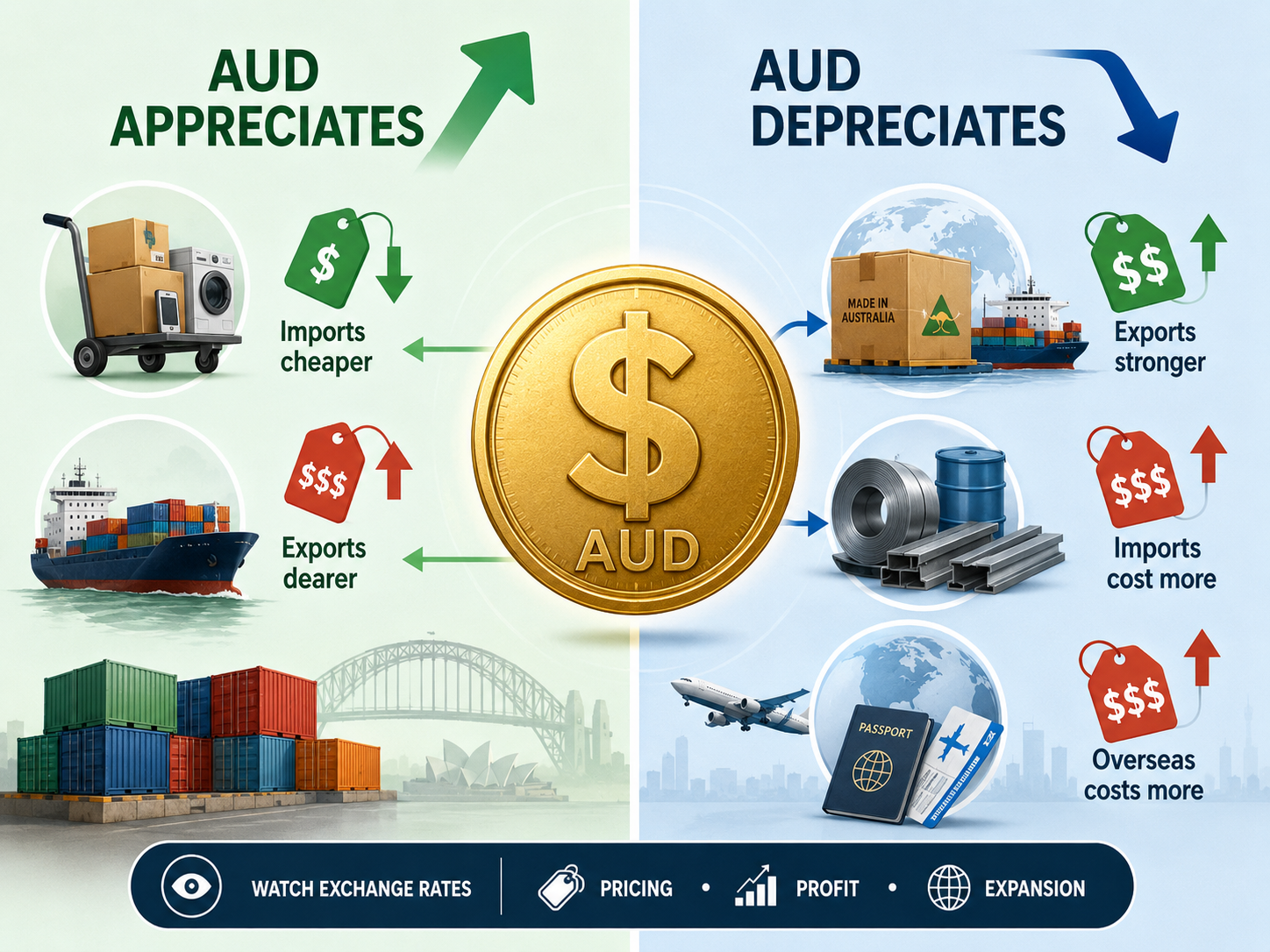
If the Australian dollar appreciates, imports become cheaper for Australian businesses, but exports may become more expensive for overseas customers. If the Australian dollar depreciates, exports may become more competitive, but imported materials and overseas costs may become more expensive.
Businesses operating globally need to monitor exchange rates because sudden changes can affect pricing, profitability and expansion plans.
Currency appreciation and depreciation
| Exchange rate change | Meaning | Possible business impact |
|---|---|---|
| Australian dollar appreciates | The AUD increases in value compared with another currency. | Imports may become cheaper, but Australian exports and tourism products may become more expensive for overseas customers. |
| Australian dollar depreciates | The AUD decreases in value compared with another currency. | Exports may become more competitive, but imported materials, overseas equipment and foreign production costs may become more expensive. |
How currency fluctuations affect operations
Import costs
A strong AUD can make imported materials, ingredients, machinery or inventory cheaper. A weak AUD can make those imports more expensive, increasing costs and reducing profit margins.
Export competitiveness
A strong AUD can make Australian exports more expensive for overseas buyers. A weak AUD can make Australian exports cheaper and more competitive in foreign markets.
Overseas revenue and profits
A strong AUD can reduce the value of overseas revenue when converted back into Australian dollars. A weak AUD can increase the value of foreign revenue when brought back to Australia.
Example of how to write this in an exam
Currency fluctuations can impact global business operations because they change the relative cost of buying and selling across countries. For example, if the Australian dollar appreciates against the Chinese yuan, an Australian wine exporter such as Penfolds may become more expensive for Chinese customers. This could reduce export competitiveness because Chinese buyers may switch to cheaper wine from other countries. As a result, an appreciating Australian dollar may lower overseas sales and reduce profit growth in the Chinese market.
🎧 Prefer listening?
If you prefer listening to the content in podcast format:
🎥 Prefer watching?
If you prefer watching the content in video format:
🃏 Flashcards
Card 1 of 18
🎮 Revision Games
💰 BME Millionaire
Climb the prize ladder. Use your lifelines wisely.
👔 Business Boss
Make 10 global decisions. Balance demand, borrowing costs, exchange rates and economic conditions.
⚡ 60 Second Showdown
A varied 60-second challenge covering DICE, business impacts and global operations.
Biz Fact: Businesses can’t control the DICE — but they can control how well they play the economic game.
Past Exam Questions
Use these past exam questions to see how this dotpoint has been assessed. Pay close attention to the command term, the number of marks and whether the question is Section 1 or Section 2.
Section 1 Questions
2022 — Section 1 — Question 6(b) — 6 marks
Context
Lisa owns several clothing boutiques in Australia and is thinking of opening up a branch overseas.
6(b): Explain how the following economic factors could impact on Lisa’s business operations in the global market. (6 marks)
Currency fluctuations:
Economic activity:
Command term focus: Explain
Explain: show cause and effect by explaining how each factor changes Lisa’s operations and the result.
See the full command term guide here: Command Terms.
6(b) Sample answer
Currency fluctuations: Currency fluctuations could impact Lisa’s business operations because changes in exchange rates may affect the cost of importing clothing, paying overseas suppliers or transferring profits back to Australia. For example, if the Australian dollar depreciates, imported clothing or overseas setup costs may become more expensive. As a result, Lisa may need to raise prices, accept lower profit margins or adjust her sourcing strategy.
Economic activity: Economic activity could impact Lisa’s overseas boutique because it affects GDP growth, unemployment, income and consumer confidence in the target market. If economic activity is strong and unemployment is low, consumers may have more income to spend on clothing and fashion. As a result, Lisa may experience stronger sales and be more confident opening a branch overseas.
2024 — Section 1 — Question 4(b) — 9 marks
Context
Question 4 focuses on financial institutions and economic factors affecting global business operations.
4(b): Explain how the following economic factors have an impact on business operations in the global market. (9 marks)
Economic activity:
Interest rates:
Currency fluctuations:
Command term focus: Explain
Explain: show cause and effect by linking each factor to sales, costs, borrowing, expansion or profitability.
See the full command term guide here: Command Terms.
4(b) Sample answer
Economic activity: Economic activity can impact global business operations because it affects GDP growth, unemployment, income, confidence and demand in the target market. If an economy is in an expansion or boom phase, customers may have more money and confidence to buy goods and services. As a result, businesses may increase production, hire more staff and expand into that market.
Interest rates: Interest rates can impact global business operations because they affect the cost of borrowing money. If interest rates rise, it becomes more expensive for a business to borrow funds for overseas stores, warehouses, machinery or marketing. As a result, the business may delay expansion or experience lower profitability due to higher loan repayments.
Currency fluctuations: Currency fluctuations can impact global business operations because they change the value of one currency compared with another. If the Australian dollar depreciates, imports may become more expensive for an Australian business, increasing costs. As a result, the business may need to raise prices, reduce profit margins or find cheaper suppliers.
Section 2 Questions
2016 — Section 2 — Question 9(c) — 9 marks
Case study / context
Trepang (also known as sea cucumber) has been fished and traded in northern Australian waters since the 1700s. An Aboriginal and Torres Strait Islander business located in the Northern Territory has demonstrated its sustainability in this market over the past decade. It is now considering business development opportunities in the Asian market due to increased demand for trepang as a gourmet seafood.
In the last few months, the business has improved its understanding of factors affecting business growth and development. The business now needs to conduct a PEST analysis to determine whether to venture into the Asian market. This analysis will address contemporary issues facing a globalised world, including factors driving global business and the resultant impacts.
To assist the business’ management team, prepare a report or essay addressing the following points:
9(c): Describe two economic factors and one political factor that could impact the business’ operations in a global market. (9 marks)
Command term focus: Describe
Describe: give the main characteristics or features of each factor and apply them to the trepang business.
See the full command term guide here: Command Terms.
9(c) Sample answer
One economic factor is economic activity. If Asian markets are experiencing strong GDP growth, low unemployment and higher consumer confidence, consumers and restaurants may have higher income and demand for gourmet seafood such as trepang. This could support the business’s decision to expand because stronger demand may increase sales opportunities.
A second economic factor is currency fluctuations. If the Australian dollar appreciates, trepang exported from Australia may become more expensive for Asian buyers. This could reduce price competitiveness and affect the business’s ability to sell profitably in the Asian market.
One political factor is political relationships between Australia and Asian trading partners. Stable trade relationships may make it easier for the business to export trepang through fewer trade barriers, clearer regulations and stronger buyer confidence. This could support smoother entry into the Asian market.
2020 — Section 2 — Question 7(d) — 8 marks
Case study / context
Tartology Ltd is a Western Australian business that specialises in manufacturing premium handmade chocolate tarts using locally-sourced ingredients. Founded in 2013, Tartology Ltd initially began as a home-based business and opened its first store in 2015. Over the past five years, Tartology Ltd has expanded both its business and the range of chocolate tarts it sells. At present, Tartology Ltd sells through various retail stores across Australia and through its website and Instagram page.
The increasing popularity of the chocolate tarts within both Western Australia and Australia has seen a huge growth in Tartology Ltd’s customer base, sales and profits. Tartology Ltd has been analysing the current economic climate and is now considering entering the New Zealand market. It is seeking to buy a warehouse facility in New Zealand which will focus on the production of tarts to sell to various patisseries in large cities. Ethical practice is important to Tartology Ltd, so it is keen to employ a diverse range of employees in its warehouse and to connect with the local community.
Tartology Ltd believes that moving into the New Zealand market is a good business decision due to that country’s growing middle-income population. This would mean an increase in the number of people who can afford to spend money on luxury items such as Tartology Ltd’s chocolate tarts. There are also good trade relations between Australia and New Zealand and the Australian dollar is relatively close in value to the New Zealand dollar. Interest rates in Australia are at an all-time low and this would allow Tartology Ltd to take advantage of the benefits of investing more into the business.
To assist in the expansion into New Zealand, Tartology Ltd is considering seeking additional funding. These funds will provide support for Tartology Ltd in purchasing the warehouse facility and extra machinery to increase the efficiency of producing and packaging the chocolate tarts in New Zealand.
7(d): For Tartology Ltd to be successful in the New Zealand market, it would also need to consider economic factors that could impact on its business operations. Analyse two economic factors that could have an impact on Tartology Ltd. (8 marks)
Command term focus: Analyse
Analyse: identify the variables, explain two linked relationships and draw out the implication. Section 2 requires application.
See the full command term guide here: Command Terms.
7(d) Sample answer
One economic factor that could impact Tartology Ltd is discretionary spending. The relationship is that Tartology sells premium handmade chocolate tarts, which are luxury items rather than essential goods, so demand in New Zealand will depend on whether consumers have enough income left after paying for basic needs. A second relationship is that the case states New Zealand has a growing middle-income population, which may increase the number of customers who can afford Tartology’s products in large cities. The implication is that higher discretionary spending could support stronger sales and make the New Zealand warehouse more viable over time.
A second economic factor is interest rates. The relationship is that Tartology is considering seeking additional funding to purchase a warehouse and machinery, so low interest rates would reduce borrowing costs and make expansion more affordable. A second relationship is that lower repayments could improve cash flow, allowing Tartology to invest more in production efficiency and packaging. The implication is that favourable interest rates may improve the profitability and long-term success of Tartology’s New Zealand expansion.
2021 — Section 2 — Question 7(d) — 8 marks
Case study / context
Smoothex is a Perth company specialising in producing organic skin care and make-up for men and women. It currently has two stores in Perth. Founded in 2010 by Chief Executive Officer (CEO) Rani, Smoothex began by producing 100% natural make-up and has expanded its range to now include daily essentials such as facial cleansers, creams and serums. The business’ main ingredients are locally sourced coconut oil, rose water, sandalwood and lemon myrtle. From 2018, the business has ensured that its products are vegan to cater for this fast-growing market sector. Smoothex prides itself on being environmentally sustainable and a supporter of various local charities.
Smoothex has tailored its products to suit a wide range of skin types and conditions, and has been advertising through its social media pages of Facebook and Instagram. The products have grown in popularity due to the business’ online skin care and make-up tutorials, which it posts on these platforms. Rani has noticed increased engagement from consumers in South-East Asia, in particular a growing customer base in Indonesia and Malaysia. Due to the success of Smoothex, Rani is thinking of opening stores in both Indonesia and Malaysia.
Smoothex believes that entering these South-East Asian markets will be a sound business decision, in particular due to the growing number of females who are becoming a part of the workforce in these countries. This means there is likely to be a high demand for Rani’s skin care and make-up products. With low inflation and all-time low interest rates in Australia, Smoothex would be able to access funding to invest in these overseas markets. Fluctuations in the exchange rates between the three nations have also been low, and both Indonesia and Malaysia are members of the Association of South East Asian Nations (ASEAN). Rani is also aware that Australia has free trade agreements (FTAs) with both Indonesia and Malaysia and is keen to take advantage of these benefits.
Referring to the case study and your own knowledge, prepare a report or essay in which you answer the questions below.
7(d): Explain how the following economic factors impact the business operations of Smoothex in the global market:
economic activity
discretionary spending
and describe how these could affect the likelihood of Smoothex expanding into Indonesia and Malaysia. (8 marks)
Command term focus: Explain + Describe
Explain: show cause and effect. Describe: give the main features of how the factors affect expansion. Section 2 requires application.
See the full command term guide here: Command Terms.
7(d) Sample answer
Economic activity could impact Smoothex because it affects GDP growth, unemployment, income and consumer confidence in Indonesia and Malaysia. The case states that more females are becoming part of the workforce in these countries, which may lower unemployment and increase household income. As a result, strong economic activity could increase Smoothex’s potential customer base and make opening stores in Indonesia and Malaysia more attractive.
Discretionary spending could also impact Smoothex because skincare and make-up are largely non-essential purchases. If consumers in Indonesia and Malaysia have higher income after paying for essentials, they may be more willing to buy Smoothex’s organic, vegan skincare products. This could increase sales and justify Rani’s decision to expand. However, if inflation rises or discretionary spending is low, consumers may choose cheaper alternatives, making expansion less likely or less profitable.
Overall, these economic factors would make expansion more likely if Indonesia and Malaysia have strong economic activity, rising employment and enough discretionary spending to support demand for Smoothex’s products. If these conditions are weak, Rani may need to delay expansion, reduce prices or use a lower-risk online entry strategy before opening physical stores.
2023 — Section 2 — Question 8(c) — 6 marks
Case study / context
Jay and Lin operate a men’s skincare business known as Woodyz. They started the business together in 2017 and are based in Fremantle, Western Australia. They have five retail stores around the Perth metropolitan area and set up a pop-up store weekly at the weekend markets around the state. The business sells skincare, such as shower gels, facial cleansers and creams. Woodyz prides itself on using 100% organic and vegan ingredients. Ingredients are sourced both locally and overseas. Primary ingredients include sandalwood oil, macadamia oil, aloe vera and cucumber.
Woodyz has a strong social media presence, with regular product information and tutorials posted on Instagram and TikTok. Customers have been also giving Woodyz rave reviews online and recommending the products on their own social media platforms. The business has a growing customer base and Jay and Lin have noticed in the past two years their website has received an increasing number of orders from South Africa. Their South African customers who live in Perth often visit Woodyz to purchase products to give to their relatives in South Africa when they go back to visit. Jay and Lin are now thinking of entering the South African market to grow their business further.
While selling at a recent ‘Men’s week’ convention in Perth, Jay and Lin met up with another stallholder, Alex, who runs Beards R Us. Alex sells shaving products and he also sources 100% organic ingredients. Alex has been considering venturing overseas and setting up production sites in South Africa as well. All three see the potential to grow their businesses together, both in Australia and overseas, over the next few years. Ethical practice is important to Jay, Lin and Alex and they are keen to ensure that any overseas production facilities adhere to international standards.
Jay, Lin and Alex would like to explore their options further. Both businesses would like to consider the options of either a joint venture or a merger to enter into the South African market. Jay, Lin and Alex are also considering options for funding. With interest rates on the rise, they are now seeking advice from a business consultant.
Refer to the case study and your own knowledge to answer the questions below.
8(c): Explain how the economic factors of discretionary spending and interest rates could affect Woodyz and Beards R Us’s business operations in the South African market. (6 marks)
Command term focus: Explain
Explain: show cause and effect by linking each factor to South African demand, funding or operations.
See the full command term guide here: Command Terms.
8(c) Sample answer
Discretionary spending could affect Woodyz and Beards R Us because men’s skincare and shaving products are mostly non-essential purchases. If South African consumers have higher discretionary income, they may be more willing to buy organic skincare, shower gels, facial cleansers and shaving products. As a result, higher discretionary spending could increase demand and make the South African market more attractive.
Interest rates could also affect business operations because Jay, Lin and Alex are considering funding options while interest rates are rising. Higher interest rates would make borrowing more expensive if they choose to fund production sites, stores, marketing or inventory in South Africa. As a result, the businesses may face higher loan repayments, lower cash flow and greater risk when deciding whether to enter the South African market.
2025 — Section 2 — Question 7(a) — 4 marks
Case study / context
SNO Tours is a Western Australian-based travel and tourism proprietary limited company. It has built a presence in the Australian market by providing unique small-group holiday experiences, focusing primarily on adventures with friends. Its target market is people aged between 18 to 25 who want to explore and are open to trying new things. The business model operates on the needs and wants of clients, including their budgets and preferred adventure activities. With a thriving client base and strong social media following, SNO Tours is considering expanding its tour offerings to include countries in Asia, specifically Japan.
SNO Tours feels Japan is a suitable starting point for small-group adventures as there are favourable economic conditions for both the business and its clients. With the Japanese yen (JPY) being weak compared with the Australian dollar (AUD), Australians visiting Japan can spend more on experiences while away. Compared to travel experiences in Australia, SNO Tours’ clients will be able to do more during their Japanese holiday, including affordable skiing holidays, visits to many cities and experiences of local culture. The relationship between the Australian and Japanese governments is positive and it is a safe and stable country for travel.
While the SNO Tours’ team is excited for this expansion, they are also aware that they will need more money to finance it. They have recorded a profit for the year, resulting in some retained profits, but will need to consider external sources of funding to make their dream a reality.
SNO Tours is well aware of the ethical implications of its industry. It has always held itself to high standards and all clients agree to a responsible travel agreement. It prides itself on its respect for local culture and will continue to do so. With expansion into international travel, it will be further considering its corporate social responsibility and how it can best operate in the travel and tourism industry.
7(a): Outline how discretionary spending and currency fluctuations could impact SNO Tours’ business operations in a global market. (4 marks)
Command term focus: Outline
Outline: state the main point and briefly clarify how each factor affects SNO Tours’ Japan operations.
See the full command term guide here: Command Terms.
7(a) Sample answer
Discretionary spending could impact SNO Tours because its small-group Japan holidays are non-essential experiences. If young Australians aged 18 to 25 have more income left after essentials, they may be more willing to pay for skiing, city visits and cultural activities in Japan.
Currency fluctuations could also impact SNO Tours because changes in the value of the Japanese yen against the Australian dollar affect travel affordability. The case states that the yen is weak compared with the Australian dollar, meaning Australians can spend more on experiences while away. This could make SNO Tours’ Japan packages more attractive and increase demand.