
U4.04 — Types of Financial Institutions
Overview
Dotpoint 4: types of financial institutions.
Financial institutions are organisations that provide financial services such as lending, deposit accounts, payment systems, trade finance, foreign exchange services and business funding.
Financial institutions help businesses access money, manage cash flow, purchase assets and fund expansion. In global markets, they are especially important because businesses may need finance for overseas warehouses, export contracts, equipment, inventory, foreign currency payments and international transactions.
This dotpoint focuses on two types of financial institutions:
- banks
- finance companies

🏦 Banks
What are banks?
Banks are financial institutions that can accept deposits from customers and provide financial services such as transaction accounts, savings accounts, business loans, overdrafts, credit cards, payment services, trade finance and foreign exchange services.
In Australia, banks are generally authorised deposit-taking institutions, meaning they are licensed to take deposits and are regulated by the Australian Prudential Regulation Authority (APRA). This makes banks a major source of finance and financial support for Australian businesses expanding overseas.
Impact on global business expansion
Banks can help businesses expand globally by providing larger, more structured sources of finance, such as term loans for overseas warehouses, commercial property loans, equipment finance and business overdrafts.
Banks are also useful in global markets because they can provide foreign exchange services, international payments, trade finance, letters of credit and bank guarantees. These services help businesses manage the risks of importing, exporting and dealing with overseas suppliers.

Australian bank examples
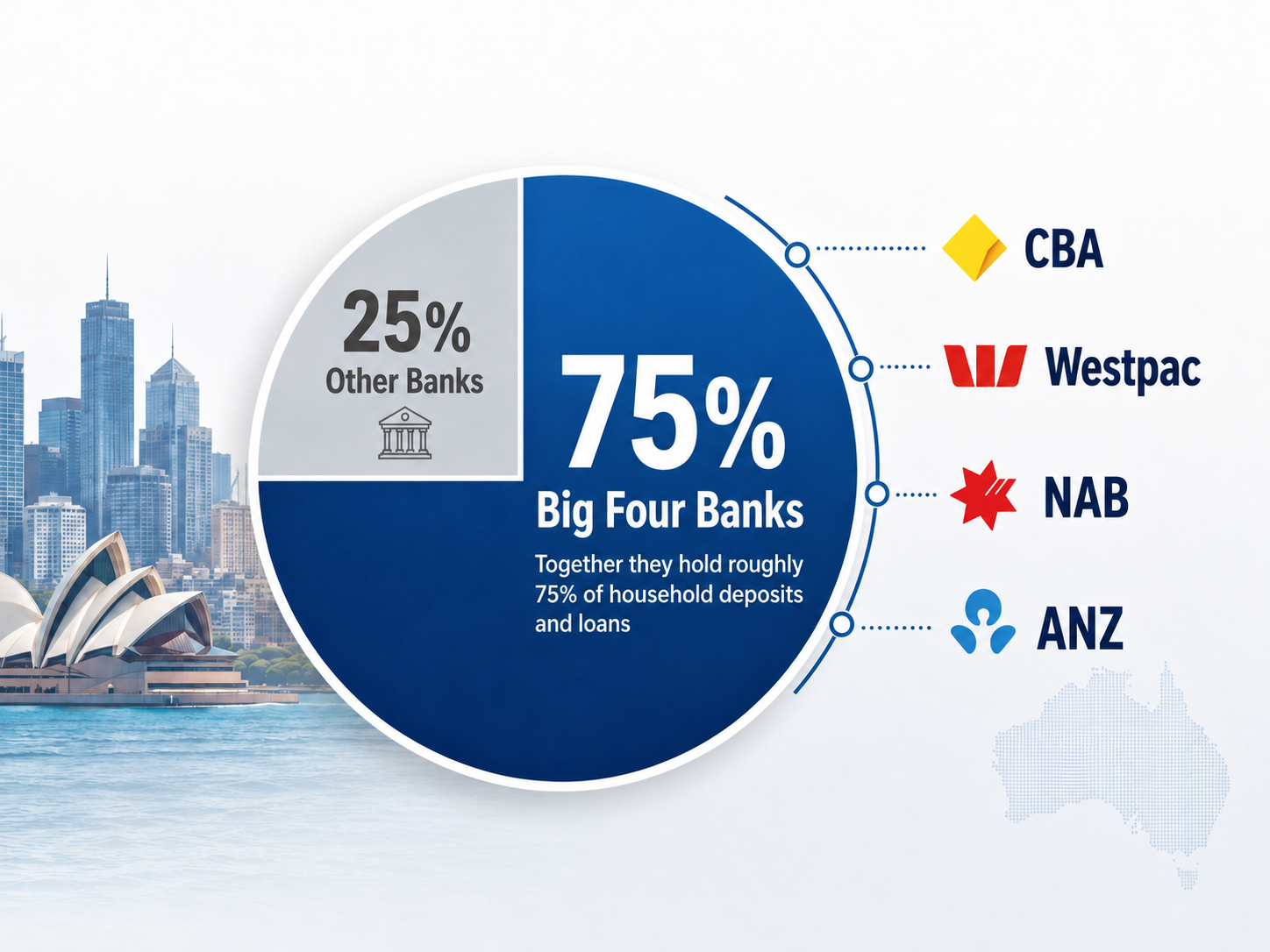
The Big Four banks in Australia are:
- Commonwealth Bank (CBA)
- Westpac
- ANZ
- NAB
Other well-known banks in Australia include Macquarie Bank, ING Australia, Bank of Queensland (BOQ), Bendigo and Adelaide Bank, HSBC Australia and Rabobank Australia.
These banks can support businesses through lending, transaction accounts, merchant facilities, foreign exchange, international payments and trade finance services.
Types of bank finance that help global expansion
Bank finance and services for global expansion
- Business term loan: a lump sum borrowed for a set period, useful for funding an overseas warehouse, new store, production facility or major expansion project.
- Business overdraft: a flexible facility linked to a business account, useful for managing short-term cash flow gaps while waiting for overseas customers to pay.
- Commercial property loan: finance used to purchase or build business property, such as a warehouse, office or distribution facility in a new market.
- Equipment finance: finance used to purchase machinery, vehicles, refrigeration equipment, packaging equipment or production technology.
- Trade finance: finance that helps with importing and exporting by supporting payments, stock purchases, supplier payments and export contracts.
- Foreign exchange services: services that allow a business to convert currency, make international payments and manage currency fluctuation risk.
Example of how to write this in an exam
Banks are financial institutions that can accept deposits and provide services such as business loans, overdrafts, payment systems, trade finance and foreign exchange. For example, an Australian business expanding into New Zealand could use a bank loan from Commonwealth Bank, Westpac, ANZ or NAB to purchase a warehouse and equipment. This can help the business grow because it receives a large amount of finance upfront and can also use international payment and foreign exchange services. As a result, banks can support global expansion, but the business must manage debt, interest repayments and cash flow carefully.
💼 Finance companies
What are finance companies?
Finance companies are non-bank financial institutions that provide finance to individuals or businesses. Unlike banks, finance companies generally do not provide the same full range of deposit accounts and everyday banking services.
Finance companies often specialise in particular types of finance, such as asset finance, equipment finance, invoice finance, trade finance, commercial lending or short-term business loans. They can be useful for businesses that need faster, more specialised or more flexible finance than a bank may provide.
Impact on global business expansion
Finance companies can help global expansion by funding specific business needs, such as machinery, vehicles, inventory, export contracts, overseas invoices or working capital.
They may be useful when a business needs finance quickly or has a specific funding problem. For example, a business waiting for overseas customers to pay could use invoice finance, while a business importing stock could use trade finance to pay suppliers before sales revenue is received.

Australian finance company examples
Export Finance Australia
An Australian Government specialist finance provider that supports export businesses and businesses expanding internationally through loans, guarantees and bonds.
ScotPac
A specialist provider of working capital solutions across Australia and New Zealand, including invoice finance, trade finance and asset finance.
Prospa
An online small business lender that provides business loans and lines of credit for Australian businesses needing flexible funding.
Pepper Money
A non-bank lender that can provide commercial lending and asset finance options for businesses that may not fit traditional bank lending criteria.
Liberty
A non-bank lender offering business and commercial loans, including options for businesses seeking flexible lending solutions.
Money Tech
A specialist business finance provider that can support invoice finance, trade finance, supply chain finance and working capital needs.
Types of finance company support for global expansion
Specialist finance company support
- Asset finance: funds equipment, vehicles, machinery or technology needed for overseas growth.
- Invoice finance: allows a business to access cash tied up in unpaid invoices, especially when overseas customers take longer to pay.
- Trade finance: helps fund purchases from overseas suppliers or stock needed for export contracts before revenue is received.
- Small business loan: provides quick funding for marketing, hiring, inventory, fit-outs or smaller expansion costs.
- Export loan: supports businesses fulfilling export contracts, setting up overseas or growing international sales.
- Guarantee: helps a business access finance when it does not have enough security to satisfy another lender.
Banks compared with finance companies
| Feature | Banks | Finance companies |
|---|---|---|
| Deposit accounts | Can usually accept deposits and provide transaction and savings accounts. | Usually do not provide the same full deposit and everyday banking services. |
| Range of services | Broad services: loans, overdrafts, payments, merchant services, foreign exchange and trade finance. | More specialised services: asset finance, invoice finance, trade finance, business loans or export finance. |
| Approval process | May require more detailed records, security and longer approval processes. | May be faster or more flexible, especially for specific funding needs. |
| Cost and risk | May offer lower rates for stronger businesses with good security. | May charge higher rates or fees because finance can be specialised, quicker or higher risk. |
| Best global use | Larger loans, international payments, foreign exchange and trade finance. | Specific problems such as unpaid export invoices, machinery, stock purchases or export contracts. |
Example of how to write this in an exam
Finance companies are non-bank financial institutions that provide specialised finance, such as asset finance, invoice finance, trade finance or business loans. For example, an Australian food manufacturer expanding into New Zealand could use a finance company such as ScotPac, Prospa or Money Tech to fund packaging equipment, access cash from unpaid invoices or pay suppliers before customer revenue is received. This may be useful because finance companies can be more flexible and targeted than banks. However, they may charge higher fees or interest rates, so the business needs to compare the cost before using this source of finance.
🎧 Prefer listening?
If you prefer listening to the content in podcast format:
🎥 Prefer watching?
If you prefer watching the content in video format:
🃏 Flashcards
Card 1 of 10
🎮 Revision Games
💰 BME Millionaire
Climb the money ladder by mastering banks and finance companies.

Biz Fact: Westpac was founded in 1817 — 84 years before Australian Federation in 1901.
Past Exam Questions
Use these past exam questions to see how this dotpoint has been assessed. Pay close attention to the command term, the number of marks and whether the question is Section 1 or Section 2.
Section 1 Questions
2022 — Section 1 — Question 3(a) — 2 marks
Context
Finance is an important aspect for a business to consider when starting up or expanding.
3(a): Describe a type of financial institution that a business could use to access finance. (2 marks)
Command term focus: Describe
Describe: give the main characteristics or features of the financial institution and how it provides finance.
See the full command term guide here: Command Terms.
3(a) Sample answer
A bank is a financial institution that a business could use to access finance. It can provide business loans, overdrafts and equipment finance to help a business fund startup costs, purchase assets or expand into a new market.
2024 — Section 1 — Question 4(a) — 3 marks
Context
Question 4 focuses on financial institutions and economic factors affecting global business operations.
4(a): Distinguish between banks and finance companies as types of financial institutions. (3 marks)
Command term focus: Distinguish
Distinguish: make the differences between banks and finance companies clear.
See the full command term guide here: Command Terms.
4(a) Sample answer
Banks are financial institutions that can accept deposits and provide a broad range of services such as transaction accounts, business loans, overdrafts, payment services and foreign exchange. In contrast, finance companies are usually non-bank lenders that specialise in specific types of finance, such as asset finance, invoice finance, trade finance or short-term business loans. Therefore, banks are generally broader financial institutions, while finance companies are more specialised sources of business finance.
Section 2 Questions
2020 — Section 2 — Question 7(a) — 8 marks
Case study / context
Tartology Ltd is a Western Australian business that specialises in manufacturing premium handmade chocolate tarts using locally-sourced ingredients. Founded in 2013, Tartology Ltd initially began as a home-based business and opened its first store in 2015. Over the past five years, Tartology Ltd has expanded both its business and the range of chocolate tarts it sells. At present, Tartology Ltd sells through various retail stores across Australia and through its website and Instagram page.
The increasing popularity of the chocolate tarts within both Western Australia and Australia has seen a huge growth in Tartology Ltd’s customer base, sales and profits. Tartology Ltd has been analysing the current economic climate and is now considering entering the New Zealand market. It is seeking to buy a warehouse facility in New Zealand which will focus on the production of tarts to sell to various patisseries in large cities. Ethical practice is important to Tartology Ltd, so it is keen to employ a diverse range of employees in its warehouse and to connect with the local community.
Tartology Ltd believes that moving into the New Zealand market is a good business decision due to that country’s growing middle-income population. This would mean an increase in the number of people who can afford to spend money on luxury items such as Tartology Ltd’s chocolate tarts. There are also good trade relations between Australia and New Zealand and the Australian dollar is relatively close in value to the New Zealand dollar. Interest rates in Australia are at an all-time low and this would allow Tartology Ltd to take advantage of the benefits of investing more into the business.
To assist in the expansion into New Zealand, Tartology Ltd is considering seeking additional funding. These funds will provide support for Tartology Ltd in purchasing the warehouse facility and extra machinery to increase the efficiency of producing and packaging the chocolate tarts in New Zealand.
7(a): Discuss the differences between banks and finance companies and describe two other sources of external funding that Tartology Ltd could use to assist it in its expansion. (8 marks)
Command term focus: Discuss + Describe
Discuss: develop relevant differences, advantages and limitations. Describe: give the main features of two other funding sources. Section 2 requires application.
See the full command term guide here: Command Terms.
7(a) Sample answer
Banks and finance companies are both financial institutions that can provide finance, but they differ in the type and range of services offered. Banks can accept deposits and provide broad financial services such as transaction accounts, business loans, overdrafts, foreign exchange and international payment services. A benefit of using a bank is that Tartology Ltd could access a larger and more structured loan to help purchase its New Zealand warehouse while also managing payments between Australia and New Zealand. However, a limitation is that banks may require strong financial records, security and regular repayments, which could place pressure on Tartology’s cash flow.
Finance companies are usually more specialised non-bank lenders. They may provide asset finance, invoice finance, trade finance or short-term business loans, but they generally do not provide the same full range of deposit accounts and everyday banking services as banks. A benefit of using a finance company is that Tartology Ltd could access more flexible or targeted finance for machinery, working capital or unpaid invoices. However, a limitation is that finance companies may charge higher fees or interest rates because the finance can be more specialised, quicker or higher risk.
One other source of external funding Tartology Ltd could use is share capital. Tartology Ltd could bring in new investors or issue shares to raise funds for the New Zealand warehouse and machinery. This would provide finance without regular interest repayments, although the original owners may lose some control and share future profits with investors.
A second source of external funding is a secured loan. Tartology Ltd could borrow money by offering an asset, such as property, equipment or other business assets, as security for the loan. This could help Tartology access a larger amount of finance for the New Zealand warehouse, but it creates risk because the lender may take the secured asset if Tartology cannot repay the loan.