
U2.23 — Financial Incentives for Employees
Overview
Dotpoint 23: financial incentives for employees, including sales bonuses and share schemes.
Financial incentives are money-based rewards used by a business to encourage employees to work harder, reach targets, improve performance or stay with the business.
Financial incentives are usually linked to money, income or ownership. They can be powerful because employees can clearly see a personal financial benefit from performing well or helping the business succeed.
This dotpoint focuses on two specific financial incentives businesses can use to motivate employees:
Sales bonuses — extra payments given when employees reach sales targets or achieve strong sales results.
Share schemes — programs that allow employees to receive or buy shares in the business they work for.
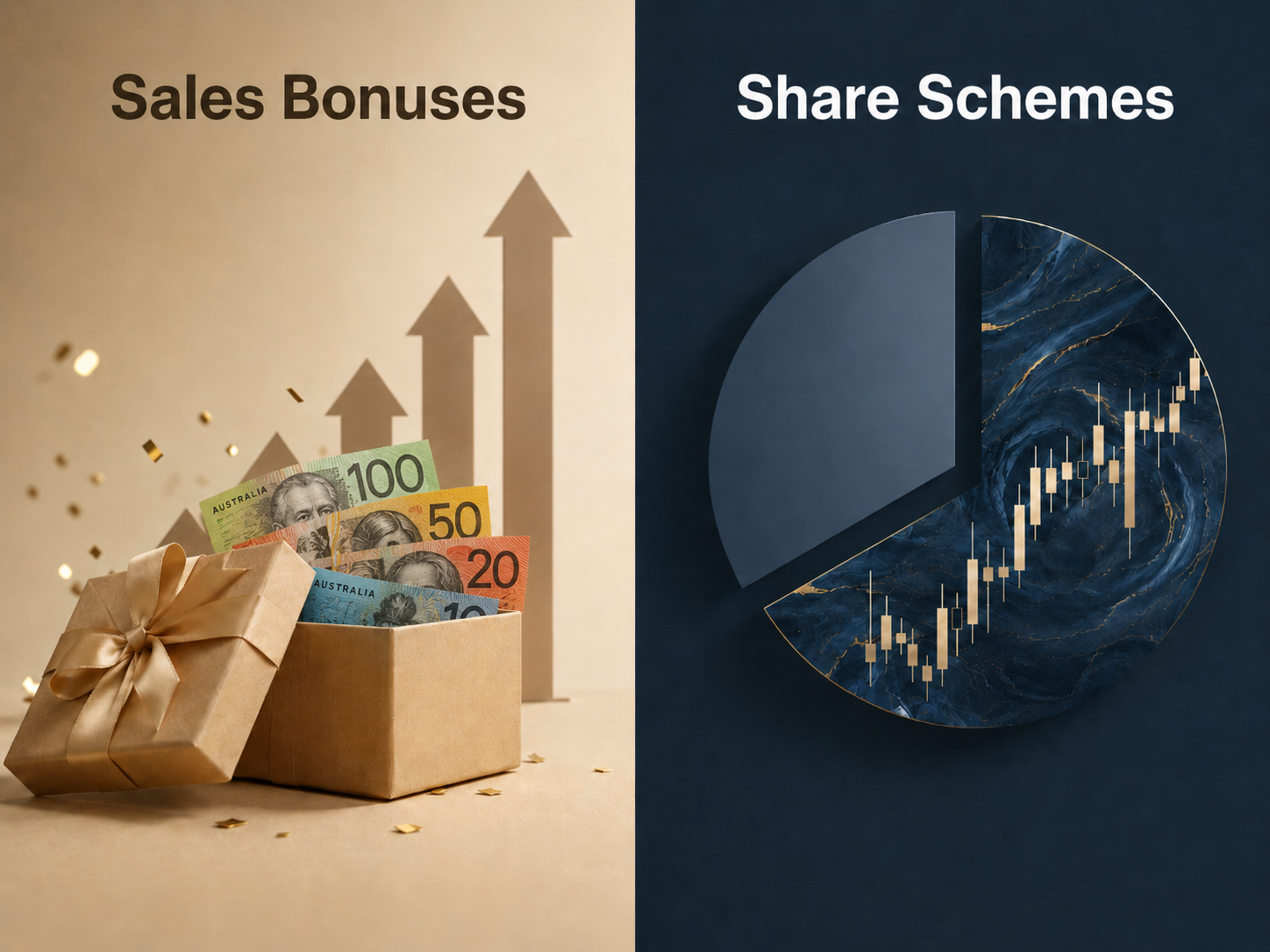
💵 Sales bonuses
Sales bonuses are extra financial payments given to employees when they meet or exceed sales targets.
Summary
Sales bonuses are used to motivate employees to increase sales revenue. They are common in businesses where employee effort can directly influence the number of customers, sales or contracts achieved.
A sales bonus may be paid when an employee reaches a set target, such as selling a certain number of products, reaching a monthly revenue goal or signing a certain number of customers. It may be paid as a one-off amount, a percentage of sales, a team bonus or a tiered bonus where higher sales lead to higher rewards.
Sales bonuses are closely linked to Vroom’s Expectancy Theory. Employees are more likely to be motivated if they believe effort will improve sales performance, sales performance will lead to a bonus, and the bonus is valuable to them.
However, sales bonuses need to be designed carefully. If targets are unrealistic, employees may give up. If targets are too easy, the bonus may not improve performance. If the business only rewards sales numbers, employees may focus too much on selling and not enough on customer service, ethics or long-term relationships.

| Type of sales bonus | How it works | Simple example |
|---|---|---|
| Individual bonus | One employee receives extra pay for reaching a sales target. | A salesperson earns a bonus after selling 20 gym memberships in a month. |
| Team bonus | A group of employees receives a bonus if the team reaches a shared target. | A retail team receives a bonus if the store exceeds its monthly sales goal. |
| Commission-style bonus | The employee earns extra income based on the value of sales made. | A real estate agent earns extra income after helping sell a property. |
| Tiered bonus | The reward increases when employees reach higher levels of sales. | A salesperson receives a bigger bonus for exceeding the target by 20% instead of 5%. |
Pros of sales bonuses
- They can increase sales because employees have a clear financial reason to work harder.
- They are easy to link to measurable targets, such as sales revenue or number of contracts signed.
- They can help create a performance-focused culture.
- They can reward high-performing employees without permanently increasing base wages.
- They may help the business grow revenue because employees are focused on winning customers.
Limitations of sales bonuses
- Employees may become too focused on sales and ignore customer service or ethical behaviour.
- If targets seem unrealistic, employees may become demotivated.
- If bonuses are only given to top sellers, teamwork may fall.
- Employees may pressure customers or oversell products to reach targets.
- Sales bonuses may not motivate employees who are more driven by recognition, flexibility or meaningful work.
Australian examples
- Flight Centre job advertisements have promoted commission-style earnings and incentives for travel sales roles, showing how sales-based businesses can use financial rewards to encourage performance.
- Real estate agencies such as Ray White, LJ Hooker or The Agency operate in an industry where sales commissions and incentive payments are common parts of sales employment arrangements.
- Car dealerships such as Toyota, Ford or Hyundai dealerships may use bonuses or commission-style rewards to encourage salespeople to reach monthly vehicle sales targets.
- Retail electronics businesses such as Harvey Norman or JB Hi-Fi may use sales targets or performance rewards to encourage employees to sell high-value products, warranties or service plans.
World examples
- lululemon has used store-based team bonuses, where employees can earn extra pay when store goals and results are achieved.
- John Lewis and Waitrose paid a staff bonus in 2026 after stronger business performance, showing how bonuses can be linked to overall results.
- Dell uses sales compensation where stronger sales performance can lead to higher commission payments for sales employees.
- Best Buy Health has used a commission plan for direct sales representatives, showing how sales roles can be linked to financial incentives.
📈 Share schemes
Share schemes are financial incentive programs that allow employees to receive, buy or earn shares in the business they work for.
Summary
A share scheme gives employees some form of ownership or potential ownership in the business. This may involve employees receiving shares, buying shares at a discount, being given share options, or earning shares if they stay with the business or meet certain performance conditions.
Share schemes are designed to connect employees to the long-term success of the business. If the business performs well and the share price increases, employees may benefit financially. This can encourage employees to think more like owners rather than just workers.
Share schemes can also help businesses attract and retain skilled employees. This is especially common in large listed companies and technology businesses, where employees may value the chance to share in future business growth.
However, share schemes are not always simple. Shares can rise or fall in value. Employees may not fully understand how the scheme works. Some schemes also have waiting periods, tax issues or rules about when shares can be sold. This means share schemes can motivate employees, but they need to be clearly explained and fairly managed.
| Type of share scheme | How it works | Simple example |
|---|---|---|
| Employee share plan | Employees are offered the chance to buy or receive shares. | An employee receives shares in the company they work for. |
| Matched share scheme | The business gives extra shares if the employee buys and holds shares for a set period. | An employee buys one share and later receives a matching share from the business. |
| Share options | Employees receive the right to buy shares in the future at a set price. | A start-up gives employees options that may become valuable if the business grows. |
| Restricted stock | Employees receive shares that vest after time or performance conditions are met. | A technology employee receives shares that become theirs after staying for several years. |
Pros of share schemes
- They can increase loyalty because employees may benefit from the long-term success of the business.
- They can encourage employees to think like owners.
- They can help attract and retain skilled workers, especially in competitive industries.
- They may motivate employees to care about profitability, growth and business performance.
- They can make employees feel more connected to the organisation.
Limitations of share schemes
- The value of shares can fall, which may disappoint or demotivate employees.
- Employees may not understand the rules, risks, tax issues or waiting periods.
- Share schemes may feel less useful to employees who need immediate income.
- Employees may have little individual control over the share price.
- If the scheme mainly benefits senior employees, it may create fairness concerns.
Australian examples
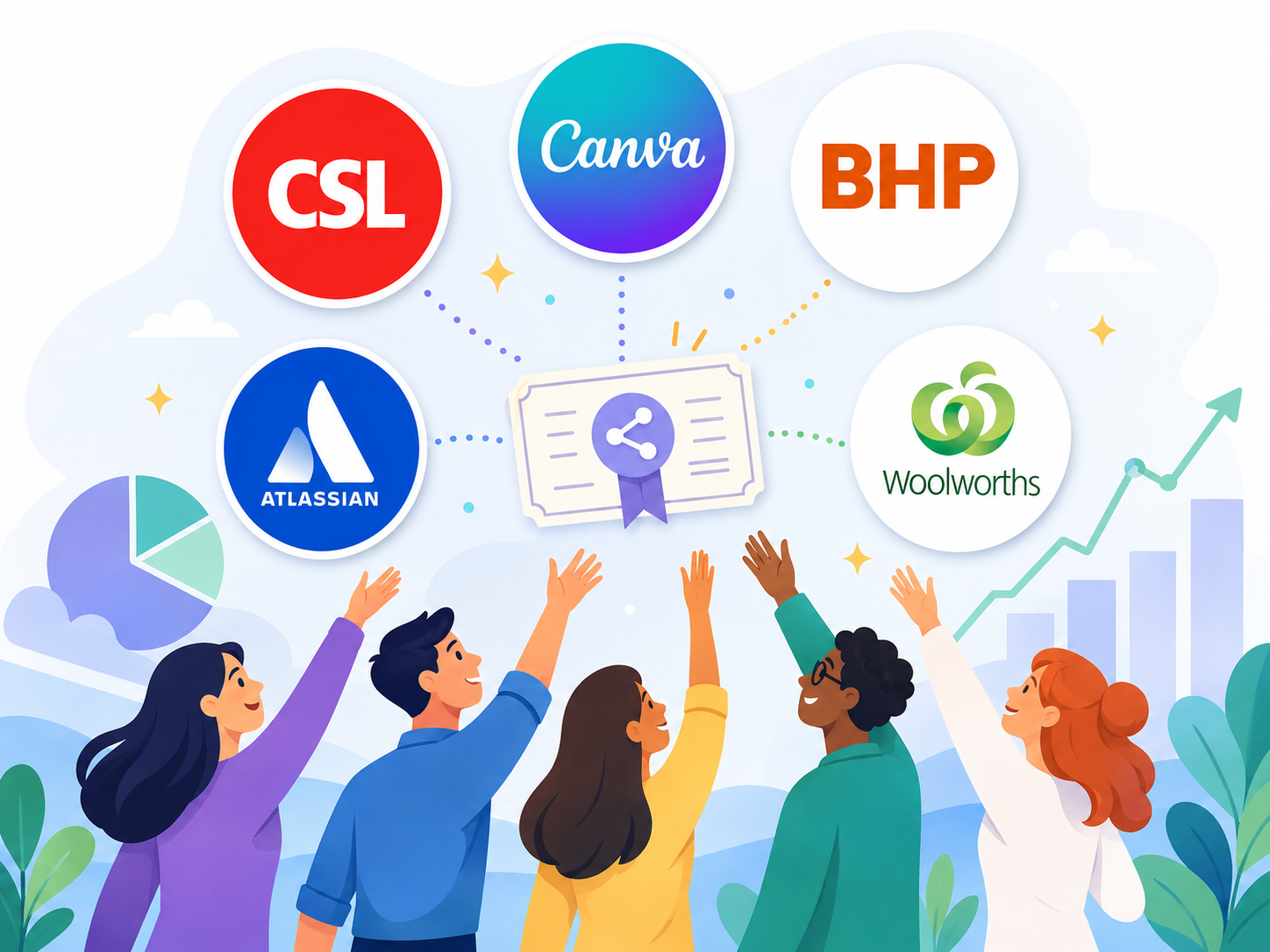
- BHP uses its Shareplus plan, where eligible employees can become shareholders and may receive matching shares if conditions are met.
- CSL operates a Global Employee Share Plan, giving employees the opportunity to share in the ownership and future success of the business.
- Woolworths Group provides employee shareholder information and has had employee share plan arrangements, showing how large Australian companies can connect employees to ownership.
- Atlassian, founded in Australia and now globally listed, has employee share purchase plan arrangements as part of its broader employee compensation approach.
World examples
- Microsoft uses stock awards and an employee stock purchase plan to reward employees and connect them to company performance.
- Apple is widely known for using share-based compensation for many employees, especially in professional and technical roles.
- Google/Alphabet is a well-known global example of a technology business using equity-based rewards to attract and retain skilled employees.
- Start-ups around the world often use share options when they cannot afford very high salaries but want employees to benefit if the business grows.
🎧 Prefer listening?
If you prefer listening to the content in podcast format:
🎥 Prefer watching?
If you prefer watching the content in video format:

Biz Fact: At Canva, some early employees became millionaires through staff share sales — a reminder that share schemes can reward workers when the business grows.