
U3.08 — The Role of E-commerce in a Global Environment
Overview
Dotpoint 8: the role of e-commerce in a global environment.
E-commerce is the buying and selling of goods or services electronically over the internet. In a global environment, e-commerce allows businesses to buy, sell, communicate and receive payments across national borders.
This dotpoint focuses on the role of e-commerce in global business, including how it allows businesses to buy and sell online, reach customers across borders, process digital payments and operate in international markets.
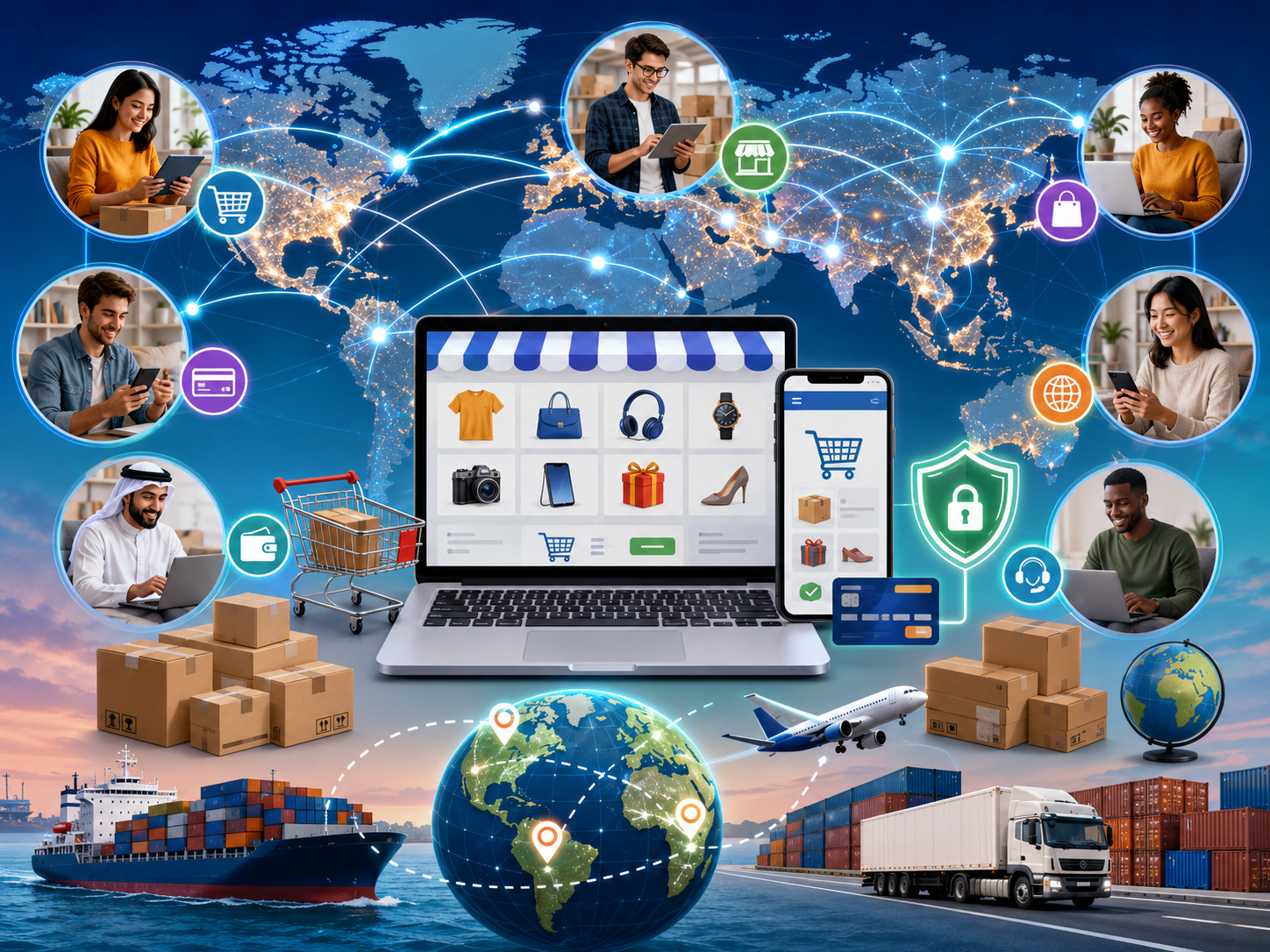
🛒 Intro to E-Commerce
E-commerce is the buying and selling of goods or services electronically over the internet. It includes transactions between businesses, consumers and other organisations. While online shopping is the most familiar form, e-commerce also supports global supply chains, wholesale trade, digital services and online marketplaces.
Types of e-commerce
1. Business-to-Consumer (B2C)
Business-to-Consumer occurs when a business sells products or services directly to individual consumers through a website, app or online store.
Customers can browse products, make secure online payments and have purchases delivered or collected in-store.
B2C e-commerce is commonly associated with major online retailers such as Amazon and Temu, but it also includes small businesses selling directly to consumers through their own online stores. Small businesses may use platforms such as Shopify, WooCommerce or Wix to manage product listings, shopping carts, payments, inventory and shipping.
Australian examples: JB Hi-Fi, The Iconic, Woolworths Online, Bunnings, Kogan, a Perth clothing boutique using Shopify, a home-based jewellery business using Squarespace, or a specialty coffee roaster using WooCommerce.
International examples: Amazon, Apple Store, Nike, Shein, Temu and Gymshark using Shopify.

2. Business-to-Business (B2B)
Business-to-Business occurs when one business sells products or services to another business.
It plays a major role in global trade because businesses can purchase raw materials, machinery, components, software, office supplies and wholesale products electronically.
Australian examples: BlueScope Steel supplying construction businesses, Officeworks Business supplying schools and workplaces, and Australian retailers sourcing products through Alibaba.
International examples: Alibaba.com, Global Sources, Faire and IndiaMART.

3. Consumer-to-Consumer (C2C)
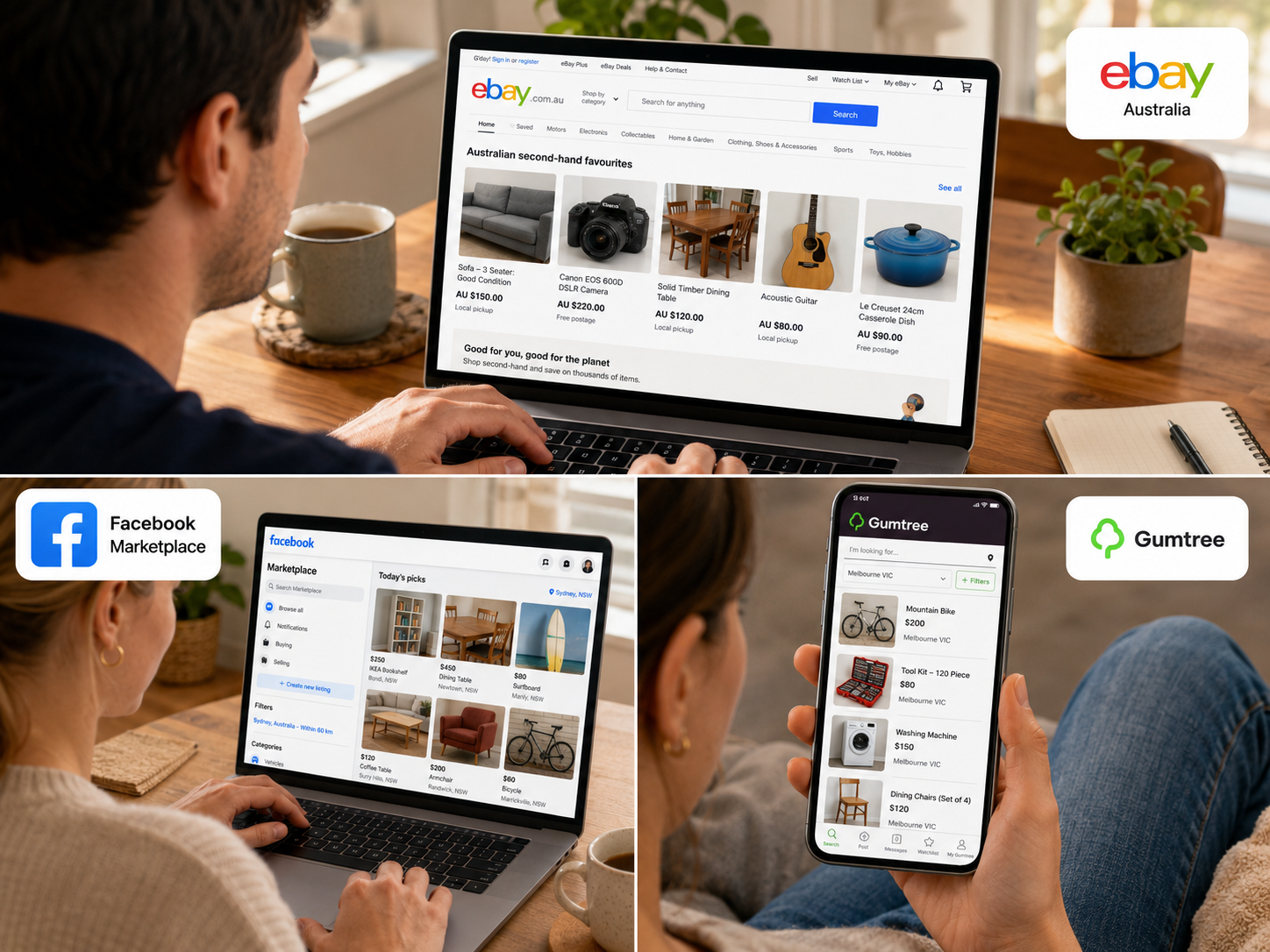
Consumer-to-Consumer allows individuals to buy and sell directly with one another through an online marketplace.
The platform connects buyers and sellers while providing search tools, payment systems, customer reviews and messaging systems.
Australian examples: eBay Australia, Facebook Marketplace, Gumtree.
International examples: eBay, Etsy and Depop.
4. Consumer-to-Business (C2B)
Consumer-to-Business occurs when an individual provides products or services to a business.
This has grown with freelancing, content creation, photography, design work, influencer marketing and the creator economy.
Australian examples: a freelance graphic designer creating logos for businesses, a photographer licensing images to Australian tourism operators, or an influencer promoting a local clothing brand.
International examples: Fiverr and Upwork.

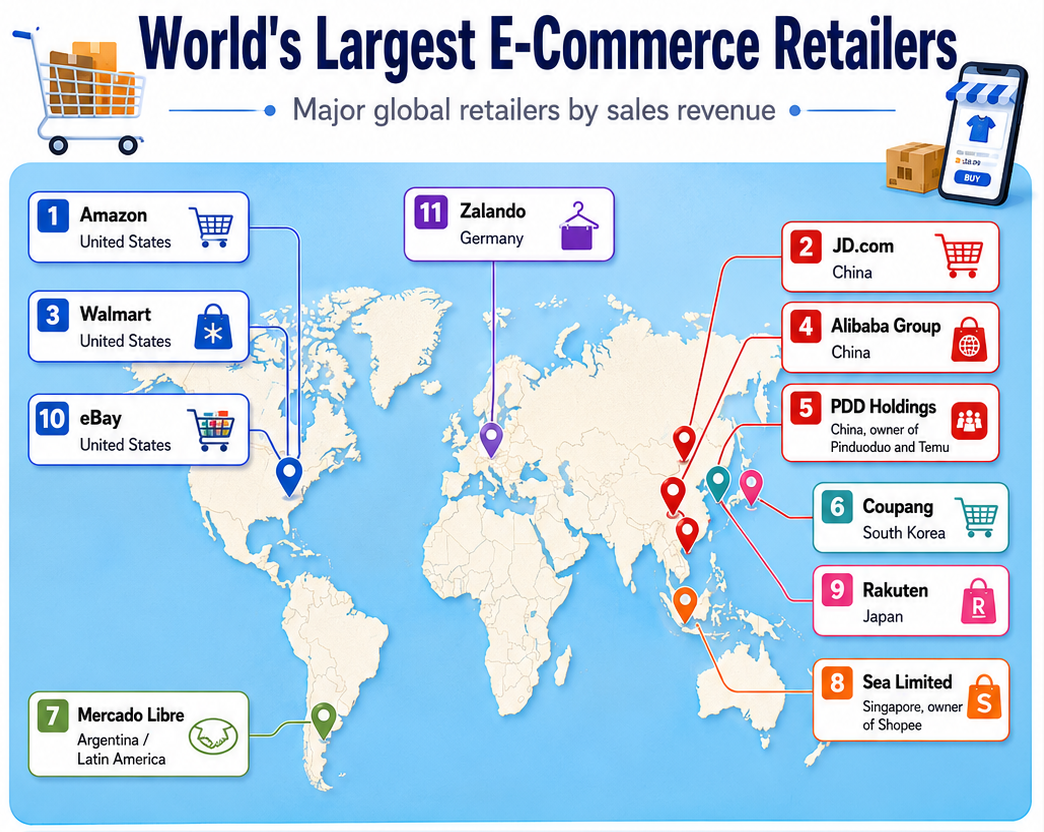
🌏 The role of e-commerce in a global environment
The role of e-commerce is the function or purpose it performs in business. In a global environment, e-commerce allows businesses to buy, sell, communicate, receive payments and serve customers across borders through digital systems.
Role = what e-commerce does
1. Enables businesses to buy and sell online
E-commerce allows businesses to display products or services online and receive orders through websites, apps or marketplaces.
Business result: businesses can trade with customers in other countries without needing face-to-face transactions.
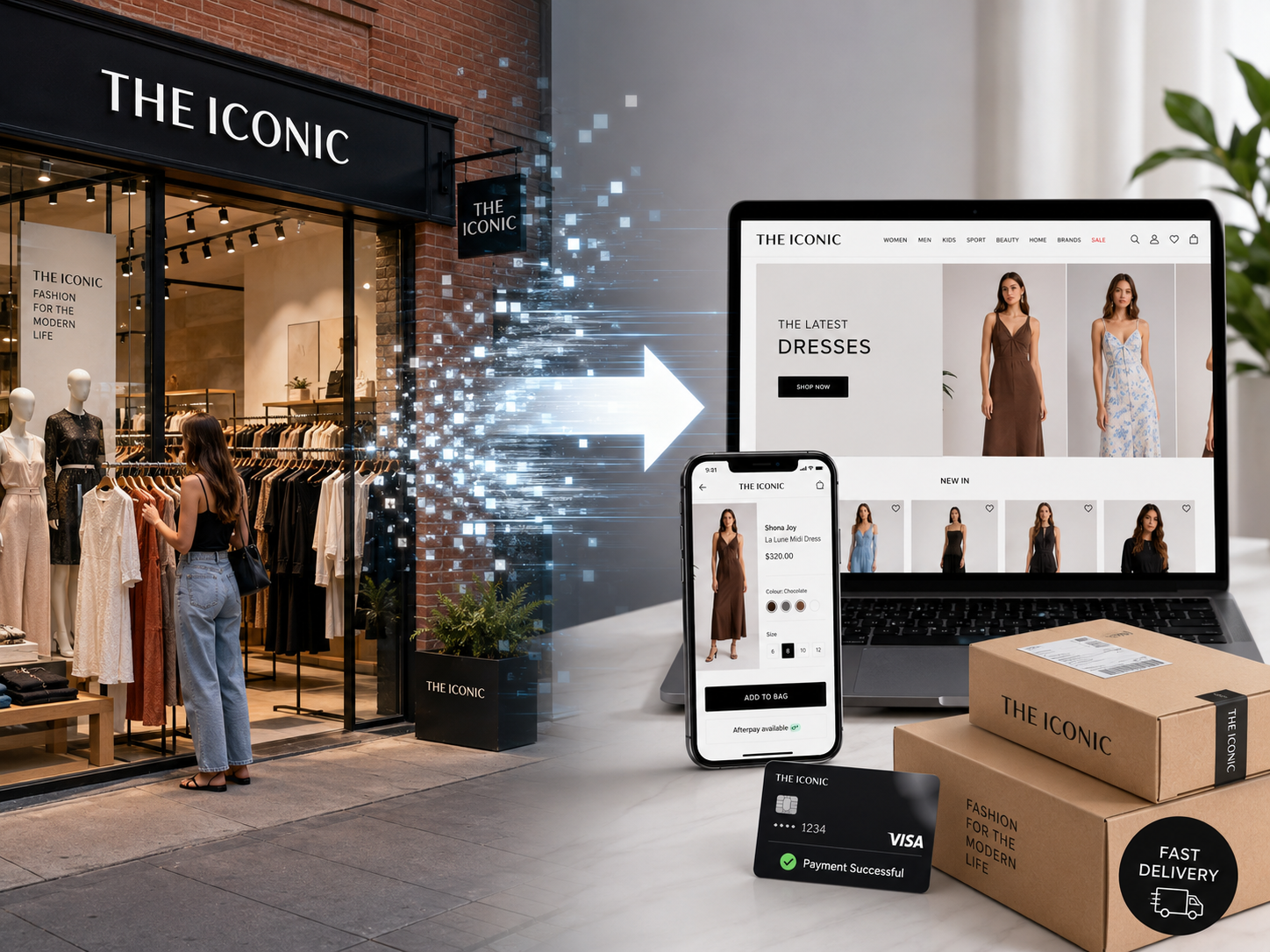
Australian example: The Iconic sells fashion online and uses digital ordering, payment and delivery systems to reach customers beyond a traditional store environment.
2. Connects businesses with global customers
E-commerce reduces geographical barriers by allowing overseas customers to discover, compare and purchase from a business online.
Business result: the business can reach a larger customer base and compete in international markets.
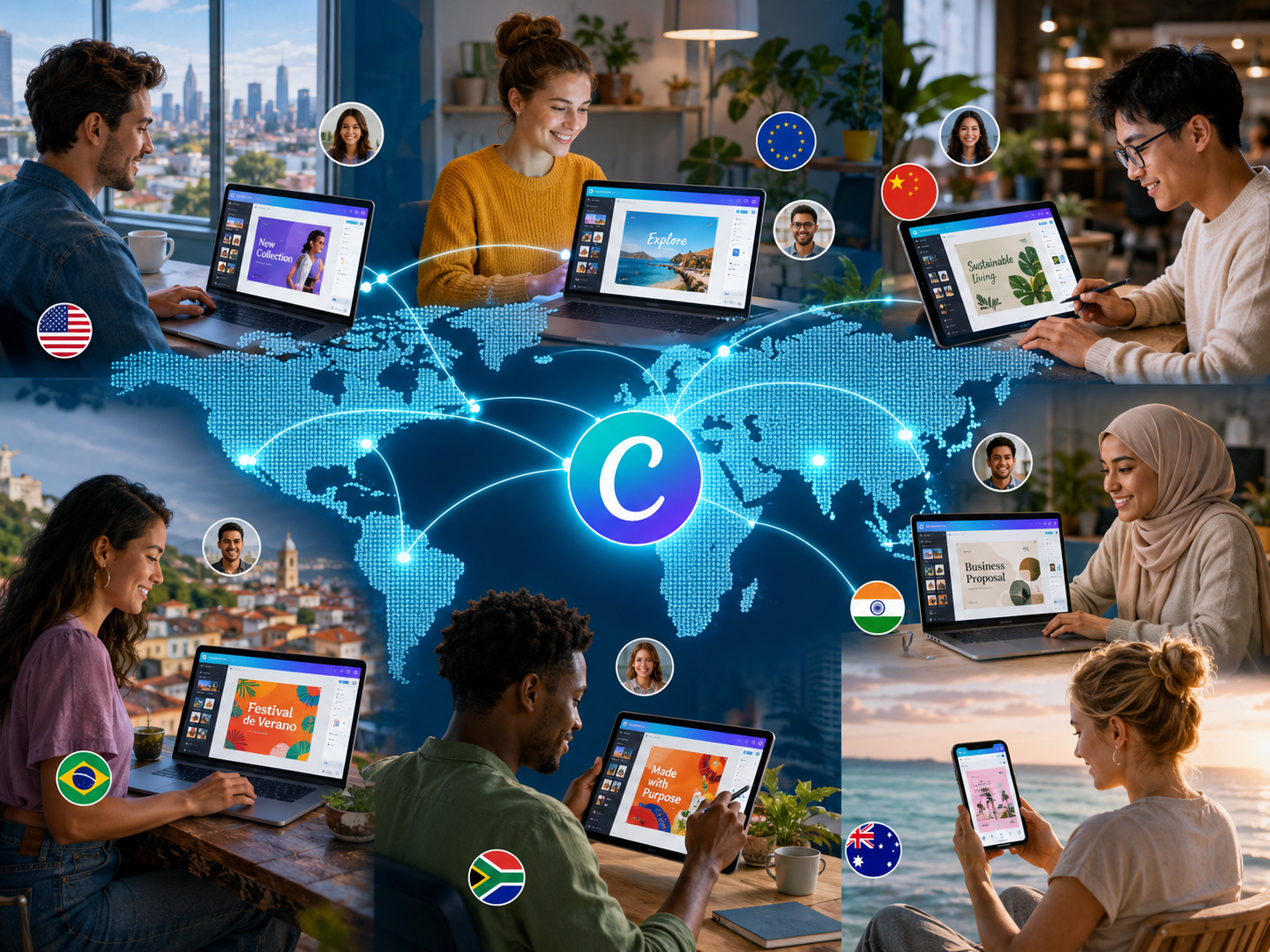
Australian example: Canva is an Australian-founded online platform with users around the world, showing how digital access can connect a business with global customers.
3. Facilitates electronic payments
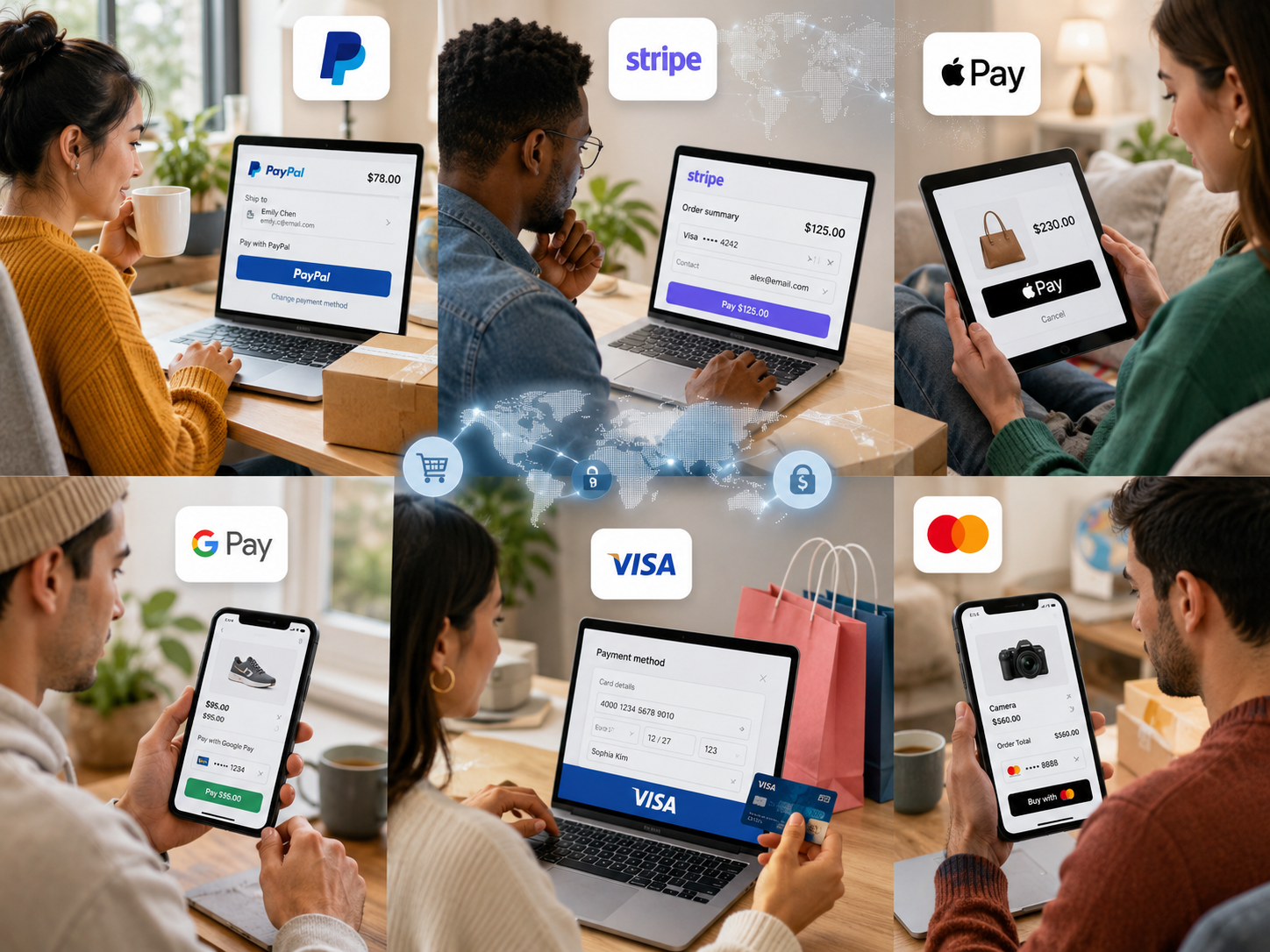
E-commerce supports online payment systems that allow customers to pay electronically using cards, digital wallets or payment platforms.
Business result: this makes international transactions faster and easier because customers can pay without visiting a physical store or using manual payment processes.
Platform examples: PayPal, Stripe, Apple Pay, Google Pay, Visa and Mastercard all support online transactions.
4. Supports 24/7 trading
E-commerce allows customers to browse, order and pay at any time, even when the business is closed in Australia.
Business result: businesses can serve customers across different time zones and generate sales outside normal trading hours.
Australian example: an Australian education, software or design business can receive online orders or subscriptions from overseas customers overnight.

5. Improves communication and customer service
E-commerce allows businesses to communicate with customers through order confirmations, live chat, email updates, tracking links, customer reviews and online support.
Business result: this can help build trust with overseas customers who cannot visit the business in person.
Business example: online retailers often use automatic order updates and shipment tracking to reassure customers buying from another country.
6. Provides customer data and market feedback
E-commerce systems can show where customers are located, which products are viewed most, which items are abandoned in carts and which markets have the strongest demand.
Business result: businesses can use this information to adjust prices, products and marketing for different international markets.
Australian example: a small Australian clothing business may notice strong online demand from New Zealand customers and create shipping options or product ranges for that market.
Benefits of e-commerce
- Increased sales revenue: more customers can access the business online.
- Access to larger global markets: the business can sell beyond Australia.
- Lower operating costs: the business may not need physical stores in every market.
- Greater customer convenience: customers can browse and order at any time.
- Faster transactions: online payments and automated confirmations speed up purchases.
- Improved efficiency: online systems can link orders, inventory and payments.
- Better customer data: the business can use online data to understand demand.
Challenges of e-commerce in global markets
- Delivery and freight costs: shipping overseas can be expensive and slow.
- Returns and customer service: international returns, refunds and complaints can be difficult.
- Customs, taxes and duties: products may face border charges or import rules in overseas markets.
- Language and currency differences: customers may need translated information and local currency options.
- Trust and reputation: overseas customers may be cautious about buying from an unfamiliar Australian business.
- Website localisation: product descriptions, sizing, measurements and payment options may need to suit the target country.
- Security and privacy: businesses must protect customer data and online payments, which is covered in more detail in a later dotpoint.
How to answer “Explain the role of e-commerce in a global environment”
Explain needs a clear cause-and-effect link.
Strong structure: role → global context → effect.
Example: “E-commerce allows businesses to buy and sell goods and services online across national borders. This enables Australian businesses to reach customers in overseas markets without needing a physical store. As a result, businesses can expand internationally, increase sales and compete more effectively in the global marketplace.”
🎧 Prefer listening?
If you prefer listening to the content in podcast format:
🎥 Prefer watching?
If you prefer watching the content in video format:
🃏 Flashcards
Card 1 of 9
🎮 Revision Games
💰 BME Millionaire
Climb the money ladder by mastering the role of e-commerce in a global environment.
Biz Fact: Global retail e-commerce sales reached an estimated US$6.4 trillion in 2025.
Past Exam Questions
Use these past exam questions to see how this dotpoint has been assessed. Pay close attention to the command term, the number of marks and whether the question is Section 1 or Section 2.
Section 1 Questions
2016 — Section 1 — Question 5(a) — 2 marks
Context
Question 5 focuses on businesses operating in an increasingly globalised world and the role of technology in business.
5(a): Describe the role of e-commerce in a global environment. (2 marks)
Command term focus: Describe
Describe: give the main characteristics of the role e-commerce plays in a global environment.
See the full command term guide here: Command Terms.
5(a) Sample answer
E-commerce allows businesses to buy and sell goods or services online across national borders. Its role in a global environment is to connect businesses with overseas customers and allow online ordering and payment without needing a physical store in every country.
2020 — Section 1 — Question 3(d) — 3 marks
Context
Globalisation can be described as the spread of products, technology, information and jobs across borders and cultures.
3(d): Explain the role of e-commerce in a global environment. (3 marks)
Command term focus: Explain
Explain: show cause and effect by explaining what e-commerce does globally and the business result.
See the full command term guide here: Command Terms.
3(d) Sample answer
E-commerce allows businesses to buy and sell goods and services online across national borders. This means a business can reach customers in overseas markets without needing to open physical stores in those countries. The effect is that the business can expand internationally, increase sales opportunities and compete more effectively in the global marketplace.
2024 — Section 1 — Question 2(c) — 3 marks
Context
Participation in global markets offers Australian businesses opportunities for growth but also exposes the businesses to challenges that must be navigated.
2(c): Explain the role of e-commerce in a global environment. (3 marks)
Command term focus: Explain
Explain: show cause and effect by linking the global role of e-commerce to a clear business outcome.
See the full command term guide here: Command Terms.
2(c) Sample answer
E-commerce plays the role of connecting businesses with overseas customers through online stores, marketplaces and electronic payment systems. This allows customers in other countries to browse, order and pay for products without visiting a physical store. The effect is that businesses can reduce geographical barriers, trade across time zones and grow international sales more easily.