
U3.11 — Standardisation or Adaptation When Applying Elements of the Marketing Mix to Global Brands
Overview
Dotpoint 11: standardisation or adaptation when applying elements of the marketing mix to global brands.
When a business expands globally, it must decide whether to keep its marketing mix the same across countries or adapt parts of it to suit each foreign market.
Standardisation means using the same or very similar marketing mix across different countries.
Adaptation means changing elements of the marketing mix to suit local languages, cultures, laws, consumer preferences, income levels and competitive conditions.
The syllabus focuses on four elements of the marketing mix:
- corporate slogan
- product name
- product features
- positioning
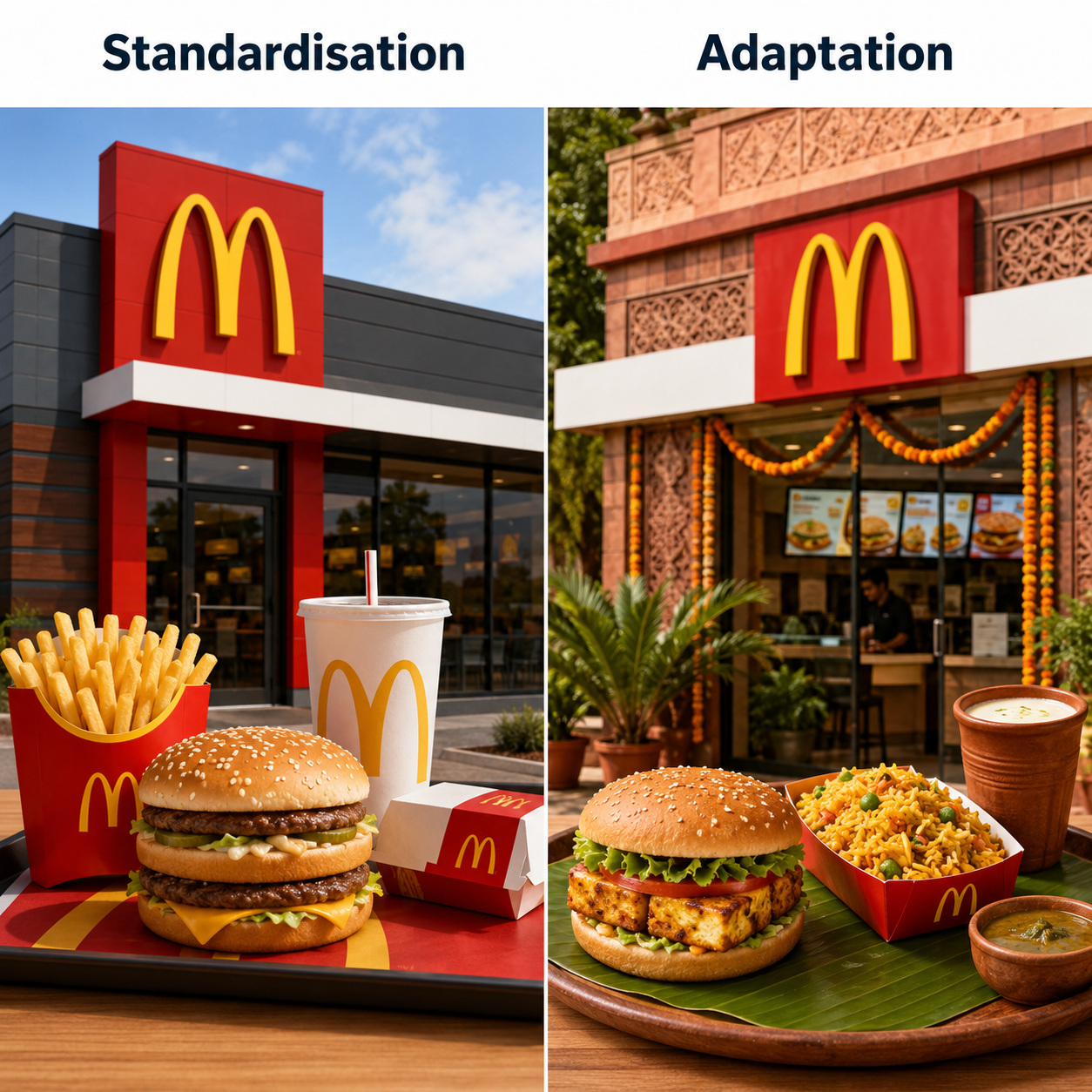
🌐 What are standardisation and adaptation?
Standardisation and adaptation are two approaches to global marketing. A business may standardise some elements of its marketing mix to build a consistent global brand, while adapting other elements to suit local markets.
Standardisation
What it means
Standardisation means using the same or very similar marketing mix across multiple countries.
Examples: the same brand colours, slogan, product name, packaging style, store design or brand positioning may be used across many global markets.
Why a business may standardise
- builds a consistent global identity
- increases brand recognition
- reduces marketing and design costs
- supports economies of scale
- makes global advertising easier to coordinate
- creates a familiar customer experience across countries
Limitations of standardisation
- the same marketing mix may not suit local cultures, languages, laws or consumer preferences
- a slogan may not translate well or may lose its intended meaning
- a product name may sound strange, be hard to pronounce or already be legally protected
- a product feature may not meet local needs, tastes, climates or regulations
- the brand’s positioning may not match local income levels or customer expectations

Business result: the business may save money, but lose sales if customers do not understand, value or accept the standardised message or product.
Adaptation
What it means
Adaptation means changing elements of the marketing mix to suit the conditions of a specific foreign market.
Examples: a business may translate a slogan, rename a product, change ingredients, alter packaging, adjust product features or reposition a brand to match local expectations.
Why a business may adapt
- makes the brand more culturally relevant
- helps avoid language or translation problems
- responds to local tastes and buying habits
- helps meet legal and labelling requirements
- can create stronger customer acceptance
- may help the business compete against local rivals
Limitations of adaptation
- different packaging, advertising and product designs can increase costs
- the business may need translation, market research and local marketing advice
- different suppliers or production methods may be required
- the business may lose economies of scale
- the global brand image may weaken if each market looks too different

Business result: the business may become more relevant locally, but could lose economies of scale or weaken its global brand image if each market looks too different.
Hybrid or “glocal” approach
Most global brands use a mix of both
A business does not need to choose complete standardisation or complete adaptation. Many global brands use a hybrid or glocal approach, where the core brand is standardised but selected marketing mix elements are adapted.
Example: McDonald’s keeps its brand colours, logo, fast-service model and general brand identity relatively consistent, but adapts menu items to suit local cultures and tastes, such as vegetarian options in India and Samurai Mac products in Japan.

📣 Corporate slogan
A corporate slogan is a short phrase that communicates the brand’s message, promise or personality. When going global, a business must decide whether to keep the same slogan across countries or adapt it for local language and culture.
Standardising a corporate slogan
How it works
The business uses the same slogan, or a very similar slogan, across global markets.
Example: Nike’s “Just Do It” is widely recognised and has been used as a consistent global brand message linked to motivation, performance and personal achievement.
Benefits
- creates a consistent global message
- improves brand recall
- reduces the need to create separate campaigns for each market
- helps customers recognise the brand when travelling or shopping online
- strengthens brand identity if the message is simple and universal
Limitations of standardising a slogan
- the slogan may not translate clearly into another language
- the slogan may lose its meaning or sound awkward
- humour, slang and idioms may not carry the same meaning across cultures
- the slogan may not connect with local customer values
- the message may feel foreign or culturally inappropriate
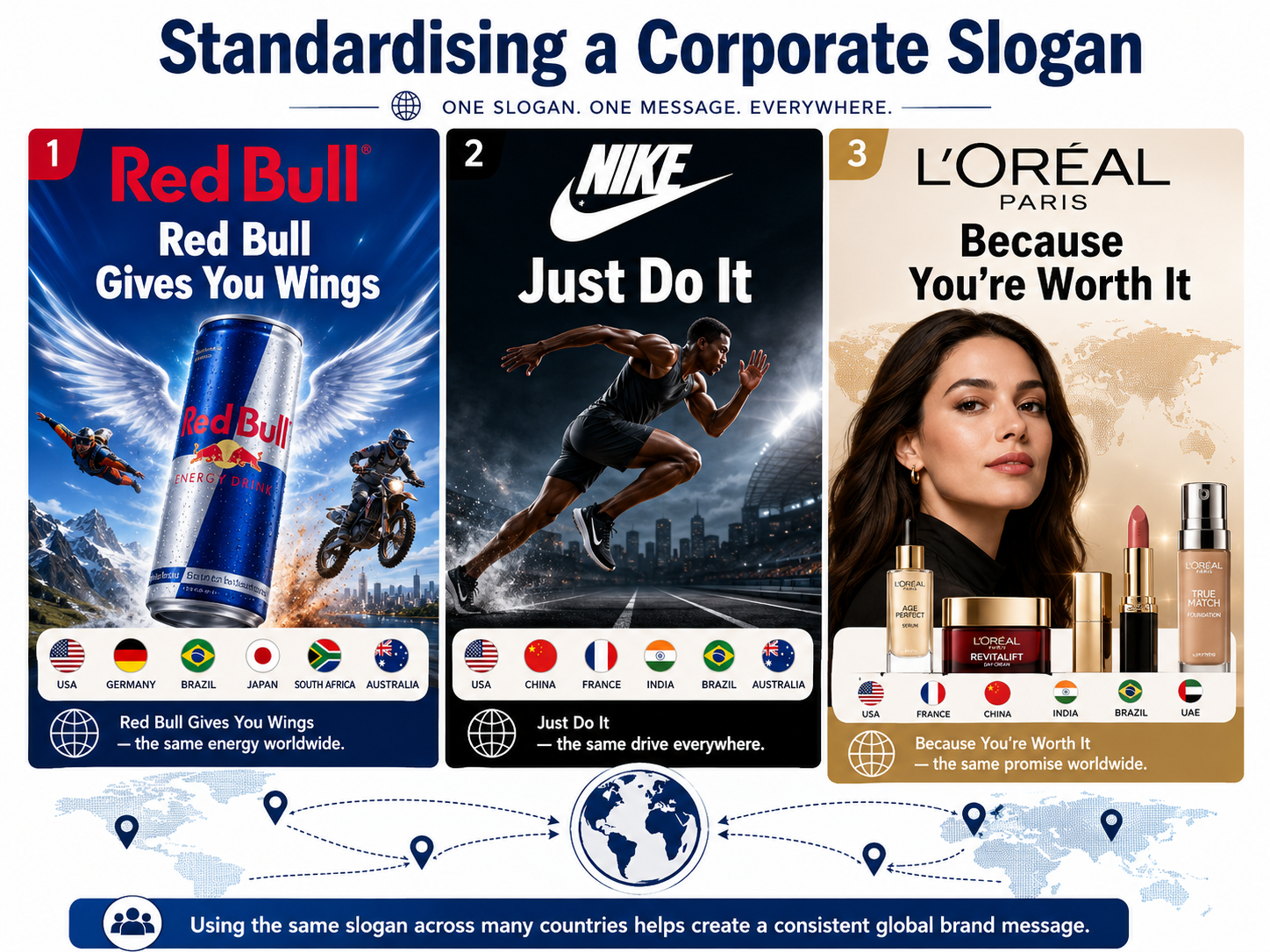
Business result: a standardised slogan may save money, but could reduce customer connection if the message feels foreign, confusing or culturally inappropriate.
Adapting a corporate slogan
How it works
The business changes the wording, language or emphasis of the slogan to suit the foreign market.
Example: Kit Kat adapted its brand message in Japan by linking the product name to the phrase “kitto katsu”, meaning “surely win”. This helped Kit Kat connect with Japanese gift-giving and exam traditions.
Benefits
- makes the slogan easier to understand
- shows respect for local language and culture
- can improve emotional connection with customers
- reduces the risk of poor translation
- helps the business respond to local customer values
Limitations of adapting a slogan
- translation and cultural testing can increase costs
- the business may need new advertising material for each market
- local marketing advice may be required
- different slogans can weaken global brand consistency
- customers may receive different brand messages in different countries
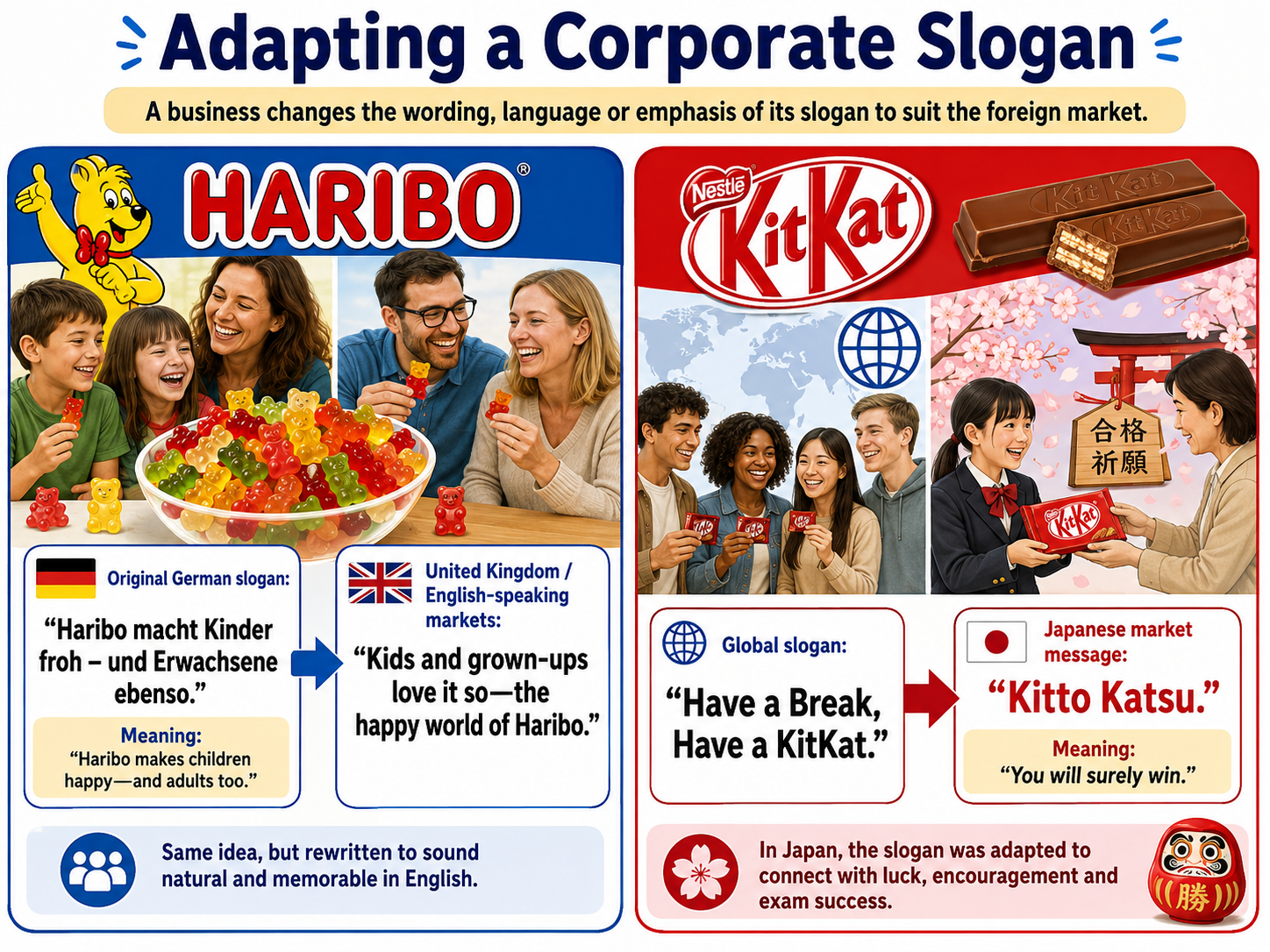
Business result: adaptation can make the slogan more relevant, but may reduce global consistency.
Example of how to write this element in an exam
A corporate slogan may need to be standardised or adapted when a business applies the marketing mix to a global brand because the slogan communicates the brand’s main message to customers. If the slogan is simple, universal and already strongly associated with the brand, standardising it may strengthen global recognition and reduce advertising costs. However, if the slogan does not translate clearly or does not suit local culture, adaptation may be more appropriate because it can make the brand message easier to understand and more relevant to customers in the foreign market. This may lead to stronger customer connection, improved brand image and increased sales.
🏷️ Product name
A product name is the name used to identify a product or service. In global markets, a product name can be standardised to build recognition or adapted to avoid language issues, legal conflicts or cultural problems.
Standardising a product name
How it works
The business uses the same product name across countries.
Example: products such as iPhone, Nike Air Max and PlayStation use consistent global names, making them easy to recognise across different countries and online platforms.
Benefits
- builds global product recognition
- makes advertising and packaging more consistent
- helps customers find the product online
- supports word-of-mouth across countries
- reduces the cost of creating and protecting multiple product names
Limitations of standardising a product name
- the name may already be legally protected in another country
- customers may find the name hard to pronounce or remember
- the name may have an unintended or negative meaning in another language
- the name may not communicate what the product does
- the name may not suit local culture, humour or customer expectations
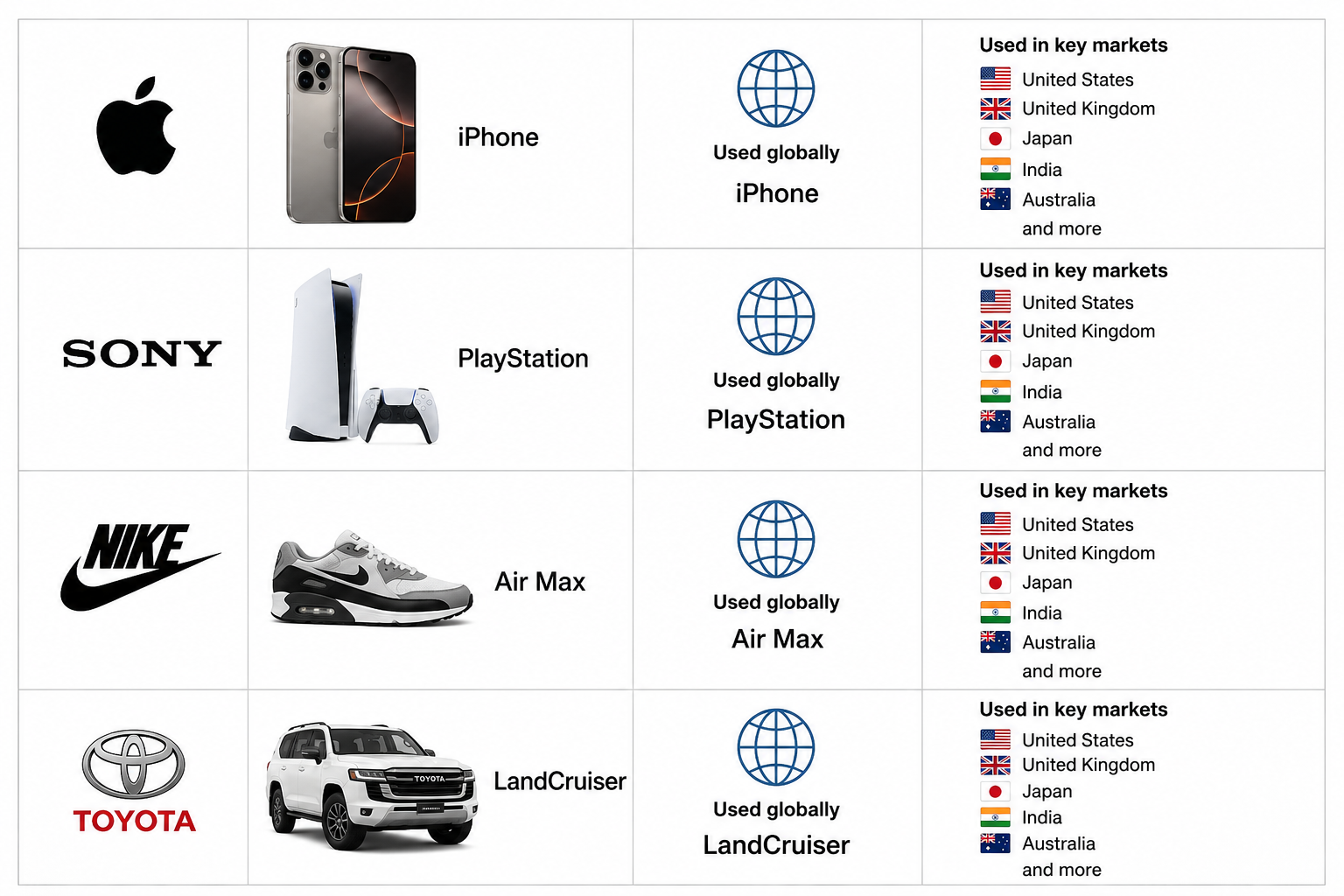
Business result: a standardised name may improve recognition, but can reduce acceptance if customers find the name confusing, offensive or unrelated to the product.
Adapting a product name
How it works
The business changes the product name for a specific market.
Example: Toyota uses the name Kluger in Australia, while the same model is known as the Highlander in some other markets. This shows how vehicle names can vary across countries.
Benefits
- avoids translation problems
- helps the name sound more natural in the local market
- can avoid trademark or legal issues
- allows the product to feel more local
- can better match customer expectations and product use
Limitations of adapting a product name
- different names can make the global brand harder to manage
- customers may not realise products are connected across countries
- online search and social media recognition can become more difficult
- the business may need separate packaging, trademarks and advertising
- marketing costs may rise because each name needs promotion
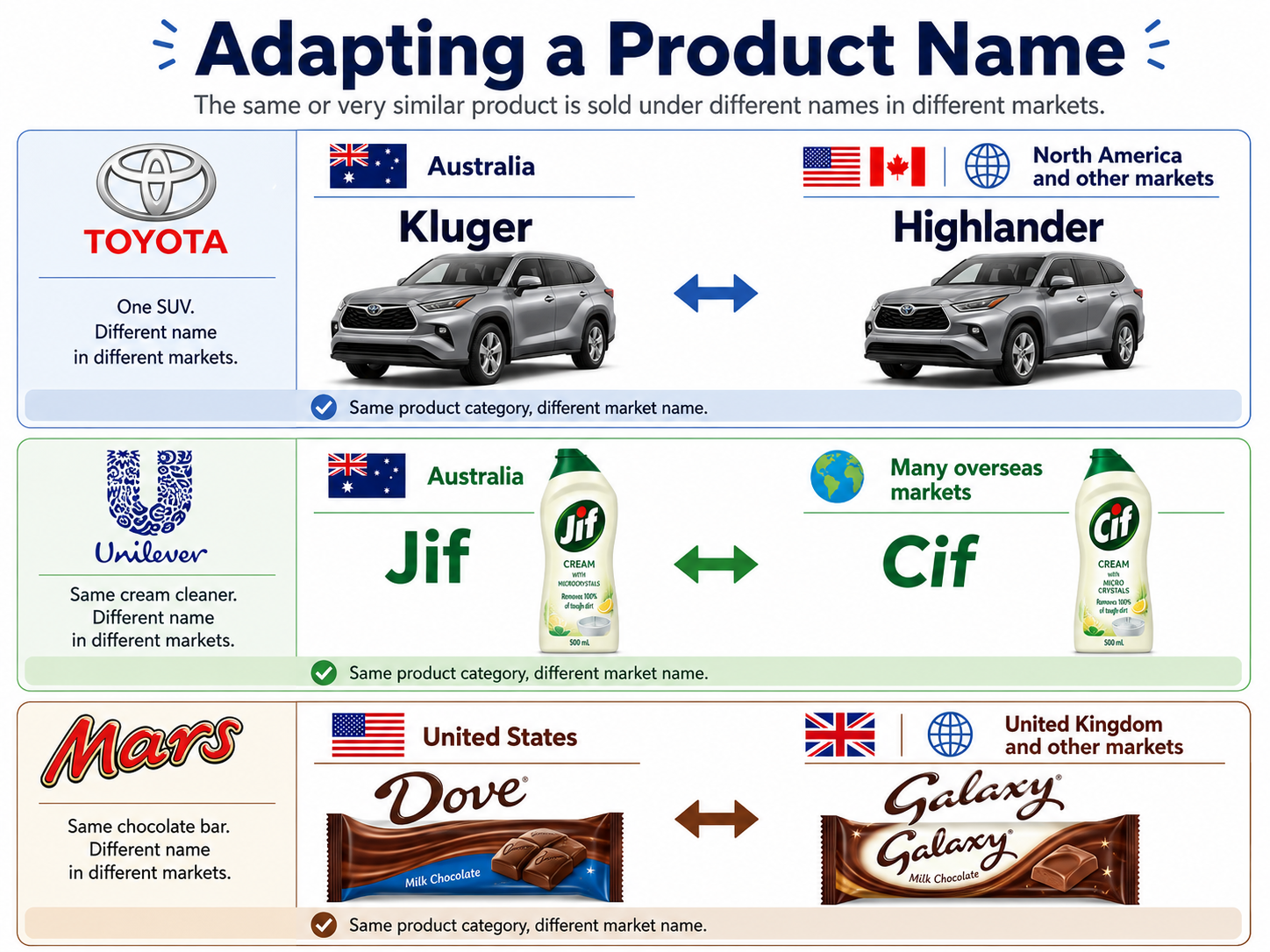
Business result: adaptation may improve local acceptance, but reduce global consistency and increase marketing costs.
Example of how to write this element in an exam
A product name may need to be standardised or adapted when a business applies the marketing mix to a global brand because the name affects customer recognition, pronunciation and brand image. If the name is easy to understand, legally available and already recognised globally, standardising it can make the product easier to identify across countries and reduce marketing costs. However, if the name has a negative meaning, is hard to pronounce or does not communicate the product clearly in the foreign market, adaptation may be needed. This may lead to stronger customer awareness, fewer language problems and improved acceptance in the target market.
🧩 Product features
Product features are the characteristics of a good or service, such as ingredients, design, packaging, size, flavour, performance, language, technology, safety features or service inclusions.
Standardising product features
How it works
The business sells the same product with the same core features in different markets.
Example: Apple generally standardises the core design and premium features of the iPhone across global markets, creating a consistent product experience.
Benefits
- supports economies of scale in production
- keeps product quality consistent
- reduces research and development costs
- makes global packaging and training easier
- helps customers know what to expect from the brand
Limitations of standardising product features
- standard product features may not match local laws or safety standards
- the product may not suit local climates, religions, tastes or incomes
- packaging, ingredients or language settings may need to change
- customers may not value the same features as Australian customers
- the business may lose sales if the standard product does not fit local use
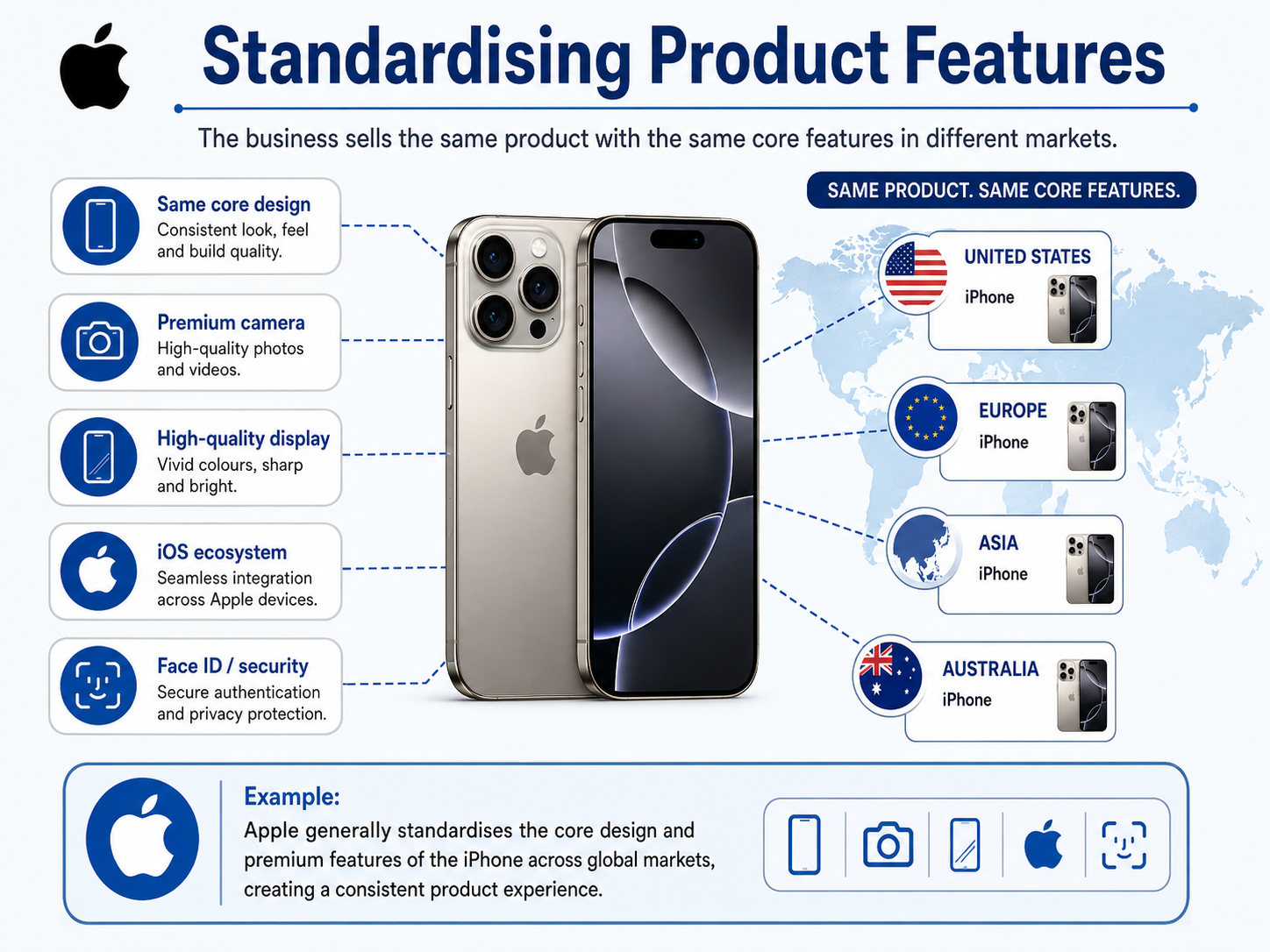
Business result: standardisation may reduce costs, but can limit sales if customers do not value or cannot use the product in its standard form.
Adapting product features
How it works
The business changes product features to suit the local market.
Example: Starbucks adapts its menu in India with local flavours and more vegetarian-friendly options, while IKEA in Japan adapts products and store displays to suit smaller homes and local living habits.
Benefits
- matches local tastes and cultural expectations
- helps meet legal, health or labelling requirements
- can make the product more useful to customers
- may improve customer satisfaction
- can create a competitive advantage against standardised rivals
Limitations of adapting product features
- new ingredients, suppliers or packaging may increase costs
- production processes and staff training may become more complex
- quality-control systems may be harder to manage
- the business may lose economies of scale
- the global brand may become harder to manage if products vary too much
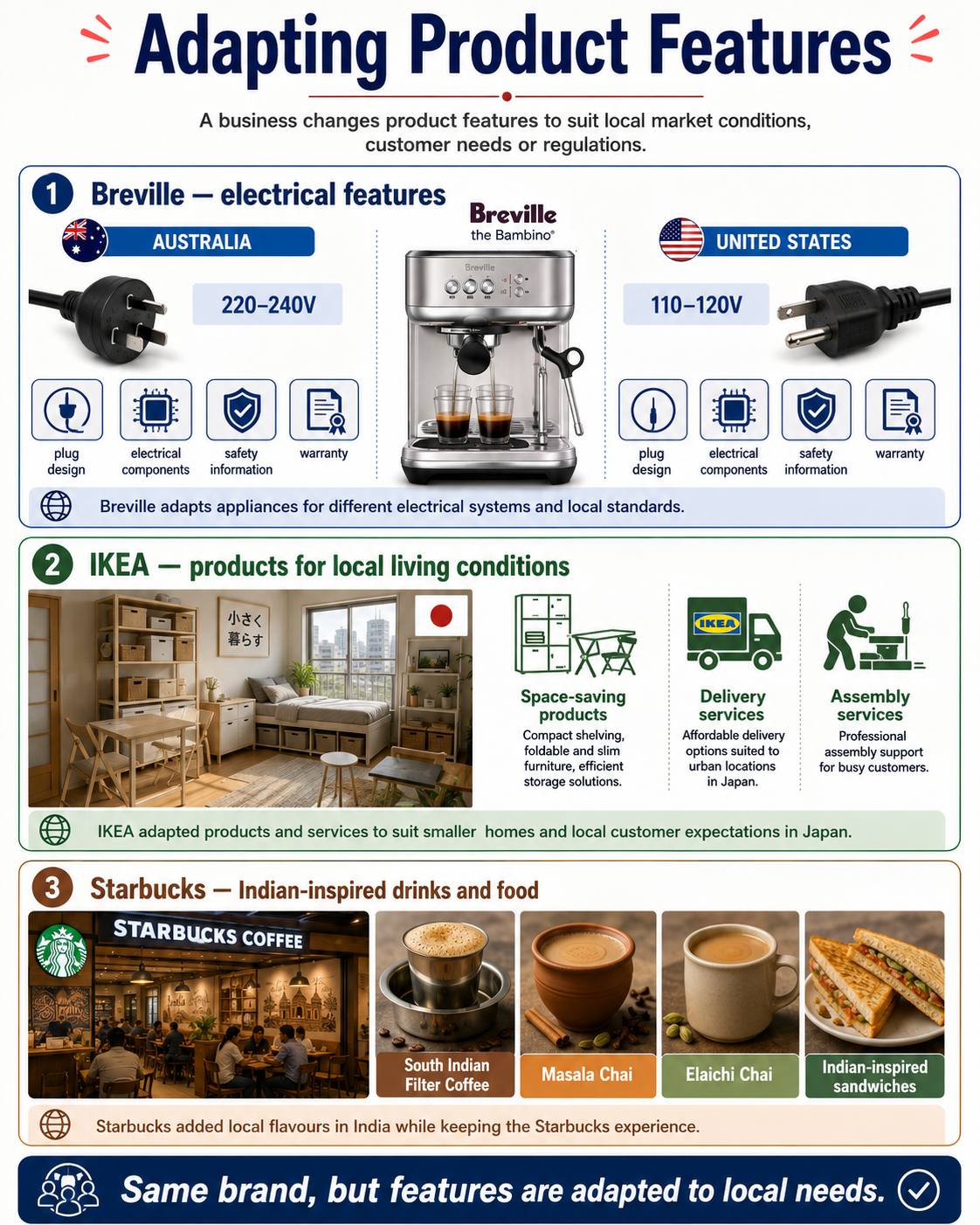
Business result: adaptation may improve local acceptance, but reduce efficiency and increase operational complexity.
Example of how to write this element in an exam
Product features may need to be standardised or adapted when a business applies the marketing mix to a global brand because customers in different markets may have different needs, tastes, laws, climates and cultural expectations. If the same features are valued across countries, standardising product features can reduce production costs, maintain consistent quality and support economies of scale. However, if customers in the foreign market require different flavours, ingredients, packaging, sizes, language settings or safety features, adaptation may be more effective. This may lead to stronger customer satisfaction, better market acceptance and increased sales in the foreign market.
🎯 Positioning
Positioning refers to how a business wants customers to perceive its brand or product compared with competitors. A brand may position itself as premium, affordable, ethical, innovative, Australian-made, healthy, convenient, luxury, durable or environmentally responsible.
Standardising positioning
How it works
The business uses the same brand position across global markets.
Example: Aesop generally maintains a premium skincare positioning through minimalist packaging, store design, product quality and customer experience across global markets.
Benefits
- creates a clear global identity
- helps customers understand what the brand stands for
- supports premium pricing if the position is strong
- reduces confusion across countries
- makes brand storytelling more consistent
Limitations of standardising positioning
- the same position may not suit every foreign market
- a premium position may be too expensive in lower-income markets
- an “Australian” position may not appeal to customers who value local identity
- customers may care more about price, convenience or local competitors
- the brand may lose relevance if the position does not match local priorities
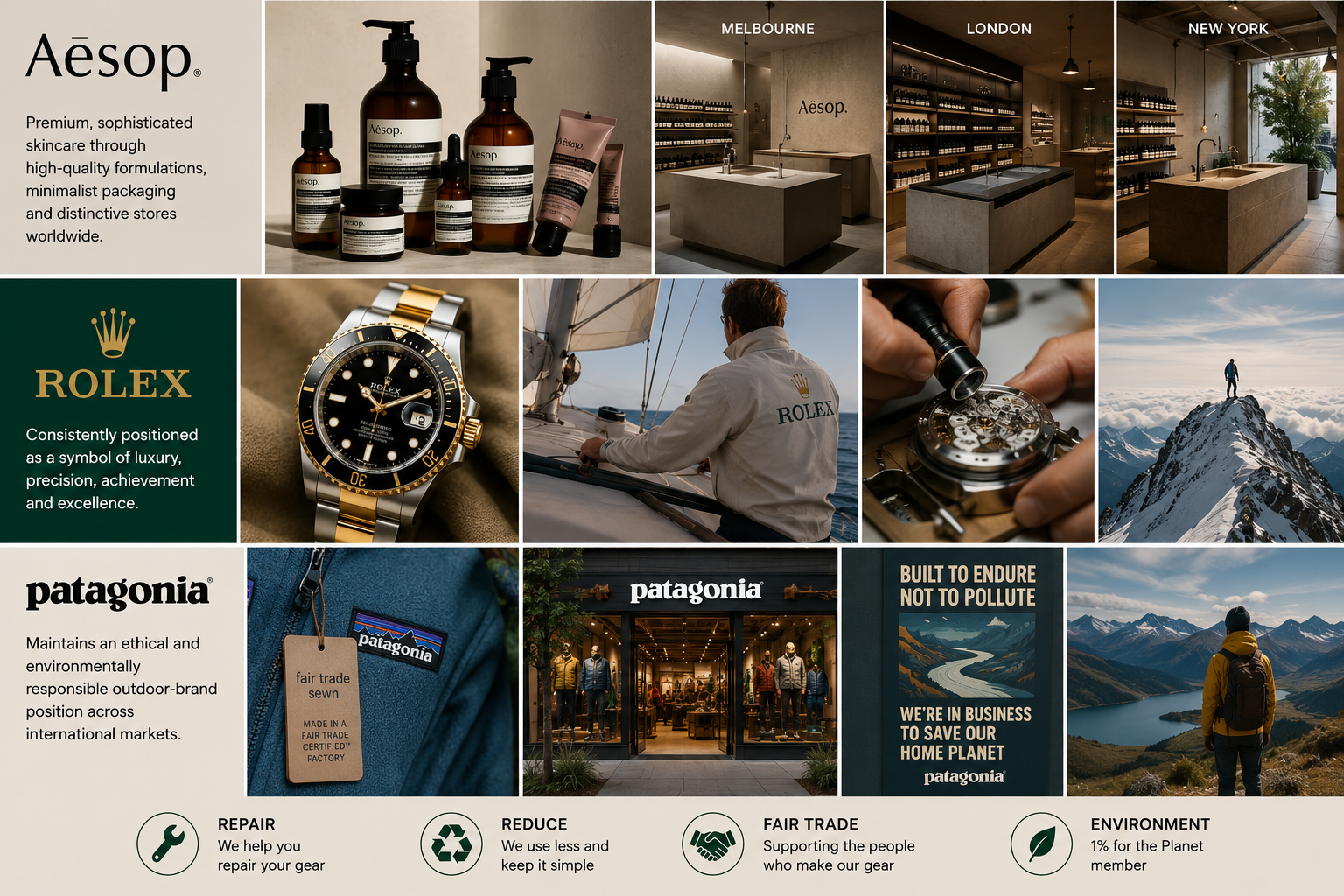
Business result: the business may build a consistent global image, but lose relevance if the position does not match local customers or competitors.
Adapting positioning
How it works
The business changes how it presents the brand in different countries.
Example: Tourism Australia positions Australia as a distinctive destination, but campaign emphasis can shift depending on the market, such as nature, adventure, food, luxury, education, family travel or iconic Australian experiences.
Benefits
- helps the brand match local customer priorities
- allows different price and quality expectations
- helps the business respond to local competitors
- can make the brand more persuasive in each market
- allows different customer segments to be targeted
Limitations of adapting positioning
- customers may become confused if the brand stands for different things in different markets
- the business may weaken its global brand identity
- advertising costs may rise because each market needs a different message
- premium brand equity may be damaged if the brand is positioned too cheaply
- the business must still protect the core global brand

Business result: adaptation may improve local appeal, but the business must still protect the core global brand.
Example of how to write this element in an exam
Positioning may need to be standardised or adapted when a business applies the marketing mix to a global brand because positioning shapes how customers perceive the brand compared with competitors. If the business wants to maintain a clear global identity, standardising its positioning can help customers consistently view the brand as premium, ethical, innovative or high quality across countries. However, if customer priorities, income levels or competitors differ between markets, adapting positioning may be more effective because the brand can emphasise the features most valued by local consumers. This may lead to stronger differentiation, improved customer appeal and greater sales in the foreign market.
🎧 Prefer listening?
If you prefer listening to the content in podcast format:
🎥 Prefer watching?
If you prefer watching the content in video format:
🃏 Flashcards
Card 1 of 11
🎮 Revision Games
💰 BME Millionaire
Climb the prize ladder. Use your lifelines wisely.
👔 Business Boss
Make 10 global-marketing decisions. Balance consistency, local fit, cost, recognition and customer acceptance.
⚡ 60 Second Showdown
A varied 60-second challenge covering slogans, product names, product features and positioning.

Biz Fact: LEGO created sets based on Chinese traditions, showing how a global toy brand can adapt product features to local culture.
Past Exam Questions
Use these past exam questions to see how this dotpoint has been assessed. Pay close attention to the command term, the number of marks and whether the question is Section 1 or Section 2.
Section 1 Questions
2017 — Section 1 — Question 1(b) — 4 marks
Context
Foxtrot Transportable Housing, a company specialising in cyclone-proof, portable housing and granny flats, has expanded its Australian business to New Zealand, where it has decided to standardise its marketing mix. It is also keen to expand to Asia in the future.
1(b): Explain why Foxtrot Transportable Housing may need to consider adapting its product name and product features in its marketing mix when expanding to Asia. (4 marks)
Product name:
Product features:
Command term focus: Explain
Explain: show cause and effect by linking why product name and product features may need adaptation to the likely business result.
See the full command term guide here: Command Terms.
1(b) Sample answer
Product name: Foxtrot may need to adapt its product name because the name may not translate clearly, be easy to pronounce, or communicate the right meaning in Asian markets. This means customers may not understand what the product is or may not connect the name with portable housing. As a result, adapting the name could improve customer recognition and make the product easier to market.
Product features: Foxtrot may need to adapt product features because housing needs can differ across Asia due to climate, building regulations, available land, household size and natural disaster risks. This means cyclone-proof features may still be useful in some areas, but other features such as heat resistance, layout, materials or compact design may need to change. As a result, adaptation could make the housing more suitable and increase the chance of sales.
2020 — Section 1 — Question 1(b) — 4 marks
Context
When should a business go global? Australian businesses are competing in a complex world economy and it’s important that companies respond to the legal, cultural and economic environments of the countries in which they operate. These environmental factors can foster or hinder innovation, business operations, marketing and enterprise.
1(b): Outline why a business might adapt the following two elements of a marketing mix in a global market. (4 marks)
Corporate slogan
Product features
Command term focus: Outline
Outline: state the main reason for adapting the corporate slogan and product features, then briefly clarify each.
See the full command term guide here: Command Terms.
1(b) Sample answer
Corporate slogan: A business might adapt its slogan so it translates clearly and suits the culture, language and values of the foreign market. This can prevent confusion or offence and make the brand message more meaningful to local customers.
Product features: A business might adapt product features to meet local laws, climate, religious requirements, customer tastes or income levels. This can make the product more useful and attractive in the foreign market.
2024 — Section 1 — Question 3(c) — 3 marks
Context
Rayz Umbrellas is a well-established Australian brand that sells a variety of beach, garden and commercial umbrellas within Australia. All umbrellas provide high UV protection and are made from water- and rust-resistant materials.
3(c): Advise Rayz Umbrellas whether it should adapt or standardise its product name when expanding into a foreign market. (3 marks)
Command term focus: Advise
Advise: recommend either standardisation or adaptation, give a reason and explain the likely effect for Rayz Umbrellas.
See the full command term guide here: Command Terms.
3(c) Sample answer
Rayz Umbrellas should adapt its product name when expanding into a foreign market. The word “Rayz” may not be easy to pronounce, understand or legally use in another country, and customers may not immediately connect it with sun protection. Adapting the product name to suit the local language and market would make the brand clearer and more memorable for foreign customers. As a result, Rayz may improve customer recognition, avoid confusion and increase the chance of sales in the new market.
2025 — Section 1 — Question 3(c) — 4 marks
Context
Luxury brands often collaborate to create unique products, such as an automobile brand partnering with an exclusive jewellery or fashion brand. These strategic alliances can offer significant benefits for global businesses.
3(c): Outline why global brands may consider adapting the following elements of their marketing mix. (4 marks)
Product features:
Positioning:
Command term focus: Outline
Outline: state why product features and positioning may need adaptation and briefly clarify the reason for each.
See the full command term guide here: Command Terms.
3(c) Sample answer
Product features: Global brands may adapt product features so the collaboration feels exclusive and suits the expectations of luxury customers. For example, the product may include limited-edition materials, design details, colours, packaging or technology to make it more desirable.
Positioning: Global brands may adapt positioning so the product is seen as more premium, fashionable, innovative or exclusive in the target market. This can help the collaboration stand out from competitors and justify a higher price.
Section 2 Questions
2016 — Section 2 — Question 7(c) and 7(d) — 12 marks
Case study / context
An Australian business that produces quality dairy products is considering the feasibility of expanding its market into Asia. The business believes that this will take advantage of the increasing demand for Australian products by the growing middle class in Asia, due mainly to the unreliable quality of locally produced Asian products.
For its logo, designed for Australian markets, the business uses images of cows in green paddocks to emphasise the freshness and high quality of its products. However, the business is concerned that the current logo does not relate as well to its yoghurt and cheese products, the proposed export focus. The business needs to decide whether to standardise the current marketing mix, with a focus on ‘freshness’, or adapt a ‘uniquely Australian’ emphasis.
Prepare a report or essay for management addressing the following points:
7(c): comment on the standardisation and adaptation options for this global brand when applying elements of the marketing mix (8 marks)
7(d): recommend whether the business should standardise or adapt if it expands into Asia, providing a rationale for your response. (4 marks)
Command term focus: Comment + Recommend
Comment: make reference to the standardisation and adaptation options and expand on their likely effects. Recommend: make a clear choice and justify it using the case.
See the full command term guide here: Command Terms.
7(c) and 7(d) Sample answer
Corporate slogan: The business could standardise a slogan focused on Australian freshness and quality because the case states that Asian middle-class consumers are increasingly demanding Australian products due to concerns about unreliable locally produced products. This would help create a consistent global brand message. However, the slogan may also need adaptation if a “freshness” message does not fully communicate the yoghurt and cheese export focus or does not translate clearly in Asian markets. Therefore, the business should keep the core idea of Australian quality but adapt wording for local language and customer understanding.
Product name: The business could standardise its product name if the name is easy to pronounce, legally available and already linked to Australian quality. This would help customers recognise the brand across markets and reduce packaging and promotion costs. However, if the product name does not suit Asian languages or does not clearly connect with yoghurt and cheese, adapting the product name may be more effective. This would make the product easier for local customers to understand and remember.
Product features: The business may need to adapt product features because yoghurt and cheese preferences can differ across Asian markets. This could include changing flavours, serving sizes, packaging language, labelling, shelf-life requirements or product formats. Adapting these features would help the products better match local consumption patterns and legal requirements, increasing the chance of customer acceptance.
Positioning: The business could standardise its positioning around Australian quality, safety and trusted dairy standards because this links directly to the case’s point about unreliable locally produced products. However, adapting the positioning to emphasise a “uniquely Australian” image may be stronger than simply using cows in green paddocks, especially because the current logo may not relate well to yoghurt and cheese. This would make the brand more relevant to Asian consumers while still protecting the core Australian quality message.
Recommendation: The business should use a hybrid approach, with standardised Australian quality positioning but adapted slogans, packaging, product features and brand imagery for Asian markets. This is recommended because it keeps the most valuable global message, Australian quality and trust, while adapting the marketing mix so yoghurt and cheese products are clearer, more culturally relevant and more appealing to Asian consumers.
2018 — Section 2 — Question 9(d) — 5 marks
Case study / context
My Ethical Eats Ltd manufactures clean and healthy food products for restaurants in the Fremantle and Perth areas. It specialises in cold beverages and manufactures a range of snack foods, soups and healthy frozen meals. The business has an excellent reputation for using locally-sourced organic products and implementing ethical work practices. My Ethical Eats Ltd is recognised by its bold packaging and simple, colourful logo.
The business is growing and the owners are considering purchasing new manufacturing equipment to cater for the increase in demand for their food products. The new equipment would meet local production needs as well as providing for future expansion overseas. The funding of the new manufacturing equipment has caused cash flow concerns for the owners. In addition, the growing demand for the company’s products has raised some concerns, including the maintenance of the company’s reputation for producing high-quality products and ethical work practices throughout this expansion.
Referring to the source information and your own knowledge, prepare a report or an essay addressing the following:
9(d): explain why and how My Ethical Eats Ltd could adapt its marketing mix in the future to cater to its potential global brand (5 marks)
Command term focus: Explain
Explain: show cause and effect by linking why and how My Ethical Eats could adapt its marketing mix to the likely business outcome.
See the full command term guide here: Command Terms.
9(d) Sample answer
My Ethical Eats Ltd could adapt its marketing mix because food preferences, labelling laws, packaging expectations and health claims may differ between global markets. This means the products that work in Fremantle and Perth may need changes before being accepted overseas. As a result, adaptation could make the global brand more relevant and increase the chance of sales.
The business could adapt product features by changing flavours, portion sizes, packaging language, nutritional labelling or ingredients to suit local tastes and laws. It could also adapt its positioning by emphasising clean, healthy, organic and ethical production in markets where customers value sustainability and premium food. However, it should keep parts of the brand standardised, such as the colourful logo and ethical reputation, so the global brand remains recognisable.
2019 — Section 2 — Question 9(d) — 5 marks
Case study / context
Aussie-Homestead Foods has been supplying the restaurant and retail markets for several years. After reading the following article, its management is considering the establishment of a native foods division and is currently in discussions with potential buyers in other countries.
Native bush food demand outstripping supply
The demand for Australian native foods across the country is by far exceeding supply, according to the industry’s peak body, Australian Native Food and Botanicals (ANFAB), who is encouraging new producers to enter the industry and existing growers to plant more crops. A spokesperson says, “We’re a supply-poor industry at the moment. The buyers are there; Asia is our neighbour and their interest in our native food products for culinary use is huge”.
An Australian exporter has been growing finger limes on her property at Possum Creek, in the far north coast of New South Wales, for more than 15 years. She started exporting her crop to the European Union (EU) 10 years ago. There has also been Asian interest in finger limes coming from Korea, Taiwan, Singapore and Hong Kong. “The fine food market in Asia has just gone nuts, absolutely nuts, and it’s a lot closer to home”, she said.
Established native food growers say there is plenty of room for growth in the industry. One grower who has been in the industry since 2000 exports lemon myrtle around the world. Korea is his biggest market for herbal tea, with some further interest from Japan and France. The potential for growth in the industry is limitless. Another Australian exporter says about her products, “The potential for our native plant products is enormous and everybody and anybody, especially foreigners who taste or see the food, fall in love with the food instantly”.
9(d): Justify whether you would standardise or adapt elements of the marketing mix of Aussie-Homestead Foods, if it decides to enter an international market. (5 marks)
Command term focus: Justify
Justify: make a clear choice between standardisation and adaptation, then support it with strong case-specific reasons and acknowledge relevant trade-offs.
See the full command term guide here: Command Terms.
9(d) Sample answer
Aussie-Homestead Foods should adapt elements of its marketing mix if it enters an international market. This is the stronger option because the case shows that different overseas markets value Australian native foods for different uses. For example, lemon myrtle is popular in Korea for herbal tea, while finger limes attract interest from fine food markets in Korea, Taiwan, Singapore, Hong Kong and the EU.
Corporate slogan: the business should adapt its slogan so it clearly communicates the unique Australian native food story in a way that foreign buyers understand. A slogan that works in Australia may not explain the value of finger limes, lemon myrtle or other native ingredients to international restaurant and retail customers.
Product name: the business may need to adapt or clarify product names because some overseas customers may not know what native Australian foods are or how they are used. For example, product names could include simple descriptions or translations so foreign buyers understand that finger limes can be used in fine dining and lemon myrtle can be used in herbal tea.
Product features: the business should adapt product features such as packaging, serving suggestions, labelling, portion sizes and usage instructions to suit each international market. This is important because different markets may use native foods in different ways, such as Korea valuing lemon myrtle for herbal tea while restaurants in Singapore, Hong Kong or the EU may value finger limes for fine dining.
Positioning: the business should adapt its positioning to suit each market while still keeping a strong Australian identity. It could position the products as premium, authentic and uniquely Australian in fine food markets, while positioning lemon myrtle as a natural Australian herbal tea ingredient in Korea.
Standardisation would still have some benefits because the business should keep a consistent Australian native food identity to highlight authenticity and uniqueness. However, full standardisation would be weaker because it may not show foreign buyers how each native food can be used in their own cuisine, beverages or restaurant markets. Adaptation is therefore justified because it keeps the Australian identity while making the products more useful, understandable and appealing to international customers. As a result, the business is more likely to gain buyer interest, increase export sales and build a successful global brand.
2023 — Section 2 — Question 7(b) — 3 marks
Case study / context
Giacomo and Chris own a number of wellness centres around Australia. The centres’ philosophy and corporate slogan is ‘Commit to a healthy lifestyle’. The centres include spaces for Pilates, yoga and personal training, as well as a dedicated nutrition area, where clients can complete educational courses on food and participate in cooking classes. They have found having a one-stop location for their clients has led to success in their businesses across Australia.
After successfully expanding throughout Australia, Giacomo and Chris have decided it is time to enter the South-East Asian market. They have sourced locations to open their wellness centres and are in the final decision-making process for staffing and branding. They are also keen to replicate the same experiences that their Australian customers receive.
Chris and Giacomo believe the South-East Asian market has great growth potential; they have chosen places to which many Australians have relocated. With the right marketing strategies, Chris and Giacomo believe this planned expansion will be very successful.
They think the demand in South-East Asia for the wellness centres will be very high as two out of every five adults are classified as overweight, with the need for diet and exercise interventions becoming higher by the day. As a result of their research on South-East Asia, they believe they have found a gap in the market, as their closest competitors are wellness resorts and not separate wellness centres.
It was decided that Giacomo would relocate to South-East Asia to implement the policy and procedures of the Australian branches. Giacomo is very assertive in his instructions; however, he maintains a motivational approach with his employees, gathering their opinions on minor decisions to help them feel a part of the business. Giacomo is very self-disciplined and wants to learn additional skills in his leadership journey to ensure the centres will succeed in the South-East Asian locations.
Refer to the case study and your own knowledge to answer the questions below.
7(b): Explain whether Giacomo and Chris should standardise or adapt the business’s corporate slogan to the South-East Asian market. (3 marks)
Command term focus: Explain
Explain: show cause and effect by linking the slogan decision to customer understanding and the likely business result in South-East Asia.
See the full command term guide here: Command Terms.
7(b) Sample answer
Giacomo and Chris should adapt the corporate slogan for the South-East Asian market. The current slogan, “Commit to a healthy lifestyle”, may need translation or softer wording to suit local language and cultural expectations. This means customers are more likely to understand the message and connect it with the wellness centre’s services. As a result, adaptation may make the brand more appealing while still keeping the same core idea of health and lifestyle improvement.