
U2.11 — Features and Purposes of a Marketing Strategy
Overview
Dotpoint 11: features and purposes of a marketing strategy.
A marketing strategy is the overall approach a business uses to reach its target market and achieve its marketing goals. It helps guide how the business will market its product or service.
In this dotpoint, the focus is on:
1. the purpose of a marketing strategy
2. the main features of a marketing strategy
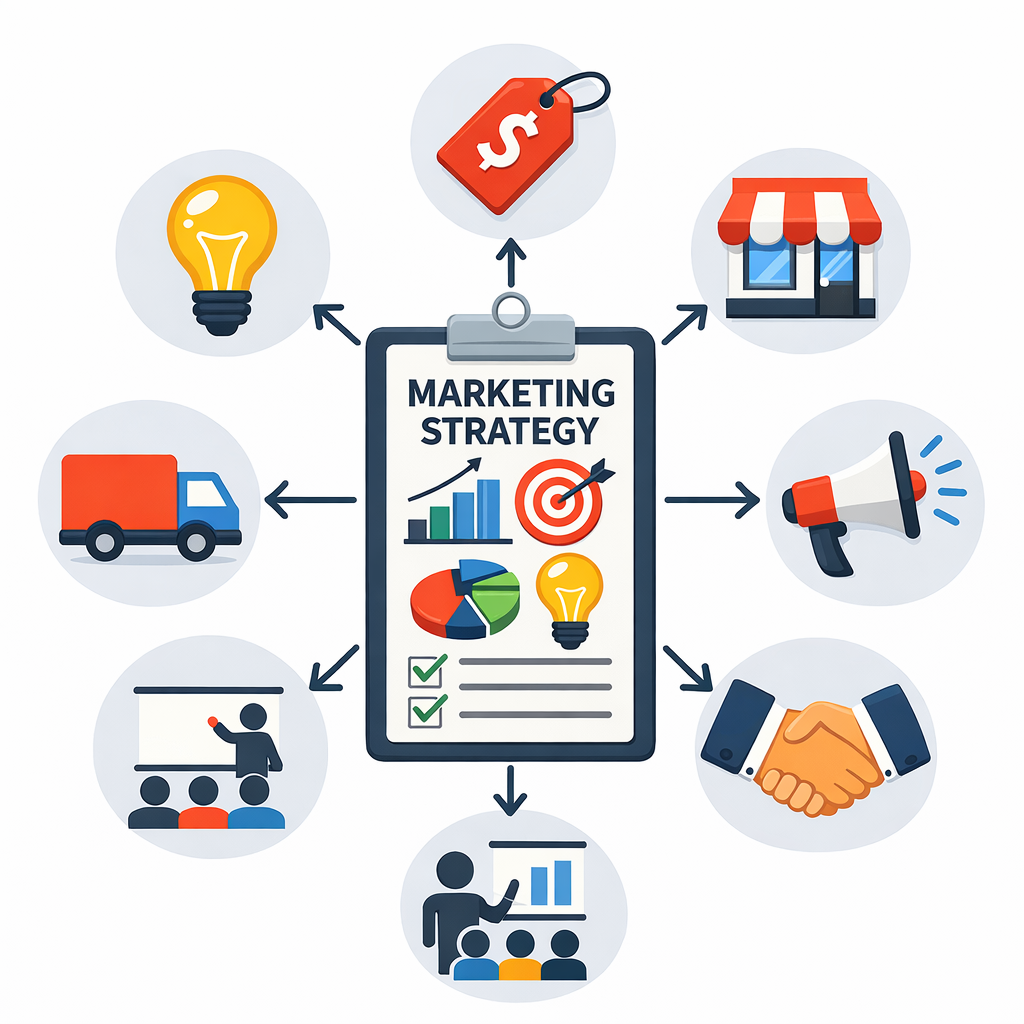
🎯 Purpose of a marketing strategy
Why businesses use a marketing strategy
A marketing strategy gives the business a clear overall approach for achieving its marketing goals. Instead of making random marketing decisions, the business can plan how it will attract its target market and compete more effectively.
Gives direction
It helps guide marketing decisions so the business has a clearer overall approach.
Focuses on the target market
It helps the business shape its marketing around the customers it wants to attract.
Helps achieve goals
It supports marketing goals such as higher sales, increased market share or stronger brand awareness.
Creates consistency
It helps make sure marketing decisions work together rather than sending mixed messages.
Improves competitiveness
It helps the business compete more effectively by choosing a clearer approach to the market.

🧩 Features of a marketing strategy
Features of a marketing strategy
The main features of a marketing strategy can be described through the marketing mix, which was covered earlier in Dotpoints U1.16 and U1.17. It shows the key areas a business considers when planning how to market a product or service. Refer back to those dotpoints for a more detailed explanation of each of the 7 Ps.
1. Product
This is what the business is offering to customers.
- Positioning
- Features
- Branding
- Packaging
2. Price
This is the amount the customer pays and the pricing approach used by the business.
- Skim
- Penetration
- Psychological
- Premium / prestige
3. Place
This is how and where the product gets to the customer.
- Direct distribution
- Indirect distribution
- Location
4. Promotion
This is how the business communicates with customers and encourages sales.
- Advertising
- Publicity
- Sales promotion
- Personal selling
- Viral marketing
5. People (employees)
Employees are part of the strategy because they affect the customer experience.
- Training
- Customer service as part of customer relationship management (CRM)
6. Processes
This refers to the procedures used to deliver a service or product.
- Procedures to deliver a service or product
7. Physical presence of the business
This is the visible evidence of the business that customers can see.
- Signage
- Webpage
- Staff uniform
🎧 Prefer listening?
If you prefer listening to the content in Podcast format:
🎥 Prefer watching?
If you prefer watching the content in video format:
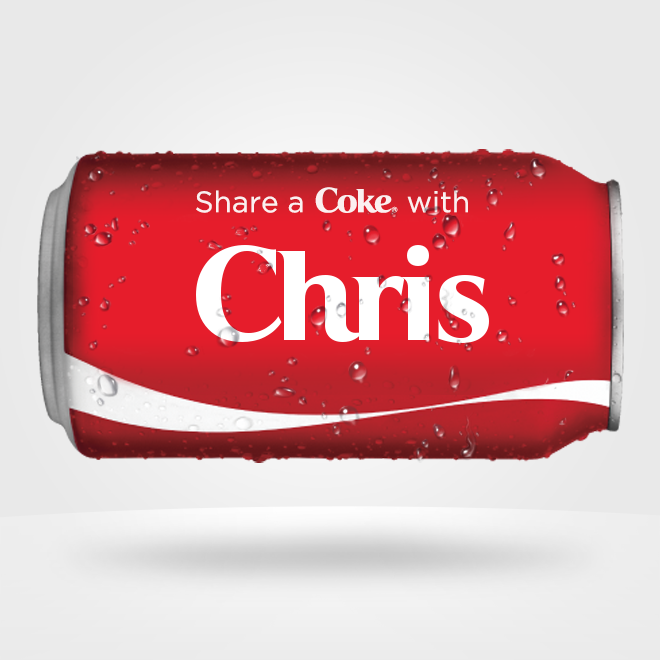
Biz Fact: Coca-Cola’s “Share a Coke” strategy put first names on bottles, turning packaging into a marketing tool and boosting engagement worldwide.