
U2.12 — Stages of the Product Lifecycle
Overview
Dotpoint 12: stages of the product lifecycle.
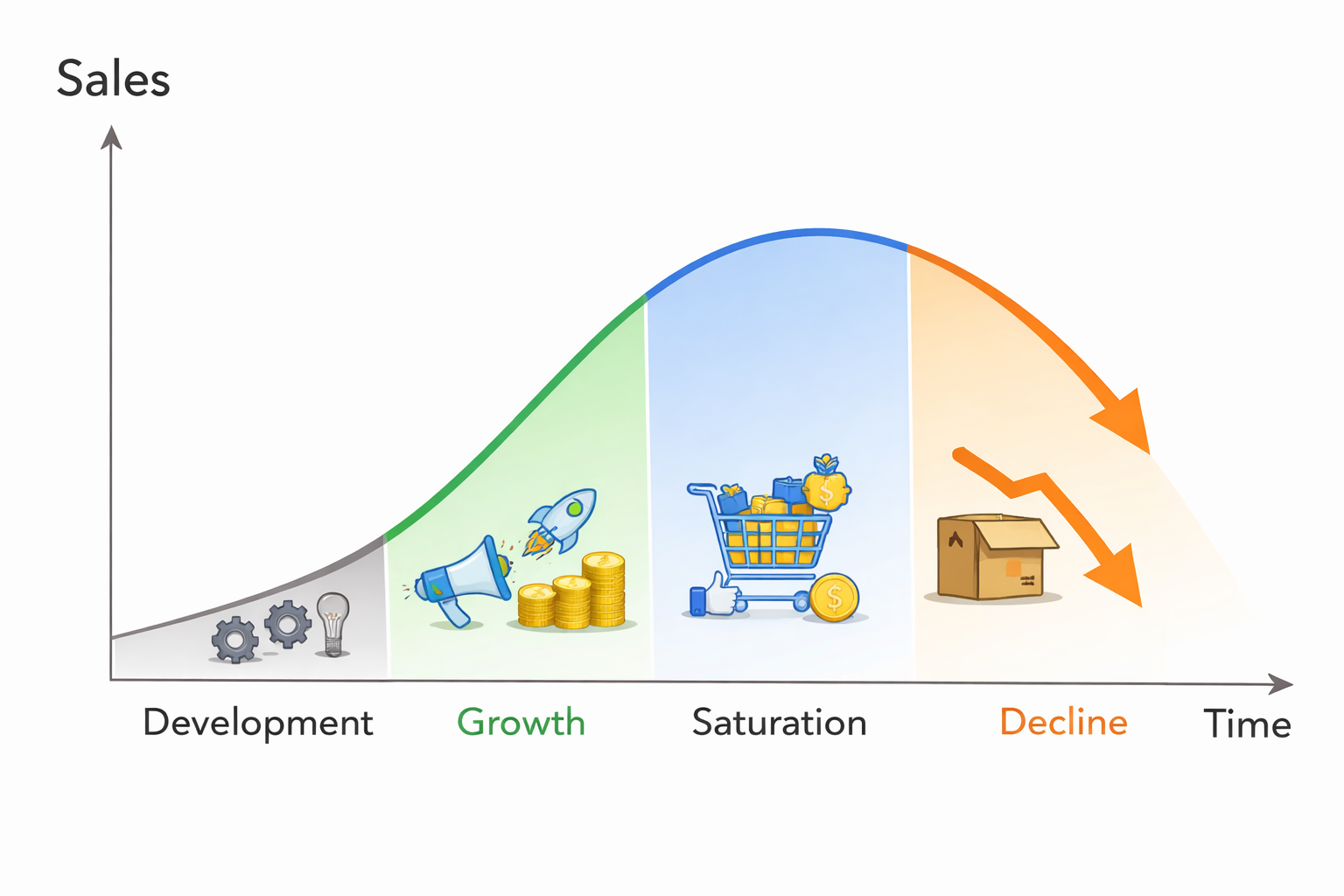
The product lifecycle describes the stages a product moves through over time.
The main stages are:
- development
- growth
- saturation
- decline
📈 What is the product lifecycle?
The product lifecycle is the pattern a product may follow from the time it is first developed until it eventually loses demand.
Not every product moves in exactly the same way, but many products pass through a similar set of stages over time.
A product may begin with little market awareness and uncertain sales.
It can then become more popular as demand rises and more customers begin buying it.
Later, sales may level off when the market becomes crowded and strong competition develops.
Eventually, demand may weaken as customer interest falls or new alternatives appear.
As a result, a product’s sales, popularity, competition level and profitability can all change depending on which stage it has reached.
The iPod
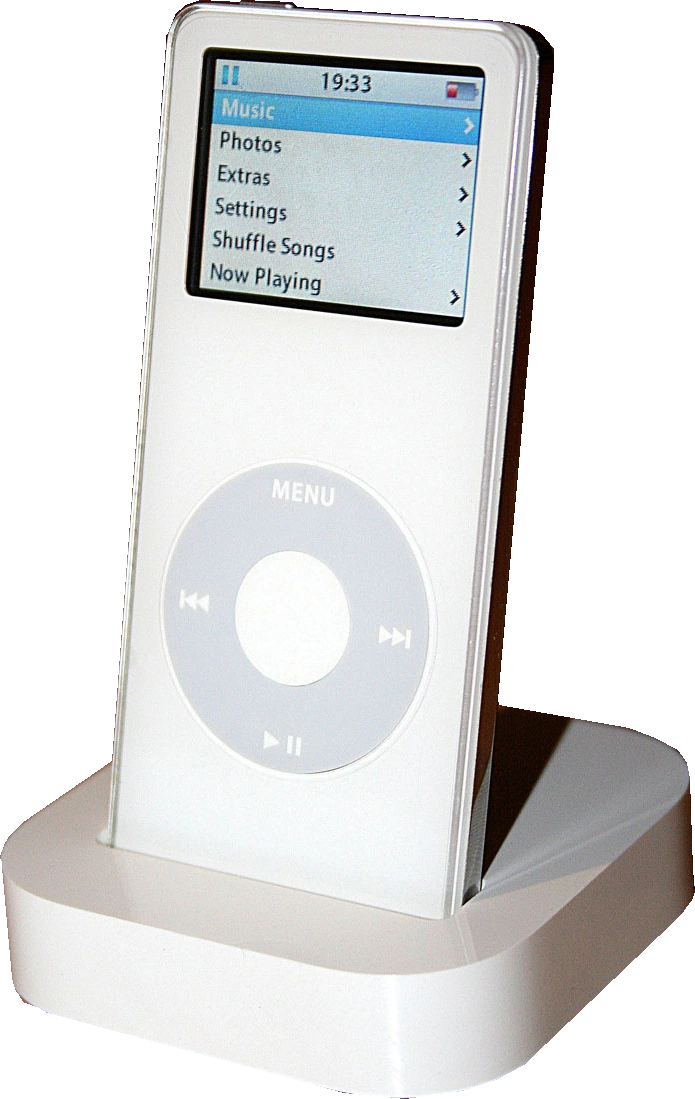
The iPod started in development in the early 2000s, entered growth from around 2001, reached saturation in the late 2000s, and moved into decline in the 2010s as smartphones replaced the need for a separate music player.
🧩 Stages of the product lifecycle
Each stage of the product lifecycle has different patterns of sales, customer demand and competition.
1. Development
This is the early stage before the product is fully established in the market.
- the product is being created, tested or prepared for launch
- sales are not yet established or are still extremely low
- business costs can be high because of design, production or promotion preparation
- customer awareness is usually limited
- the business may still be refining the product before wider release
- there may be a high level of risk because success is still uncertain
2. Growth
This is the stage where the product begins to become more successful and demand rises.
- sales increase more quickly
- customer awareness and interest improve
- profits may begin to rise as sales build
- the product gains stronger recognition in the market
- more competitors may enter as the product proves popular
- the business may expand supply or distribution to keep up with demand
3. Saturation
This is the stage where sales reach a peak or level off because the market is becoming crowded or fully developed.
- sales may stabilise rather than continue rising strongly
- market growth slows
- competition is usually strong
- many customers who want the product may already have bought it
- businesses may need to work harder to protect market share
- price pressure can increase as rivals compete for similar customers
4. Decline
This is the stage where demand and sales begin to fall.
- sales decrease
- customer interest weakens
- newer products or better alternatives may replace it
- profits may fall
- the business may reduce, update or remove the product
- some competitors may leave the market as demand becomes weaker
➕ Extension stage of the PLC
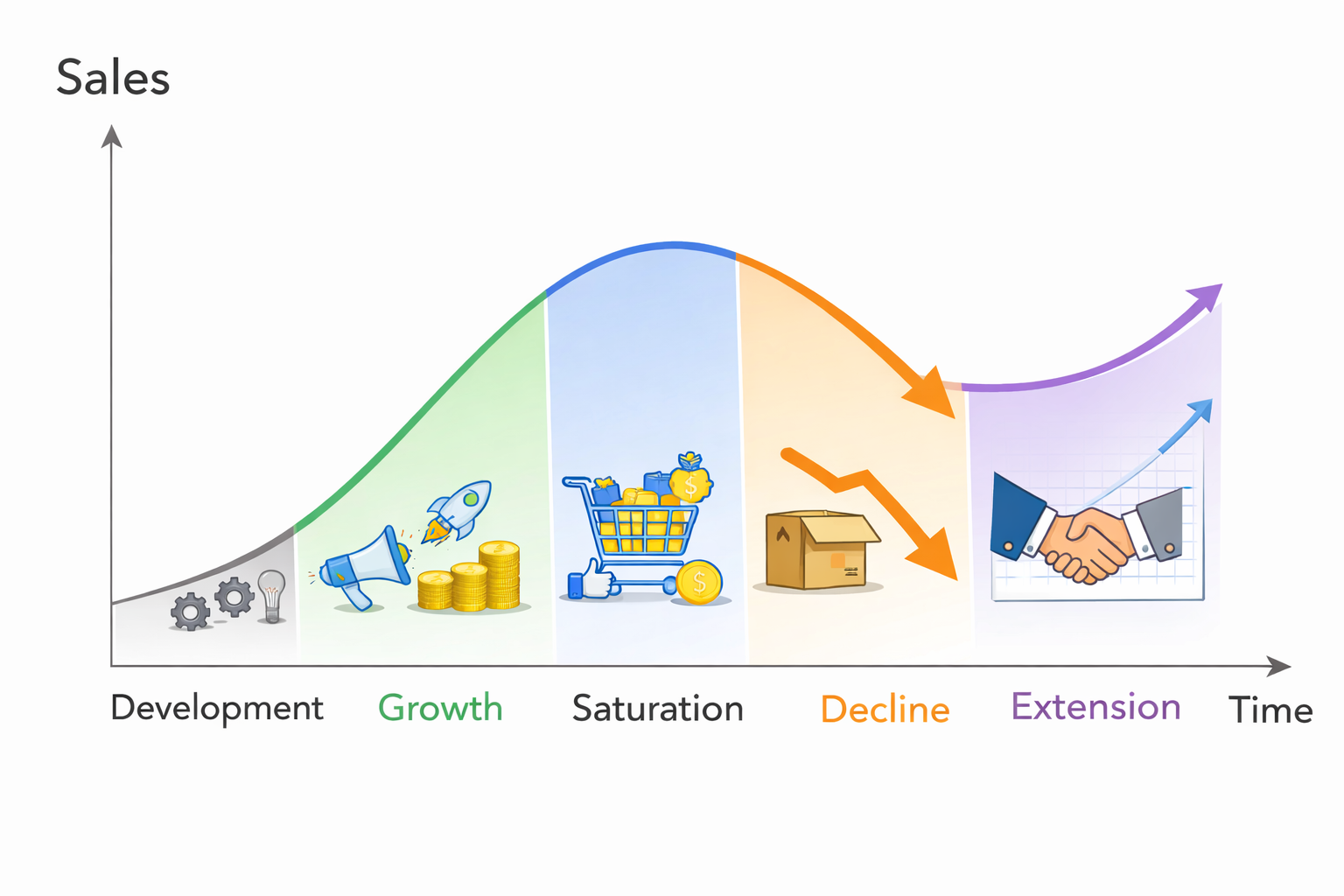
The extension stage is when a business tries to keep a product selling for longer instead of letting it move fully into decline. This is usually done by refreshing the product or changing the way it is marketed so that customer interest continues.
Businesses may try to extend the life of a product by:
- updating the branding
- refreshing the packaging
- adding new features or improvements
- changing the design or style
- running new promotions
- targeting a new market segment
- repositioning the product
- adjusting the price
- releasing limited editions or variations
- linking the product to new trends or technology
- expanding to a new country
Examples
Apple iPhone: Apple regularly releases updated iPhone models with new features, design changes and stronger cameras, helping extend sales and keep the product relevant for longer.
Coca-Cola: Coca-Cola has extended the life of many products through new packaging, limited editions, flavour variations and fresh promotions aimed at keeping customer interest high.
HBF in WA: HBF has kept its brand relevant in Western Australia by refreshing its marketing, maintaining strong visibility and adapting its offers and messaging to suit changing customers over time.
⚠️ Limitations of the PLC
The product lifecycle is a useful model for understanding how products may change over time, but it does not perfectly predict what will happen to every product.
Key idea: The PLC can help businesses think about sales, demand and competition, but it should not be used on its own to make marketing decisions.
- Not every product follows the same pattern: some products grow quickly, some decline slowly, and some skip stages completely.
- It can be hard to identify the exact stage: a business may not know whether a product is in growth, saturation or decline until after sales data becomes clearer.
- External factors can suddenly change the cycle: technology, competitors, trends, economic conditions or new laws can cause a product to rise or fall faster than expected.
- Some products stay popular for a very long time: products such as Coca-Cola, Vegemite or iPhones may not decline in a simple way because businesses keep refreshing them.
- Extension strategies can change the pattern: advertising, new packaging, new flavours, updated features or entering new markets can extend a product’s life.
- It is better for looking backwards than predicting the future: the PLC can explain what has happened, but it cannot guarantee what will happen next.
Key takeaway: The PLC is helpful for thinking about marketing strategies, but businesses should also use sales data, customer feedback, competitor research and market trends before making decisions.
🎧 Prefer listening?
If you prefer listening to the content in Podcast format:
🎥 Prefer watching?
If you prefer watching the content in video format:

Biz Fact: The Nintendo Wii grew fast because of its motion controls and family appeal, but later declined as the novelty wore off and newer consoles entered the market.