
U1.22 — Levels of Management Within a Business
Overview
Dotpoint 22: Levels of management within a business, including top, middle and frontline management
Most businesses are organised in a hierarchy — a chain of command that shows how authority, responsibility and communication flow through the business.
This structure helps employees understand who makes major decisions, who turns those decisions into plans, and who supervises the work being completed each day.
An organisational chart is often used to show these reporting relationships visually.
In most organisations, management is grouped into three levels:
- Top management
- Middle management
- Frontline management
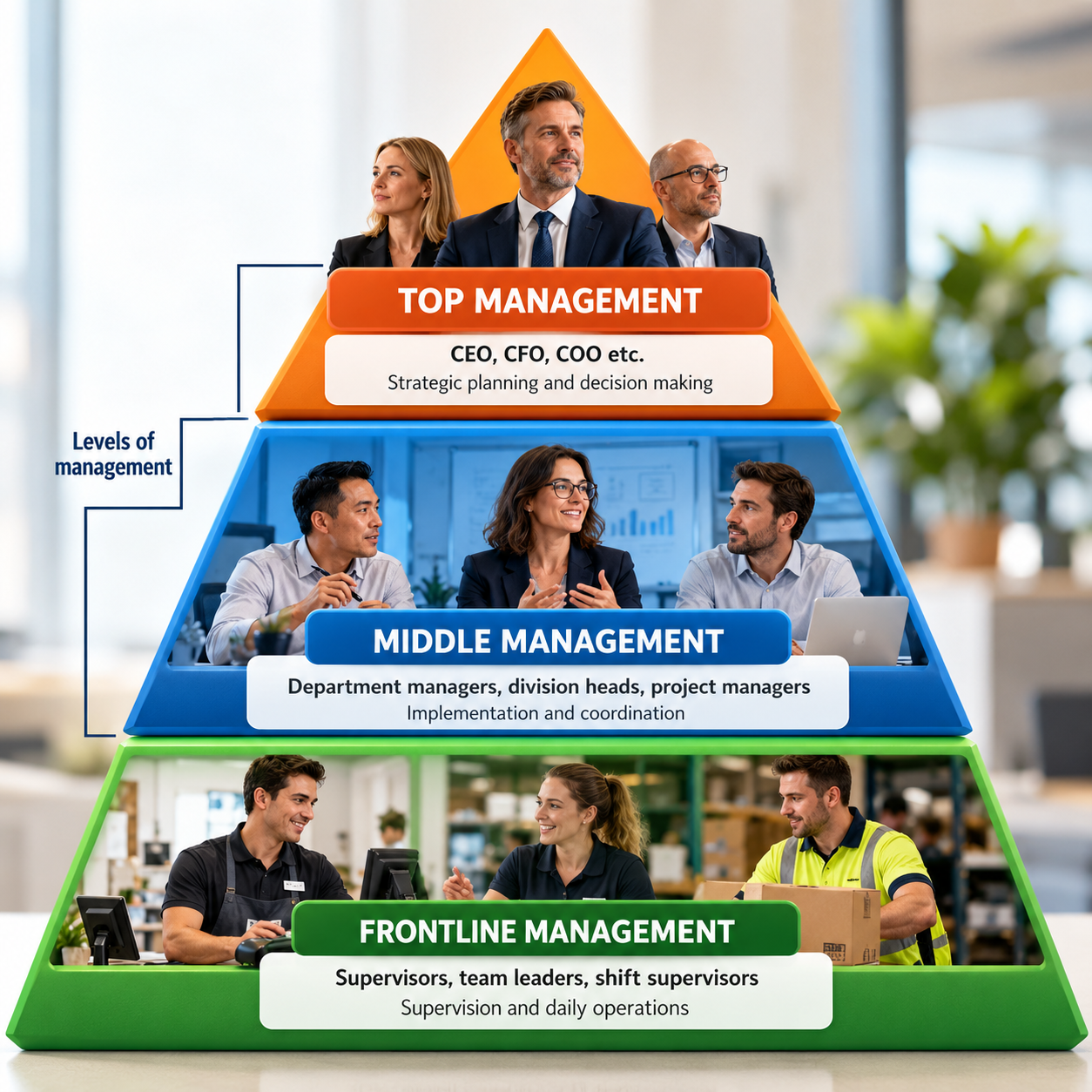
🏢 Top Management
Top management is responsible for setting the overall direction and long-term goals of the business.
Who they are and what they do
Top managers are the senior leaders of the organisation, such as the CEO, Managing Director, Board of Directors and General Manager. Their decisions affect the whole business rather than one department or one shift.
Their main role is to decide where the business is going. They focus on long-term growth, major risks and the overall performance of the organisation rather than supervising day-to-day tasks.
Key responsibilities
- Set direction: establish the vision, mission and long-term objectives of the business.
- Make major strategic decisions: such as entering new markets, expansion, large investments or mergers.
- Approve major budgets and KPIs: deciding where significant resources should be allocated and what results the business should achieve.
- Manage overall risk and reputation: considering issues that could affect the whole organisation.
- Shape culture and values: setting expectations for how the organisation should operate.
Skills needed
- Strategic thinking and long-term planning
- Strong decision-making under uncertainty
- Leadership and communication with internal and external stakeholders
- Financial literacy to assess profitability, cash flow and investment decisions
Top managers usually work with incomplete information, so they need to weigh risk, opportunity and long-term consequences before committing the business to major decisions.

Example of how to write this in an exam
Top management is responsible for setting the overall direction and long-term goals of a business. For example, the executive team of a national retailer may decide to expand into a new market and approve the investment required to open new stores. This is a strategic decision because it affects the whole organisation and involves significant resources and risk. Top management would therefore set the objective, approve the budget and monitor whether the expansion is achieving the expected results.
📊 Middle Management
Middle management connects top management strategy with day-to-day operations.
Who they are and what they do
Middle managers include department managers, regional managers, operations managers, marketing managers and HR managers. They sit between senior executives and frontline managers.
Their main role is to translate broad strategy into practical plans. If top management decides what the business wants to achieve, middle management works out how a department, region or function will contribute to that goal.
Key responsibilities
- Create department plans: convert long-term objectives into short- and medium-term goals.
- Allocate resources: decide how staffing, time and budgets should be used within the department.
- Monitor KPIs: track measures such as sales targets, customer satisfaction and efficiency.
- Support frontline managers: provide training, guidance and resources.
- Solve operational problems: deal with issues that are too large for frontline managers but do not require executive decisions.
- Communicate changes: explain new systems, policies and priorities to teams.
Skills needed
- Planning and organising
- Leadership and coaching
- Problem-solving and data analysis
- Communication upward to executives and downward to teams
Middle managers are especially important because they keep information moving in both directions: they explain strategy to employees and report performance or problems back to top management.

Example of how to write this in an exam
Middle management translates top management strategy into practical plans. For example, if top management sets an objective to increase sales by 10%, a regional manager may set store targets, allocate extra staff to busy periods and monitor weekly sales data. This allows the broad business objective to be converted into specific actions that employees can follow. Middle management also reports results back to senior leaders so the strategy can be reviewed if performance is below target.
👥 Frontline Management
Frontline management supervises employees who carry out the daily tasks of the business.
Who they are and what they do
Frontline managers are supervisors and team leaders who work closest to employees and customers. Examples include shift supervisors, team leaders and store supervisors.
Their main role is to ensure that plans are carried out every day. They focus on immediate operations such as staff performance, workflow, customer service and following procedures.
Key responsibilities
- Supervise daily tasks and workflow: make sure work is completed on time and to the expected standard.
- Manage rosters and shift coverage: ensure enough employees are available when needed.
- Maintain quality and safety: check service standards, procedures and workplace requirements.
- Handle minor customer or staff issues: resolve immediate problems before they escalate.
- Motivate staff: provide feedback and support to keep the team performing effectively.
- Report upward: tell middle management what is working and where problems are occurring.
Skills needed
- Clear communication and people skills
- Time management and decision-making under pressure
- Conflict resolution
- Attention to detail in quality, safety and customer service
Because frontline managers are close to daily operations, they often notice customer problems, staff issues and process weaknesses before senior managers do.

Example of how to write this in an exam
Frontline management supervises employees who carry out the daily work of the business. For example, a retail shift supervisor may allocate staff to registers, manage breaks, respond to customer complaints and make sure store procedures are followed. This helps the business maintain service standards during the shift. The supervisor can also report recurring problems to middle management, allowing larger operational issues to be addressed.
🔗 How the Three Levels Work Together
A business operates effectively when the three levels are connected. Each level has a different focus, but the decisions of one level affect the work of the others.
Why communication between levels matters
Communication needs to move both downward and upward. Senior decisions must be clearly explained to managers and employees, while information about results and problems must travel back up the hierarchy.
If this breaks down, staff may receive unclear instructions, resources may be allocated poorly, customers may receive inconsistent service and targets may be missed.
Example of how to write this in an exam
The three management levels work together by converting business strategy into daily action. For example, top management may set an objective to improve customer service, middle management may introduce new training and service targets, and frontline managers may coach staff and monitor service during each shift. This creates a clear chain from strategic decision to operational execution and allows performance information to be reported back up the hierarchy.
📍 Examples: Rebel Sport and Qantas
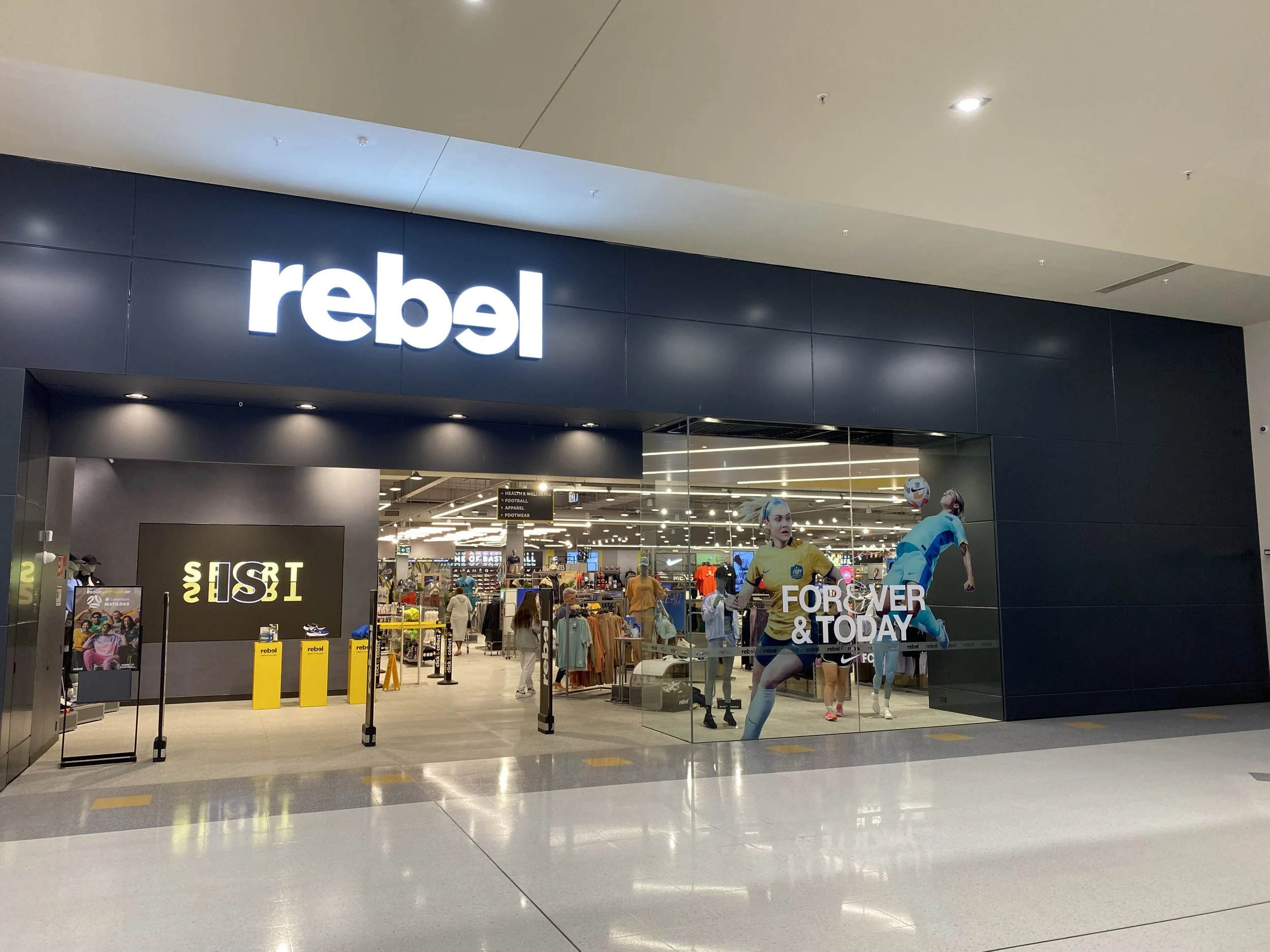
Example 1: Rebel Sport
In a Rebel Sport store, the three management levels can be seen through the way targets, staffing, stock and customer service are managed.
- Top management: head office sets national strategy such as pricing, brand campaigns, product ranges and major sales targets.
- Middle management: store and department managers turn those targets into weekly plans for staffing, merchandising, local promotions and stock priorities.
- Frontline management: shift supervisors and team leaders manage daily operations such as rosters, customer service, queues and store presentation.
This shows how a national strategy becomes practical action inside an individual store, especially during busy periods such as weekend trade or major sale events.
Example 2: Qantas
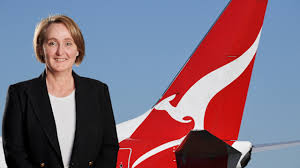
Qantas is a much larger and more complex organisation, so the hierarchy is essential for coordinating thousands of employees and maintaining safe, reliable operations.
- Top management: the CEO and executive team set long-term strategy such as network growth, fleet decisions, partnerships and profitability goals.
- Middle management: operational managers and department heads turn strategy into plans for scheduling, staffing, training, service procedures and budgets.
- Frontline management: airport and operational supervisors manage daily delivery such as check-in, boarding, staff coordination and responses to delays or cancellations.
The example shows that even a strong strategy depends on clear planning and consistent daily execution at lower levels of management.
🎧 Prefer listening?
If you prefer listening to the content in Podcast format:
🎥 Prefer watching?
If you prefer watching the content in video format:
🃏 Flashcards
Card 1 of 12
🎮 Revision Games
💰 BME Millionaire
Climb the ladder by mastering the three levels of management.
🏢 Who Handles It?
Match each decision or task to the correct management level.
⚡ 60 Second Showdown
Rapid-fire management questions against the clock.
Biz Fact: WA Police has top-level commissioners setting policy — but frontline sergeants manage teams responding to incidents every day.
