
U4.02 — The Role of Business in Relation to Ethical Practice in a Global Context
Overview
Dotpoint 2: the role of business in relation to ethical practice in a global context.
When businesses operate globally, they may face different labour laws, environmental standards, cultural expectations and levels of government regulation. Ethical practice means the business chooses to act responsibly, even when cheaper or easier options are available.
Ethical practice refers to business decisions and actions that are fair, honest, responsible and respectful of workers, customers, communities and the natural environment.
This dotpoint focuses on three major areas of ethical practice:
- minimum standards of labour by the International Labour Organisation (ILO), including the use of child labour
- corporate social responsibility
- environmental sustainability
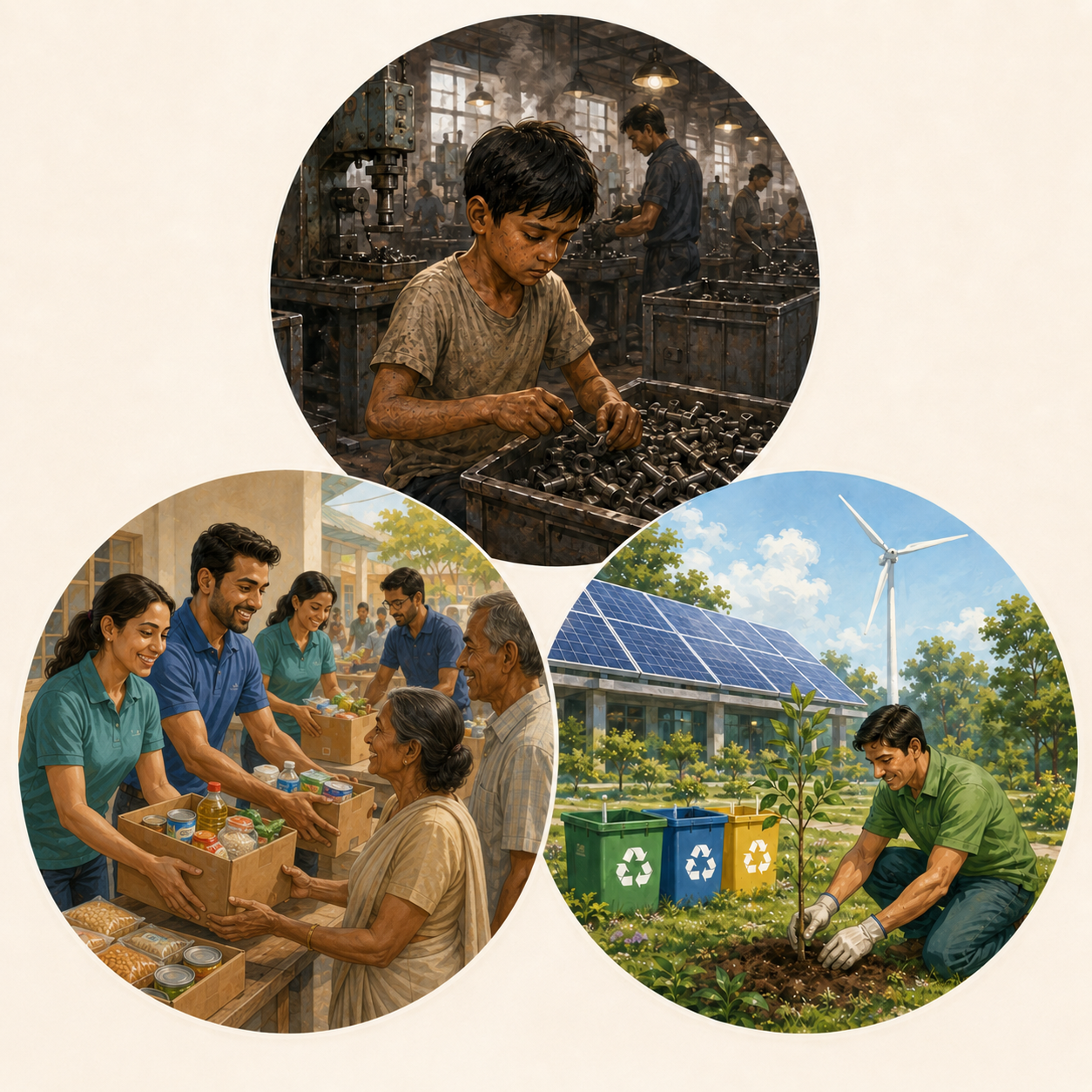
⚖️ Ethical practice
What is ethical practice and what is the role of business?
Ethical practice means making business decisions that are fair, honest, responsible and respectful of people, communities and the environment. In a global context, this means the business should not lower its standards simply because it operates in a country with cheaper labour, weaker regulation or different legal systems.
The role of a business is to build ethical responsibility into its normal business practice. This means ethical behaviour should influence production, employment, sourcing, marketing, supply chains, environmental management and relationships with local communities.
An ethical global business may:
- avoid child labour, forced labour and unsafe working conditions
- pay attention to minimum labour standards and supplier behaviour
- act honestly towards customers, workers, communities and governments
- reduce waste, pollution, emissions and environmental damage
- support local communities and respect local culture
- monitor suppliers rather than assuming overseas production is ethical
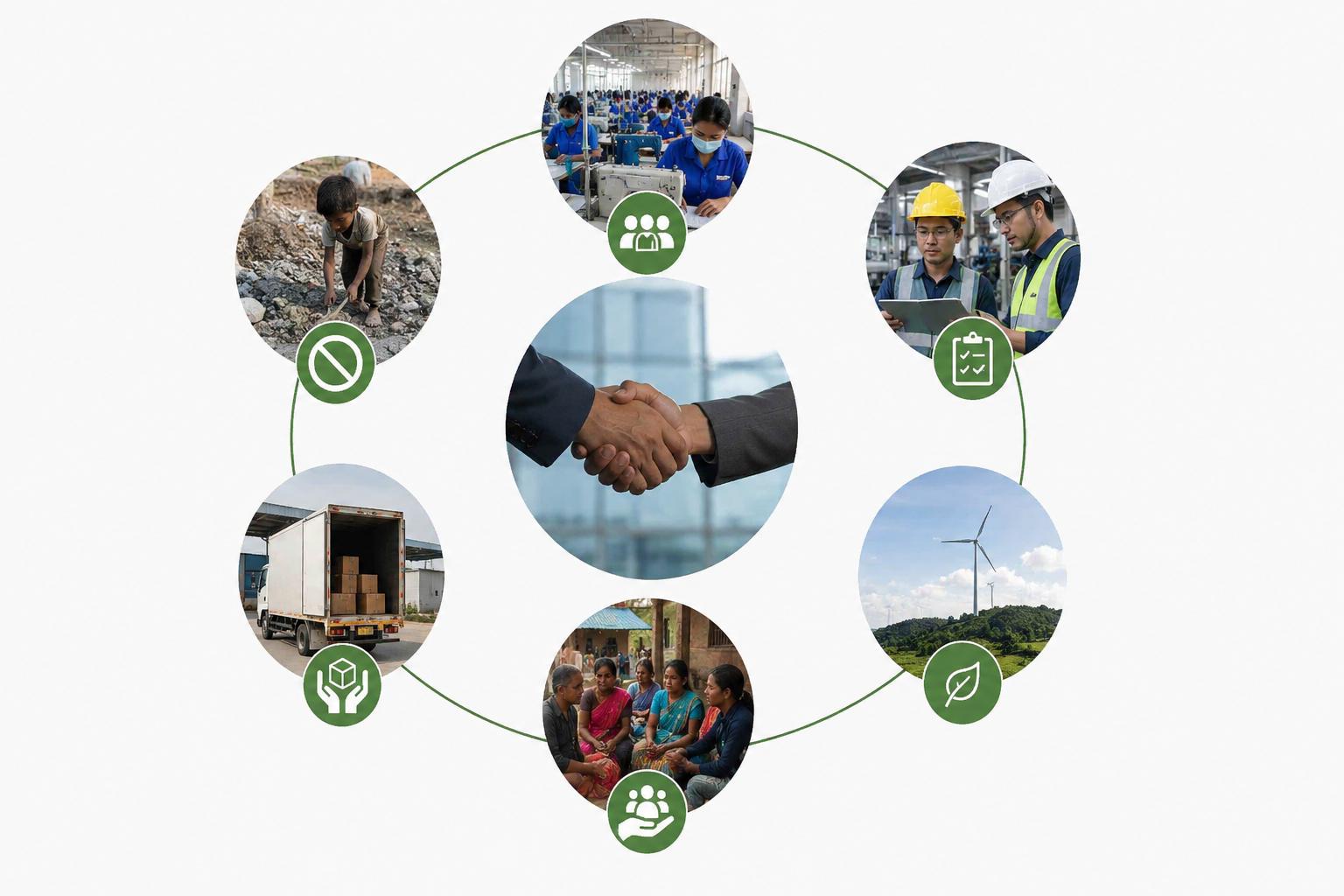
The three ethical practice areas in this dotpoint
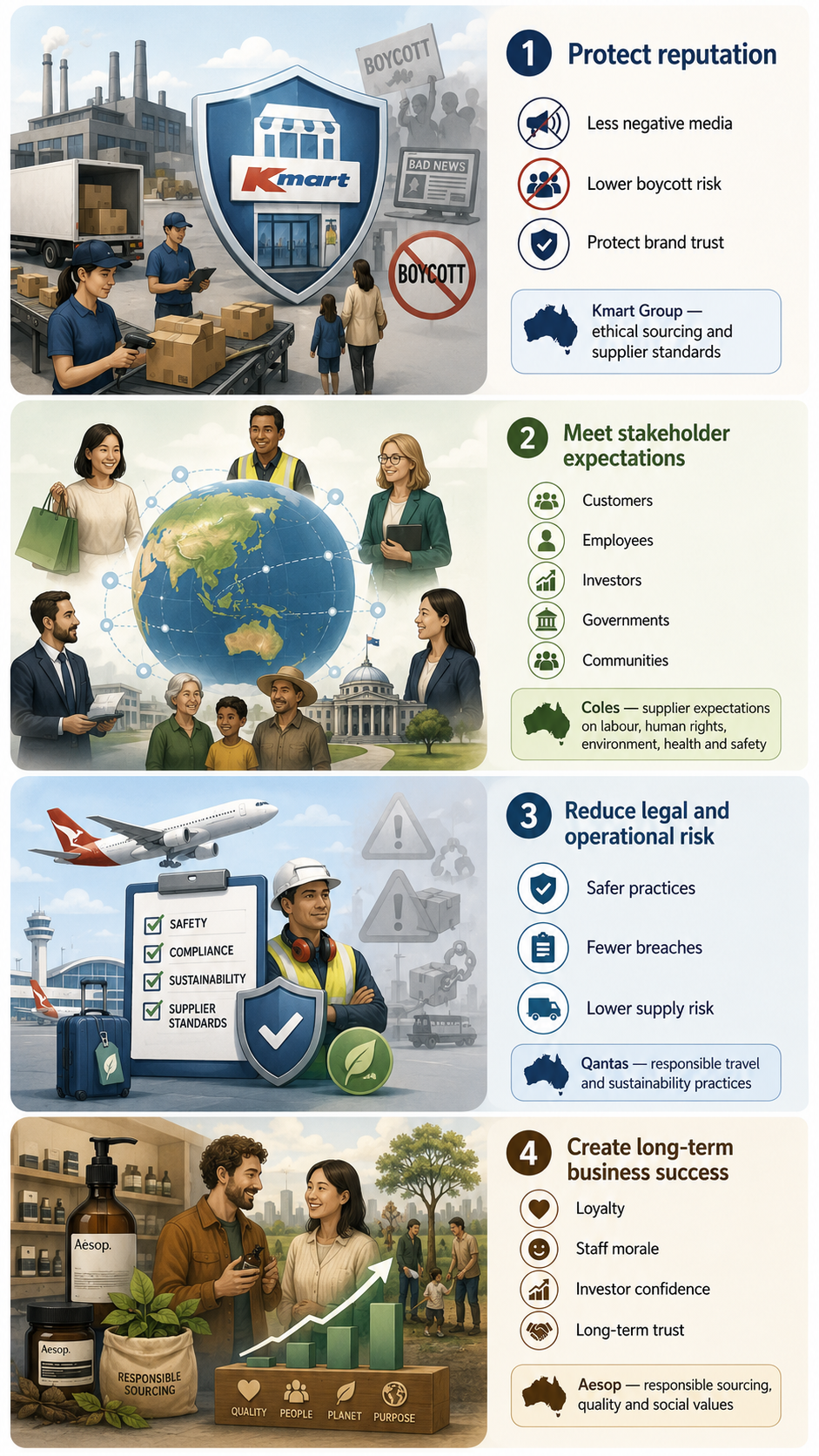
Why incorporate ethical responsibility into business practice?
Protect reputation
Ethical behaviour helps reduce the risk of negative publicity, customer backlash and loss of trust.
Australian example: Kmart Group uses an Ethical Sourcing Program to reassure customers its low-cost products are not linked to unacceptable labour practices.
Meet stakeholder expectations
Customers, employees, investors and communities increasingly expect businesses to act responsibly.
Australian example: Coles has ethical sourcing expectations for suppliers covering labour rights, human rights and environmental conduct.
Reduce legal and operational risk
Ethical policies can help a business avoid unsafe work, poor supplier behaviour and environmental breaches.
Australian example: Qantas and other travel businesses need responsible practices to manage environmental and community risks linked to tourism.
Create long-term business success
Ethical practice can improve loyalty, staff morale, investor confidence and long-term brand strength.
Australian example: Aesop’s responsible sourcing and strong values have supported its premium reputation in global markets.
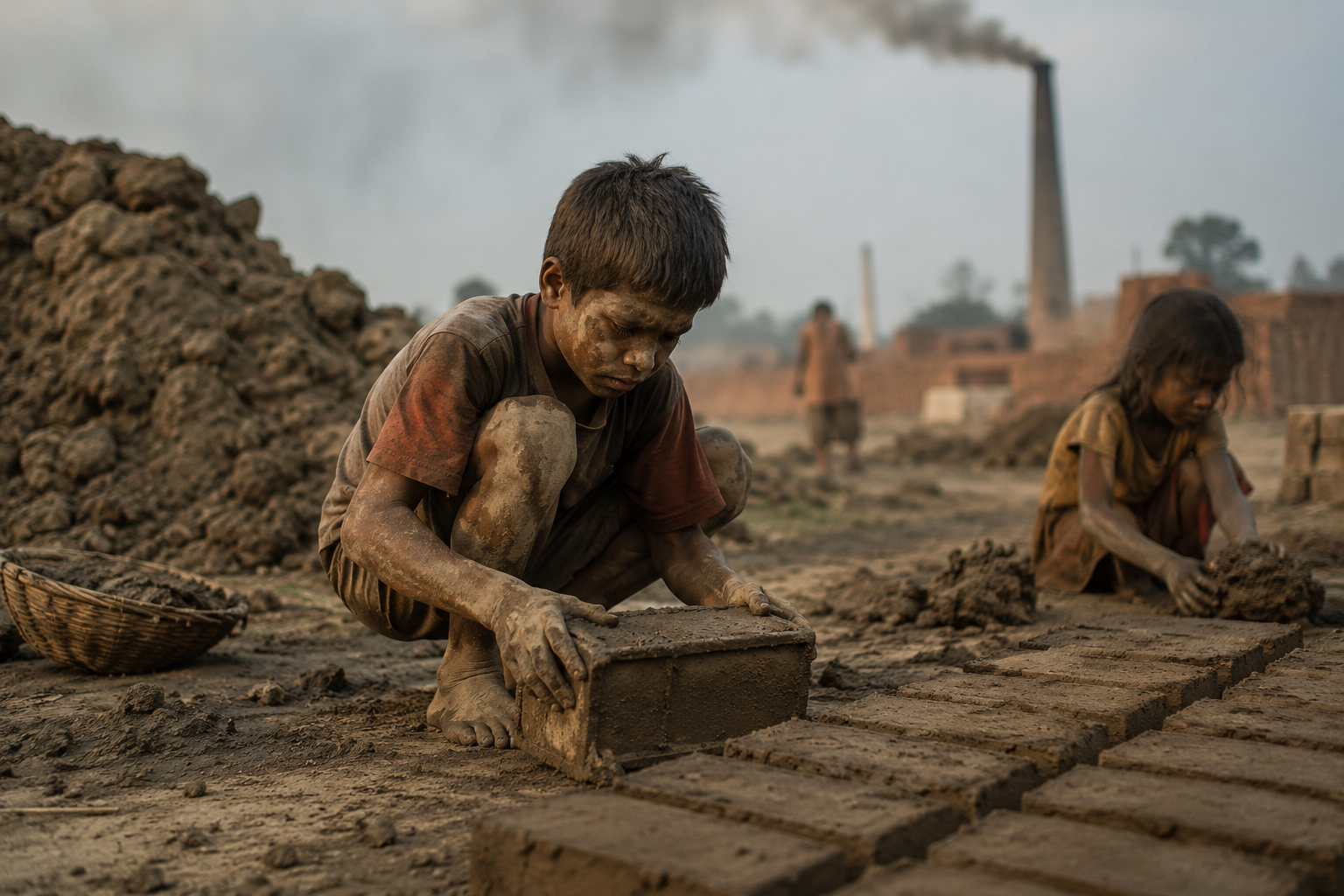
🧒 Minimum standards of labour by the ILO, including child labour
Who is the ILO?
The International Labour Organisation (ILO) is a United Nations agency that sets international labour standards and promotes decent work. It was created in 1919 after World War I, and its purpose is to improve working conditions and protect workers around the world.
The ILO is tripartite, meaning governments, employers and workers all help shape labour standards. Its role is to promote fair work, safer workplaces, worker rights and the elimination of exploitative practices such as forced labour and child labour.
Child labour is work that is unsuitable for children because it can harm their health, safety, education, development or wellbeing. The ILO’s Convention No. 138 on Minimum Age, adopted in 1973, generally sets 15 as the minimum age for work and 18 as the minimum age for hazardous work.
Child labour remains a major global issue. Around 138 million children worldwide are still involved in child labour, equal to almost 8% of all children.

Impact on global business practice
ILO labour standards affect global business practice because businesses may need to check that overseas workers are paid fairly, work in safe conditions, are not forced to work and are not children doing work that harms their health, safety, education or development.
This is especially important for businesses that outsource production, manufacture clothing, use agricultural inputs, source raw materials, or rely on overseas supply chains where labour regulation may vary.
If a business ignores labour standards, it may reduce costs in the short term, but it risks reputational damage, legal problems, customer backlash and loss of trust.
Key ILO labour standards businesses should understand
Minimum age and child labour
Businesses should ensure workers meet minimum age requirements and are not exposed to work that harms their health, safety, education or development.
Elimination of forced labour
Workers should not be forced to work through threats, debt, withheld passports, intimidation or coercion.
Safe and healthy working conditions
Workers should have safe equipment, protective systems, training and protection from dangerous conditions.
No discrimination
Workers should not be treated unfairly because of gender, age, religion, ethnicity, disability or other characteristics.
Freedom of association and worker voice
Workers should be able to raise concerns and participate in workplace discussion where permitted by law.
Fair pay, working hours and conditions
Businesses should avoid underpayment, excessive hours and unsafe workloads in global production.
How businesses can uphold ILO standards
Supplier code of conduct
Set written standards requiring suppliers to avoid child labour, forced labour, unsafe work and discrimination.
Supplier audits
Inspect factories, production sites and subcontractors to check worker ages, hours, pay, safety and conditions.
Age verification
Require reliable records to confirm workers are legally old enough to work and not exposed to hazardous roles.
Trace supply chains
Monitor the main supplier, subcontractors and raw material suppliers where child labour risks may be hidden.
Corrective action plans
If labour breaches are found, require suppliers to fix them through training, safer systems or removal from dangerous work.
Long-term supplier relationships
Avoid unrealistic prices or deadlines that pressure suppliers into unethical labour practices.
Australian case study — Kmart Group and ethical sourcing
Kmart Group is a useful Australian example because it sources products through large global supply chains. Its ethical sourcing approach is based on respecting core labour standards, protecting human rights and promoting responsible supplier behaviour.
Kmart identifies risks such as excessive working hours, unpaid work, below-minimum wages, forced labour, child labour, unethical recruitment and unauthorised subcontracting. This shows why Australian businesses cannot simply rely on low-cost overseas suppliers without monitoring labour practices.
For a global business, this type of sourcing program helps set supplier expectations, monitor supplier behaviour and reduce the risk that products are made using exploited or underage workers.
Example of how to write this in an exam
Minimum standards of labour by the ILO can affect global business practice because businesses must ensure overseas workers are treated fairly and not exploited. For example, an Australian clothing business manufacturing overseas could use supplier codes of conduct, factory audits and age checks to help prevent child labour and unsafe work. This may increase monitoring costs, but it reduces the risk of reputational damage and labour exploitation. As a result, following ILO labour standards can help the business protect its brand and operate ethically in global markets.
🤝 Corporate social responsibility
Corporate social responsibility (CSR) refers to a business taking responsibility for the impact of its decisions on stakeholders, including employees, customers, suppliers, communities and the environment.
CSR means the business looks beyond profit and considers how its actions affect society.
Impact on global business practice
CSR affects global business practice because businesses may need to support local communities, treat workers fairly, communicate honestly, respect local culture and consider the social impact of their operations.
CSR can be especially important when entering foreign markets because local communities may judge whether the business is contributing positively or simply exploiting cheap labour, resources or tourism demand.
Strong CSR can improve brand reputation, customer loyalty, employee morale and community support.

CSR in global business
| CSR area | What it means | Global business example |
|---|---|---|
| Employees | Fair pay, safe work, training, non-discrimination and respectful workplace culture. | A business opening a warehouse overseas trains local employees and offers safe working conditions. |
| Customers | Honest marketing, safe products, clear information and respect for local culture. | A skincare business clearly labels ingredients and avoids misleading claims about organic or vegan products. |
| Suppliers | Fair contracts, ethical sourcing and avoiding pressure that leads suppliers to exploit workers. | A clothing business does not demand prices so low that suppliers cut wages or safety standards. |
| Communities | Supporting local employment, respecting local culture and giving back to the community. | A tourism business uses local guides and educates travellers to respect local customs. |
| Environment | Reducing waste, emissions, pollution and resource use. | A manufacturer uses sustainable materials and reduces packaging waste in overseas operations. |
Business responses
Create CSR policies
Set clear expectations for employee treatment, community impact, product safety, sourcing and environmental responsibility.
Support local communities
Hire local workers, use local suppliers, support local causes and respect community needs.
Report transparently
Publish information about labour practices, community projects, environmental goals and ethical sourcing.
Example of how to write this in an exam
CSR plays a role in ethical practice because it encourages a business to consider the impact of its decisions on employees, customers, suppliers and local communities. For example, a travel business expanding into Japan could demonstrate CSR by using local guides, respecting local culture and educating tourists about responsible behaviour. This may improve the business’s reputation because customers and communities may view the business as respectful rather than exploitative. As a result, CSR can help a global business build stakeholder trust and support long-term success.
🌱 Environmental sustainability
Environmental sustainability refers to business practices that reduce harm to the natural environment and help preserve resources for the future.
This includes reducing waste, pollution, emissions, water use, energy use, packaging and environmental damage across global operations and supply chains.
Impact on global business practice
Environmental sustainability affects global business practice because businesses may need to change how they source materials, manufacture products, package goods, transport items, manage waste and use energy.
Global expansion can increase environmental impact through shipping, production, tourism, packaging and resource use. Ethical businesses try to reduce this impact rather than simply shifting environmental damage overseas.
Environmental sustainability can improve reputation, reduce waste costs, meet customer expectations and reduce long-term risk.

Environmental sustainability in global business
| Area | What the business can do | Global business impact |
|---|---|---|
| Materials | Use recycled, renewable, certified or responsibly sourced materials. | Reduces environmental damage and can strengthen brand reputation. |
| Packaging | Reduce plastic, use recyclable packaging and avoid unnecessary packaging. | Reduces waste and appeals to environmentally conscious customers. |
| Production | Use energy-efficient equipment, reduce water use and minimise pollution. | Can reduce costs and help the business meet environmental expectations. |
| Transport | Consolidate shipments, use efficient logistics and reduce unnecessary air freight. | Can reduce emissions linked to global supply chains. |
| Waste | Recycle, reuse materials and reduce production waste. | Can reduce landfill and improve operating efficiency. |
| Tourism | Promote responsible travel, reduce overtourism and protect natural environments. | Can preserve destinations and improve community support. |
Business responses
Sustainable sourcing
Choose materials and suppliers that reduce environmental harm and support responsible production.
Waste reduction
Reduce packaging, recycle materials and redesign products to create less waste.
Cleaner operations
Use energy-efficient machinery, renewable energy, water-saving systems and lower-emission transport.
Example of how to write this in an exam
Environmental sustainability is an ethical practice because it requires a business to reduce the environmental impact of its operations. For example, a furniture business expanding into Indonesia could use responsibly sourced timber, reduce packaging waste and install energy-efficient machinery in its manufacturing base. This may increase setup costs, but it can reduce waste and protect the business’s reputation as environmentally responsible. As a result, environmental sustainability can support long-term customer trust and responsible global growth.
🎧 Prefer listening?
If you prefer listening to the content in podcast format:
🎥 Prefer watching?
If you prefer watching the content in video format:
🃏 Flashcards
Card 1 of 16
🎮 Revision Games
💰 BME Millionaire
Climb the prize ladder. Use your lifelines wisely.
👔 Business Boss
Make 10 ethical business decisions. Balance workers, communities, reputation and environmental responsibility.
⚡ 60 Second Showdown
A varied 60-second challenge covering ILO labour standards, CSR and environmental sustainability.
Biz Fact: 138 million children worldwide are still involved in child labour, equal to almost 8% of all children.
Past Exam Questions
Use these past exam questions to see how this dotpoint has been assessed. Pay close attention to the command term, the number of marks and whether the question is Section 1 or Section 2.
Section 1 Questions
2017 — Section 1 — Question 4(b) — 2 marks
Context
Business operation in global markets requires knowledge of different business practices and legal systems.
4(b): Describe the role of corporate social responsibility in ethical practice for a global business. (2 marks)
Command term focus: Describe
Describe: give the main characteristics or features of CSR and its role in ethical practice.
See the full command term guide here: Command Terms.
4(b) Sample answer
Corporate social responsibility plays a role in ethical practice by encouraging a global business to consider its impact on employees, customers, suppliers, communities and the environment. This means the business should act responsibly in areas such as labour standards, community impact and environmental behaviour, rather than focusing only on profit.
2022 — Section 1 — Question 5(c) — 4 marks
Context
Question 5 continued.
5(c): Explain the role of corporate social responsibility and provide an example of how it may be applied in a global business setting. (4 marks)
Command term focus: Explain
Explain: show cause and effect by explaining how CSR influences ethical behaviour and the result, with an example.
See the full command term guide here: Command Terms.
5(c) Sample answer
Corporate social responsibility is the responsibility a business has to consider the impact of its decisions on stakeholders such as workers, customers, communities and the environment. CSR plays a role in ethical practice because it encourages the business to act responsibly even when operating in countries with different laws or lower standards. For example, an Australian clothing business manufacturing overseas could apply CSR by supporting local communities, treating employees fairly and reporting openly on sourcing practices. As a result, CSR can help the business protect its reputation and build trust in global markets.
Section 2 Questions
2017 — Section 2 — Question 7(c) — 3 marks
Case study / context
Case study not available.
7(c): Outline how Domino’s innovation in technology assists ethical practice in achieving environmental sustainability. (3 marks)
Command term focus: Outline
Outline: state the main point and briefly clarify how technology can support environmental sustainability.
See the full command term guide here: Command Terms.
7(c) Sample answer
Domino’s innovation in technology could assist ethical practice by making operations more environmentally sustainable. For example, improved online ordering, delivery technology or production systems could reduce paper use, reduce waste, improve delivery efficiency and lower unnecessary energy use. This supports ethical practice because the business is taking responsibility for its environmental impact rather than focusing only on sales growth.
2019 — Section 2 — Question 7(d) — 8 marks
Case study / context
Health and fitness is a multimillion dollar industry. More and more people are aware of the importance of healthy eating and daily exercise. People of all ages spend money on gym memberships, personal training and group fitness classes, books, clothing, sporting equipment and much more.
Jettaya is a triathlete with a degree in sports and rehabilitation science and wants to profit from this expanding industry. She has recently created an online fitness program, healthy eating diet plan and clothing line so she can tap into the industry.
Jettaya understands the importance of being innovative to differentiate her product and service in this heavily saturated market. She realises that technology is a powerful tool for creating a profile for herself and to market her products and services in Australia and overseas. Jettaya has also conducted market research and has decided to manufacture her clothing line in China due to the cheaper labour costs and materials and the fact that the free trade agreement between China and Australia brings many benefits.
Jettaya realises that she needs to create a strategic vision and be innovative and creative for her business to become a success. She has come to you to ask for some advice and tips about how to create a successful global business.
7(d): Analyse two ethical practices in global business that Jettaya should be aware of and present ways in which she could adopt these practices for long-term business success. (8 marks)
Command term focus: Analyse
Analyse: identify the variables, explain two linked relationships and draw out the implication. Section 2 requires application.
See the full command term guide here: Command Terms.
7(d) Sample answer
One ethical practice Jettaya should be aware of is minimum standards of labour by the ILO. The relationship is that manufacturing her clothing line in China may reduce labour and material costs, but it also creates a risk that workers in the supply chain could face poor conditions or even child labour if suppliers are not monitored. A second relationship is that labour standards also affect Jettaya’s brand reputation, because customers in the health and fitness market may not want to support clothing made through exploitative labour. The implication is that her long-term business success could be damaged if lower-cost production leads to customer distrust or reputational harm.
Jettaya could adopt this practice by using a supplier code of conduct, checking worker ages, auditing factories and requiring suppliers to meet minimum labour and safety standards.
A second ethical practice is environmental sustainability. The relationship is that producing and exporting a clothing line can create waste, packaging and transport emissions. A second relationship is that sustainability can also strengthen product differentiation, because Jettaya is entering a crowded market and environmentally responsible activewear could help her brand stand out. The implication is that sustainable materials and lower-waste production may support stronger customer loyalty and long-term brand growth.
Jettaya could adopt this practice by choosing recycled or sustainably sourced fabrics, reducing packaging and promoting accurate environmental claims.
2020 — Section 2 — Question 7(b) — 5 marks
Case study / context
Tartology Ltd is a Western Australian business that specialises in manufacturing premium handmade chocolate tarts using locally-sourced ingredients. Founded in 2013, Tartology Ltd initially began as a home-based business and opened its first store in 2015. Over the past five years, Tartology Ltd has expanded both its business and the range of chocolate tarts it sells. At present, Tartology Ltd sells through various retail stores across Australia and through its website and Instagram page.
The increasing popularity of the chocolate tarts within both Western Australia and Australia has seen a huge growth in Tartology Ltd’s customer base, sales and profits. Tartology Ltd has been analysing the current economic climate and is now considering entering the New Zealand market. It is seeking to buy a warehouse facility in New Zealand which will focus on the production of tarts to sell to various patisseries in large cities. Ethical practice is important to Tartology Ltd, so it is keen to employ a diverse range of employees in its warehouse and to connect with the local community.
Tartology Ltd believes that moving into the New Zealand market is a good business decision due to that country’s growing middle-income population. This would mean an increase in the number of people who can afford to spend money on luxury items such as Tartology Ltd’s chocolate tarts. There are also good trade relations between Australia and New Zealand and the Australian dollar is relatively close in value to the New Zealand dollar. Interest rates in Australia are at an all-time low and this would allow Tartology Ltd to take advantage of the benefits of investing more into the business.
To assist in the expansion into New Zealand, Tartology Ltd is considering seeking additional funding. These funds will provide support for Tartology Ltd in purchasing the warehouse facility and extra machinery to increase the efficiency of producing and packaging the chocolate tarts in New Zealand.
7(b): State briefly the meaning of ‘ethical practice’ and describe two ethical practices in a global business that Tartology Ltd should be aware of if it enters the New Zealand market. (5 marks)
Command term focus: State + Describe
State: give the meaning directly. Describe: give the main features of two ethical practices and apply them to Tartology Ltd.
See the full command term guide here: Command Terms.
7(b) Sample answer
Ethical practice means making business decisions that are fair, honest and responsible towards stakeholders such as employees, customers, communities and the environment.
One ethical practice Tartology Ltd should be aware of is corporate social responsibility. As it enters New Zealand, Tartology Ltd could employ a diverse range of staff, treat employees fairly and connect with the local community. This would support ethical practice because the business is considering its social impact rather than only focusing on profit.
A second ethical practice is environmental sustainability. Tartology Ltd could reduce food waste, use recyclable packaging and purchase efficient machinery for its New Zealand warehouse. This would help reduce the environmental impact of producing and packaging chocolate tarts in a new market.
2021 — Section 2 — Question 7(b) — 6 marks
Case study / context
Smoothex is a Perth company specialising in producing organic skin care and make-up for men and women. It currently has two stores in Perth. Founded in 2010 by Chief Executive Officer (CEO) Rani, Smoothex began by producing 100% natural make-up and has expanded its range to now include daily essentials such as facial cleansers, creams and serums. The business’ main ingredients are locally sourced coconut oil, rose water, sandalwood and lemon myrtle. From 2018, the business has ensured that its products are vegan to cater for this fast-growing market sector. Smoothex prides itself on being environmentally sustainable and a supporter of various local charities.
Smoothex has tailored its products to suit a wide range of skin types and conditions, and has been advertising through its social media pages of Facebook and Instagram. The products have grown in popularity due to the business’ online skin care and make-up tutorials, which it posts on these platforms. Rani has noticed increased engagement from consumers in South-East Asia, in particular a growing customer base in Indonesia and Malaysia. Due to the success of Smoothex, Rani is thinking of opening stores in both Indonesia and Malaysia.
Smoothex believes that entering these South-East Asian markets will be a sound business decision, in particular due to the growing number of females who are becoming a part of the workforce in these countries. This means there is likely to be a high demand for Rani’s skin care and make-up products. With low inflation and all-time low interest rates in Australia, Smoothex would be able to access funding to invest in these overseas markets. Fluctuations in the exchange rates between the three nations have also been low, and both Indonesia and Malaysia are members of the Association of South East Asian Nations (ASEAN). Rani is also aware that Australia has free trade agreements (FTAs) with both Indonesia and Malaysia and is keen to take advantage of these benefits.
Referring to the case study and your own knowledge, prepare a report or essay in which you answer the questions below.
7(b): Explain how Smoothex could demonstrate ethical practices in corporate social responsibility (CSR) and environmental sustainability in Indonesia and Malaysia, giving examples. (6 marks)
Command term focus: Explain
Explain: show cause and effect by linking CSR and environmental sustainability to Smoothex’s expansion and the result.
See the full command term guide here: Command Terms.
7(b) Sample answer
Smoothex could demonstrate CSR by supporting local communities and treating employees fairly when opening stores in Indonesia and Malaysia. For example, Rani could hire local staff, provide training, offer fair working conditions and continue supporting local charities in the new markets. This would demonstrate ethical practice because Smoothex would be considering its social impact on employees and communities, not just the opportunity to increase sales.
Smoothex could also demonstrate environmental sustainability by maintaining its organic, vegan and environmentally responsible approach in Indonesia and Malaysia. For example, it could use recyclable packaging, reduce waste from skincare products and source ingredients responsibly. This would help protect the business’s environmentally sustainable image and reassure customers that Smoothex is not lowering its ethical standards as it expands overseas.
2023 — Section 2 — Question 8(a) — 3 marks
Case study / context
Jay and Lin operate a men’s skincare business known as Woodyz. They started the business together in 2017 and are based in Fremantle, Western Australia. They have five retail stores around the Perth metropolitan area and set up a pop-up store weekly at the weekend markets around the state. The business sells skincare, such as shower gels, facial cleansers and creams. Woodyz prides itself on using 100% organic and vegan ingredients. Ingredients are sourced both locally and overseas. Primary ingredients include sandalwood oil, macadamia oil, aloe vera and cucumber.
Woodyz has a strong social media presence, with regular product information and tutorials posted on Instagram and TikTok. Customers have been also giving Woodyz rave reviews online and recommending the products on their own social media platforms. The business has a growing customer base and Jay and Lin have noticed in the past two years their website has received an increasing number of orders from South Africa. Their South African customers who live in Perth often visit Woodyz to purchase products to give to their relatives in South Africa when they go back to visit. Jay and Lin are now thinking of entering the South African market to grow their business further.
While selling at a recent ‘Men’s week’ convention in Perth, Jay and Lin met up with another stallholder, Alex, who runs Beards R Us. Alex sells shaving products and he also sources 100% organic ingredients. Alex has been considering venturing overseas and setting up production sites in South Africa as well. All three see the potential to grow their businesses together, both in Australia and overseas, over the next few years. Ethical practice is important to Jay, Lin and Alex and they are keen to ensure that any overseas production facilities adhere to international standards.
Jay, Lin and Alex would like to explore their options further. Both businesses would like to consider the options of either a joint venture or a merger to enter into the South African market. Jay, Lin and Alex are also considering options for funding. With interest rates on the rise, they are now seeking advice from a business consultant.
Refer to the case study and your own knowledge to answer the questions below.
8(a): Explain how Woodyz and Beards R Us could uphold the minimum standards of labour by the International Labour Organisation, including the use of child labour, if the businesses enter the South African market. (3 marks)
Command term focus: Explain
Explain: show cause and effect by linking ILO labour standards to the South African production facilities and the result.
See the full command term guide here: Command Terms.
8(a) Sample answer
Woodyz and Beards R Us could uphold minimum standards of labour by the ILO by ensuring any South African production facilities use safe working conditions, fair employment practices and no child labour. For example, they could create a supplier code of conduct, check worker ages and audit production sites to ensure workers are not underage or placed in hazardous work. As a result, the businesses could expand production into South Africa while protecting their ethical reputation and reducing the risk of labour exploitation in their supply chain.
2024 — Section 2 — Question 9(a) — 4 marks
Case study / context
Crafted Haven Furniture (CHF) is an iconic furniture business, based in Albany, Western Australia (WA), which specialises in creating custom furniture. The business takes pride in manufacturing unique pieces that are innovatively designed and produced with great attention to detail and expert craftsmanship. The business ensures that it keeps up-to-date with the latest quality management and production techniques in order to maintain its competitive edge.
Starting out in 2010, CHF initially appealed to customers from the Great Southern region of WA, but since 2015, CHF has grown in popularity and now sells to customers around Australia with display showrooms in each of the major cities. Over the past five years, CHF’s exceptional furniture designs have also sparked growing interest internationally, prompting owners May and Sun to think about opening their first overseas store. They are considering initially expanding into Indonesia.
CHF would like to set up a manufacturing base in Indonesia, as well as two stores in the country. The business prioritises ethical production methods and is renowned for leading environmental sustainability in Australia. May and Sun plan to visit their business consultant to explore ways of maintaining a high standard of ethical practice in their expansion to Indonesia. They are also aware that CHF will need to be culturally considerate if they are to be successful in Indonesia. Additionally, they would like to analyse the financial information below with their consultant.
Financial ratios
Current ratio: 2022 — 125%; 2023 — 175%
Debt to equity ratio: 2022 — 55%; 2023 — 60%
Profit ratio: 2022 — 12%; 2023 — 14%
Return on equity ratio: 2022 — 8%; 2023 — 11%
Expense ratio: 2022 — 60%; 2023 — 55%
Refer to the case study and your own knowledge to answer the questions below:
9(a): Describe two examples of environmental sustainability that CHF could consider when expanding into the Indonesian market. (4 marks)
Command term focus: Describe
Describe: give the main features of two environmental sustainability examples and apply them to CHF’s Indonesian expansion.
See the full command term guide here: Command Terms.
9(a) Sample answer
One example of environmental sustainability is using responsibly sourced timber and sustainable materials in CHF’s Indonesian manufacturing base. This would help CHF reduce environmental harm from furniture production while maintaining its reputation for ethical production and environmental sustainability.
A second example is reducing waste and energy use in production. CHF could use energy-efficient machinery, recycle offcuts and reduce packaging waste in its Indonesian stores. This would help lower the environmental impact of expanding into Indonesia while supporting CHF’s sustainable brand image.
2025 — Section 2 — Question 7(b) — 6 marks
Case study / context
SNO Tours is a Western Australian-based travel and tourism proprietary limited company. It has built a presence in the Australian market by providing unique small-group holiday experiences, focusing primarily on adventures with friends. Its target market is people aged between 18 to 25 who want to explore and are open to trying new things. The business model operates on the needs and wants of clients, including their budgets and preferred adventure activities. With a thriving client base and strong social media following, SNO Tours is considering expanding its tour offerings to include countries in Asia, specifically Japan.
SNO Tours feels Japan is a suitable starting point for small-group adventures as there are favourable economic conditions for both the business and its clients. With the Japanese yen (JPY) being weak compared with the Australian dollar (AUD), Australians visiting Japan can spend more on experiences while away. Compared to travel experiences in Australia, SNO Tours’ clients will be able to do more during their Japanese holiday, including affordable skiing holidays, visits to many cities and experiences of local culture. The relationship between the Australian and Japanese governments is positive and it is a safe and stable country for travel.
While the SNO Tours’ team is excited for this expansion, they are also aware that they will need more money to finance it. They have recorded a profit for the year, resulting in some retained profits, but will need to consider external sources of funding to make their dream a reality.
SNO Tours is well aware of the ethical implications of its industry. It has always held itself to high standards and all clients agree to a responsible travel agreement. It prides itself on its respect for local culture and will continue to do so. With expansion into international travel, it will be further considering its corporate social responsibility and how it can best operate in the travel and tourism industry.
7(b): Explain how SNO Tours could apply ethical practices regarding corporate social responsibility and environmental sustainability. (6 marks)
Command term focus: Explain
Explain: show cause and effect by linking CSR and environmental sustainability to SNO Tours’ Japan operations and the result.
See the full command term guide here: Command Terms.
7(b) Sample answer
SNO Tours could apply corporate social responsibility by ensuring its Japan tours respect local communities, culture and businesses. For example, it could use local guides, promote respectful behaviour through its responsible travel agreement and encourage tourists to support local restaurants, activities and accommodation providers. As a result, SNO Tours would show that it is contributing positively to Japanese communities rather than simply profiting from Australian tourists.
SNO Tours could also apply environmental sustainability by reducing the environmental impact of its travel experiences. For example, it could encourage public transport such as trains, limit waste on tours, choose accommodation with sustainability practices and educate clients about protecting ski areas, cities and cultural sites. As a result, SNO Tours could protect the destinations it relies on and strengthen its reputation as an ethical travel business.