
U4.16 — Inventory Control Techniques
Overview
Dotpoint 16: inventory control techniques.
Inventory control is the process of ensuring the appropriate amount of raw materials, components, work in progress and finished goods is available so the business can meet production and customer demand.
The two inventory control techniques in this dotpoint are:
- just-in-time (JIT) — holding very low inventory and arranging materials or stock to arrive close to when they are required
- just-in-case (JIC) — holding buffer or safety stock in advance to protect the business against supply disruption or unexpected demand
The key challenge is balancing the cost of holding inventory against the risk and cost of not having enough inventory.

⏱️ Just-in-time inventory control
What is just-in-time?
Just-in-time (JIT) is an inventory control technique in which the business holds very low levels of stock and arranges for raw materials, components or finished goods to arrive as close as possible to when they are required.
JIT generally operates as a pull system, because actual customer demand or production requirements trigger production and the ordering of inputs rather than the business producing or purchasing large quantities in advance.
JIT requires reliable suppliers, accurate demand forecasts, strong information systems, flexible production and consistent quality so stock arrives when needed without disrupting production.
The main objective is to reduce inventory holding costs, working capital tied up in stock, waste and obsolescence while responding closely to customer demand.
Key features of JIT
Very low inventory levels
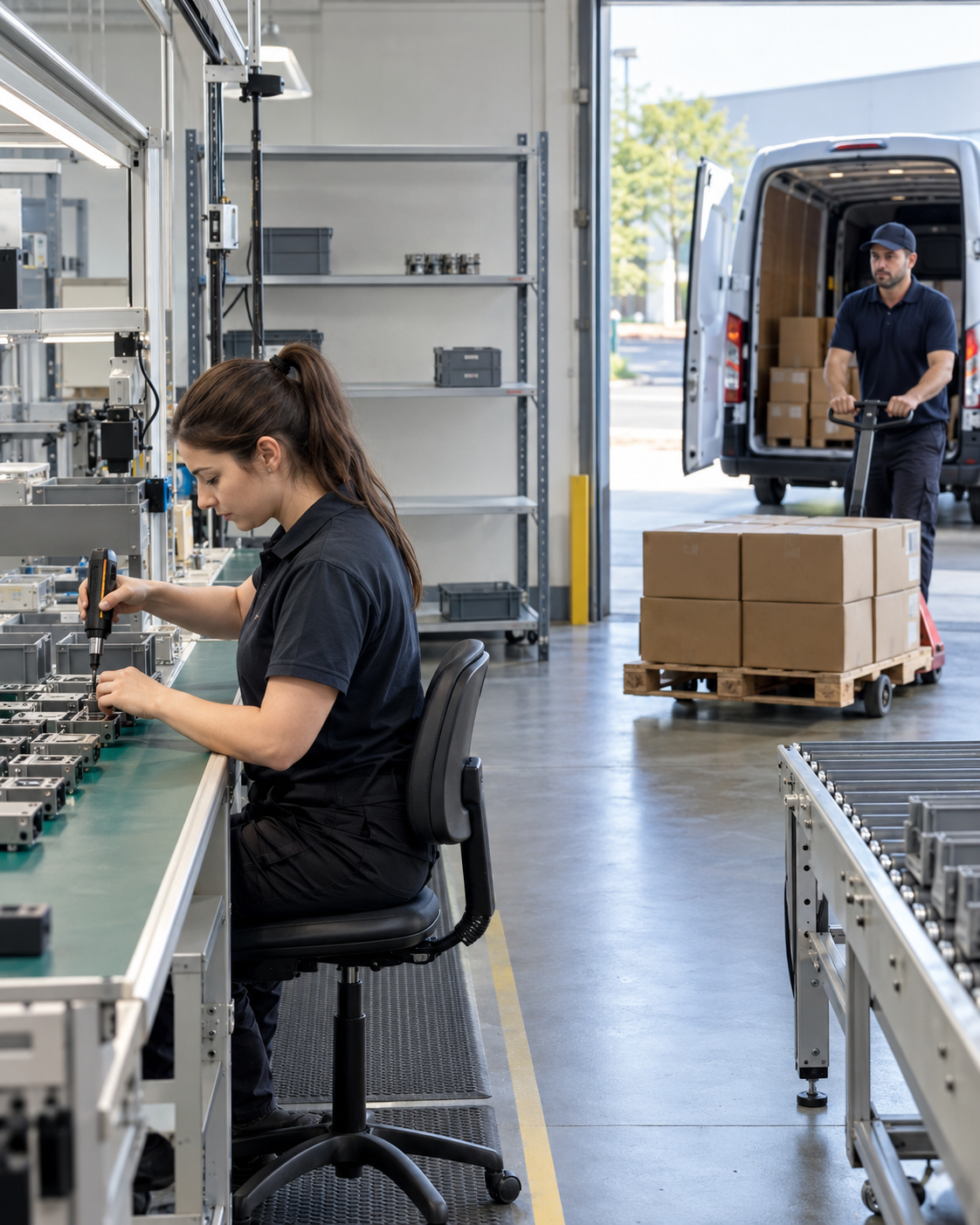
The business holds minimal raw materials, work in progress and finished goods, reducing the amount of stock sitting unused.
Pull system
Customer demand or immediate production requirements trigger production and stock replenishment.
Frequent small deliveries
Suppliers deliver smaller quantities more regularly so materials arrive close to the time they are required.
Fast inventory flow
Materials move quickly into production and finished goods move quickly to customers, with little time spent in storage.
Accurate information
Reliable demand forecasts, production schedules, sales data and inventory information are needed so the correct quantity arrives at the correct time.
Benefits and limitations
Benefits
- Lower inventory and working capital — less finance is tied up in stock.
- Lower storage costs — less warehouse space, insurance and handling are required.
- Less waste and obsolescence — particularly useful for perishable or fast-changing products.
- More productive use of space — facilities can be used for production rather than storage.
- Greater responsiveness — production can respond more closely to changes in customer demand.
Limitations
- Supply disruption risk — a delayed delivery can stop production because little safety stock is held.
- Frequent delivery costs — small and regular orders may increase transport and administration costs.
- Reduced bulk discounts — smaller orders may increase the average purchase cost.
- Supplier dependence — business performance becomes heavily dependent on reliable suppliers.
- High capability requirements — accurate data, flexible equipment and adaptable employees may require investment.
Businesses suited to JIT
- Predictable demand — e.g. Breville, where sales patterns help estimate stock needs.
- Fast-moving inventory — e.g. McDonald’s, where ingredients are used and replenished quickly.
- Perishable stock — e.g. Guzman y Gomez, where fresh ingredients cannot be stored for long.
- High inventory holding costs — e.g. Cochlear, where specialised components are expensive to store.
- Limited storage space — e.g. Domino’s, where stores have little room for excess stock.
- Products made from many components — e.g. Tesla, where parts need to arrive at the right time.
- Risk of stock becoming obsolete — e.g. Samsung, where technology changes quickly.
Case study — Domino’s
Domino’s is well suited to a JIT-style inventory approach because its stores use fast-moving and perishable ingredients such as dough, cheese, vegetables and meat, while also operating with limited storage space.
Rather than holding large quantities of fresh ingredients for long periods, stores can receive frequent replenishment based on expected and actual customer demand. This reduces the risk of food waste, spoilage and unnecessary storage.
JIT also helps Domino’s keep less finance tied up in inventory and allows stores to use available space for food preparation and customer service. However, the system depends on reliable suppliers, accurate demand information and consistent deliveries because a delayed shipment of a key ingredient could disrupt production and affect customer orders.

How to write this in an exam
Just-in-time is an inventory control technique in which stock is ordered or produced as close as possible to when it is required. It uses low inventory levels, frequent deliveries and accurate demand information. One advantage is lower storage and stock-holding costs because less inventory needs to be stored. This will lead to lower operating expenses and less finance being tied up in stock. However, JIT depends heavily on reliable suppliers because a delayed delivery can stop production when little safety stock is available.
📦 Just-in-case inventory control
What is just-in-case?
Just-in-case (JIC) is an inventory control technique in which the business holds extra or buffer stock in advance of customer demand and possible supply problems.
The stock held may include raw materials, components, replacement parts, work in progress and finished goods. Stock levels are generally based on demand forecasts, previous sales and the expected risk of supply delays or fluctuations in customer demand.
The main objective is to maintain production continuity, reduce the risk of stockouts and allow the business to respond quickly to unexpected increases in demand.
Key features of JIC
Buffer or safety stock
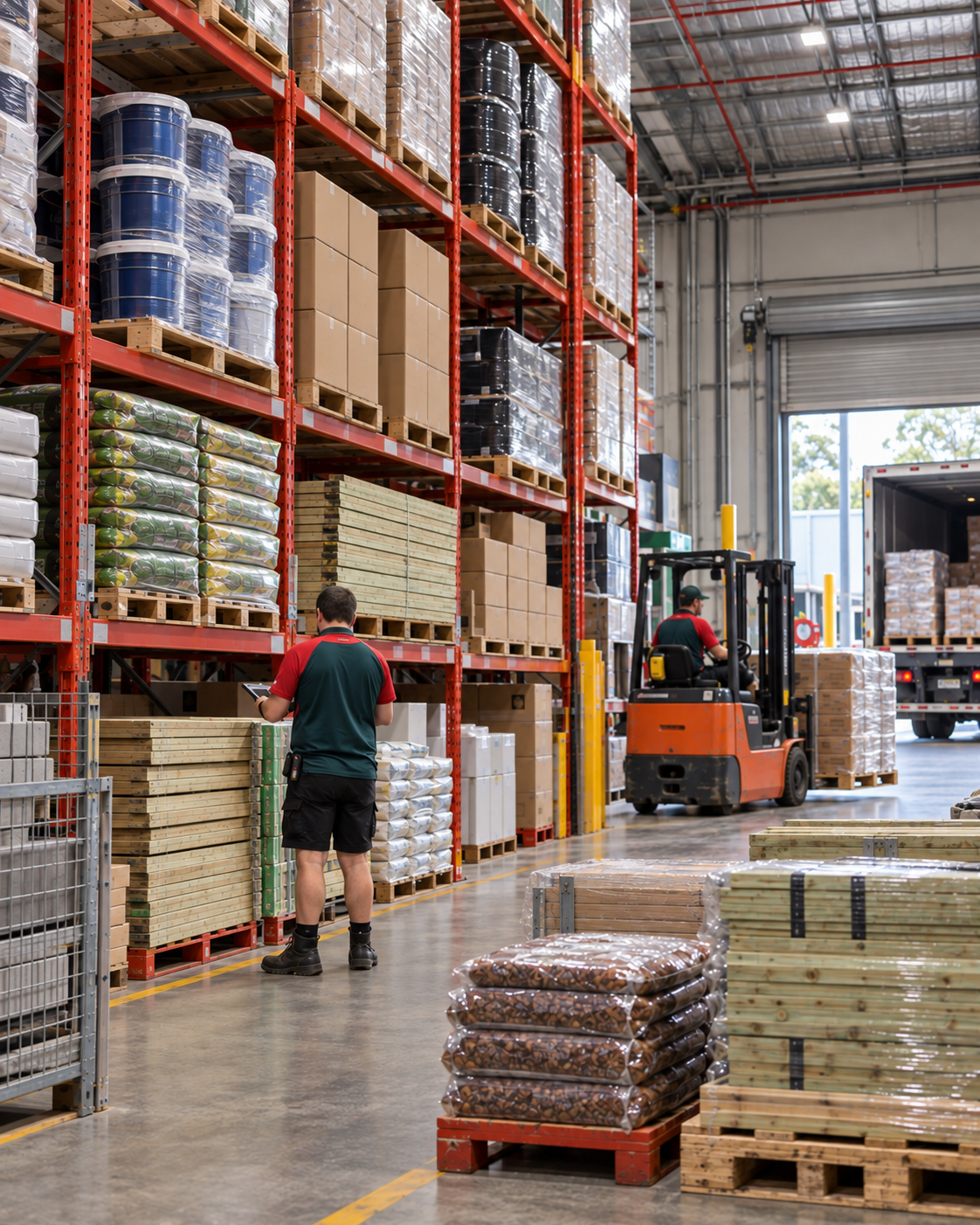
The business intentionally holds extra stock above immediate requirements to protect against uncertainty.
Forecast-based planning
Inventory levels are commonly based on expected demand, past sales and the anticipated risk of supplier delays.
Production continuity
Extra raw materials and components allow production to continue if suppliers are delayed or deliveries are disrupted.
Immediate customer response
Finished goods held in stock can be supplied immediately when customer demand rises unexpectedly.
Higher inventory levels
The technique requires more storage space and more finance to be committed to stock than a JIT system.
Benefits and limitations
Benefits
- Production continuity — buffer inputs can keep production running during supplier delays.
- Fewer stockouts — finished goods can be supplied immediately when demand increases.
- Bulk purchasing discounts — larger orders may reduce the average input cost.
- Replacement items available — defective inputs may be replaced without stopping production.
- Greater protection from uncertainty — useful when suppliers or international lead times are unreliable.
Limitations
- Higher storage costs — larger premises, insurance, handling and stock-management costs may be required.
- Damage or obsolescence — unsold stock may lose value, expire or become outdated.
- Opportunity cost — finance and storage space tied up in inventory cannot be used elsewhere.
- Forecasting risk — poor forecasts may create excessive inventory or still fail to meet demand.
- May hide inefficiency — large buffer stocks can conceal unreliable suppliers or poor-quality processes.
Businesses suited to JIC
- Unpredictable demand — e.g. LEGO, where popular products can experience sudden spikes in demand.
- High risk of supply disruption — e.g. Apple, where global component shortages can interrupt production.
- Long supplier lead times — e.g. IKEA, where products and materials may travel long distances before reaching stores.
- Essential products — e.g. Woolworths, where key items need to remain available even when demand rises unexpectedly.
- Low storage costs — e.g. Bunnings, where many durable products can be stored for longer periods.
- Seasonal demand — e.g. Target, where extra stock may be held before Christmas or major sales periods.
- High cost of stockouts — e.g. Coca-Cola, where running out of popular products can mean lost sales and dissatisfied customers.
Case study — Bunnings
Bunnings is well suited to a JIC-style inventory approach for many of its durable products because items such as tools, hardware, garden equipment and building supplies can often be stored for longer periods without spoiling.
Holding buffer stock allows Bunnings to keep popular products available when customer demand rises unexpectedly or when supplier deliveries are delayed. This is particularly useful for essential or fast-selling lines where a stockout could mean lost sales and dissatisfied customers.
JIC can also allow Bunnings to purchase larger quantities and potentially gain bulk-buying efficiencies. However, the trade-off is that more finance is tied up in stock and the business must provide significant warehouse and store space to hold inventory.
How to write this in an exam
Just-in-case is an inventory control technique in which a business holds buffer or safety stock before it is required. One advantage is greater production continuity because spare raw materials or components are available if suppliers are delayed. This will lead to fewer production stoppages and a lower risk of lost sales. However, JIC requires more storage space and ties up more finance in stock, increasing holding costs and the risk that inventory is damaged, expires or becomes obsolete.
⚖️ Comparing JIT and JIC
Selecting the right technique
Neither JIT nor JIC is automatically better. The more suitable technique depends on factors such as supplier reliability, lead times, demand predictability, perishability, storage cost, stockout risk and access to accurate inventory data.
The business must balance the cost of holding stock against the risk and cost of not having stock available when it is needed.
| Aspect | Just-in-time | Just-in-case |
|---|---|---|
| Inventory level | Very low inventory. | Higher inventory with buffer or safety stock. |
| Main aim | Reduce holding costs, waste and finance tied up in stock. | Protect production and sales against supply disruption or unexpected demand. |
| Planning basis | Actual demand and tightly coordinated replenishment. | Forecast demand plus a buffer for uncertainty. |
| Supplier requirement | Highly reliable suppliers and short lead times are essential. | Can provide protection when suppliers or lead times are less reliable. |
| Storage cost | Usually lower. | Usually higher. |
| Stockout risk | Higher if demand or supply is disrupted. | Lower because buffer stock is held. |
| Obsolescence or spoilage risk | Lower because less stock is held. | Higher because inventory may remain in storage for longer. |
| Cash flow | Less cash tied up in inventory. | More cash tied up in inventory. |
Which technique is more suitable?
| Business condition | More suitable technique | Reason |
|---|---|---|
| Perishable raw materials and reliable local suppliers | JIT | Small, frequent deliveries reduce spoilage and storage while preserving freshness. |
| Long or unreliable international supply chains | JIC | Safety stock reduces the risk that delayed inputs stop production. |
| Highly predictable demand and accurate real-time data | JIT | Production and deliveries can be closely matched to actual requirements. |
| Sudden or unpredictable demand and high stockout cost | JIC | Finished goods or inputs are available immediately when demand increases. |
| Products likely to become obsolete quickly | JIT | Low inventory reduces the risk of outdated stock. |
| Critical components with no easy substitute | JIC | Buffer stock protects production continuity if supply fails. |
Hybrid approach
Some businesses combine the two techniques. They may use JIT for reliable, predictable or perishable items while holding JIC safety stock for critical or high-risk components. This allows the business to reduce inventory costs without exposing every part of the operation to the same supply risk.
Example: a car manufacturer could use JIT for regularly supplied seats, tyres and interior components, but hold JIC safety stock of specialised electronic chips that have long or uncertain international lead times.
How to select and justify
Start with a clear recommendation, then support it with reasons that match the business situation. A justification should be balanced — explain why the chosen technique fits the business, but also acknowledge the major trade-off or risk.
Example: Just-in-case would be more suitable where a business faces international supply-chain issues. The reason is that JIC holds safety stock in advance, so delayed shipping or unreliable overseas suppliers are less likely to stop production. This reduces the risk of stockouts and lost sales. However, the business must accept higher storage costs and more finance tied up in inventory.
🎧 Prefer listening?
If you prefer listening to the content in podcast format:
🎥 Prefer watching?
If you prefer watching the content in video format:
🃏 Flashcards
Card 1 of 11
🎮 Revision Games
💰 BME Millionaire
Climb the prize ladder. Use your lifelines wisely.
👔 Business Boss
Make 10 real management decisions. Every choice changes your KPIs — sometimes for better and worse.
⚡ 60 Second Showdown
A fast-paced 60-second challenge testing key BME knowledge under pressure.

Biz Fact: McDonald’s uses frequent replenishment of ingredients because holding too much fresh food would increase waste.
Past Exam Questions
Use these past exam questions to see how this dotpoint has been assessed. Pay close attention to the command term, the number of marks and whether the question is Section 1 or Section 2.
Section 1 Questions
2017 — Section 1 — Question 2(b), 2(c) — 8 marks
Context
In recent months, Veggie Fresh Café has begun experiencing cash flow problems and one of its major suppliers of fresh produce has gone out of business. The owner, Aaron Green, is looking for a replacement supplier and a way to manage the café’s cash flow.
2(b): Justify why just-in-time is a suitable inventory control technique for Veggie Fresh Café. (4 marks)
2(c): Outline two advantages and two disadvantages of the just-in-case inventory control technique. (4 marks)
Command term focus
Justify: make a claim and give balanced reasons that support it.
Outline: state the main point and briefly clarify the key idea.
See the full command term guide here: Command Terms.
2(b) & 2(c) Sample answers
2(b) JIT is suitable for Veggie Fresh Café because fresh produce is perishable and the café is experiencing cash flow problems. Using JIT would allow Aaron to order smaller quantities more frequently rather than holding large stocks of produce. This would reduce spoilage, storage requirements and the amount of cash tied up in inventory. However, Aaron would need to choose a highly reliable replacement supplier because the café would hold little safety stock and a late delivery could leave it without key ingredients. Overall, JIT is suitable if the new supplier can deliver fresh produce reliably and at short notice.
2(c) Advantages:
- JIC provides buffer stock, allowing production or sales to continue during supplier delays.
- JIC can help meet sudden increases in customer demand because finished goods or inputs are already available.
Disadvantages:
- JIC increases storage and stock-holding costs because larger quantities of inventory must be stored.
- Holding more stock increases the risk of damage, spoilage or obsolescence before the inventory is used or sold.
2020 — Section 1 — Question 4(a), 4(b) — 8 marks
Context
Inventory control techniques are used by businesses to manage their stock levels.
4(a): Describe the just-in-time technique and state two of its advantages. (4 marks)
4(b): Describe the just-in-case technique and state two of its advantages. (4 marks)
Command term focus
Describe: give the main characteristics or features with enough detail to show what it is like.
State: give the required point directly without explanation.
See the full command term guide here: Command Terms.
4(a) & 4(b) Sample answers
4(a) Just-in-time is an inventory control technique in which the business holds very low stock levels and arranges for materials or products to arrive close to when they are required. It commonly uses frequent small deliveries and accurate demand information.
- Lower storage and stock-holding costs.
- Less finance tied up in inventory.
4(b) Just-in-case is an inventory control technique in which the business holds extra or buffer stock in advance of customer demand and possible supply problems.
- Production can continue if suppliers are delayed.
- The business can respond quickly to unexpected increases in demand.
2022 — Section 1 — Question 5(b) — 3 marks
Context
The process a product takes from ideation to it being available in retail stores can be very complex and is affected by a variety of environmental factors.
5(b): Select and justify which inventory control technique would be better for a business to use where there are international supply chain issues. (3 marks)
Command term focus: Justify
Justify: make a claim and give balanced reasons that support it.
See the full command term guide here: Command Terms.
5(b) Sample answer
5(b) Just-in-case would generally be more suitable where a business faces international supply-chain issues. JIC holds safety stock in advance, so delayed shipping, port disruption or unreliable overseas suppliers are less likely to stop production. This allows the business to continue meeting customer demand and reduces the risk of lost sales. However, the business must accept higher storage costs and more finance tied up in inventory. Overall, the protection from supply disruption makes JIC the stronger option in this situation.
Section 2 Questions
2018 — Section 2 — Question 9(b) — 4 marks
Case study / context
My Ethical Eats Ltd manufactures clean and healthy food products for restaurants in the Fremantle and Perth areas. It specialises in cold beverages and manufactures a range of snack foods, soups and healthy frozen meals. The business has an excellent reputation for using locally-sourced organic products and implementing ethical work practices. My Ethical Eats Ltd is recognised by its bold packaging and simple, colourful logo.
The business is growing and the owners are considering purchasing new manufacturing equipment to cater for the increase in demand for their food products. The new equipment would meet local production needs as well as providing for future expansion overseas. The funding of the new manufacturing equipment has caused cash flow concerns for the owners. In addition, the growing demand for the company’s products has raised some concerns, including the maintenance of the company’s reputation for producing high-quality products and ethical work practices throughout this expansion.
9(b): Justify an inventory control technique that would be suitable for My Ethical Eats Ltd’s growing business. (4 marks)
Command term focus: Justify
Justify: make a claim and give balanced reasons that support it. Section 2 requires application.
See the full command term guide here: Command Terms.
9(b) Sample answer
9(b) Just-in-time would be a suitable inventory control technique for My Ethical Eats Ltd because many of its ingredients are likely to be fresh or perishable and the business is already experiencing cash flow concerns from funding new manufacturing equipment. JIT would allow the business to order smaller quantities closer to when they are required, reducing spoilage, storage costs and the amount of finance tied up in stock. This would support cash flow while the business expands production. However, the technique would depend on reliable suppliers because a late delivery could interrupt production of beverages, soups or frozen meals. Overall, JIT is suitable if My Ethical Eats can maintain dependable suppliers, accurate demand information and consistent product quality.
2025 — Section 2 — Question 8(c) — 8 marks
Case study / context
Aura and Ash founded their online greeting card business, AuraAsh Designs in Perth in 2022, offering both custom-made and general greeting cards for all occasions. The business quickly gained popularity due to its unique designs and personalised options, attracting a loyal customer base. With the success of their online platform, Aura and Ash are now looking to expand their operations into the New Zealand market. They are aware of the benefits provided by Australia’s free trade agreement with New Zealand, which could facilitate smoother entry into the New Zealand market through reduced trade barriers.
Aura and Ash are planning to open a physical branch in New Zealand after recognising the potential for the business’ future growth. This branch will act as a local base for production and distribution in New Zealand. This will ensure faster delivery times for their New Zealand customers. Aura and Ash intend to hire a small team of local employees, who understand the market dynamics and customer preferences, to manage operations at the New Zealand branch. This team will handle everything from production to customer support and help establish a strong presence for AuraAsh Designs.
Technology will play an important role in AuraAsh Designs’ expansion into New Zealand. Aura and Ash are aiming to use their existing online platform to reach a wider audience and simplify operations. Aura and Ash plan to use innovative e-commerce software to manage inventory, process orders and track shipments efficiently. Additionally, the business will use social media and digital marketing strategies to promote their brand and engage with customers in New Zealand to build a strong online community. However, Aura and Ash are aware that they will need to address security and privacy issues to protect customer data and ensure compliance with local regulations. They aim to implement strong cybersecurity measures and comprehensive privacy policies.
By combining the benefits of the free trade agreement, a local physical presence and advanced technology, Aura and Ash are well positioned to successfully expand their greeting card business into the New Zealand market. They hope their strategic approach will not only enhance the business’ operational efficiency, but also provide a personalised and smooth experience for their new customers.
8(c): Analyse two inventory control techniques that AuraAsh Designs needs to consider when expanding into the New Zealand market. (8 marks)
Command term focus: Analyse
Analyse: identify the variables, explain linked relationships and draw out the implication. Section 2 requires application.
See the full command term guide here: Command Terms.
8(c) Sample answer
Just-in-time: AuraAsh Designs could use JIT at its New Zealand branch by using e-commerce and local sales data to order card stock, envelopes and other inputs close to when they are required. Holding less inventory would reduce storage requirements and the amount of finance tied up in stock, improving operating efficiency as the new branch becomes established. At the same time, real-time sales and inventory data could allow production to respond more closely to actual New Zealand demand, reducing the risk of excess or obsolete stock. As a result, JIT could lower costs and improve responsiveness, although its success would depend on reliable suppliers, accurate data and consistent replenishment.
Just-in-case: AuraAsh Designs could use JIC by holding buffer stocks of important card stock, envelopes and packaging in New Zealand. This would reduce the risk that supplier or freight delays interrupt production, allowing customer orders to continue being completed even when replacement inputs are late. Greater stock availability could also improve customer service by supporting more reliable production and delivery times as AuraAsh builds its presence in the market. As a result, JIC could strengthen reliability and customer satisfaction during the early stages of expansion, although AuraAsh would need to manage the higher storage costs and finance tied up in inventory.