
General U1.04 - Types of Innovation
Overview
Dotpoint 4: types of innovation.
Innovation is the introduction of a new or improved product, service, process or marketing method that creates value or improves how the business operates.
Innovation does not always mean inventing something completely new. A business may innovate by making a small improvement to an existing product, changing how it produces or delivers something, finding a new way to reach customers, or redesigning how the business operates.
This dotpoint looks at innovation in two ways. First, innovation can be considered by its degree of change, such as incremental or disruptive innovation. Second, it can be classified by what part of the business is changing, such as the product, process, marketing or service.

Categories of innovation: incremental and disruptive
How much change does the innovation create?
One way to classify innovation is by the scale of the change. Some innovations improve an existing idea gradually, while others significantly challenge established products, services or ways of doing business.
Incremental innovation
Incremental innovation involves small, ongoing improvements to an existing product, service or process.
The business keeps the basic idea but improves features, quality, convenience, efficiency or customer experience over time.
Examples: a phone with a longer-lasting battery, a café improving its mobile ordering system, or a gym adding easier app-based bookings.

Disruptive innovation
Disruptive innovation involves an innovation that significantly challenges established ways of operating and can change customer behaviour or reshape a market.
It can make an existing product or service easier to access, more convenient or more affordable, forcing established businesses to respond.
Examples: streaming changing how people access video entertainment, ride-booking apps changing how customers arrange transport, or simple online design tools changing access to graphic design.

Product innovation
Changing the product itself
Product innovation involves creating a new physical product or making a meaningful improvement to an existing product.
The change may involve new features, materials, performance, design, durability, sustainability or functionality. The key question is: has the product itself changed?
The examples below show how businesses can change the physical product to offer customers something new or improved.
How to recognise it
- The physical good is new or improved.
- Features, materials, design or performance change.
- The customer receives a different or improved product.

Why businesses use product innovation
Product innovation can help a business meet changing customer needs, differentiate itself from competitors and create a reason for customers to upgrade, switch brands or try something new.
Process innovation
Changing how the business produces or delivers
Process innovation involves changing the way a product or service is produced, handled or delivered to make operations faster, cheaper, safer, more consistent or more efficient.
The customer may receive the same final product, but the way the business creates or delivers it has changed.
The examples below show how businesses can redesign production and delivery methods without necessarily changing the final product.
How to recognise it
- Production or delivery methods change.
- The focus is often efficiency, cost, speed or quality.
- The final product may stay largely the same.
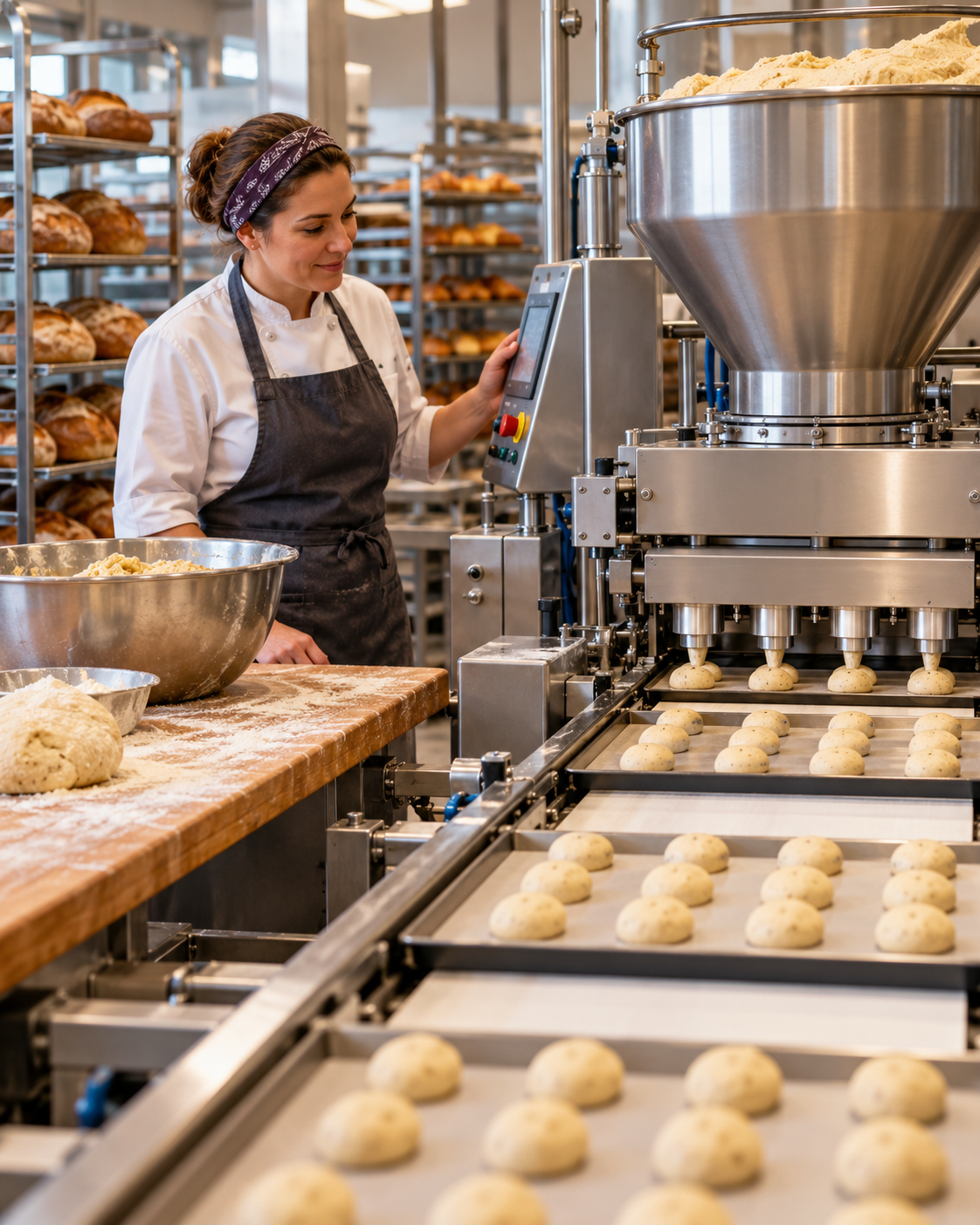
Cause and effect
A more efficient process may reduce the time or resources needed to produce each unit. This can lower operating costs or increase output, which may improve profitability or allow the business to respond to demand more quickly.
Marketing innovation
Changing how the business reaches and persuades customers
Marketing innovation involves introducing a new or significantly improved way of promoting, presenting, packaging, pricing or selling a product or service.
The product itself may remain unchanged. What changes is how customers discover it, understand its value or are encouraged to buy it.
The examples below show how businesses can innovate in the way they attract attention, communicate value and encourage purchases.
How to recognise it
- Promotion, packaging, pricing or sales method changes.
- The aim is often to attract attention or improve customer response.
- The underlying product may remain the same.

Marketing change versus product change
New packaging or a new promotion can be marketing innovation even if the product inside is unchanged. If the features or performance of the product itself change, that is product innovation.
Service innovation
Changing the service or customer experience
Service innovation involves developing a new service or significantly improving how a service meets customer needs.
The innovation may improve convenience, access, personalisation, speed, flexibility or support. It is especially important in industries where the customer experience is a major part of the value being offered.
The examples below show how businesses can create new ways for customers to access, use or experience a service.
How to recognise it
- The service offered to the customer changes.
- Convenience, access or customer experience improves.
- The innovation may be digital even when no physical product is involved.

Service innovation versus process innovation
If the customer receives a new or improved service, it is service innovation. If the business mainly changes its internal method of producing or delivering something, it is process innovation. Some real innovations can involve both.
Comparing the five types
Ask: what part of the business has changed?
| Type | What changes? | Simple clue | Example |
|---|---|---|---|
| Product | The physical good or its features | “The product itself is different.” | A phone with a significantly improved battery. |
| Process | How something is produced or delivered | “The method is different.” | A warehouse using automated stock scanning. |
| Marketing | Promotion, packaging, pricing or sales approach | “The way customers are persuaded has changed.” | A new subscription pricing model or influencer campaign. |
| Service | The service or customer experience | “The customer receives a different service.” | Virtual personal training or 24/7 app support. |
One innovation can fit more than one type
Real businesses often combine several types of innovation. For example, an online ordering app may be a service innovation because it improves convenience for customers and a process innovation because it changes how orders move through the business. In questions, focus on the part of the innovation described most clearly in the scenario.
Useful Australian reference: business.gov.au – Innovation in your business
🎧 Prefer listening?
If you prefer listening to the content in podcast format:
🎥 Prefer watching?
If you prefer watching the content in video format:
🧑🏫 Class Activities
Hands-on activities
These activities are designed to help you apply the full content to real businesses through research, decision-making and practical classroom tasks.
How this section could be used: teachers could place students into small groups and allocate different activities, ask students to complete one or two activities each week, or use the activities at the end of each syllabus point so groups can take turns completing and presenting one task to the class. Activities can also be used as extension work, revision, or as a starting point for short class discussions.

1. Innovation Detective
Your group receives eight business changes. For each one, identify whether it is product, process, marketing or service innovation and explain the evidence that led to your choice.
- A bakery installs automated dough-mixing equipment.
- A bank introduces secure 24/7 in-app support.
- A sports brand develops a shoe using a new recycled material.
- A fashion label begins selling through live-stream shopping events.
- A gym launches virtual personal training.
- A retailer uses RFID to track stock through its warehouse.
- A phone company significantly improves camera performance.
- A food brand introduces interactive packaging with QR-linked offers.
Finish with: choose two scenarios that could reasonably involve more than one type and explain which type is the best answer based on what the scenario emphasises.
2. Reinvent the School Canteen
The school canteen has long queues, food waste, limited healthy choices and students who often run out of time before sport or clubs.
Develop one realistic innovation for each of the four types:
- Product: change the food or physical product.
- Process: change how orders are prepared or delivered.
- Marketing: change how offers are promoted, packaged or priced.
- Service: change the customer experience or access.
For each idea, explain the problem it solves. Rank the four ideas from strongest to weakest and justify your top choice using likely effects on customers, costs and efficiency.
3. Incremental or Disruptive?
Choose one familiar industry such as music, transport, food delivery, fitness, banking, retail or entertainment.
- Find one clear example of incremental innovation.
- Find one innovation that significantly changed how customers access or use the industry.
- Explain why the first example is incremental.
- Explain why the second had a much larger disruptive effect.
- Identify one established business that had to respond to the larger change.
Presentation: create a two-column “before and after” comparison and deliver a two-minute explanation.
4. Streetwear Innovation Challenge
A small Perth streetwear brand has steady sales but wants to grow. It sells basic T-shirts through one physical store and posts occasional product photos on social media.
- Develop one product innovation.
- Develop one process innovation.
- Develop one marketing innovation.
- Develop one service innovation.
- For each, explain exactly what changes and what problem it addresses.
- Recommend which innovation should be introduced first and justify your decision.
5. One Business, Four Innovations
Your group manages a local fitness business. Customer numbers are stable, but competition is increasing.
- Create one product innovation.
- Create one process innovation.
- Create one marketing innovation.
- Create one service innovation.
- For each, predict one benefit and one possible difficulty.
- Decide which innovation is most likely to improve competitiveness and explain why.
6. Real Business Innovation Audit
Choose a real business your group knows well, such as Apple, Canva, Netflix, Nike, McDonald’s, a supermarket, a local café or another approved business.
- Find one real example of innovation used by the business.
- Classify it as product, process, marketing or service innovation.
- Explain the evidence for your classification.
- Decide whether it is mainly incremental or has created a much larger disruptive effect.
- Explain the customer need or business problem it addressed.
- Explain one likely effect on competitiveness, costs, customer experience or growth.
Output: present the audit using one slide or one A4 visual with a maximum of 100 words.
✍️ Short Answer Questions
Practice questions
Answer each question before opening the sample answer. Marks are based on the command term and the number of separate points requested.
Show sample answer
Innovation is the introduction of a new or improved product, service, process or marketing method that creates value or improves how the business operates.
Show sample answer
Incremental innovation involves smaller ongoing improvements to something that already exists. Disruptive innovation creates a much larger change that challenges established ways of operating and can alter customer behaviour or reshape a market.
Show sample answer
Product innovation involves creating a new physical product or meaningfully improving its features, materials, design or performance. Process innovation involves changing how a product or service is produced, handled or delivered to improve efficiency, cost, speed, safety or consistency.
Show sample answer
A bakery could use process innovation by introducing automated mixing and portioning equipment. This would allow the bakery to produce goods more quickly and consistently while reducing labour time and ingredient waste. As a result, the cost of producing each item may fall, increasing the bakery’s profit margin or allowing it to produce and sell a greater volume using the same resources.
Show sample answer
A live-stream fashion campaign is a marketing innovation because it changes how the business promotes and sells its clothing rather than changing the clothing itself. This gives customers a new way to discover products, interact with the brand and purchase items during the promotion. As a result, the brand may reach more potential customers and generate additional sales without needing to redesign the underlying product.
Show sample answer
Service innovation changes or improves the service the customer receives, such as a gym introducing virtual personal training. This can improve convenience or access for customers because they can use the service in a new way. Process innovation, however, changes how the business produces or delivers its output, such as using automated scheduling to organise bookings more efficiently. As a result, service innovation mainly changes the customer offering, while process innovation mainly changes the method used to operate or deliver it.
Show sample answer
Introducing an online pre-order system could allow customers to place orders before arriving at the café. This may shorten queues and waiting times, improving customer satisfaction and allowing more customers to be served during busy periods. The system could also send orders directly into a more organised preparation sequence. This may reduce errors and improve workflow, lowering wasted time while increasing the café’s sales capacity. Overall, the innovation could strengthen competitiveness by improving both the customer experience and operational efficiency.
Show sample answer
Advantages: First, incremental innovation can improve quality, convenience or efficiency without forcing an established business to completely replace a successful product or process. Second, smaller improvements usually require less investment and may expose the business to less risk than a major innovation.
Disadvantages: First, small improvements may not be enough when technology or customer expectations are changing rapidly. Second, a competitor that introduces a much larger innovation may make the established business’s offer less attractive, even if that offer has been gradually improved.
Show sample answer
I recommend service innovation. The gym could introduce live virtual personal training or on-demand classes because this changes the service customers receive and gives them greater flexibility. In this case, customers specifically want to train from home as well as at the gym, so the innovation directly responds to the identified need. As a result, the gym may improve convenience, retain members who cannot always attend in person and attract customers who value flexible access.
Show sample answer
Product innovation: one advantage is that new materials, designs or features could make the clothing more attractive and differentiate the brand from competitors. However, one disadvantage is that developing and stocking new products may increase design, production and inventory costs, creating greater financial risk.
Marketing innovation: one advantage is that new promotional channels, packaging or pricing methods could expose the existing range to more potential customers without requiring a complete product redesign. However, one disadvantage is that stronger promotion may have little effect if customers do not actually value the clothing being offered.
Judgement: the best choice depends on why sales are weak. If customers value the products but awareness is low, marketing innovation should be prioritised because the main problem is reaching customers. If research shows the clothing itself is not competitive, product innovation is more suitable because the offer must improve before stronger promotion is likely to generate sustainable sales growth.
🃏 Flashcards
Card 1 of 12
🎮 Revision Games
💰 BME Millionaire
Climb the prize ladder by classifying innovation categories, types and realistic business examples.
🧪 Innovation Lab
Diagnose twelve business changes and identify the innovation type that best fits each scenario.
⚡ 60 Second Showdown
A rapid-fire sprint through definitions, categories, types and business scenarios.
Biz Fact: The Post-it Note grew from an adhesive that was weaker than originally intended. 3M scientist Spencer Silver developed the unusual adhesive, and Art Fry later connected it to a practical use. The product launched nationally in the United States in 1980.