
General U2.05 - Legal Requirements for Operating SMEs
Overview
Dotpoint 5: legal requirements for operating small to medium enterprises (SMEs), including sole traders and partnerships.
Businesses operating in Australia must meet a range of legal and government reporting requirements. These requirements can apply to SMEs operating under different business structures, including sole traders and partnerships.
This dotpoint focuses on two important taxation and reporting requirements that many SMEs may need to understand and meet when operating in Australia:
1. Goods and Services Tax (GST)
2. Business Activity Statement (BAS) reporting
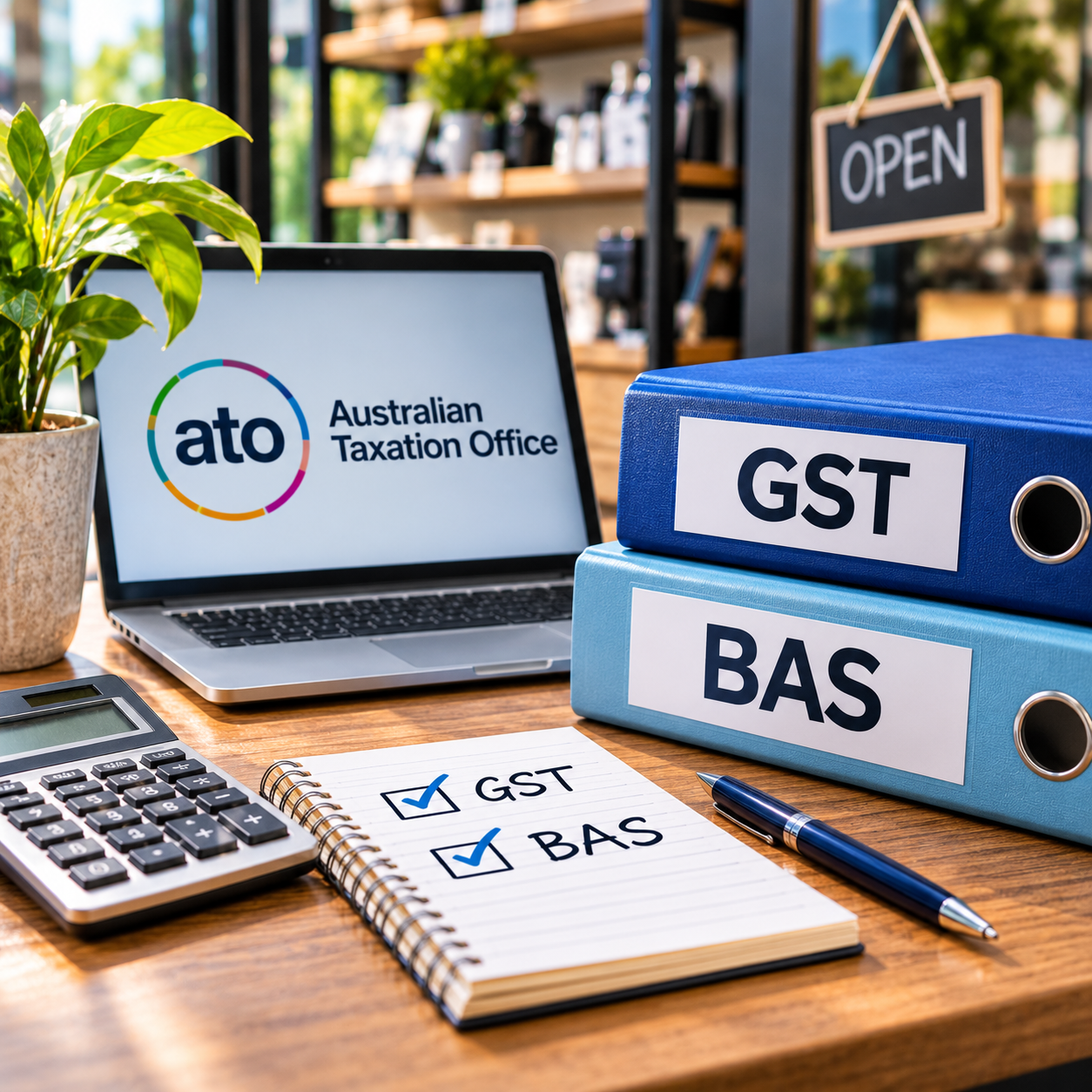
⚖️ Understanding the legal requirements
Legal responsibilities continue after a business opens
Businesses must meet a range of legal and government reporting requirements, both when they are first established and throughout their operations.
For many small and medium enterprises (SMEs), these responsibilities include determining whether they need to register for Goods and Services Tax (GST) and, once registered, correctly reporting their GST obligations through a Business Activity Statement (BAS).
These requirements help ensure businesses meet their taxation and reporting obligations and remain compliant with Australian law.
Sole traders and partnerships
👤 Sole trader
A sole trader operates the business as an individual.
If the business is required to register for GST, the sole trader must meet the relevant GST and BAS obligations for the business.
👥 Partnership
A partnership involves two or more people carrying on a business together.
The partnership has its own ABN and, where required, the partnership registers for GST and meets the relevant reporting obligations.
Business structure does not remove GST responsibilities
Whether a business operates as a sole trader or partnership, it must still understand and follow the GST rules that apply to its operations.
Choosing a particular business structure does not allow an owner to avoid their GST responsibilities. Both sole traders and partnerships must determine whether they need to register for GST and, if registered, correctly collect, report and pay GST.
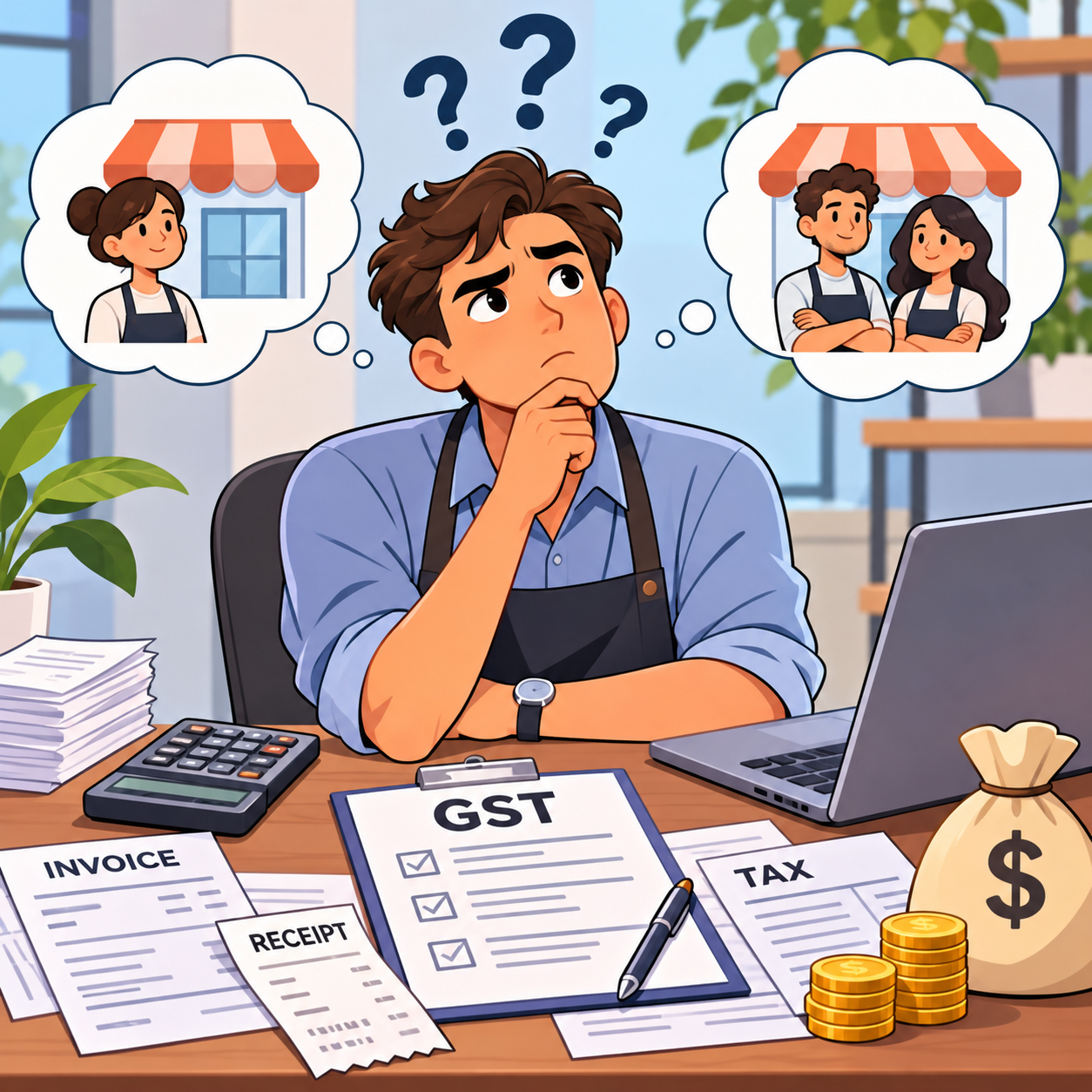
💰 Goods and Services Tax (GST)
What is GST?
Goods and Services Tax (GST) is a tax of 10% added to the price of most goods and services sold or consumed in Australia.
GST is a consumption tax. This means the tax is connected to people purchasing goods and services rather than directly to the profit earned by a business.
A business registered for GST generally collects GST from customers when it makes taxable sales and later reports this GST to the Australian Taxation Office (ATO).
When did Australia introduce GST?
GST began in Australia on 1 July 2000 at a rate of 10%.
It replaced the previous wholesale sales tax system and created a broader tax on the consumption of goods and services.
When consumers purchase many goods and services, part of the price they pay is GST.
Is GST charged on everything?
No. Some goods and services are GST-free.
GST applies to most goods and services, but not every sale has GST added to it.
Some goods and services are classified as GST-free. This means the customer does not pay GST on that sale.
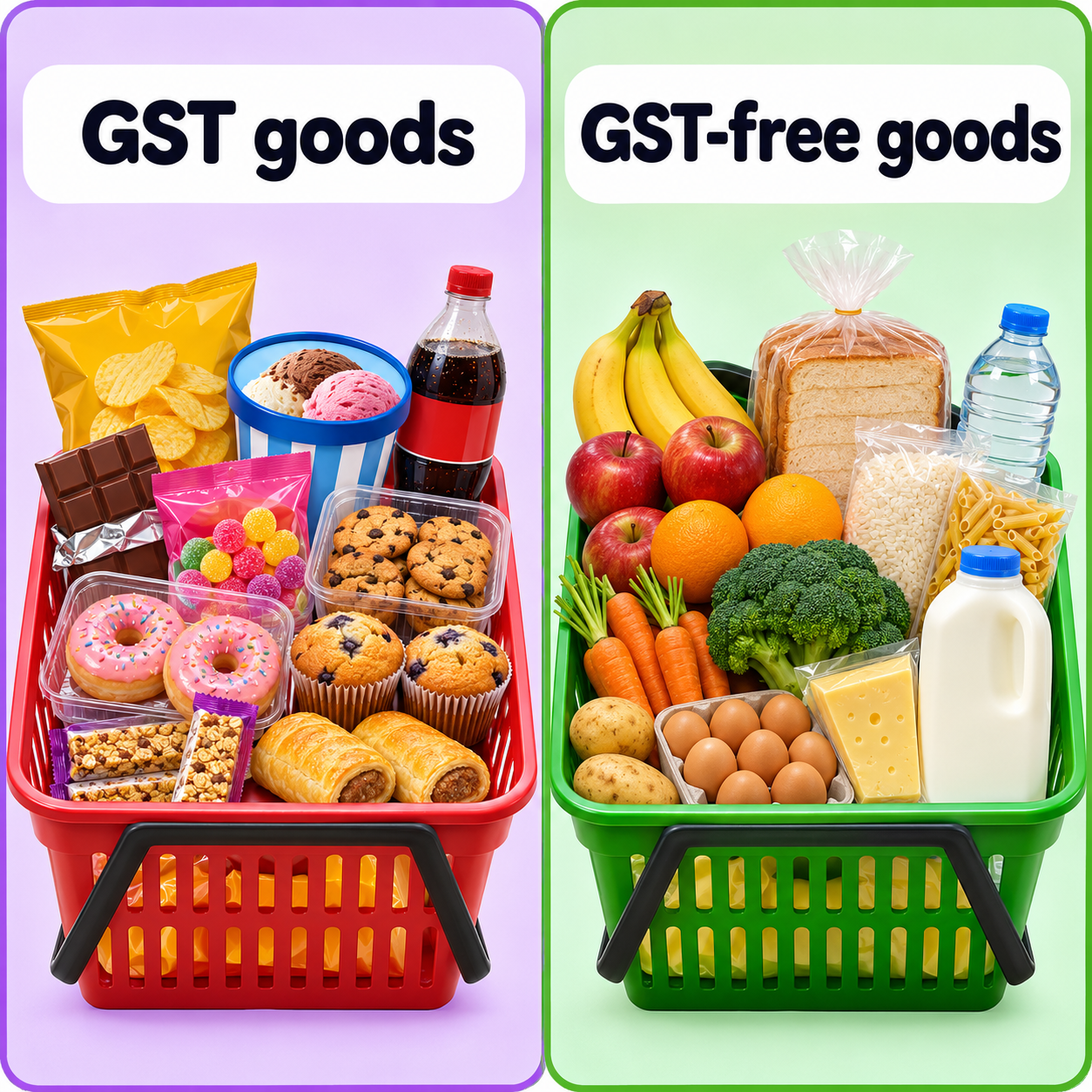
🍎 Basic food
Many basic foods are GST-free, including fresh fruit and vegetables, bread and unflavoured milk.
🩺 Some health services
Many eligible medical and health services are GST-free.
🎓 Some education
Certain education courses and related services can be GST-free.
🌏 Some exports
Some goods and services exported from Australia can be GST-free.
🍫 Basic food does not mean all food
Not everything sold in a supermarket is GST-free.
Many basic foods are GST-free, while products such as confectionery and many savoury snack foods are generally taxable and can include GST.
For example, plain bread and fresh fruit are generally GST-free, while chocolate and many packaged snack foods generally include GST.
The GST treatment therefore depends on the type of product being sold.
When does a small business need to register for GST?
💵 The $75,000 turnover threshold
Most businesses generally need to register for GST when their annual turnover, or sales revenue, reaches $75,000 or more.
The ATO refers to the turnover used for this test as GST turnover. It is based on the business's gross sales used for GST purposes, excluding GST itself.
The important distinction is that the $75,000 threshold relates to sales revenue or turnover, not profit.
Below $75,000
GST registration is generally not compulsory.
$75,000 or more
The business will generally need to register for GST and begin meeting its GST reporting responsibilities.
What about voluntary registration?
A business with turnover below $75,000 may choose to register for GST even though registration is not compulsory.
If it chooses to register, it must then follow the GST rules that apply to registered businesses, including collecting GST on taxable sales and completing the required GST reporting.
What happens once a business is registered?
1. Customer buys
The customer purchases a taxable good or service.
2. Business collects GST
The registered business includes GST in the price charged.
3. Business reports GST
The business later reports its GST information to the ATO.
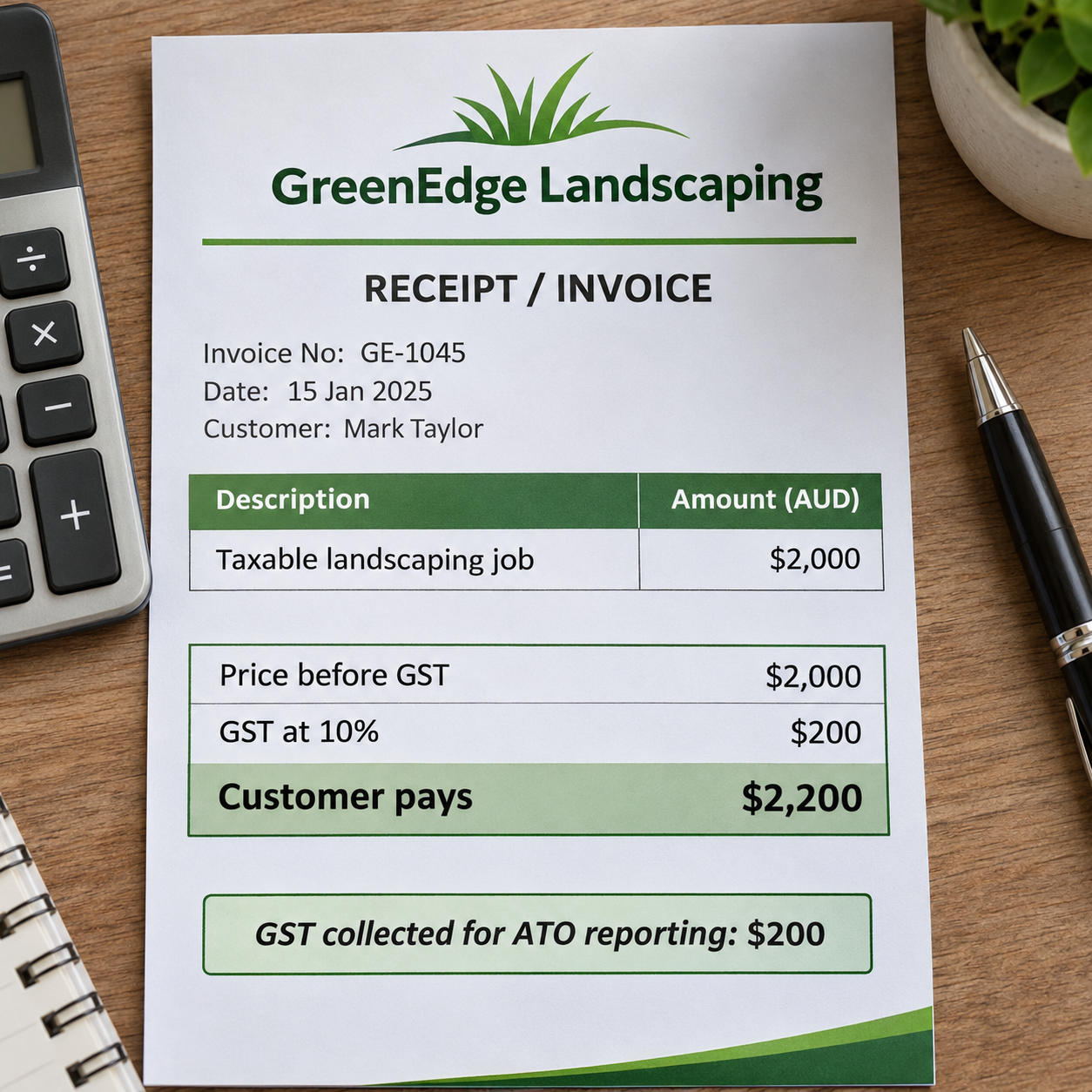
🪴 Example: GreenEdge Landscaping
GreenEdge Landscaping is registered for GST. It completes a taxable landscaping job priced at $2,000 before GST.
The customer pays $2,200. The extra $200 is GST collected by GreenEdge Landscaping and must be included when the business reports its GST information to the ATO.
What are GST credits?
GST credits recognise GST the business has already paid
A registered business does not only collect GST from customers. It may also pay GST when purchasing eligible goods and services for the business.
For example, a cabinet maker may pay GST when purchasing tools, equipment or eligible business supplies.
GST included in eligible business purchases can generally be claimed as a GST credit.
The credit is taken into account when determining how much GST the business owes the ATO.
GST collected
The business collects $600 GST from customers.
GST credit
The business has already paid $200 GST on eligible purchases.
🧮 Putting it together
The business has collected $600 GST from customers but has already paid $200 GST on eligible business purchases. Taking the $200 credit into account leaves a net GST amount of $400.
The GST story in one sentence
A GST-registered business collects GST on taxable sales, records GST paid on eligible business purchases, and reports these amounts to the ATO.
🧾 Business Activity Statement (BAS) reporting
What is a BAS?
A Business Activity Statement (BAS) is a report businesses use to provide certain taxation information to the Australian Taxation Office.
A GST-registered business has been making sales, collecting GST and keeping records of GST paid on eligible business purchases. The BAS is where this information is brought together and reported.
How does BAS connect to GST?
During the reporting period
🏪 The business makes sales.
💰 It collects GST on taxable sales.
📦 It buys business supplies and may pay GST.
🧾 It keeps records of these transactions.
At reporting time
The business uses its records to complete its BAS.
The BAS tells the ATO about its sales, GST collected and eligible GST credits.
GST is the tax. BAS is the report.
GST is the tax connected to taxable goods and services.
BAS is the report used by a registered business to provide the ATO with its GST information and certain other taxation information.
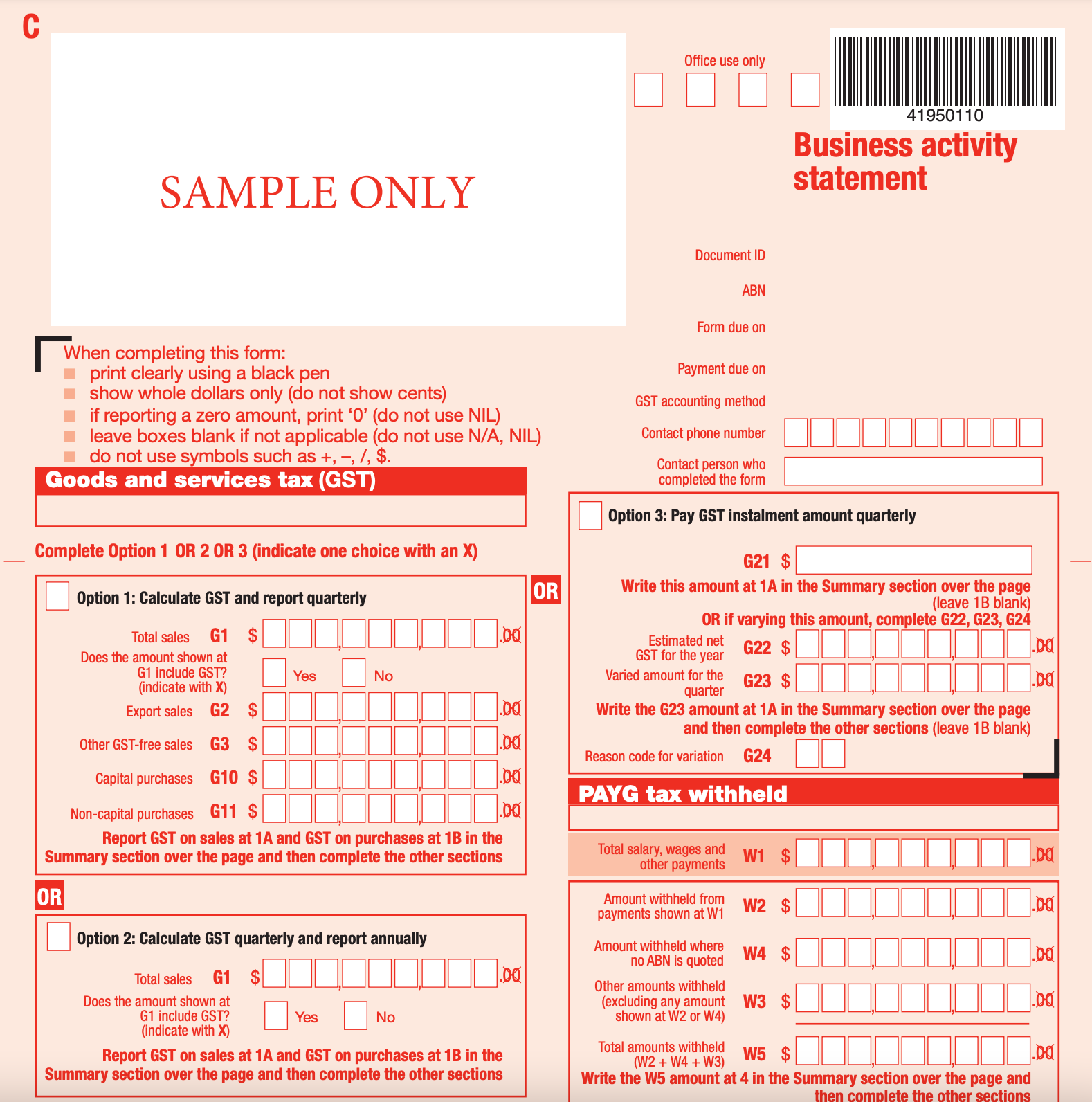
What are G1, 1A and 1B?
They are simply sections of the BAS
The labels G1, 1A and 1B are not separate taxes.
They identify different places on the BAS where the business reports particular information.
Total sales
Think: How much did the business sell?
GST on sales
Think: How much GST did the business collect?
GST on purchases
Think: How much eligible GST did the business pay on its purchases?
🏄 Example: Coastal Board Repairs
Coastal Board Repairs has annual turnover above $75,000 and is registered for GST. During one reporting period it records:
When completing its BAS, Coastal Board Repairs reports its total sales at G1, GST collected on sales at 1A and eligible GST credits at 1B.
What happens next?
The business has collected $2,100 GST from customers and has $650 of eligible GST credits.
The difference is $1,450.
This information helps determine the business's GST position for the reporting period.
How often is BAS reported?
Reporting frequency can vary
A business may report GST monthly, quarterly or annually depending on its circumstances and reporting arrangements.
Many small businesses report quarterly.
A BAS is separate from the business owner's annual income tax return.
Why does record keeping matter?
🧾 Sales records
Accurate sales records help the business calculate total sales and GST collected.
📦 Purchase records
Invoices and purchase records help identify eligible GST credits.
The BAS process in plain English
Keep records → calculate the GST figures → enter the figures into the BAS → lodge the BAS with the ATO.
🎧 Prefer listening?
Listen to the GST and BAS podcast to revise the key concepts.
🎥 Prefer watching?
Watch the GST and BAS video to reinforce how the two requirements work together.
🧑🏫 Class Activities
Hands-on activities
These activities are designed to help you apply the full content to real businesses through research, decision-making and practical classroom tasks.
How this section could be used: teachers could place students into small groups and allocate different activities, ask students to complete one or two activities each week, or use the activities at the end of each syllabus point so groups can take turns completing and presenting one task to the class. Activities can also be used as extension work, revision, or as a starting point for short class discussions.

1. GST or GST-Free?
Research the GST treatment of:
- fresh apples
- plain bread
- milk
- chocolate
- potato chips
- soft drink
Output: create a two-column table headed GST-Free and GST Applies.
2. GST Registration Decision
Consider:
- a gardener with annual turnover of $52,000
- a clothing partnership with annual turnover of $81,000
- a photographer expecting annual turnover of $77,000
Decide whether each business would generally need to register for GST.
Output: complete a table headed Business, Register? and Reason.
3. Follow the GST
A furniture business sells a desk for $1,100 including GST.
- identify the price before GST
- identify the GST
- identify who pays the GST
- identify who collects it
- identify who receives the GST information
Output: draw a flow diagram showing Customer → Business → ATO.
4. Understand the GST Credit
A registered business collects $900 GST from customers and has $250 of eligible GST credits.
- identify the GST collected
- identify the GST credit
- calculate the difference
- explain why the credit reduces the GST position
Output: show the calculation and provide a short explanation.
5. Build a Simple BAS
A mobile dog-grooming business has annual turnover of $86,000 and is registered for GST.
During one reporting period it records:
- total sales of $24,200
- GST on taxable sales of $1,900
- eligible GST credits of $520
Place the correct figures into G1, 1A and 1B and calculate the difference between the GST collected and GST credits.
Output: create a three-box simplified BAS.
6. GST and BAS Explained
Imagine you are explaining GST and BAS to someone who has just opened a small business.
Your explanation must cover:
- what GST is
- when GST registration is generally required
- what the business collects from customers
- what GST credits are
- how BAS connects to GST
Output: prepare a three-slide presentation titled GST and BAS Explained Simply.
✍️ Short Answer Questions
Practice questions
Answer each question before opening the sample answer. Marks are based on the command term and the number of separate points requested.
Show sample answer
Goods and Services Tax (GST) is a 10% tax on most goods and services sold or consumed in Australia. It is a consumption tax that is generally included in the price of taxable goods and services.
Show sample answer
Many basic food items, such as fresh fruit, plain bread and unflavoured milk, are GST-free. Certain eligible medical and health services may also be GST-free.
Show sample answer
Most businesses generally need to register for GST when their annual turnover reaches $75,000 or more. The business's turnover of $85,000 is above this threshold. As a result, the business would generally need to register for GST so it can correctly collect GST on taxable sales and meet its GST reporting obligations.
Show sample answer
A registered business may pay GST when purchasing eligible goods and services for business use. This GST can generally be claimed as a GST credit and deducted from the GST collected on taxable sales. As a result, the GST credit reduces the net amount of GST the business may need to pay to the ATO.
Show sample answer
A Business Activity Statement (BAS) is a report businesses use to provide certain taxation information to the Australian Taxation Office. For a GST-registered business, it can include information about total sales, GST collected on sales and eligible GST credits.
Show sample answer
A GST-registered business collects GST on taxable sales and keeps records of GST paid on eligible business purchases. These figures are then reported through the business's BAS. As a result, the BAS allows the business to communicate its GST position to the ATO and meet its GST reporting obligations.
Show sample answer
G1 represents total sales, 1A represents GST on sales and 1B represents GST on purchases.
Show sample answer
The business needs accurate sales and purchase records to identify its total sales, GST collected on taxable sales and eligible GST credits. These figures are required when completing the BAS. As a result, accurate records reduce the risk of the business reporting incorrect GST information to the ATO.
Show sample answer
One advantage is that GST and BAS requirements encourage the business to maintain accurate and current records of its sales and purchases. This can give the owner clearer information about the transactions occurring in the business.
One disadvantage is that calculating GST, maintaining supporting records and preparing BAS reports can increase the administrative workload of a small-business owner.
Overall, GST and BAS requirements create additional administrative responsibilities, but they are manageable when the business maintains reliable records and regularly updates its financial information. The additional administration is therefore likely to be less significant for a business with an organised record-keeping system.
🃏 Flashcards
Card 1 of 11
🎮 Revision Games
💰 GST & BAS Millionaire
Climb the ladder by mastering GST, registration, GST-free sales, credits and BAS reporting.
🧾 BAS Builder
Build a BAS step by step from realistic small-business transactions.
⚡ 60 Second Showdown
Race through mixed GST and BAS decisions while building streak multipliers.
Biz Fact: The Australian GST was introduced on 1 July 2000 at a rate of 10%.