
U1.19 — Competitor Profiling
Overview
Dotpoint 19: The use of competitor profiling to determine competitor product range, prices and marketing strategies
Competitor profiling is when a business systematically studies its competitors to understand what they sell, how much they charge, and how they attract customers. Instead of guessing, a business builds a clear picture of the competitive landscape and uses it to make smarter marketing decisions.
Profiling helps a business work out three key things about competitors: product range, prices, and marketing strategies.
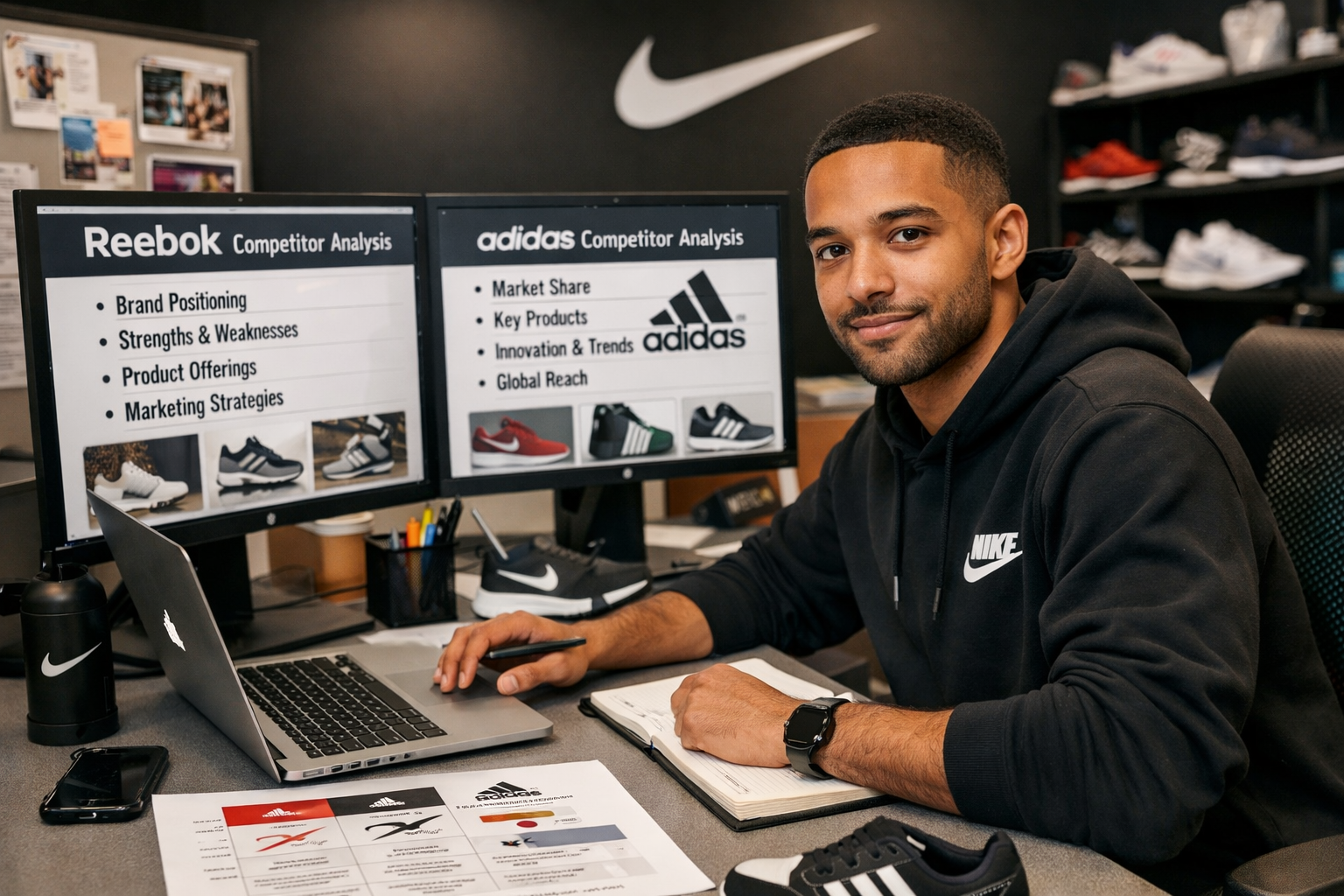
🧠 What is Competitor Profiling?
Competitor profiling is the process of collecting and analysing information about competitors to understand their product range, prices, and marketing strategies, so a business can make better marketing decisions.
In the next few sections, the profile is broken into the three areas businesses compare most: what competitors offer, how they price, and how they promote.
📦 Competitor Product Range
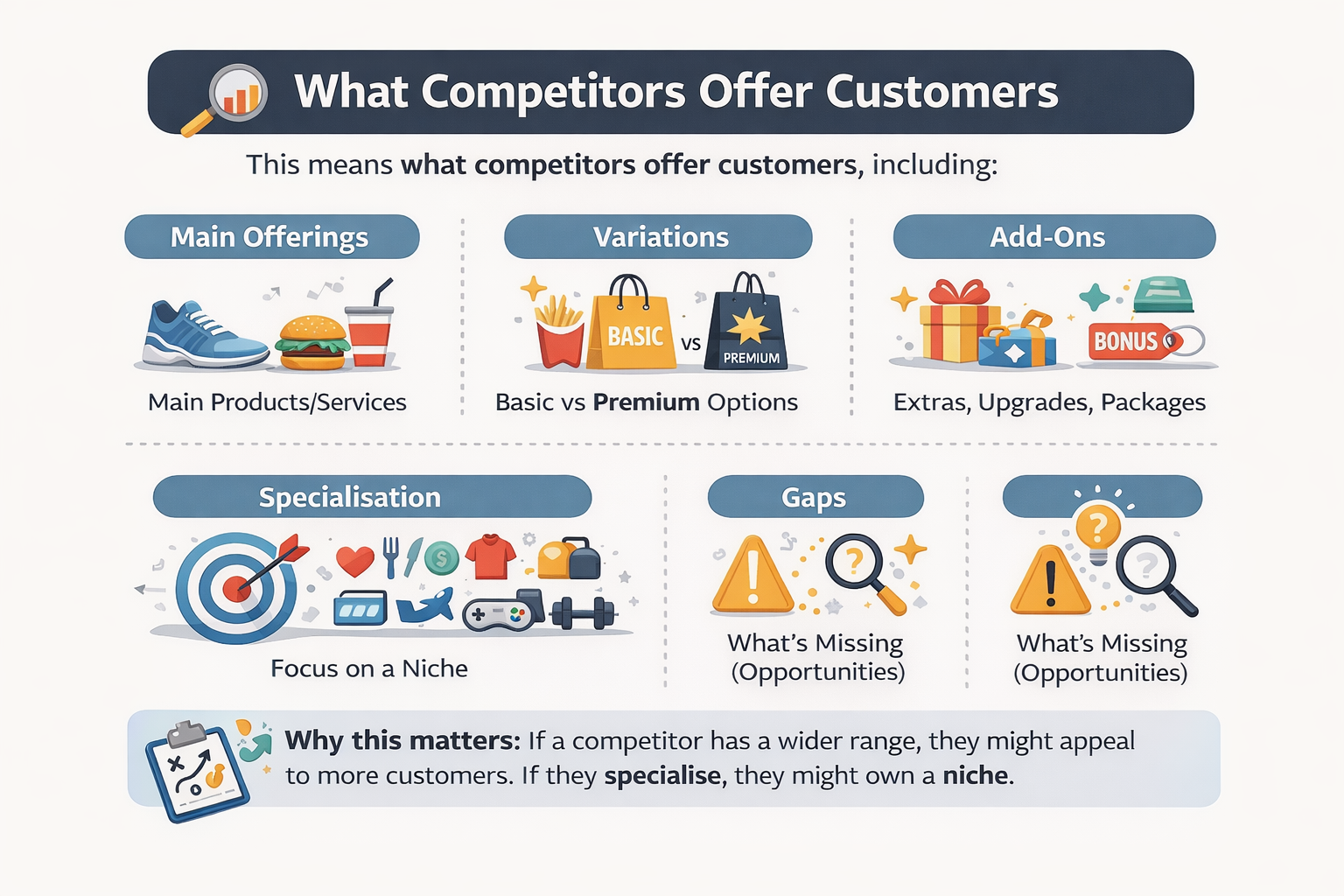
This means what competitors offer customers, including:
- The main products/services
- Variations (basic vs premium options)
- Add-ons (extras, upgrades, packages)
- Specialisation (what niche they focus on)
- Gaps (what they don’t offer — which might be an opportunity)
Why this matters: If a competitor has a wider range, they might appeal to more customers. If they specialise, they might own a niche.
💲 Competitor Prices
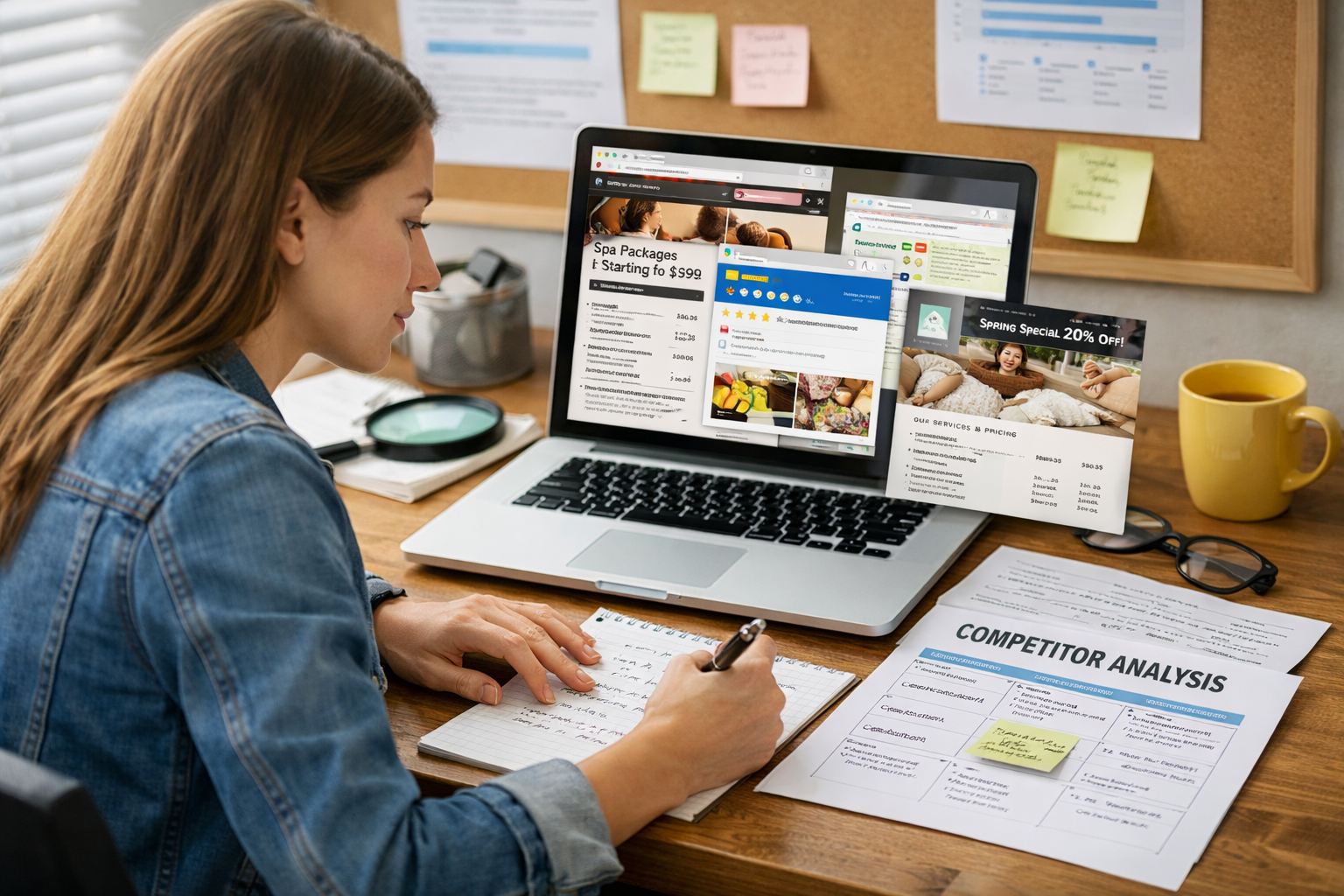
This means more than “cheap or expensive”. It includes:
- Their typical price points
- Discounts, bundles, memberships
- Pricing style (premium pricing vs value pricing)
- Extra fees (call-out fees, delivery fees, “from” prices)
- How transparent pricing is (clear online vs “quote only”)
Why this matters: Pricing influences how customers judge value. Premium prices require clear benefits, while lower prices require clear value without looking “cheap” or risky.
📣 Competitor Marketing/Promotion Strategies
This is how they attract customers and what they’re known for:
- Their main marketing channels (Google, Instagram, TikTok, flyers, referrals)
- Their key message (e.g., “fast”, “family-friendly”, “premium”, “cheap”, “trusted”)
- Their promotions (sales, limited offers, packages)
- Branding style (professional, trendy, simple, luxury)
- Reviews and reputation (Google rating, common complaints/praise)
Why this matters: It shows how they win customers — and what you must match, avoid, or beat.

🔍 How Businesses Gather Competitor Information
Competitor profiling usually uses secondary research (easy-to-access information) and sometimes primary research.
Common sources
- Competitor websites (service list, booking system, “from” prices)
- Google Business profiles (reviews, photos, hours, location)
- Social media (what they post, promotions, branding)
- Online ads (what keywords they target, what claims they make)
- Menus / brochures / price lists
- Mystery shopping (calling for quotes, asking about packages)
- Customer reviews and forums (what customers praise or complain about)
Important for students: this is legal and ethical research using public information — not spying.
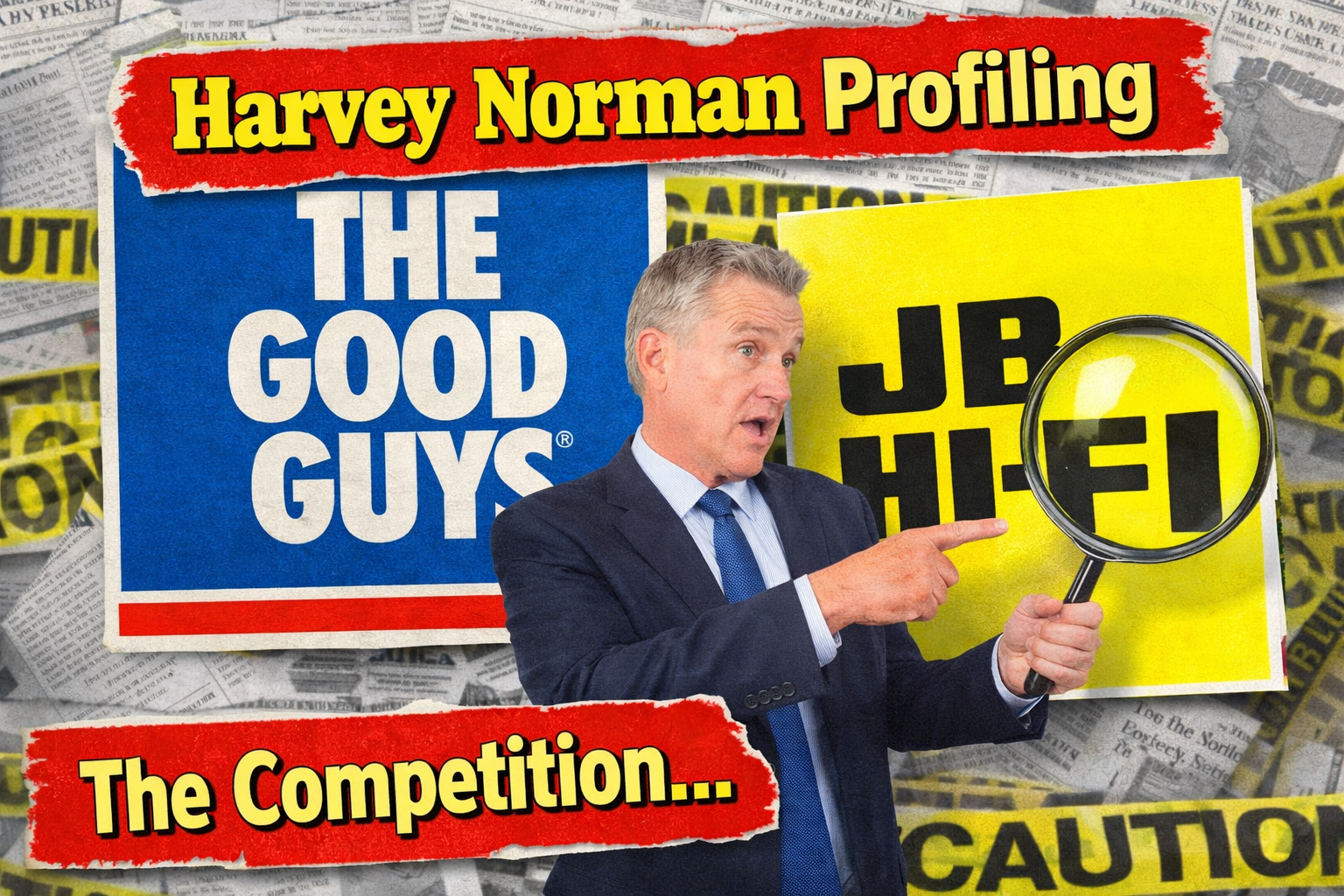
📍 Case Study — Harvey Norman Profiling JB Hi-Fi and The Good Guys
Imagine Harvey Norman is competing with JB Hi-Fi and The Good Guys in the electronics and appliances market. Harvey Norman builds competitor profiles to understand how these businesses win customers.
To keep the comparison clear, Harvey Norman profiles competitors across the three areas below: product, price, and promotion.
1) Product (range and offering)
- JB Hi-Fi: strong range in tech (TVs, laptops, phones, gaming), usually stocked in-store and online for quick purchase.
- The Good Guys: strong focus on appliances (fridges, washers, ovens) and often promotes “package” deals.
- Harvey Norman learns: tech buyers want fast access and variety, while appliance buyers value bundles and delivery/install options.
2) Price (positioning and deals)
- JB Hi-Fi: often positions itself as sharp-priced on tech and runs frequent sale events.
- The Good Guys: heavily uses “sale” messaging, price matching, and big-ticket discounts for appliances.
- Harvey Norman learns: customers compare prices quickly online, so “value” must be obvious and easy to justify.
3) Promotion (how they attract customers)
- JB Hi-Fi: bold branding, constant promos, strong online presence, email/SMS deals and big sales periods.
- The Good Guys: TV/radio style promo feel, heavy discount advertising, seasonal “events” and catalogue style promotions.
- Harvey Norman learns: competitors win attention through frequent promos and clear “deal” messaging.
Harvey Norman response (what changes based on profiling)
- Product decision: expand tech bundles (e.g., TV + soundbar), and make delivery/install add-ons clearer for appliances.
- Price decision: use price matching more visibly and offer clearer “bundle savings” to reduce comparisons.
- Promotion decision: run stronger campaign periods (EOFY, Black Friday), highlight finance options, and use more digital offers to match where customers are comparing.
- Positioning decision: compete on service + support (helpful advice, delivery, set-up) to justify price when not the cheapest.
Key takeaway: Competitor profiling helps Harvey Norman see exactly how competitors win customers, and then respond with product, price and promotion changes that make it more competitive.
🎧 Prefer listening?
If you prefer listening to the content in Podcast format:
🎥 Prefer watching?
If you prefer watching the content in video format:

Biz Fact: Uber didn’t just beat taxis — it profiled them and redesigned the experience (cashless payment, live tracking, driver ratings, and quicker booking) to remove the biggest customer pain points.