
U1.19 — Competitor Profiling
Overview
Dotpoint 19: The use of competitor profiling to determine competitor product range, prices and marketing strategies
Competitor profiling is the process of collecting and analysing information about competitors to understand their product range, prices and marketing strategies, so a business can make better marketing decisions.
Instead of guessing what competitors offer and how they attract customers, a business builds a clear picture of its competitive market.
This dotpoint focuses on three areas:
- Competitor product range
- Competitor prices
- Competitor marketing strategies
Businesses use this information to identify opportunities and make more informed decisions about their own products, prices and promotion.
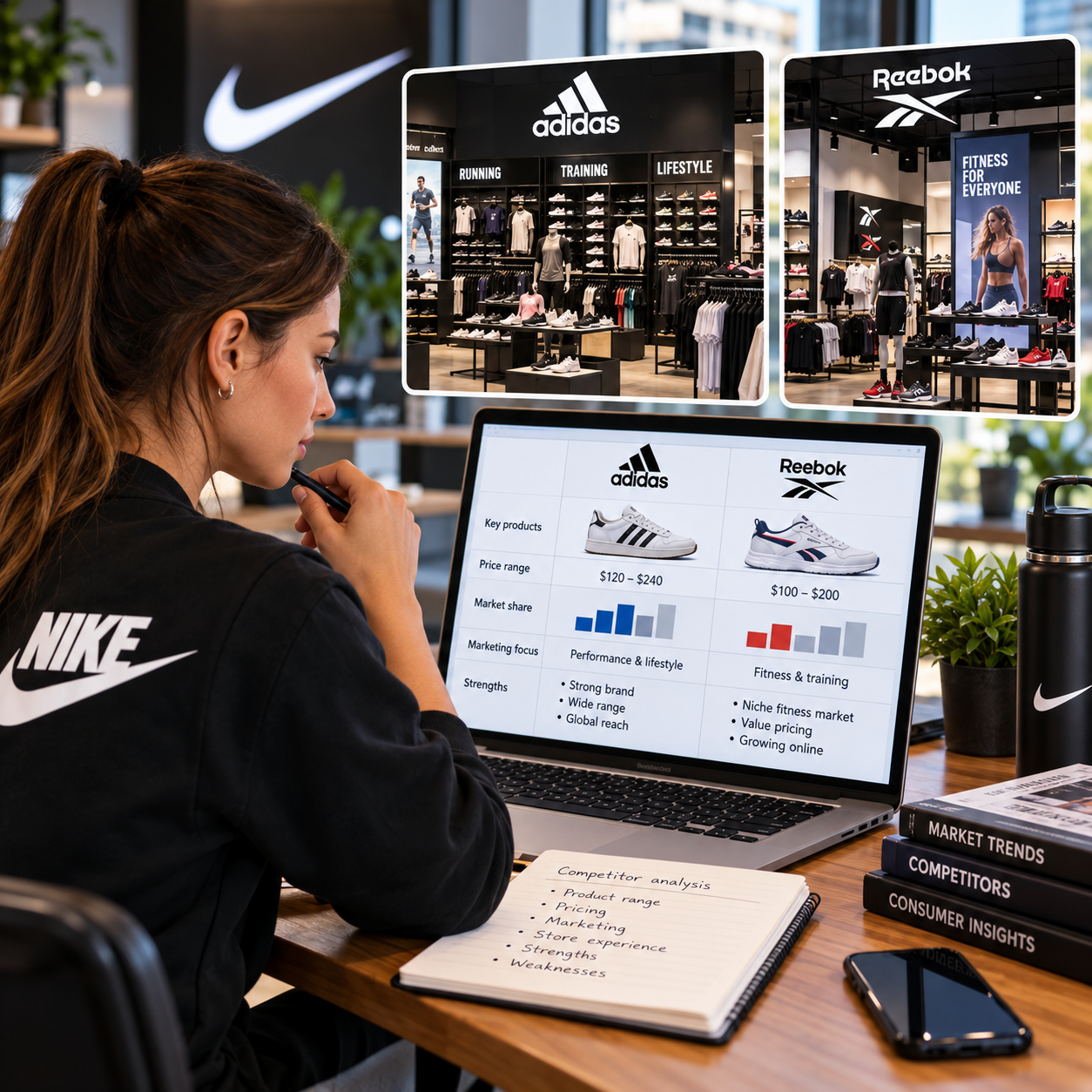
🧠 What is Competitor Profiling?
Competitor profiling is the process of collecting and analysing information about competing businesses, particularly their product range, prices and marketing strategies, to help a business make better marketing decisions.
A competitor profile summarises this information, allowing a business to compare itself with its competitors and identify opportunities to gain a competitive advantage.
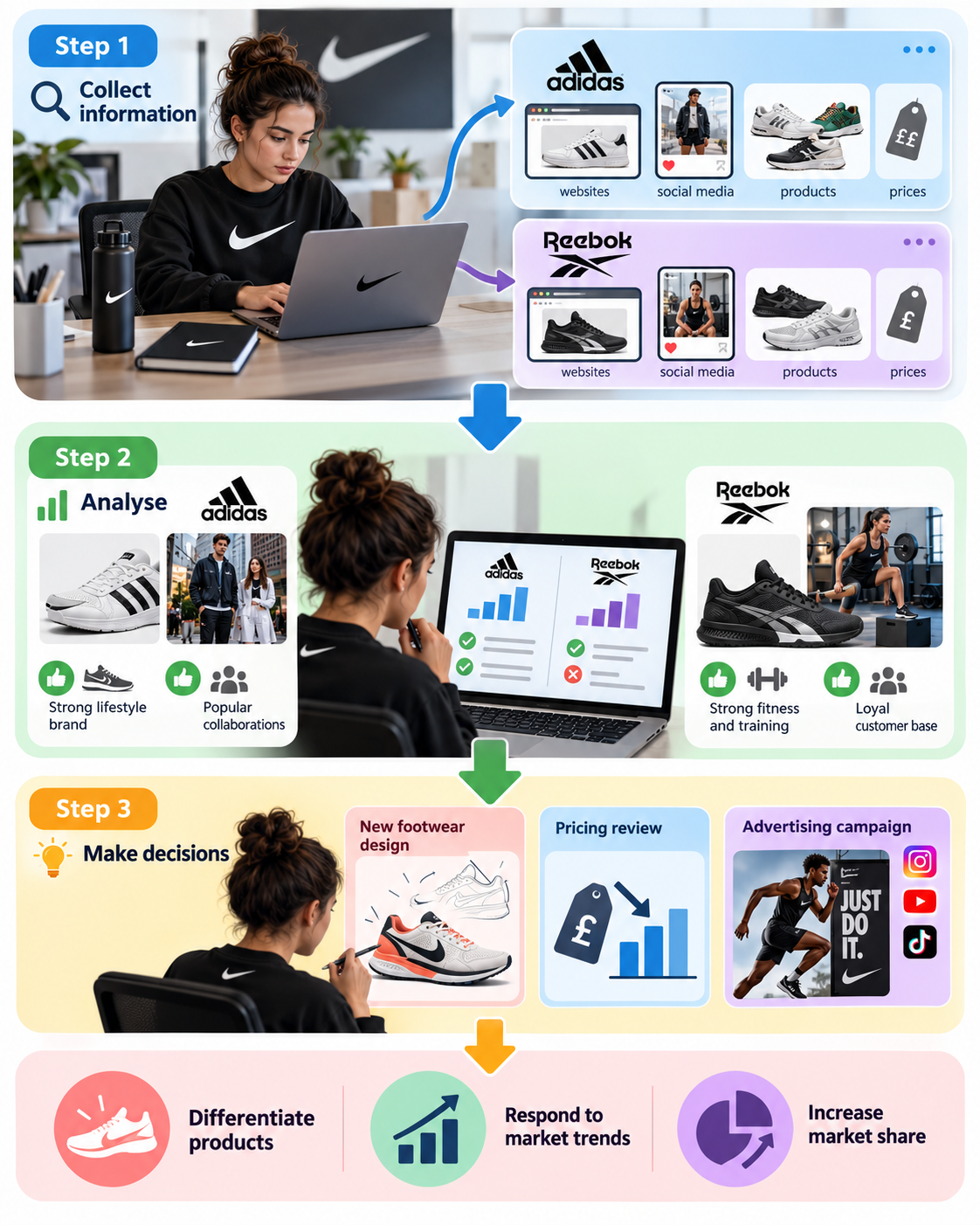
There are three main steps in competitor profiling: collect information, analyse the findings and use the profile to make business decisions.
1. Collecting Competitor Information
Businesses research competitors by examining three main areas:
What products or services competitors offer, including their features, quality and variety.
How much competitors charge, including discounts, special offers and pricing strategies.
How competitors attract customers through advertising, social media, promotions and branding.
Common sources of information
- Competitor websites: Product ranges, advertised prices and special offers.
- Social media and advertising: Marketing campaigns, promotions and branding.
- Customer reviews: What customers like and dislike about competitors.
- Mystery shopping: Visiting or contacting competitors to investigate their products, prices and customer service.
Most competitor profiling uses secondary research, such as publicly available websites, advertisements and reviews. However, businesses may also conduct primary research, such as mystery shopping.
Competitor research should always be conducted legally and ethically, without accessing confidential information.

2. Analysing the Information
Once information has been collected, the business compares its competitors to identify:
- Strengths: What competitors do well, such as offering lower prices or a wider product range.
- Weaknesses: Where competitors perform poorly, such as limited products or ineffective marketing.
- Market gaps: Products or services competitors do not offer, or customer needs they are not adequately meeting.
3. Using Competitor Profiles to Make Business Decisions
Businesses use the information to improve their own competitive position. This may involve:
- Product decisions: Introducing new products, improving quality or offering something competitors do not.
- Pricing decisions: Adjusting prices, introducing discounts or offering better-value packages.
- Marketing decisions: Developing advertising and promotions that highlight why customers should choose the business over its competitors.
Example – Nike Analysing Adidas and Reebok
A Nike marketing employee conducts competitor profiling to understand how Adidas and Reebok compete in the sportswear market.
Step 1 – Collect information
The employee examines Adidas's and Reebok's websites, product ranges, prices and social media advertising.
Step 2 – Analyse the information
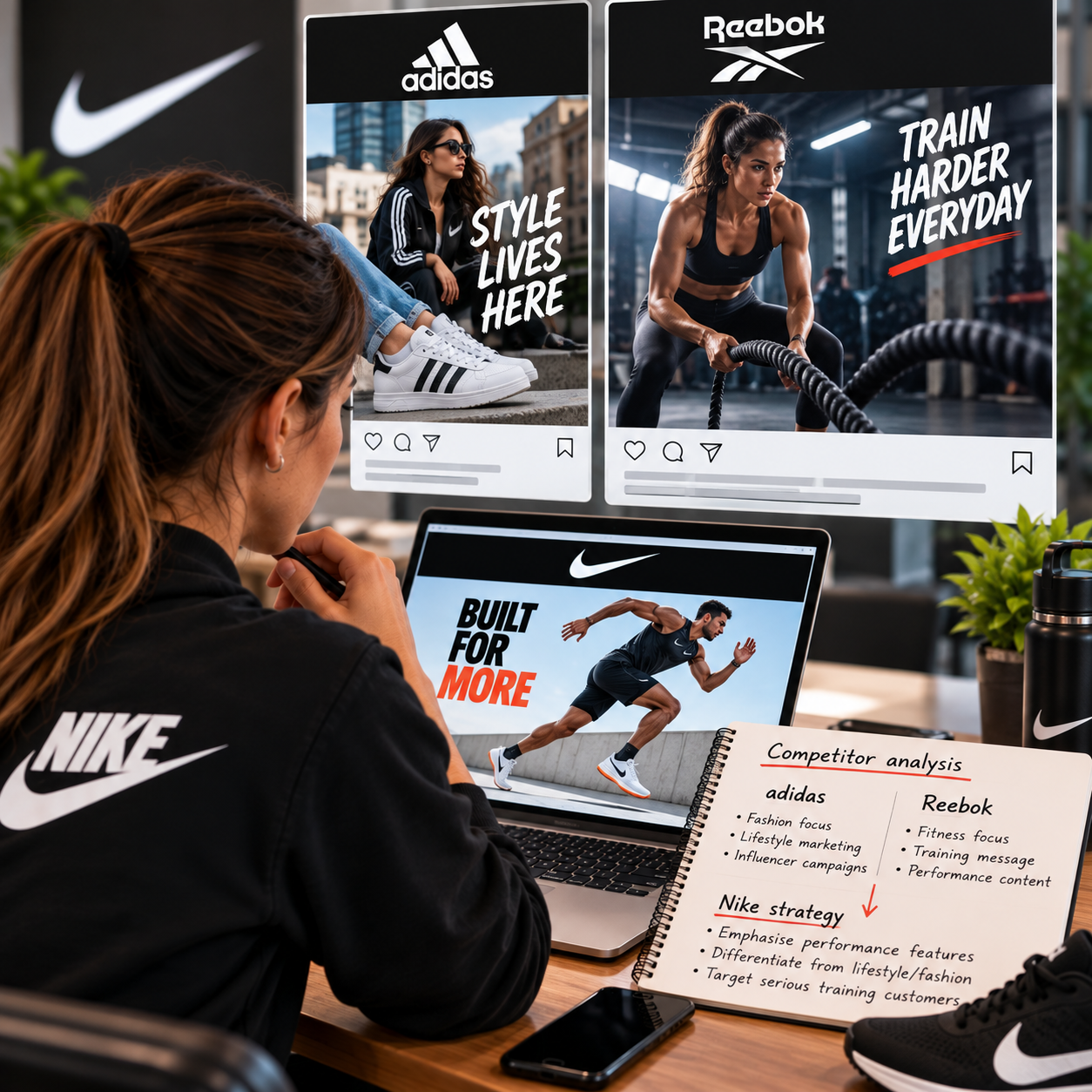
The employee identifies that Adidas promotes its lifestyle sneakers through fashion collaborations, while Reebok offers a range of fitness and training footwear. This helps Nike identify its competitors' strengths and potential opportunities in the market.
Step 3 – Make business decisions
Nike uses the findings to develop new footwear designs, review its pricing and create advertising campaigns that highlight the features of its own products.
By understanding its competitors, Nike can differentiate its products, respond to market trends and potentially increase its market share.
Example of how to write this in an exam
Competitor profiling involves collecting and analysing information about competitors' product ranges, prices and marketing strategies. For example, Nike may research Adidas's and Reebok's footwear, pricing and advertising through their websites and social media. This allows Nike to identify competitors' strengths, weaknesses and potential gaps in the market. Nike can then use this information to develop new products, adjust its prices or create targeted advertising campaigns. These decisions may help Nike improve its competitive position and increase its market share.
📦 Competitor Product Range
Competitor product range refers to the variety of products and services offered by a competing business, including different models, features and additional options.
Businesses compare their product ranges with those of competitors to identify strengths, weaknesses and gaps in the market.
What Do Businesses Compare?
- Product variety: The different types of products or services competitors sell.
- Product features and quality: How products differ in design, quality and functionality.
- Additional options: Extras, upgrades, accessories and product bundles.
- Gaps in the range: Products or services that competitors do not offer.
Why Is Comparing Product Ranges Important?
Comparing product ranges helps a business decide whether to:
- Expand its range by introducing products that competitors already offer.
- Differentiate its products by offering unique features, designs or better quality.
- Identify market gaps by introducing products or services that competitors do not currently provide.
These decisions can help a business attract new customers, better meet customer needs and gain a competitive advantage.
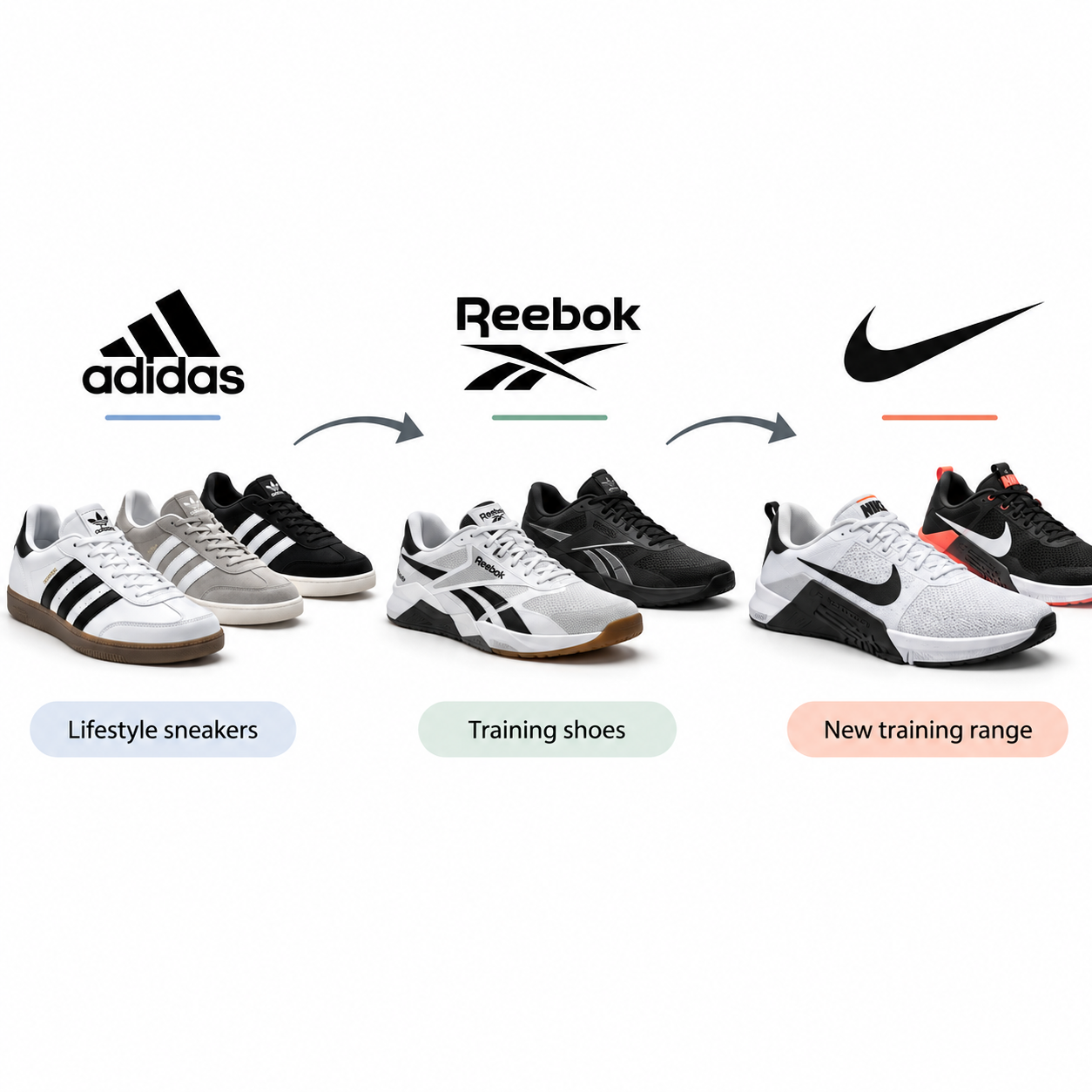
Example – Nike Analysing Adidas and Reebok
Nike examines the footwear ranges of Adidas and Reebok to compare their product variety, features and designs. It discovers that Adidas offers a wide range of lifestyle sneakers, while Reebok has a selection of fitness and training shoes. Using this information, Nike decides to expand its own training footwear range by introducing shoes with specialised features. This may help Nike attract new customers, differentiate its products and increase sales.
Example of how to write this in an exam
Competitor product range refers to the variety of products and services offered by competing businesses, including their features and additional options. For example, Nike may analyse Adidas's and Reebok's footwear ranges to identify differences in product variety and features. If Nike identifies an opportunity in the fitness footwear market, it could introduce new training shoes with specialised features. This may help Nike differentiate its products, attract more customers and gain a competitive advantage.
💲 Competitor Prices
Competitor prices are the amounts competing businesses charge for their products and services, including discounts, special offers and their overall pricing approach.
Businesses compare competitor prices to understand how their own prices and value compare with similar products in the market.
What Do Businesses Compare?
- Standard prices: How much competitors charge for comparable products and services.
- Discounts and promotions: Sales, introductory offers, coupons and limited-time deals.
- Pricing strategies: Whether competitors focus on lower prices, premium pricing or value-for-money packages.
- Additional charges: Delivery, installation, booking fees or other extras.
Why Is Comparing Competitor Prices Important?
Comparing prices helps a business decide whether to:
- Review its prices when comparable competitor products are cheaper or more expensive.
- Improve value by adding features, service or bundles rather than simply cutting prices.
- Introduce promotions or offers that appeal to price-sensitive customers.
These decisions can help the business remain competitive while protecting its desired brand image and profitability.
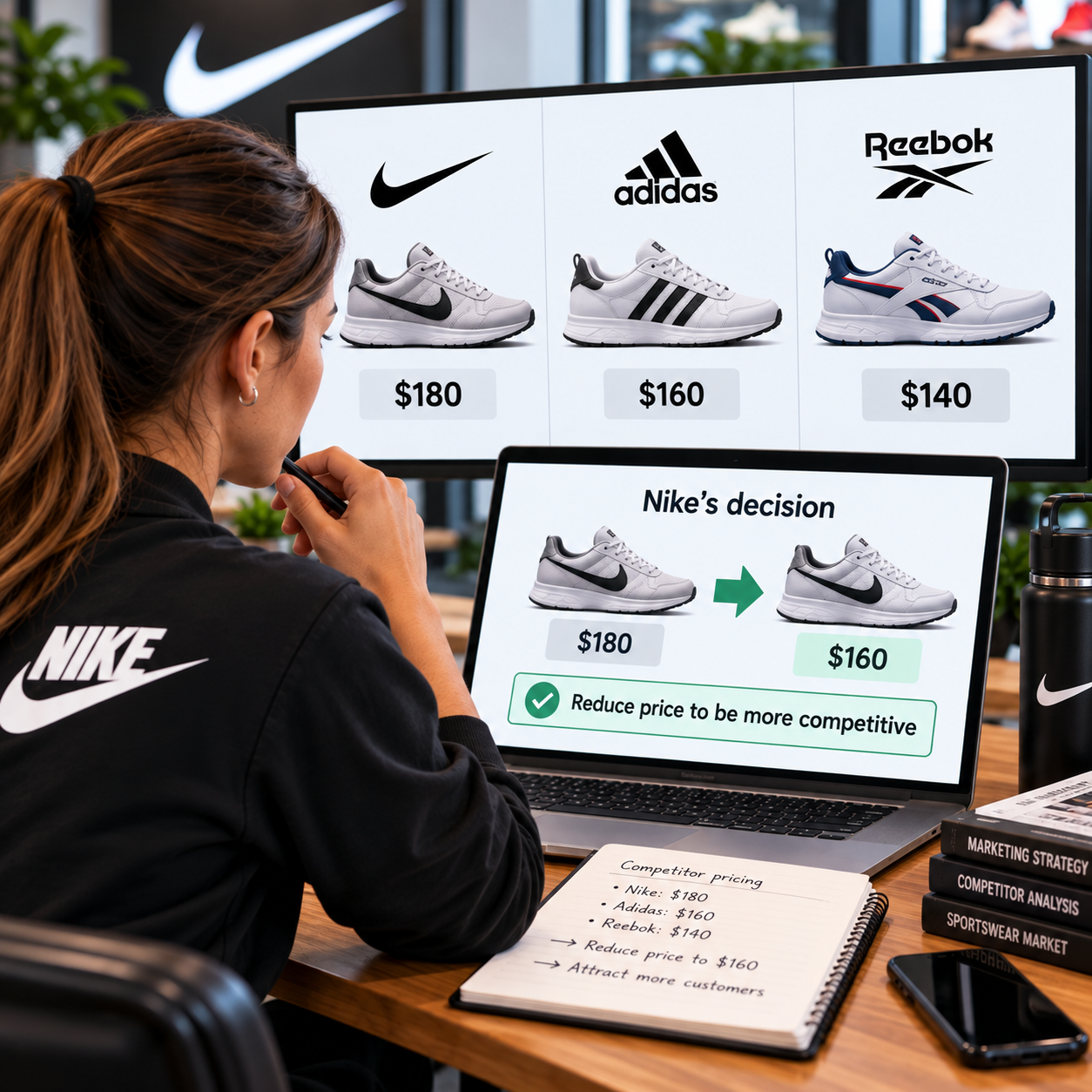
Example – Nike Analysing Adidas and Reebok
A Nike marketing employee compares the prices of similar running and training shoes sold by Adidas and Reebok, including any sale discounts. The employee identifies where Nike's footwear is priced above or below comparable products. Nike may then review its prices or offer added features and promotions to make the value of its footwear clearer to customers.
Example of how to write this in an exam
Competitor price analysis involves examining the prices and pricing strategies used by rival businesses. For example, Nike may compare the prices and discounts offered by Adidas and Reebok on similar training shoes. If Nike finds that a comparable competitor product is cheaper, it could review its price or highlight additional features that justify the difference. This may help Nike remain attractive to its target market, communicate better value and maintain its competitive position without unnecessarily reducing profit margins.
📣 Competitor Marketing Strategies
Competitor marketing strategies are the methods competing businesses use to attract customers, promote their products and establish their brand in the market.
Businesses analyse competitors' marketing to understand which customers they target, how they communicate with those customers and how they differentiate themselves.
What Do Businesses Compare?
- Advertising channels: Social media, websites, search advertisements, television, radio and outdoor advertising.
- Promotional offers: Discounts, giveaways, limited-time campaigns and product bundles.
- Branding and messages: The image competitors create and the benefits they emphasise.
- Target audiences: The customer groups competitors appear to focus on.
- Online engagement: The content and campaigns that attract customer attention and interaction.
Why Is Comparing Marketing Strategies Important?
Comparing competitor marketing helps a business decide whether to:
- Choose more effective channels to reach its target customers.
- Differentiate its message by highlighting benefits competitors do not emphasise.
- Respond to competitor promotions with suitable campaigns or offers.
These decisions may improve brand awareness, attract customers and strengthen the business's competitive position.
Example – Nike Analysing Adidas and Reebok
A Nike marketing employee reviews Adidas's and Reebok's social media campaigns, promotional offers and branding. If Adidas places particular emphasis on fashion collaborations and Reebok promotes fitness footwear, Nike may develop a campaign focusing on the performance features of its own training shoes. This helps Nike present a distinctive message to its target customers.
Example of how to write this in an exam
Competitor marketing strategy analysis involves examining how rival businesses attract customers through advertising, promotions and branding. For example, Nike may analyse the social media campaigns and product messages used by Adidas and Reebok. If Nike finds that competing campaigns focus heavily on fashion or general fitness, it could promote the specialised performance features of its own training shoes. This may help Nike differentiate its brand, communicate a clear benefit to its target market and attract customers who value performance.
🎧 Prefer listening?
If you prefer listening to the content in podcast format:
🎥 Prefer watching?
If you prefer watching the content in video format:
🃏 Flashcards
Card 1 of 16
🎮 Revision Games
💰 BME Millionaire
Climb the ladder by mastering competitor profiling.
🕵️ Competitor Detective
Identify product, price and promotion evidence in competitor scenarios.
⚡ 60 Second Showdown
Rapid-fire questions on competitor profiles and marketing decisions.

Biz Fact: Uber didn’t just beat taxis — it profiled them and redesigned the experience (cashless payment, live tracking, driver ratings, and quicker booking) to remove the biggest customer pain points.